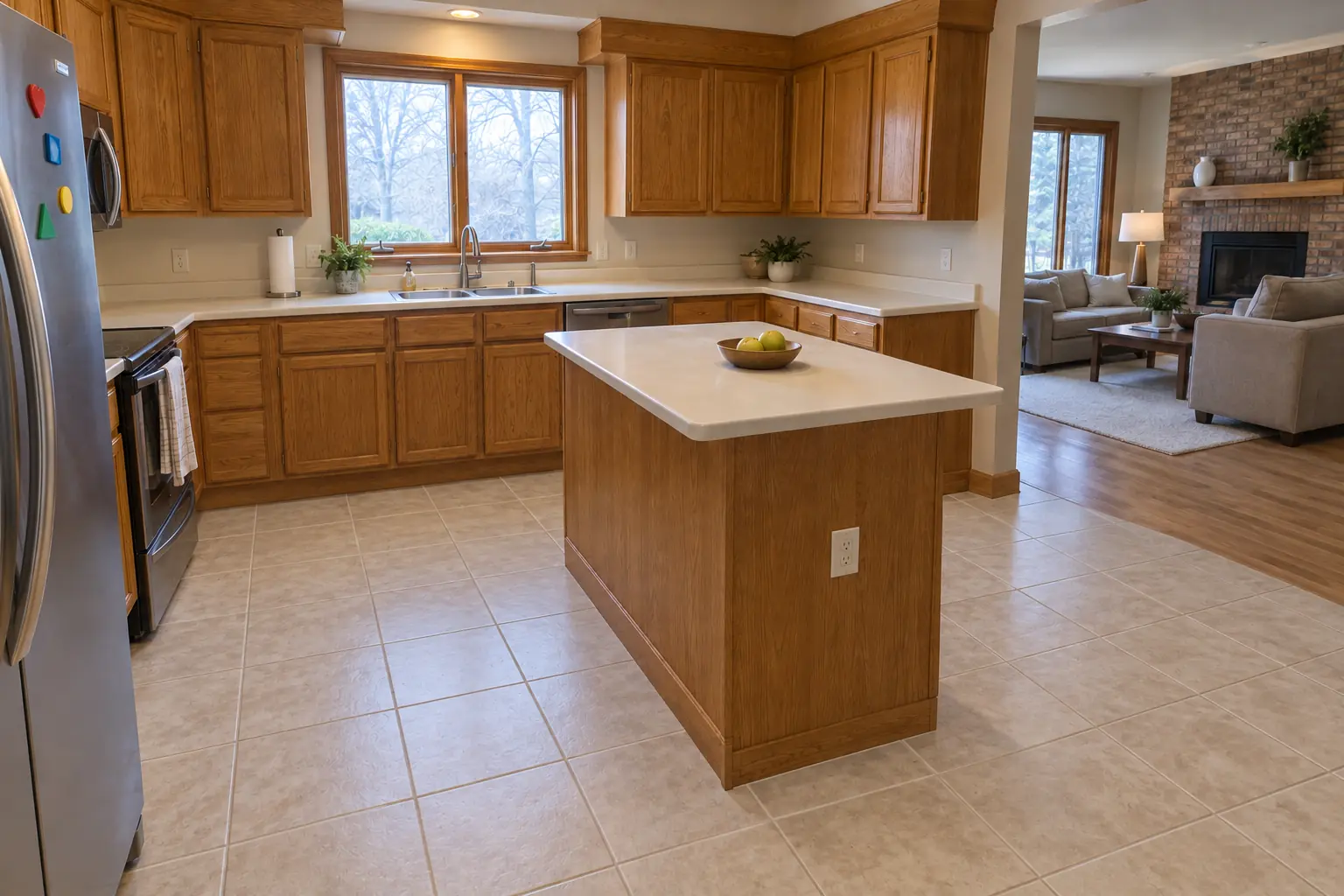
Mold under the sink with no visible leak
No puddle doesn't mean no moisture. Slow seepage, sweating pipes or an old leak that was never dried can feed growth under a sink.
Serving 49 Chicago-area suburbs
Mold under the sink, behind the dishwasher or inside a wall? We fix the moisture and remove the mold from Chicagoland kitchens.
Mold in a kitchen almost always follows water: a slow drip under the sink, a dishwasher leak or condensation behind the fridge. In Chicagoland we find and fix that moisture first, then contain the area, remove the affected materials and clean what stays.
No puddle doesn't mean no moisture. Slow seepage, sweating pipes or an old leak that was never dried can feed growth under a sink.
When growth covers a large area, roughly the size EPA guidance treats as larger, containment and the work plan get more involved. We size the containment to the job.
Porous cabinet parts with mold are removed. Solid wood or plywood that is only surface-affected can often be cleaned and kept.
Mold inside the sink cabinet is a symptom. We trace the water, cut out the affected cabinet bottom or back and check the wall behind it.
Winter condensation in kitchens is common around here. Fixing ventilation keeps the growth from returning after cleanup.
Pulling out old cabinets often exposes mold on the wall or floor behind them. We contain the area and remove it before new materials go in.
Spots on the wall behind the refrigerator usually trace to the water line. We stop it and clean or replace the drywall.
If the kitchen smells damp but every surface looks clean, the source is usually hidden. We check the likely spots first: sink base, behind appliances and the wall below a window.
The same job looks different in a 1920s bungalow, a 1970s split-level and a new subdivision. Here is what we plan for in different parts of the region.
Prewar towns
Older homes often have plaster walls, old plumbing and little ventilation in the kitchen. We deal with the mold and point out the moisture conditions behind it.
Condo and townhome towns
Shared plumbing means shared problems. We remediate your kitchen and note where the moisture came from.
Arlington Heights, Schaumburg, Glendale Heights, Mount Prospect, Evanston, Woodridge
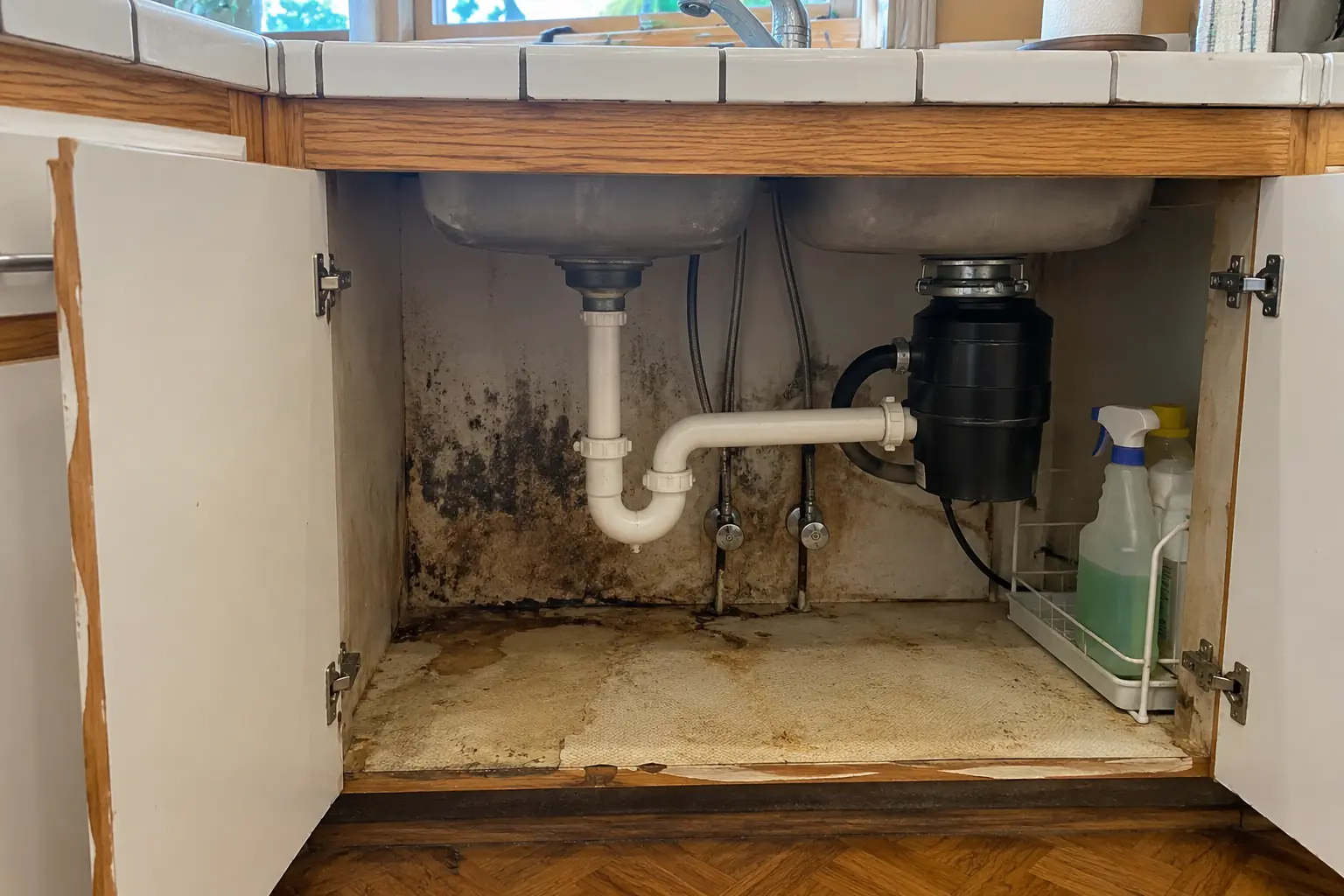 Before
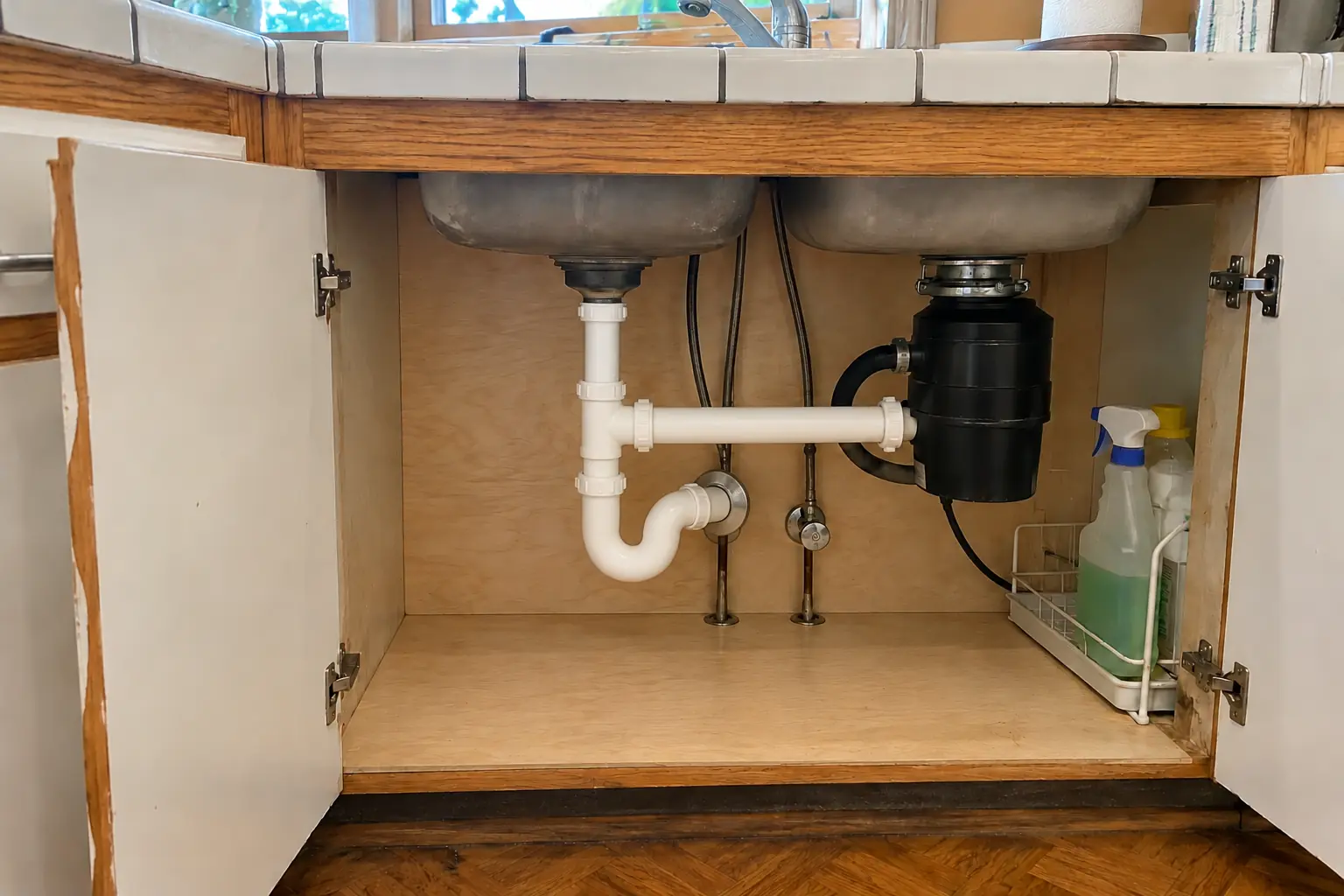 After
The site: a 1980s two-story in Northbrook. What we started with: white double sink and white thermofoil cabinets peeling at the edges, oak trim. The main complaint was black spots on the back of the sink base. Finished kitchen: the sink cabinet cleaned and dried, a new back panel and cabinet floor installed and the drain leak fixed. The job covered inspection and moisture readings, HEPA air filtration, plus final cleaning.
Kitchen Mold Remediation in Northbrook →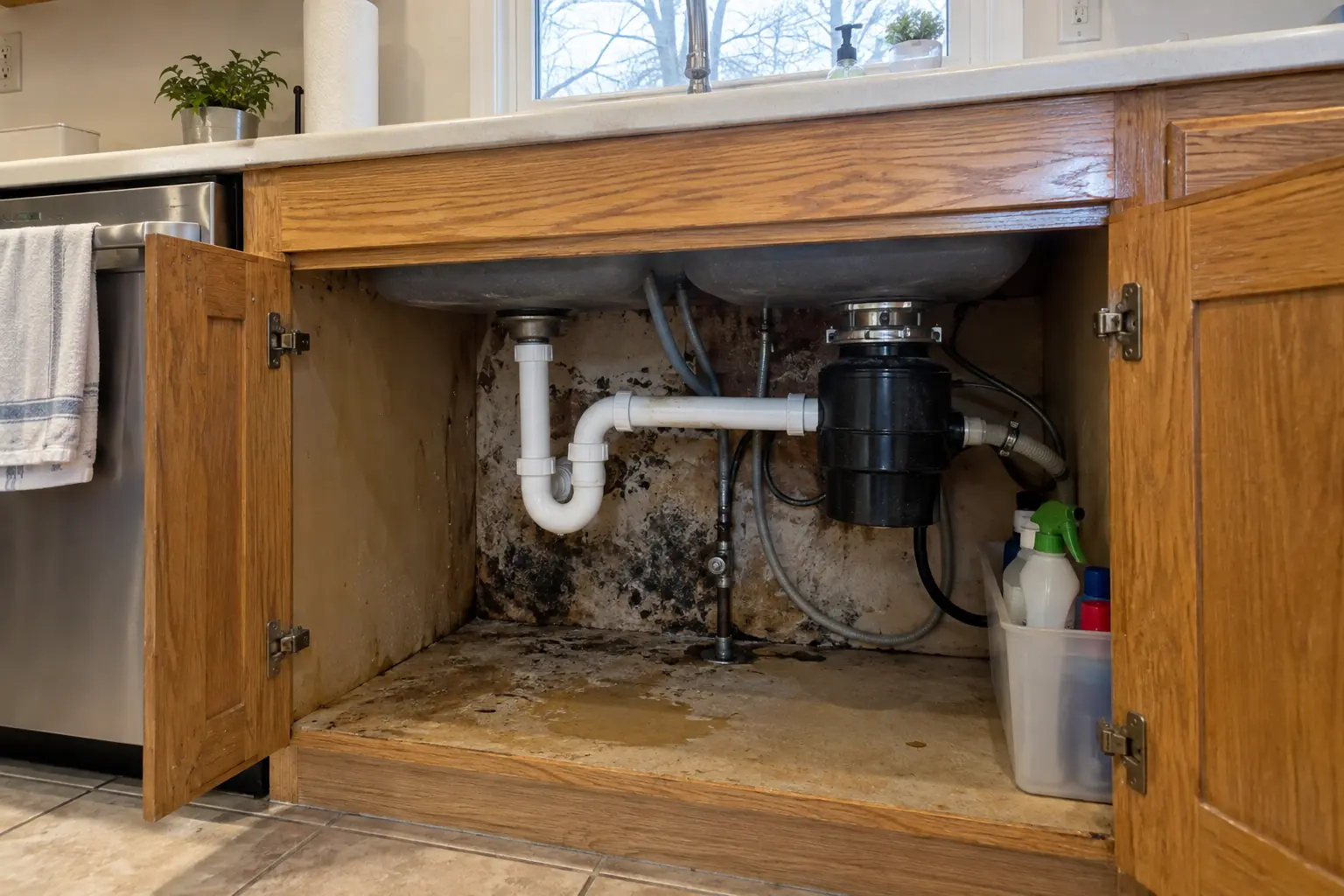 Before
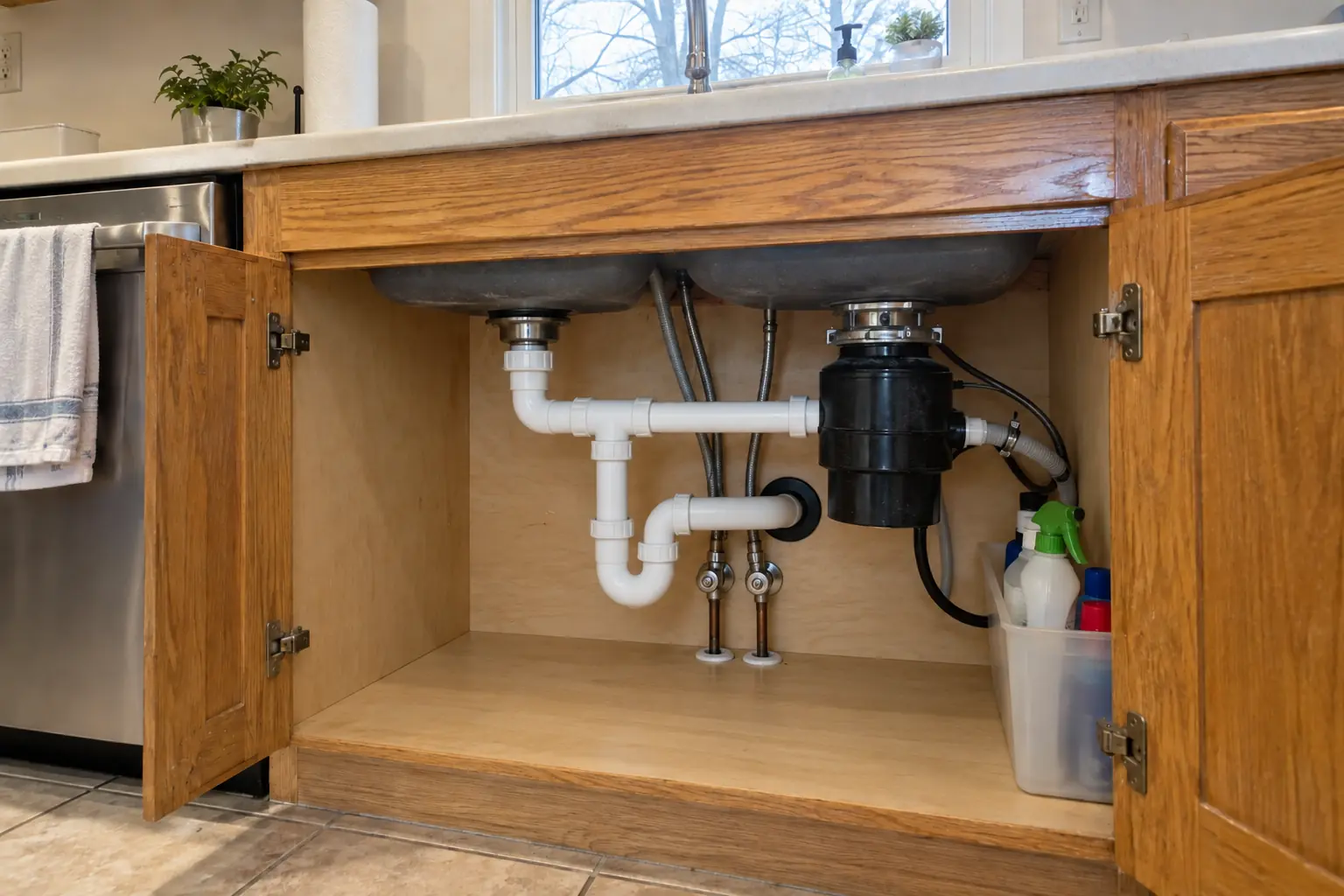 After
The site: a two-story colonial from the 1990s in Roselle. The kitchen as it was: solid-surface integrated sink and golden-oak cabinets with oak soffits above. The main complaint was a musty smell that wouldn't go away. The result: the sink cabinet cleaned and dried, a new back panel and cabinet floor installed and the drain leak fixed. On site this meant containment, removing affected porous materials, plus drying.
Kitchen Mold Remediation in Roselle →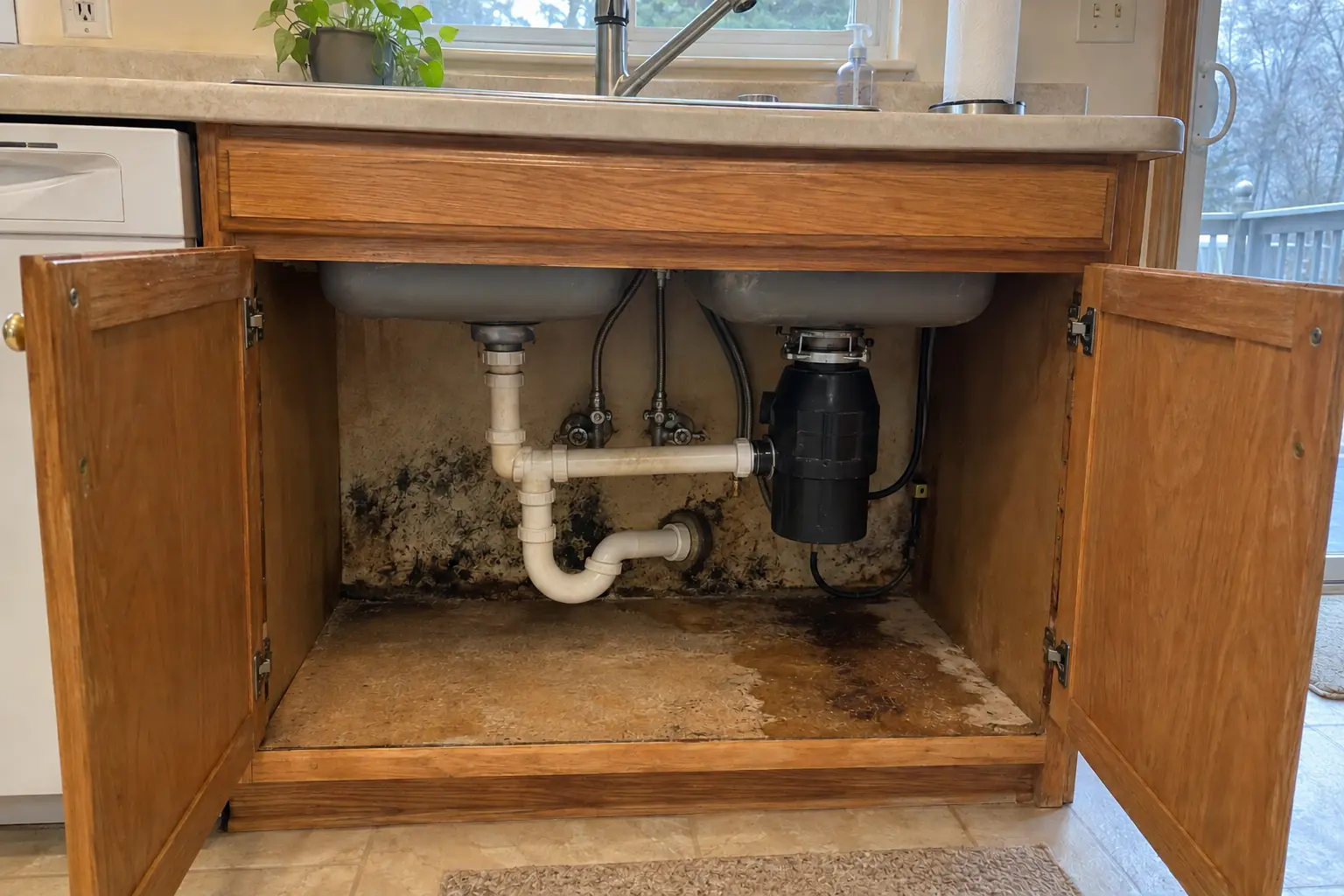 Before
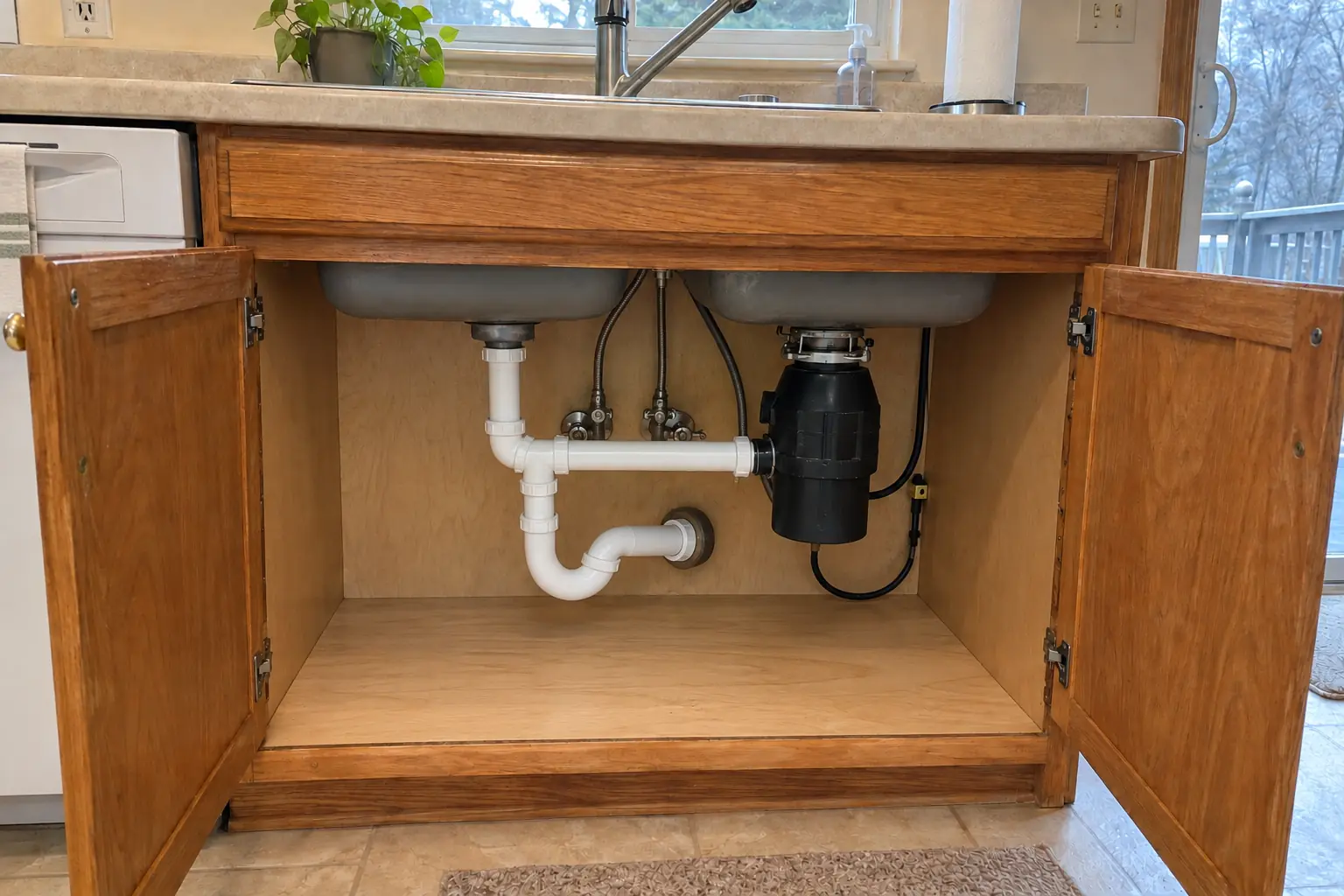 After
The site: a two-story colonial from the 1990s in Park Ridge. The kitchen as it was: white cast-iron double sink and honey-oak cathedral raised-panel cabinets with worn finish near the handles, brass knobs. The main complaint was mold under the kitchen sink. The result: the sink cabinet cleaned and dried, a new back panel and cabinet floor installed and the drain leak fixed. The job covered inspection and moisture readings, drying, plus final cleaning.
Kitchen Mold Remediation in Park Ridge →Pick your town for local details, ZIP codes and nearby projects.
Call us — we'll check your ZIP, answer your questions and book an in-home estimate.