Serving Bloomingdale & nearby Roselle, Glendale Heights

Kitchen Mold Remediation in Bloomingdale, IL

Mold under the sink, behind the dishwasher or inside a wall? We fix the moisture and remove the mold from Bloomingdale kitchens.

  • Serving Bloomingdale ZIP 60108
  • Containment so the damage doesn't spread
  • One team from cleanup to rebuild

Prefer a callback?

Leave your number and a Bloomingdale mold remediation technician will call you.

Kitchen mold problems we take care of in Bloomingdale

Mold in a kitchen almost always follows water: a slow drip under the sink, a dishwasher leak or condensation behind the fridge. In Bloomingdale we find and fix that moisture first, then contain the area, remove the affected materials and clean what stays.

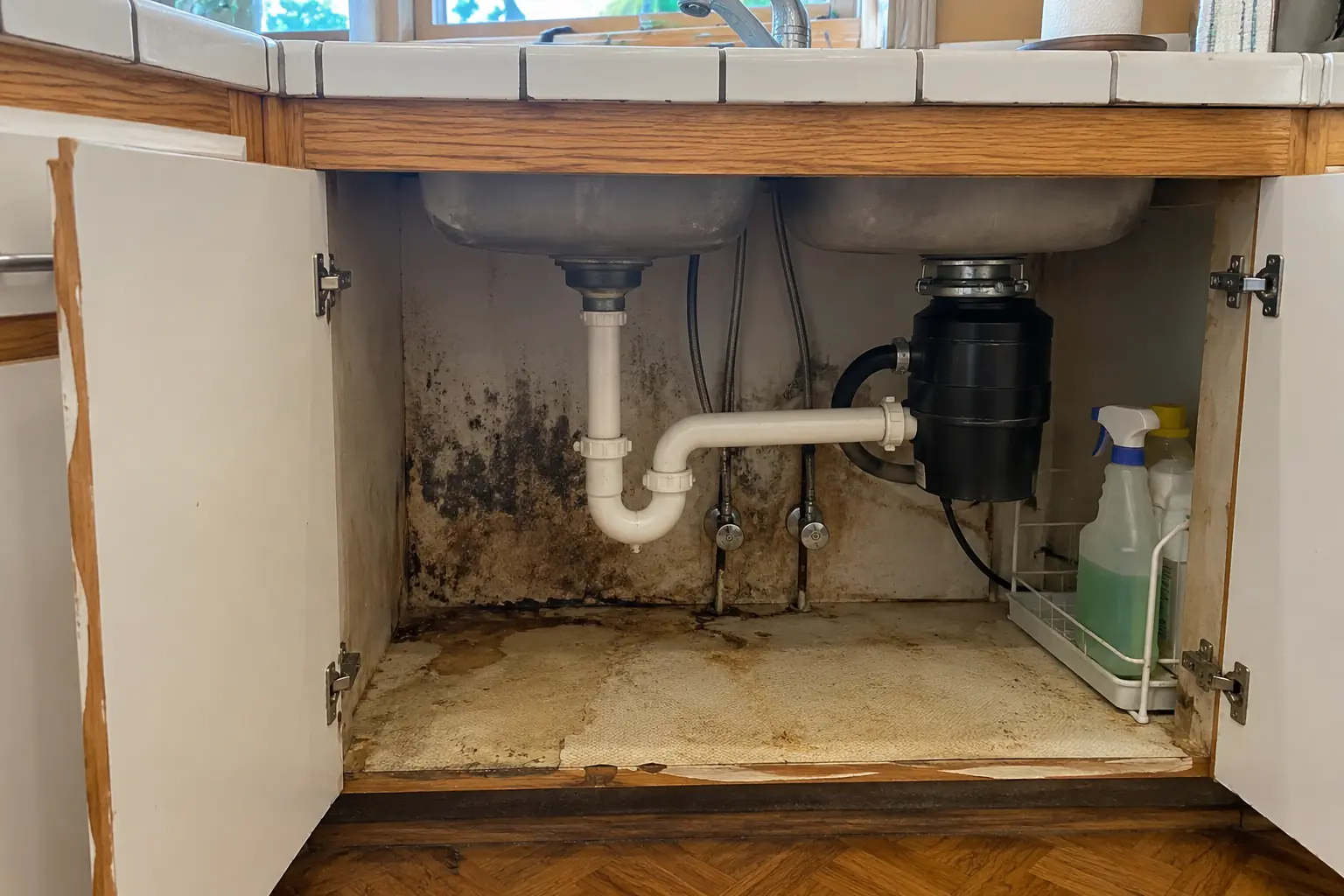
Mold under the kitchen sink

The sink base is the most common place we find kitchen mold. A drain or supply drip keeps the particleboard damp, and that panel usually has to be replaced.

Condensation and window mold

Mold on the sill or wall under a kitchen window often comes from condensation. We clean or replace the affected parts and look at how the room is vented.

Mold on cabinet backs and particleboard

Particleboard and MDF absorb water and hold it, so mold grows into them, not just on top. Those panels are replaced rather than cleaned.

Mold behind the refrigerator

A leaking ice maker line or condensation from the fridge can grow mold on the wall and floor behind it. We pull it out, fix the line and remove what is affected.

Musty smell with no mold in sight

If the kitchen smells damp but every surface looks clean, the source is usually hidden. We check the likely spots first: sink base, behind appliances and the wall below a window.

A large area of mold

Large-area mold is handled with full containment and HEPA filtration, and we may suggest independent testing beforehand.

Mold behind or under the dishwasher

A leaking door seal or drain hose can keep the floor and wall behind the dishwasher damp for months. We pull the unit and check the subfloor, side panels and drywall.

Mold that keeps coming back

If cleaning hasn't kept it away, the material is likely still damp or the growth is inside it. Removal plus a fix for the moisture is what lasts.
What the restoration covers

  • Inspection and moisture readingsFirst we map how far the moisture and growth reach and what caused them.
  • ContainmentWe isolate the affected area so spores and dust stay inside it.
  • HEPA air filtrationWe filter the air in the work area with HEPA equipment while materials are removed.
  • Cleaning what staysSolid materials that remain are cleaned of growth and debris.
  • DryingThe area is dried and checked with meters before anything is closed up.
  • Final cleaningThe containment area is HEPA-vacuumed and wiped down before the plastic comes down.
  • RebuildNew cabinet panels, drywall, insulation and finishes go back in.

Methods and equipment

Containment sheetingPlastic barriers, zip doors and tape that isolate the work area.
Replacement panels and drywallMaterials to rebuild the area after remediation.
Mold-resistant materialsOptions that hold up better in a spot that has seen water.
HEPA vacuumsCleanup equipment that holds fine dust instead of blowing it around.
Moisture metersReadings that show where moisture is and when drying is done.

Kitchen Mold Remediation before and after — Bloomingdale homes

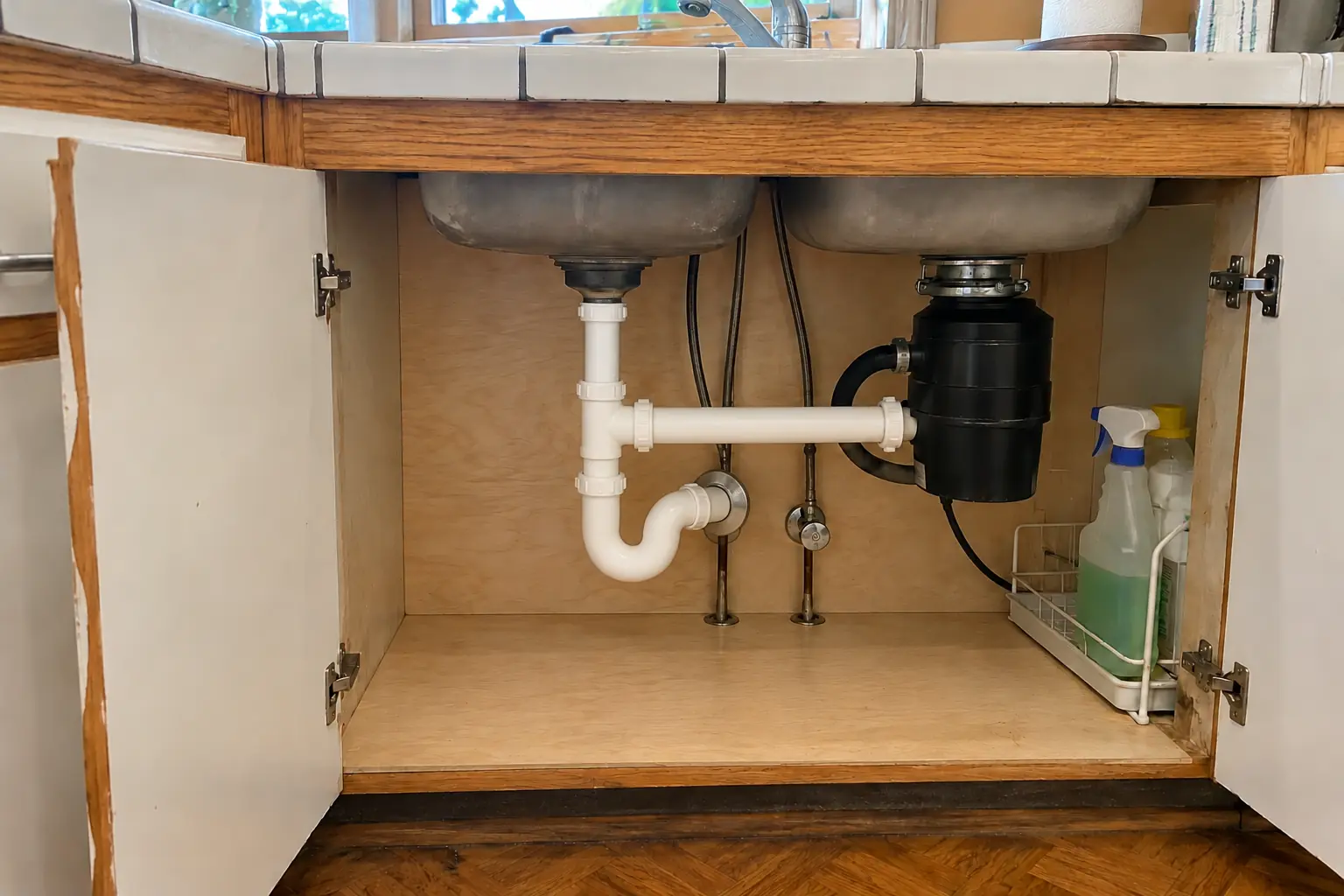
Kitchen Mold Remediation in a 1980s-1990s two-story colonial / tract house — problemProblem
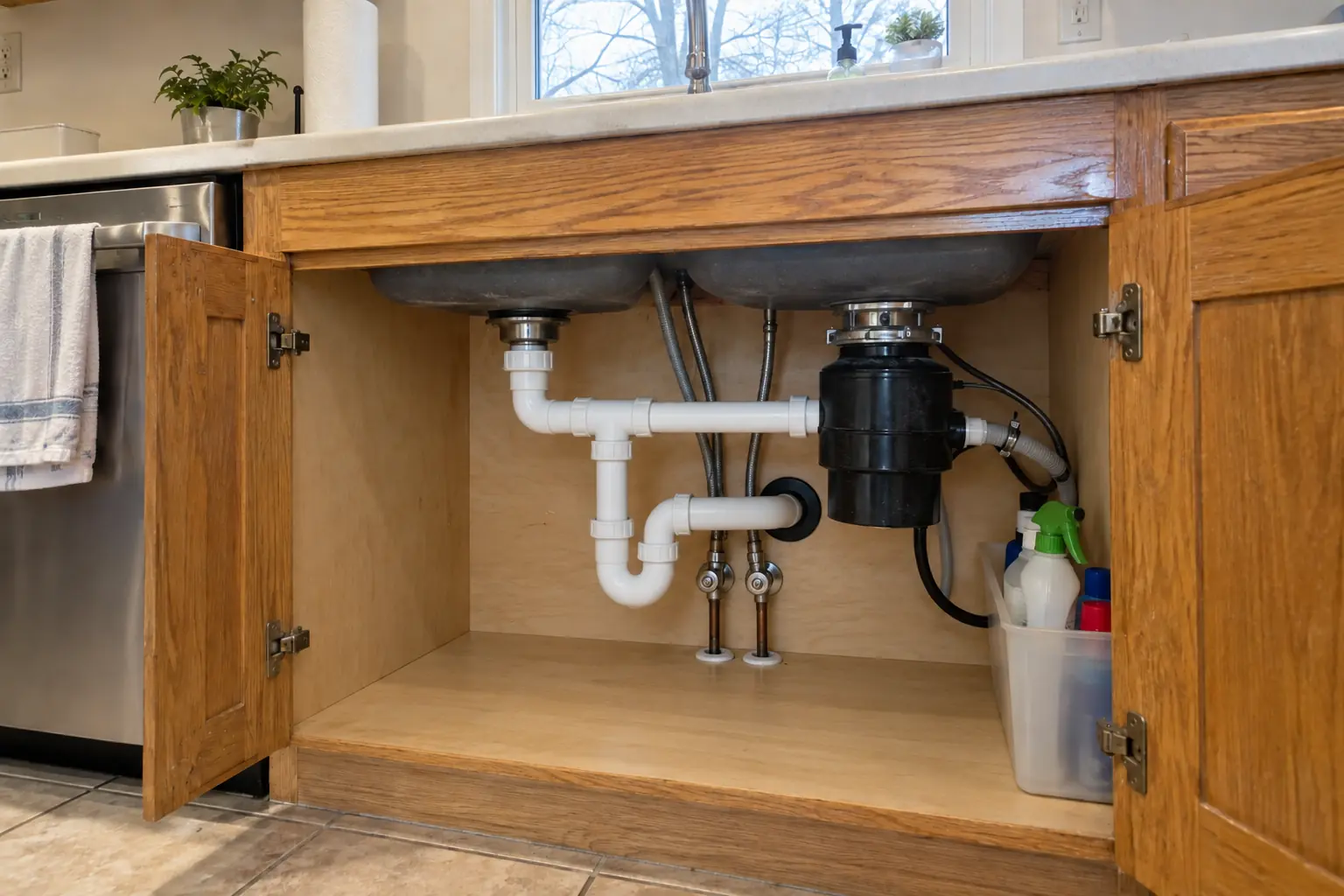
Kitchen Mold Remediation in a 1980s-1990s two-story colonial / tract house — fixedFixed
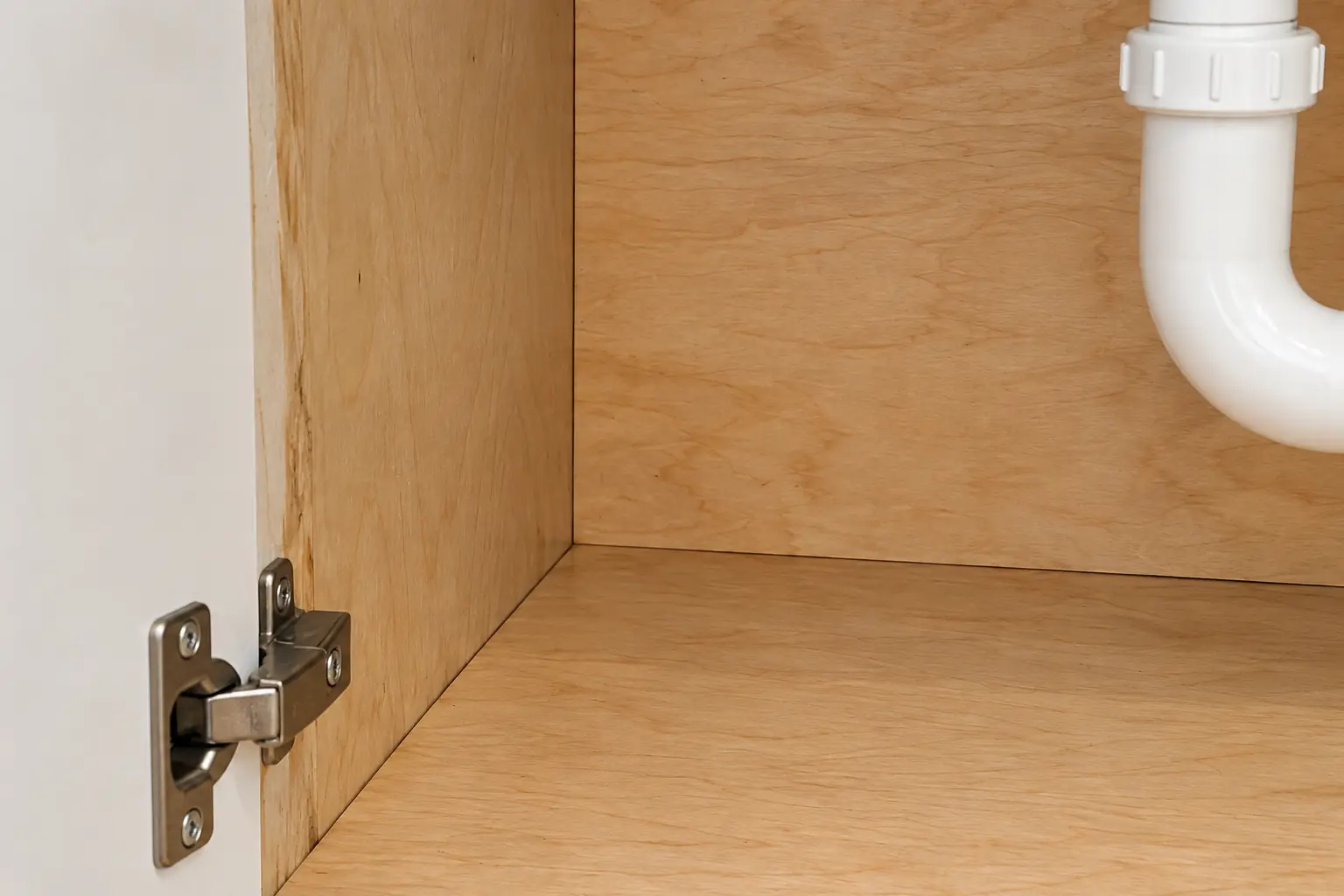
Kitchen Mold Remediation in a 1980s-1990s two-story colonial / tract house — detailDetail

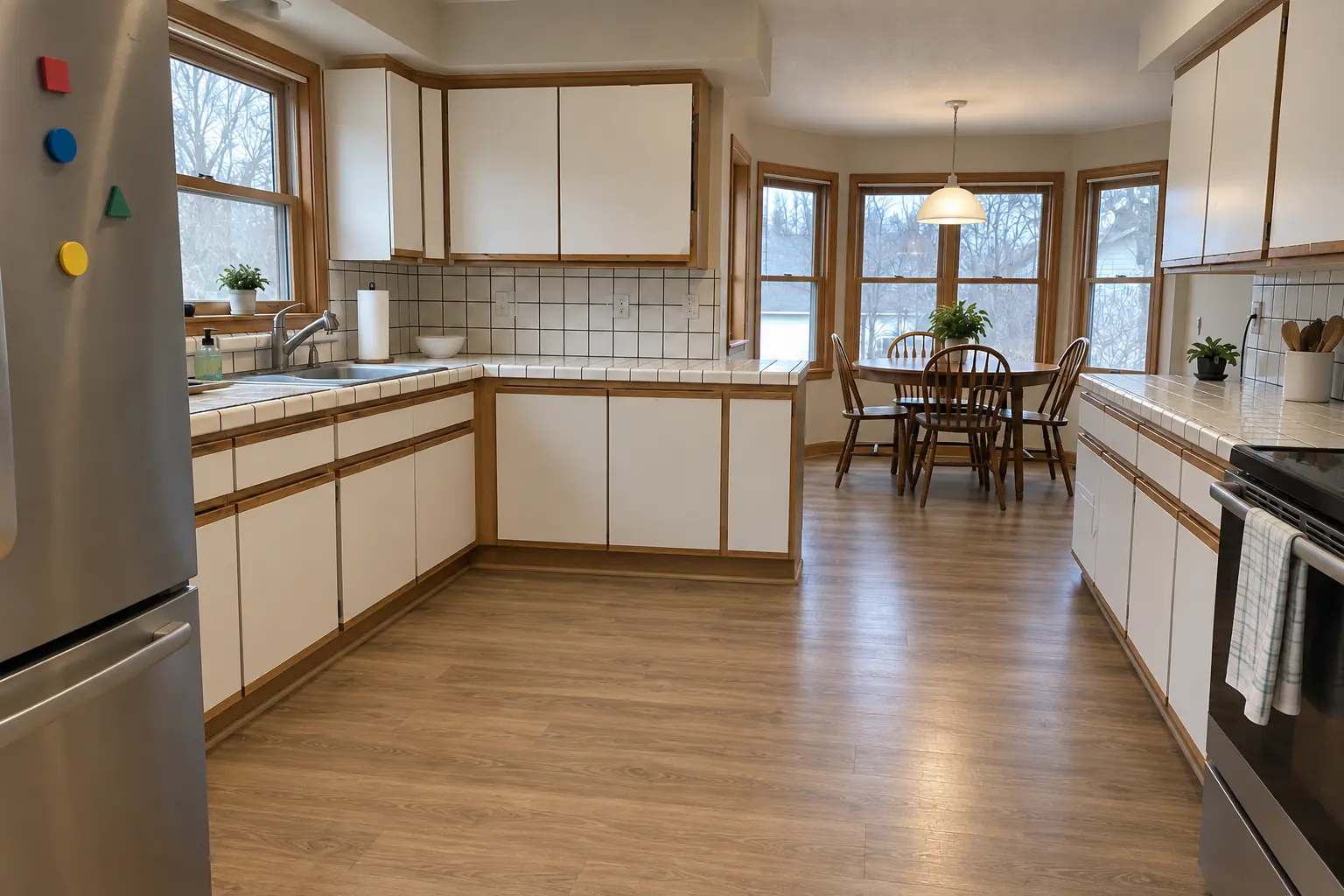
Kitchen Mold Remediation in a 1980s two-story, Bloomingdale

This one is a 1980s two-story near Old Town Bloomingdale. The kitchen as it was: white double sink and white thermofoil cabinets peeling at the edges, oak trim. What bothered the owners most: black spots on the back of the sink base. After: the sink cabinet cleaned and dried, a new back panel and cabinet floor installed and the drain leak fixed. The job covered inspection and moisture readings, HEPA air filtration, plus rebuild.
Kitchen Mold Remediation project in Roselle, beforeBefore
Kitchen Mold Remediation project in Roselle, afterAfter

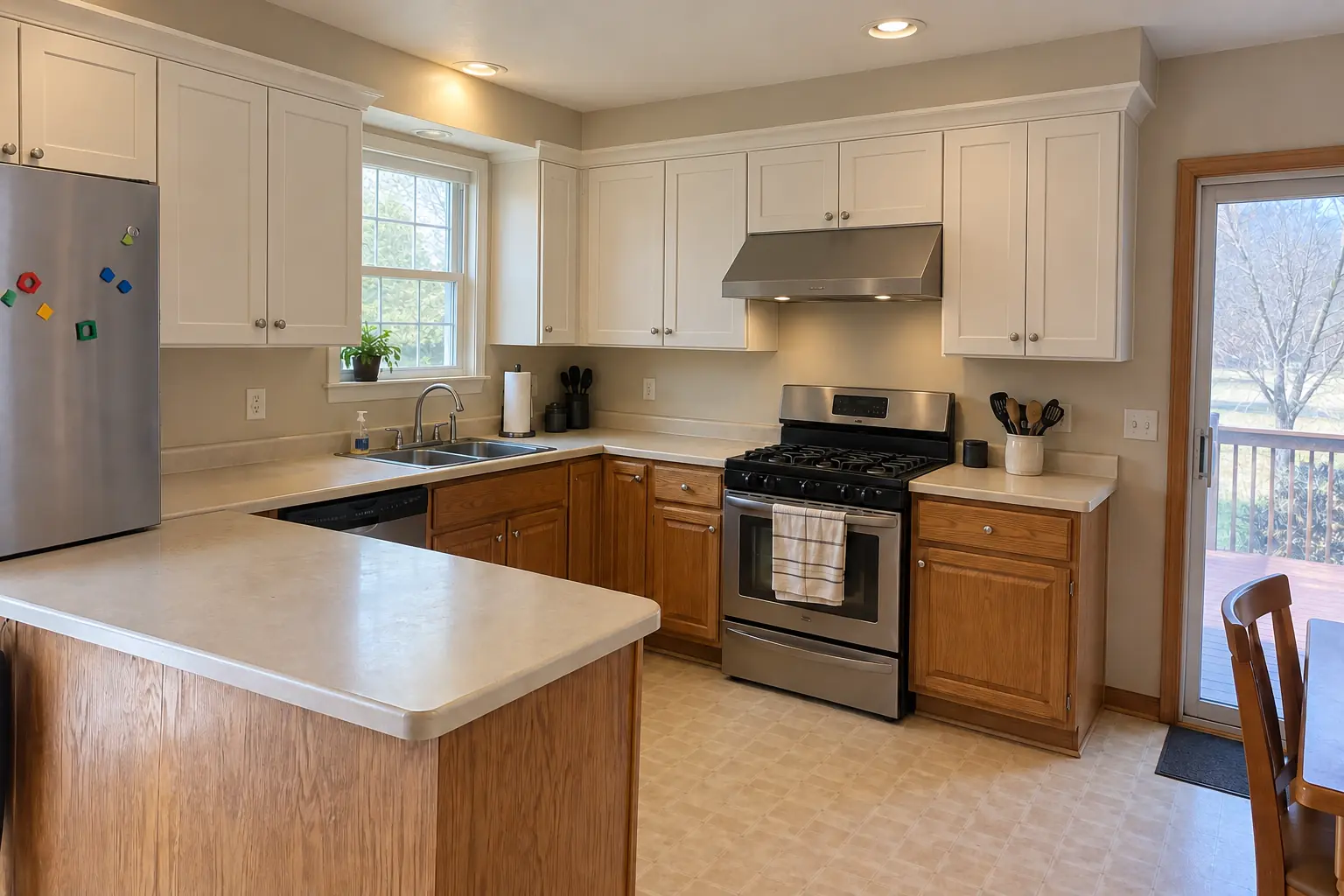
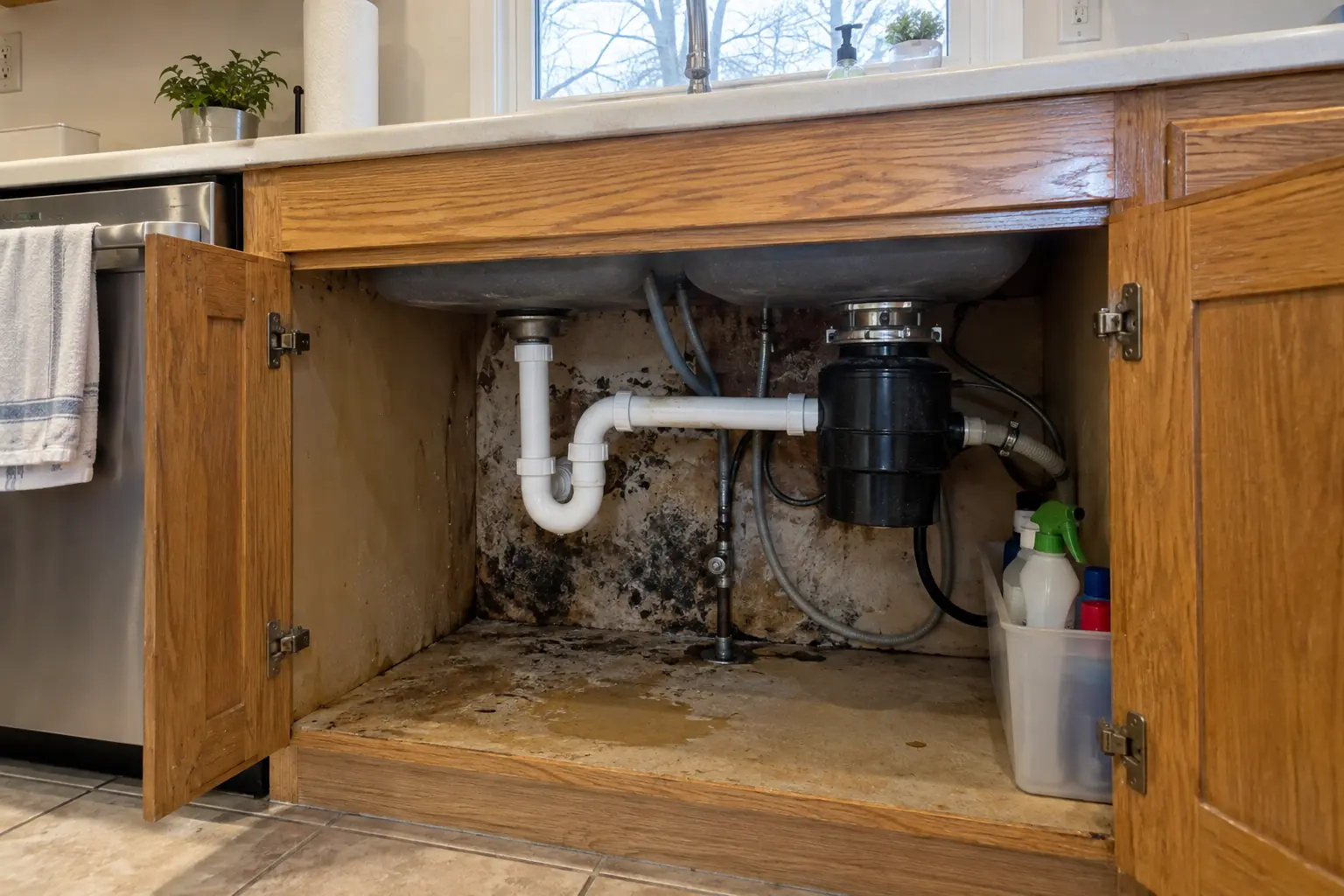
Roselle kitchen, 1980s two-story: kitchen mold remediation

A 1980s two-story in Roselle, a typical kitchen for Roselle. What we started with: solid-surface integrated sink and golden-oak cabinets with oak soffits above. What bothered the owners most: a musty smell that wouldn't go away. After: the sink cabinet cleaned and dried, a new back panel and cabinet floor installed and the drain leak fixed. Work included HEPA air filtration, final cleaning, plus rebuild.

Kitchen Mold Remediation in Roselle →
Kitchen Remodeling project near Bloomingdale, beforeBefore
Kitchen Remodeling project near Bloomingdale, afterAfter

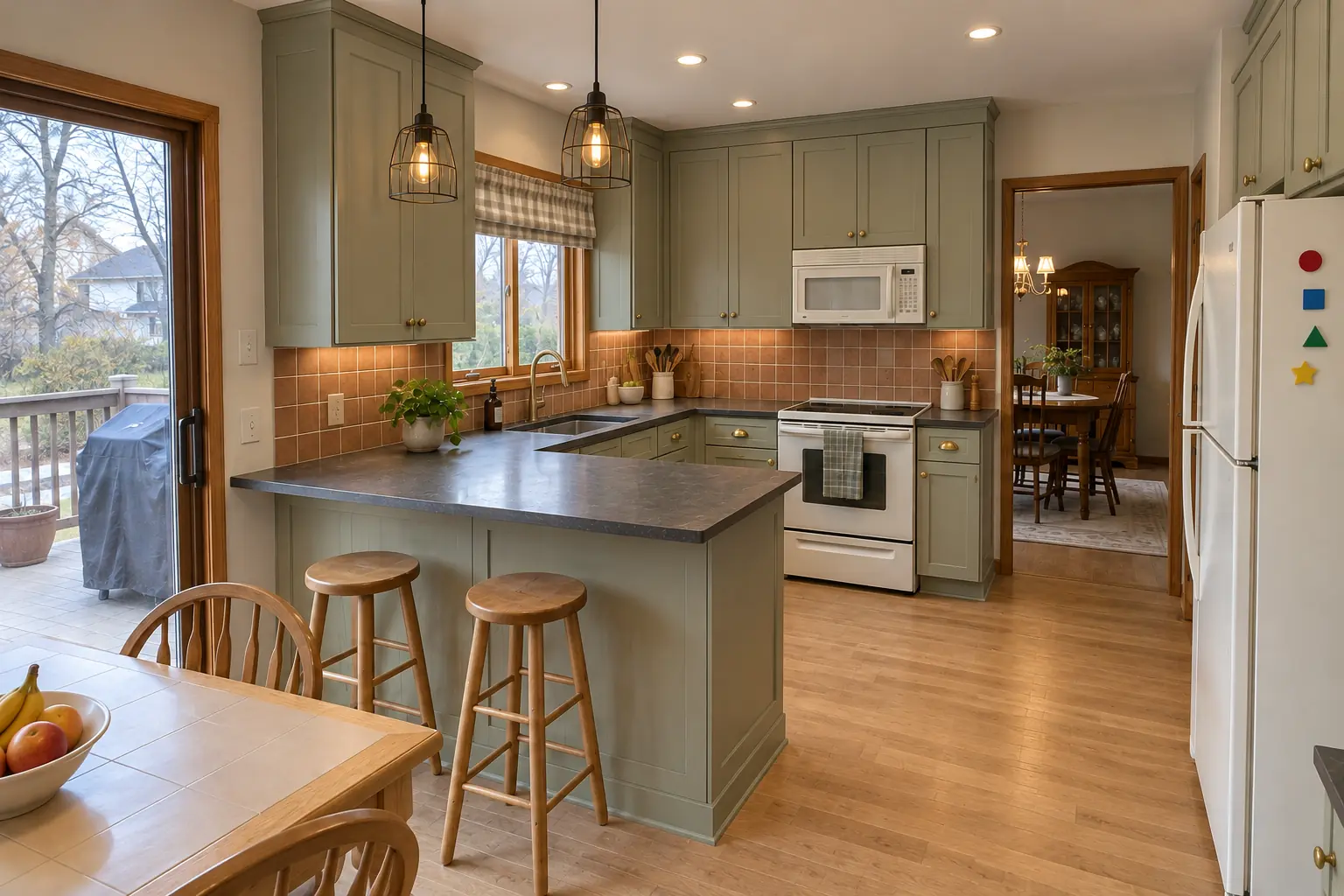
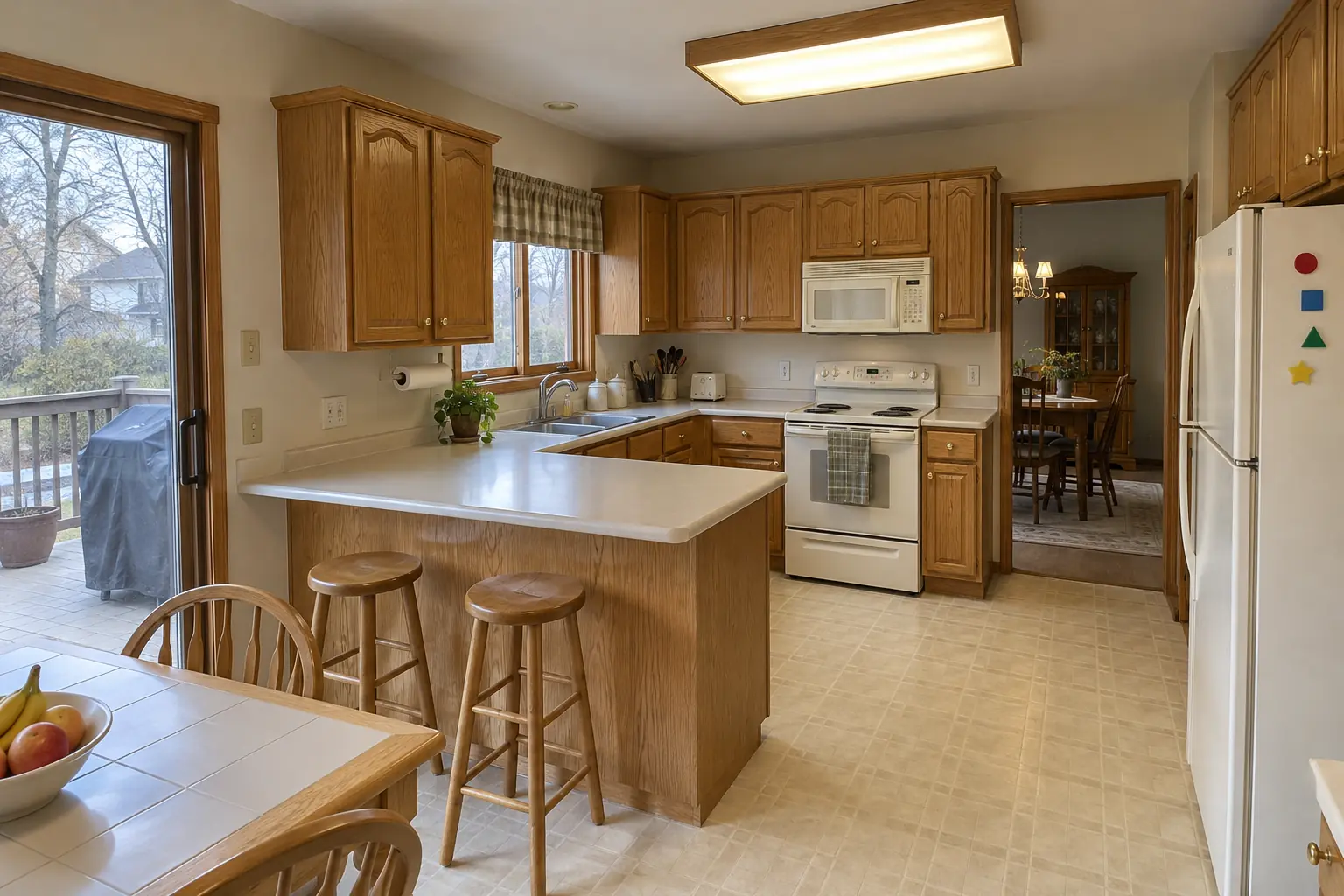
A Bloomingdale 1990s two-story colonial: before and after

What changed: cabinets in pale sage with unlacquered brass knobs and cup pulls, charcoal concrete-look quartz counters, a terracotta-look square tile backsplash, light oak hardwood flooring and black cage pendants and slim recessed lights.

Kitchen Remodeling in Bloomingdale →
Kitchen Cabinet Painting project near Bloomingdale, beforeBefore
Kitchen Cabinet Painting project near Bloomingdale, afterAfter

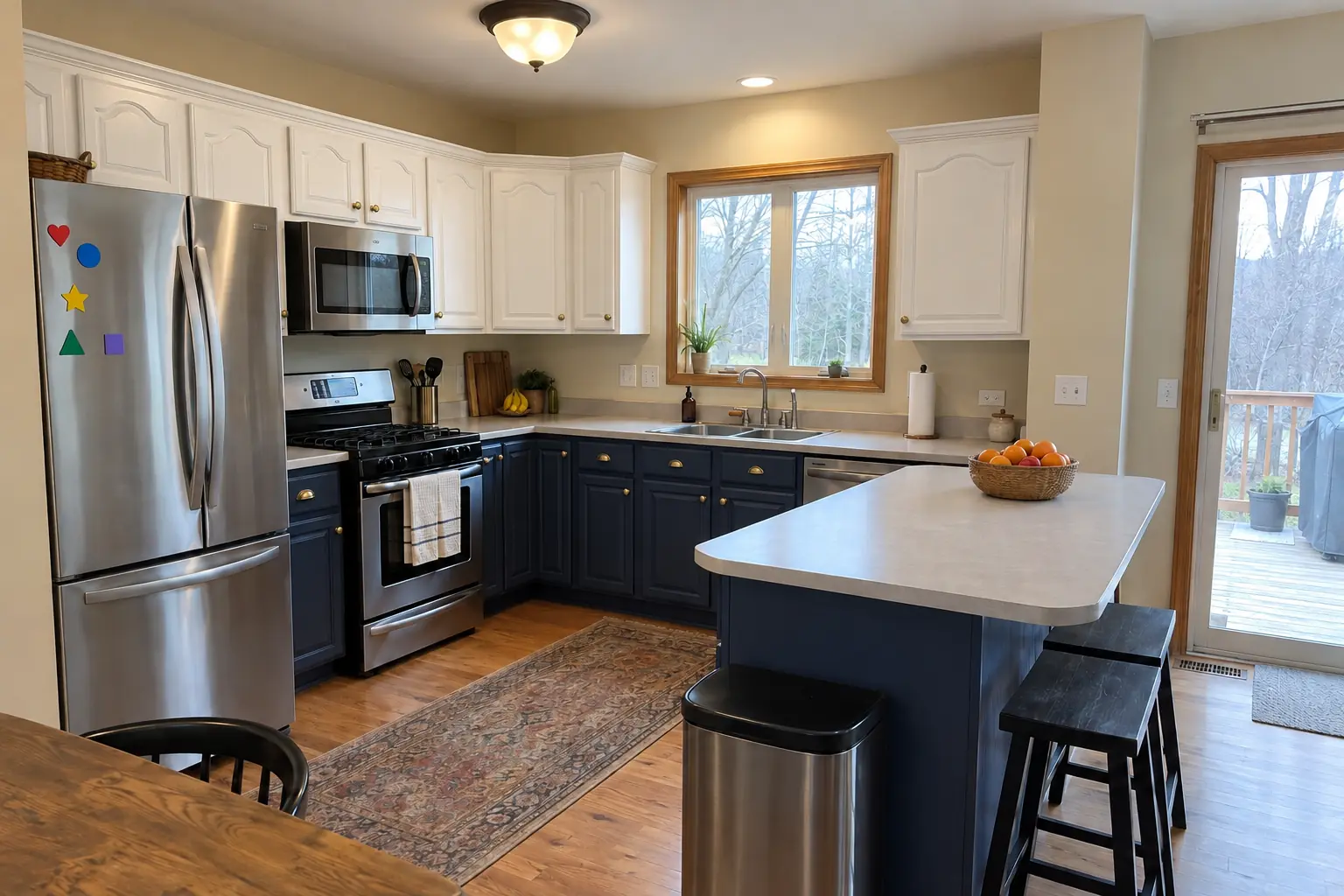
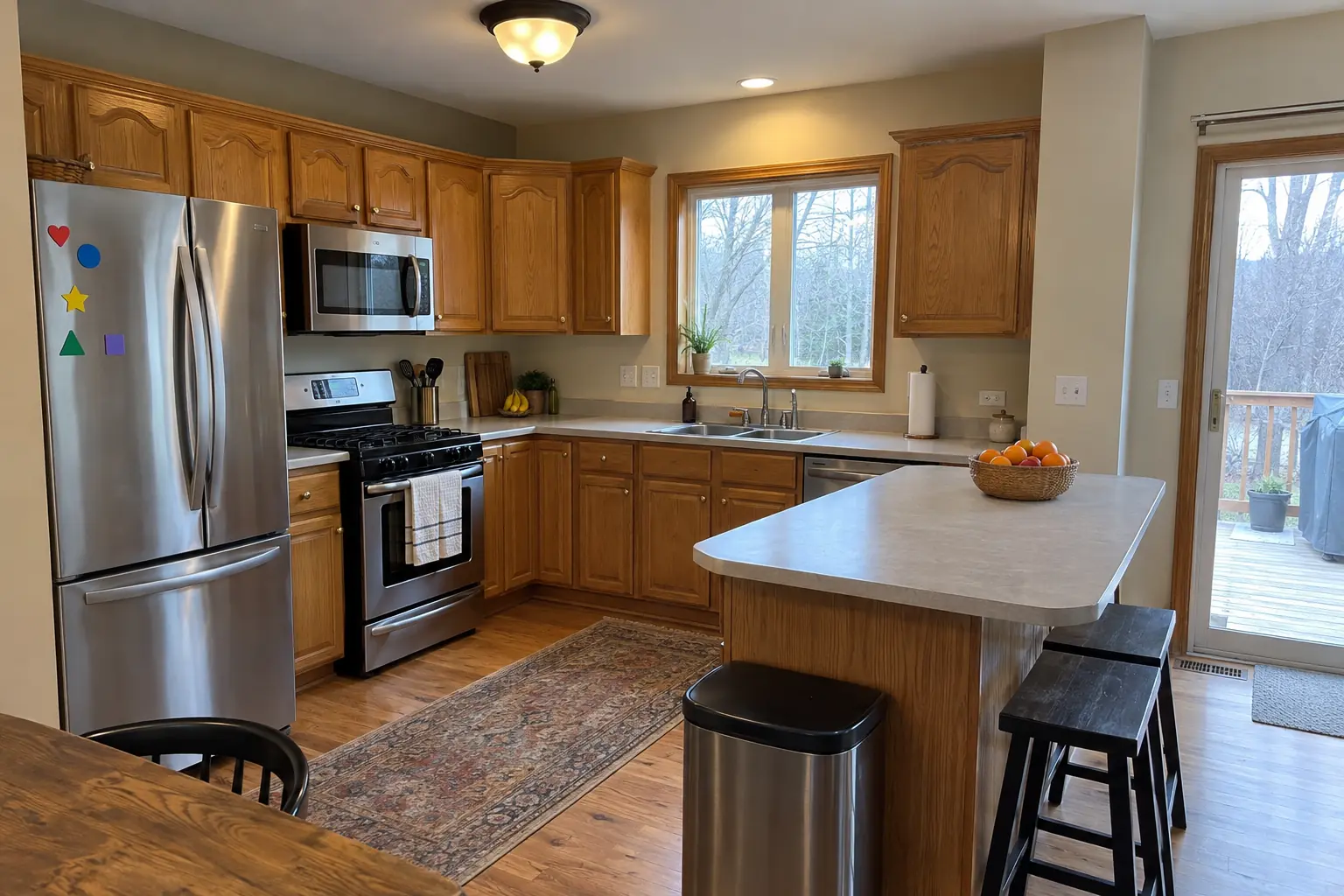
A Bloomingdale 1980s two-story: before and after

What changed: the same doors sprayed in creamy white uppers and navy lowers, new satin brass pulls; counters and floor stayed as they were.

Kitchen Cabinet Painting in Bloomingdale →
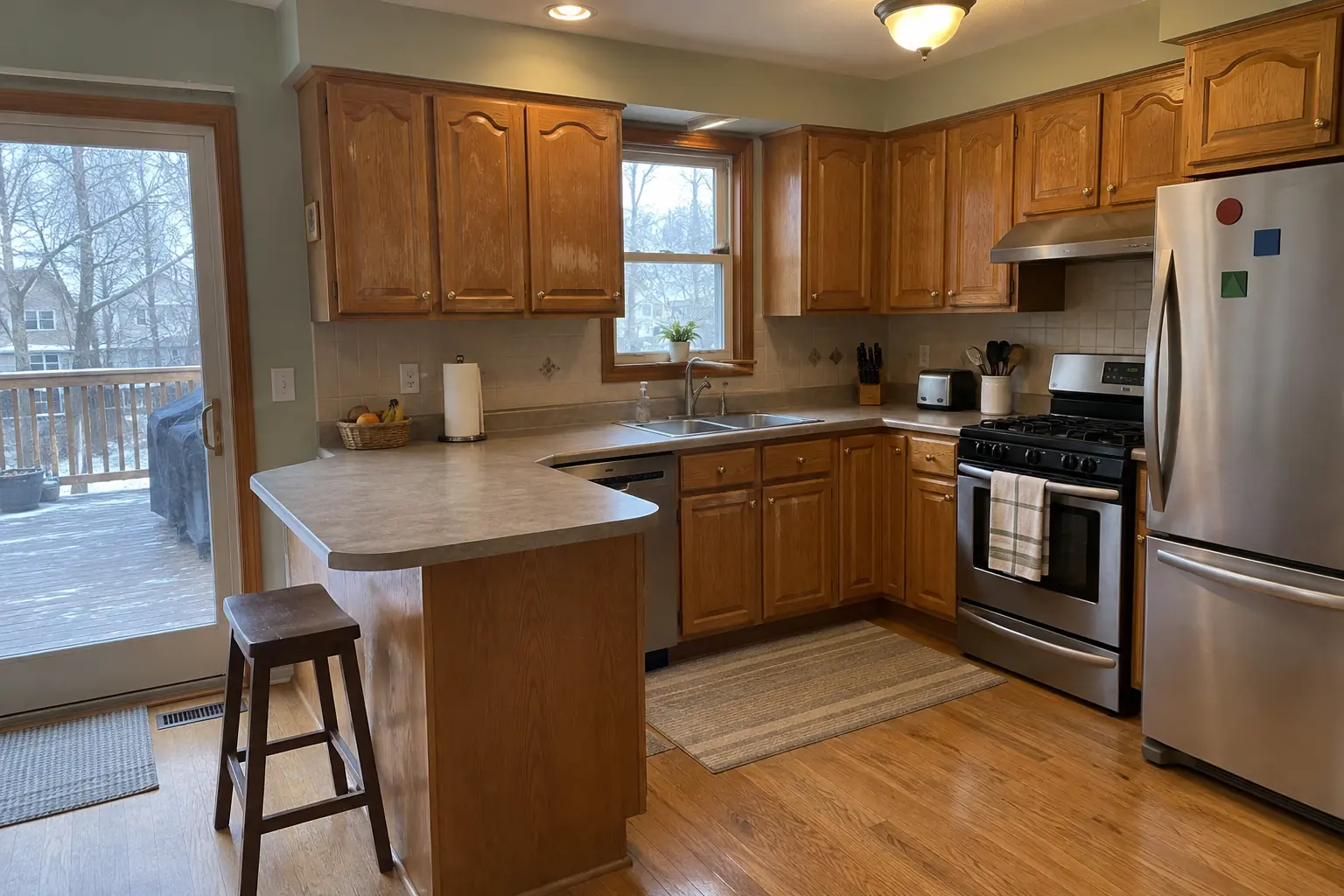
Cabinet Refacing project near Bloomingdale, beforeBefore
Cabinet Refacing project near Bloomingdale, afterAfter

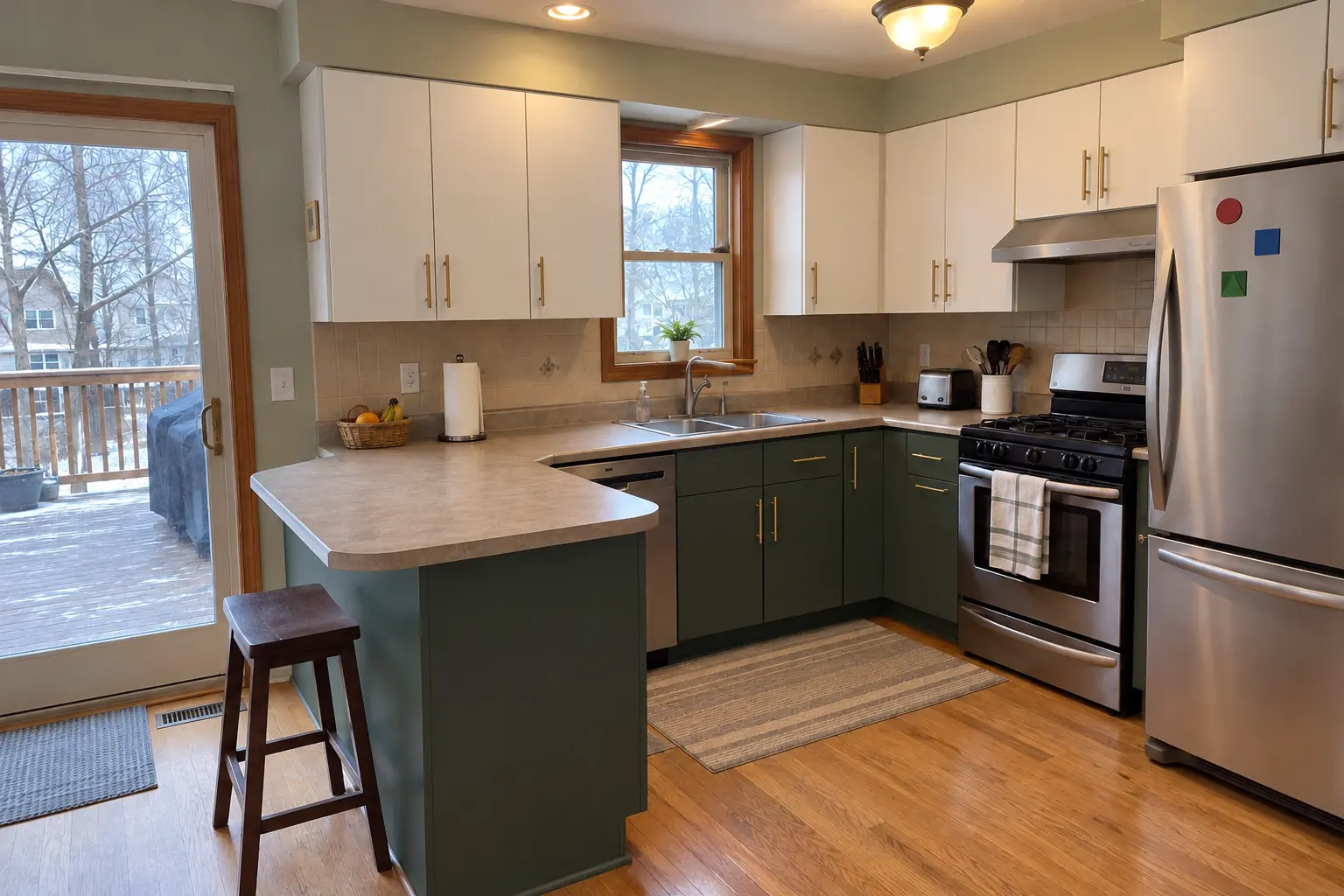
Cabinet Refacing in a two-story colonial from the 1990s, Bloomingdale

Finished: new flat slab doors with a thin edge in white uppers and deep green lowers on the existing boxes, matching face-frame veneer and satin brass pulls.

Cabinet Refacing in Bloomingdale →

Step by step after damage

  1. InspectA visit to assess the growth, the moisture and the plan.
  2. Fix the moistureThe leak or condensation is repaired before removal begins.
  3. Contain and removeContainment goes up, then moldy materials are removed and surfaces cleaned.
  4. Dry and rebuildOnce dry and clean, the kitchen is put back together.

Kitchen Mold Remediation questions from Bloomingdale homeowners

Can mold be removed without replacing my cabinets?
Plywood and solid wood can often be cleaned; particleboard with growth is replaced. Whole cabinets rarely need to go.
How long does kitchen mold remediation take?
It depends on the size and whether drying is needed. Rebuilding cabinets or drywall adds time.
What's the difference between mold removal and mold remediation?
Remediation is the full process: source, containment, removal, cleaning and drying. Simply cleaning the surface is removal.
Can we stay home while you work?
Most owners stay. Containment and HEPA filtration keep the work separate, and we tell you when the kitchen is usable again.
What causes mold under the kitchen sink?
Almost always a leak, sometimes condensation. We find which before we start.
Bloomingdale building permit for kitchen mold remediation: where do I apply?
Permits go through Building & Zoning Department, phone (630) 671-5660. When your scope needs one, we prepare the application and schedule the inspections.
Do you work in my part of Bloomingdale?
Yes. Our crews work across Bloomingdale, including Old Town Bloomingdale — ZIP 60108 — and nearby Roselle, Glendale Heights, Carol Stream.

Working in Bloomingdale

  • A lot of Bloomingdale kitchens date from the 1970s. We know these layouts well and what is worth keeping.
  • Most Bloomingdale homes are single-family. We protect floors and driveways and leave the site clean every day.

Old Town Bloomingdale

ZIP 60108

Kitchen Mold Remediation nearby

Planning a kitchen project in Bloomingdale?

Call us — we'll check your ZIP, answer your questions and book an in-home estimate.
Call now (708) 400-7049
Call (708) 400-7049Callback