Mold Under the Kitchen Sink and Water Damage Under Kitchen Cabinets: What to Do
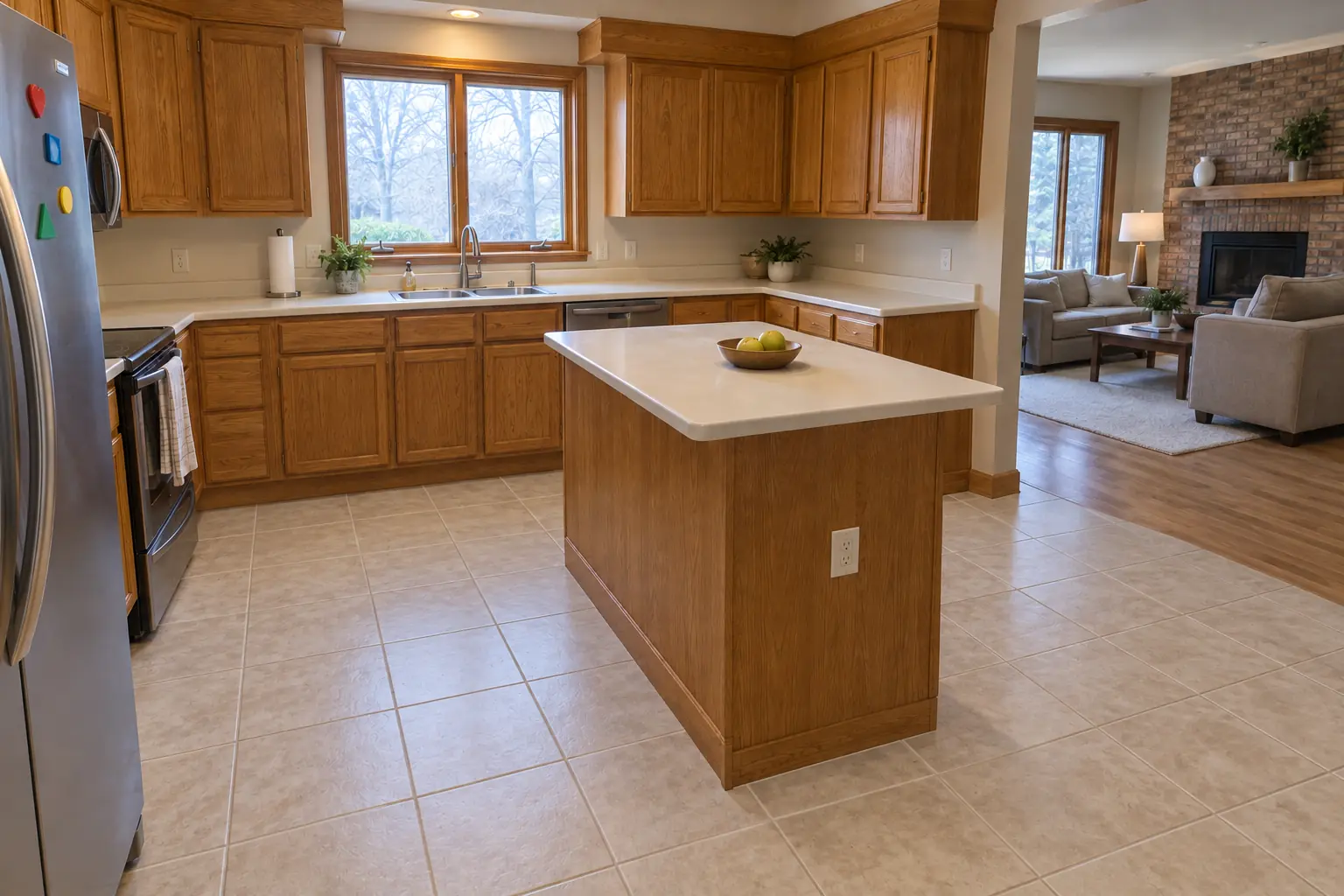
Mold under the kitchen sink is almost always a moisture problem first and a mold problem second. A slow drip from a drain joint, a supply line, the dishwasher hose or the garbage disposal keeps the cabinet floor damp, and mold grows on the particleboard, the back panel or the drywall behind it. The fix that lasts is the same every time: find and stop the water, dry what can be dried, remove what cannot, then clean and rebuild.
Water damage under kitchen cabinets follows the same logic but can hide longer, because the toe kick and cabinet bottom cover the subfloor. This guide covers the signs, how to trace the leak, what the EPA says homeowners can reasonably clean on their own, when to bring in a remediation crew and how damaged cabinets are repaired. We are a kitchen contractor, so we focus on the cabinet and building side; for any health concern, talk to your doctor.
Signs of water damage under kitchen cabinets
Most kitchen leaks are slow, so the first signs are subtle and often a smell before a stain. Look and smell before you start pulling things out of the sink base.
- A musty or earthy smell when you open the sink cabinet, even if nothing looks wet.
- Swollen, soft or flaking particleboard on the cabinet floor; the laminate skin may bubble or peel.
- Dark rings, water lines or stains on the cabinet bottom or the back panel.
- Black, green or white fuzzy spots on wood, drywall or the underside of the cabinet floor.
- A toe kick that is warped, stained or pulling away from the cabinet.
- Flooring in front of the sink or dishwasher that is cupped, lifting or discolored.
- Rust or mineral crust on shutoff valves, trap nuts or the disposal housing.
Common sources of moisture under the sink
In our experience the water usually comes from a short list of places, and several of them leak only while something is running. That is why a dry-looking cabinet can still grow mold.
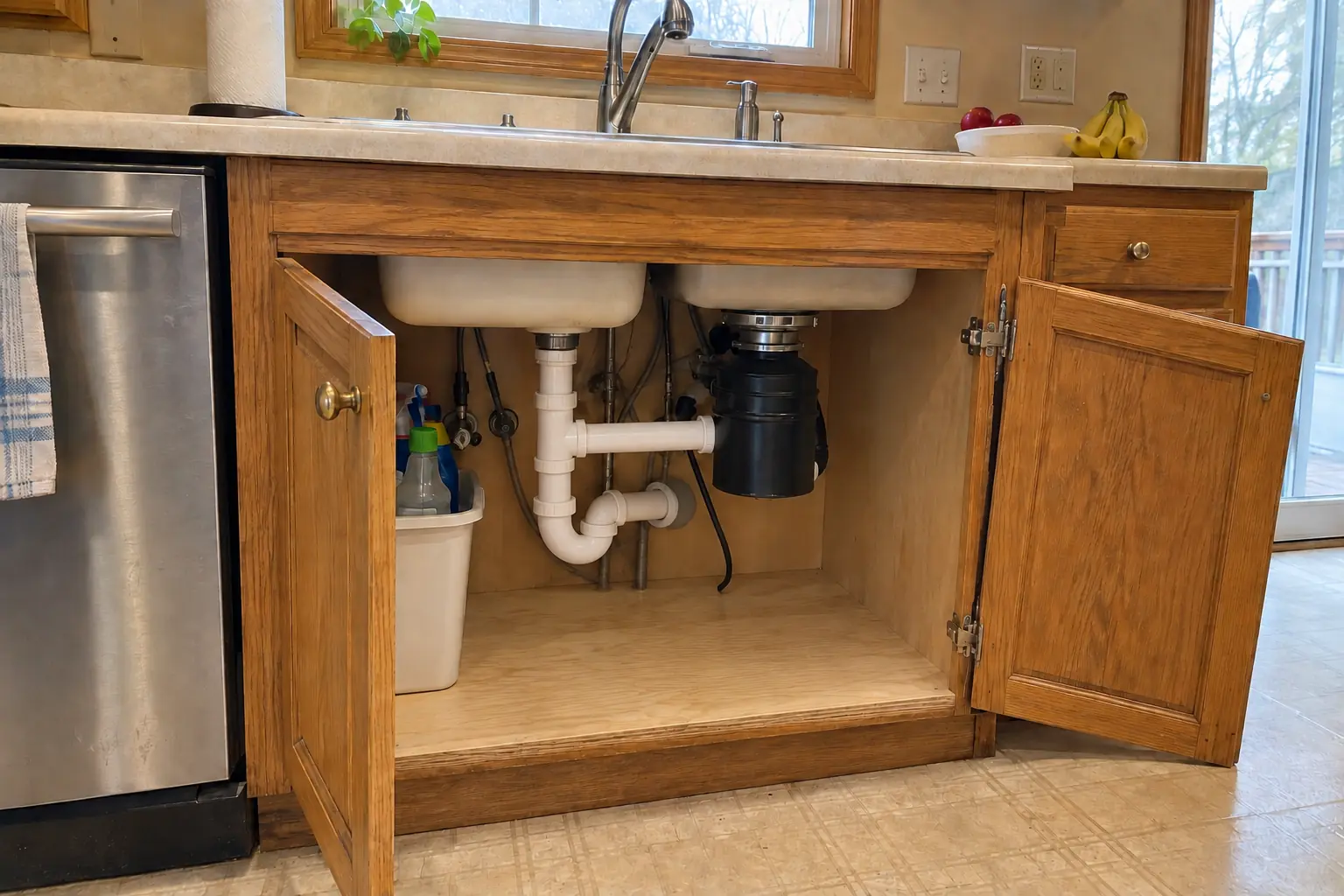
- Empty the cabinet and dry itStart from a dry surface so new water is easy to see.
- Run everythingRun the faucet, fill and drain both bowls, run a dishwasher cycle and the disposal.
- Check every joint with a paper towelA dry paper towel shows a damp joint that your fingers will miss.
- Check for condensationOn a humid summer day, look at the cold supply lines; condensation on cold pipes can drip steadily without any actual leak.
| Source | When it leaks | What to look for |
|---|---|---|
| P-trap and tailpiece nuts | While draining | Drips at slip joints |
| Basket strainer or drain flange | With water in the bowl | Wet underside of the sink |
| Supply lines and shutoff valves | Constantly or slowly | Crust, rust, damp braid |
| Dishwasher drain hose | During the drain cycle | Wet hose clamp at disposal or air gap |
| Garbage disposal body | While running or draining | Cracked or corroded housing |
| Faucet base, sprayer, undermount seal | When used | Water along the deck or sink rim |
| RO filter, ice-maker line, hot water tank | Varies | Damp fittings in the sink base |
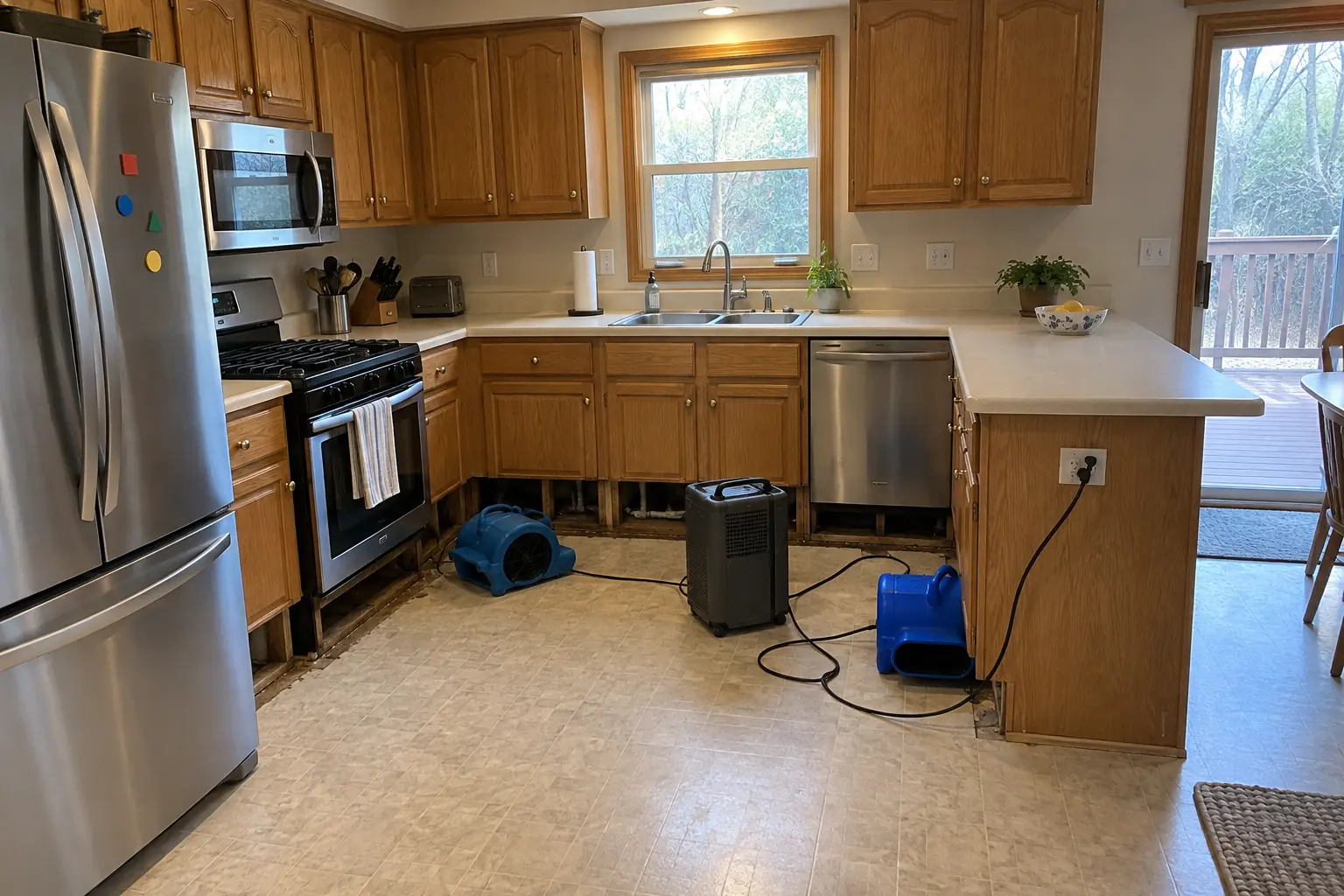 Before
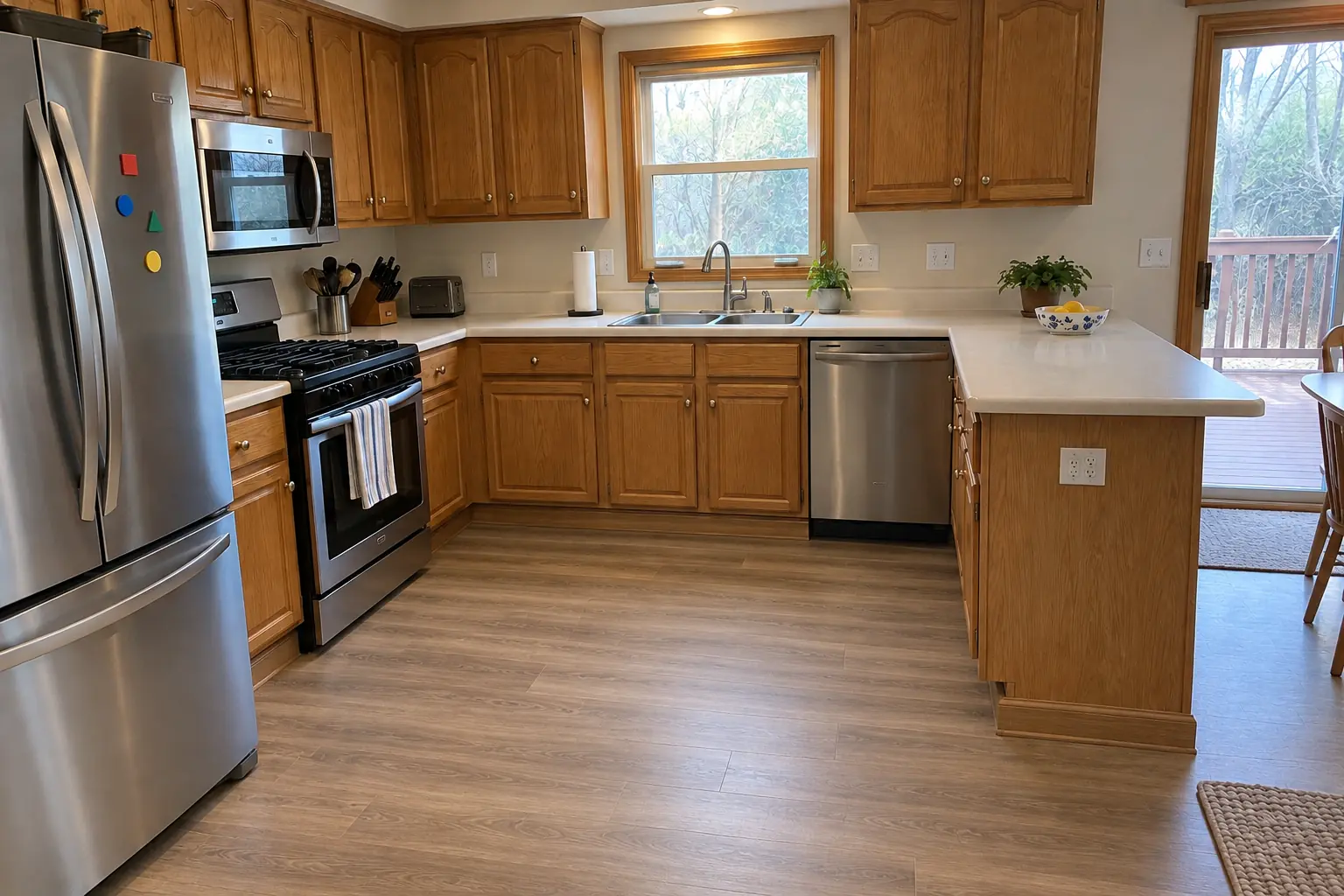 After
Fix the moisture first
EPA guidance on mold is clear on one point: the key to mold control is moisture control. Cleaning mold while the cabinet stays wet only buys a few weeks. Shut off the water to the leaking fixture, empty the cabinet and repair or replace the failed part before anything else.
Then dry the area. EPA recommends drying water-damaged materials within 24 to 48 hours where possible to prevent mold growth. Leave the doors open, run a fan into the cabinet and a dehumidifier in the kitchen. If the subfloor or the wall behind the cabinet got wet, surface drying is usually not enough; a moisture meter tells you whether the material underneath is still wet.
Can you clean mold under the kitchen sink yourself?
For a small area, often yes. EPA guidance says that if the moldy area is less than about 10 square feet, roughly a 3 ft by 3 ft patch, a homeowner can usually handle the job. Typical mold under a sink fits that, as long as the growth is on the surface and the material underneath is sound.
Hard surfaces versus porous materials
Hard, non-porous surfaces such as the sink, pipes or a plastic cabinet liner can be scrubbed with water and detergent and dried completely. Particleboard, MDF and drywall are porous; when they are moldy and swollen, cleaning rarely works, and the affected piece is usually cut out and replaced. EPA also advises against painting or caulking over mold, because the paint peels and the growth continues underneath.
Protecting yourself while you work
Wear gloves, eye protection and, per EPA, an N-95 respirator, and bag the debris before you carry it through the house. If anyone in the household has asthma, allergies or a weakened immune system, ask a doctor before doing the cleanup yourself.
When to call a professional
Call a remediation crew when the problem is bigger than a surface patch or the water was not clean. Those cases usually need containment, HEPA air filtration and removal of building materials, not just wiping.
When the damage reaches the subfloor
The cabinets may have to come out so the floor can be dried or replaced. That is where plumbing, remediation and cabinet work must be done in the right order.
| Situation | Usually a homeowner job | Call a pro |
|---|---|---|
| Area of growth | Under about 10 sq ft | Larger than about 10 sq ft |
| Type of water | Clean supply leak | Sewage or drain backup |
| Location | Cabinet surfaces, pipes | Inside the wall or under flooring |
| After cleaning | Stays clean once dry | Keeps coming back |
| Leak source | Loose trap nut you can tighten | Plumbing failure, for a licensed plumber |
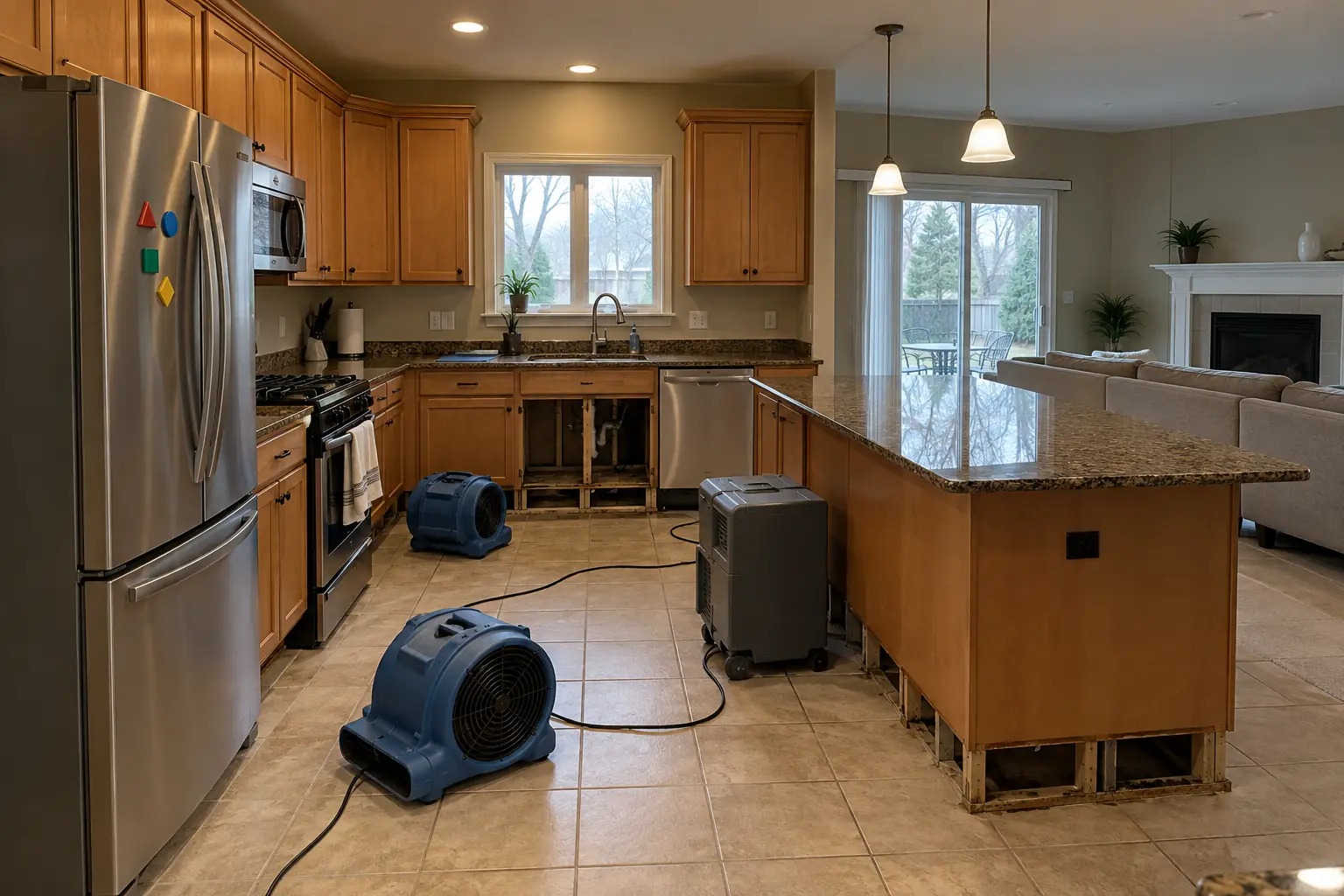 Before
 After
Repairing water-damaged kitchen cabinets
A swollen sink-base floor is one of the most common cabinet repairs we see, and in many cases the cabinet box is fine. Only the bottom panel, and sometimes the back, needs replacing. The new floor is cut from plywood or a moisture-resistant panel and fitted in place, and the frame and doors stay.
When the side panels or face frame have swollen, the whole sink base is usually replaced. Matching an older finish can be the hard part, so it helps to know the cabinet line or to keep a spare door.
Insurance, documentation and the order of work
Homeowner policies differ on sudden leaks versus long-term seepage and on mold coverage. Before anything is torn out, take photos of the cabinet, the leak source and the damage, keep the failed part, and call your insurer or agent to ask what the policy covers. We are not insurance advisors; your agent is the right person for coverage questions.
- Stop the waterShut off the fixture and repair the plumbing.
- DocumentPhotograph the damage and keep the failed part for your insurer.
- Contain and removeSet up containment if mold is present, and remove wet or moldy materials.
- Dry and verifyDry the subfloor and wall cavity and confirm with a moisture meter.
- Clean and rebuildClean remaining surfaces, then replace drywall, subfloor and cabinet parts.
- Reconnect and testReinstall the sink, faucet and appliances and check every connection under load.
Frequently asked questions
Is mold under the kitchen sink dangerous?
Does bleach kill mold under the sink?
Why is there mold under my sink but no leak?
Can water-damaged particleboard be saved?
How do I know if water got under the kitchen cabinets?
Who should I call first, a plumber or a mold company?
Kitchen Water Damage Restoration in your town
- Carol Stream
- Naperville
- Schaumburg
- Wheaton
- Glen Ellyn
- Bloomingdale
- Bartlett
- Roselle
- Hanover Park
- Glendale Heights
- West Chicago
- Winfield
- Warrenville
- Lisle
- Downers Grove
- Lombard
- Villa Park
- Elmhurst
- Oak Brook
- Addison
- Itasca
- Wood Dale
- Elk Grove Village
- Hoffman Estates
- Arlington Heights
- Palatine
- Mount Prospect
- Des Plaines
- Park Ridge
- Skokie
- Evanston
- Northbrook
- Glenview
- Highland Park
- Buffalo Grove
- Lake Zurich
- Oak Park
- Berwyn
- Tinley Park
- Orland Park
- Bolingbrook
- Aurora
- Elgin
- St. Charles
- Geneva
- Batavia
- Crystal Lake
- Plainfield
- Woodridge
Sources
Keep reading
-
 CabinetsKitchen Cabinet Repair: Doors, Drawers, Veneer and Water DamageMost kitchen cabinets can be repaired rather than replaced. Cabinet doors not closing properly usually need a hinge adjustment or a new hinge…3 min read
-
 Plumbing, appliances and electricalKitchen Sink Replacement and Plumbing: What Drives the Cost and Can You Move a Sink?Kitchen sink replacement cost stays modest when the new sink fits the same countertop opening and the drain stays put. It rises when the sink changes…4 min read
-
 Repairs, cleaning and damageHow to Remove Grease From Kitchen Cabinets, Plus a Post-Renovation Kitchen Cleaning ChecklistTo remove grease from kitchen cabinets, wipe them with warm water and a few drops of grease-cutting dish soap on a damp microfiber cloth, rinse with…3 min read