Kitchen Cabinet Materials, Doors and Hardware: What to Know Before You Buy
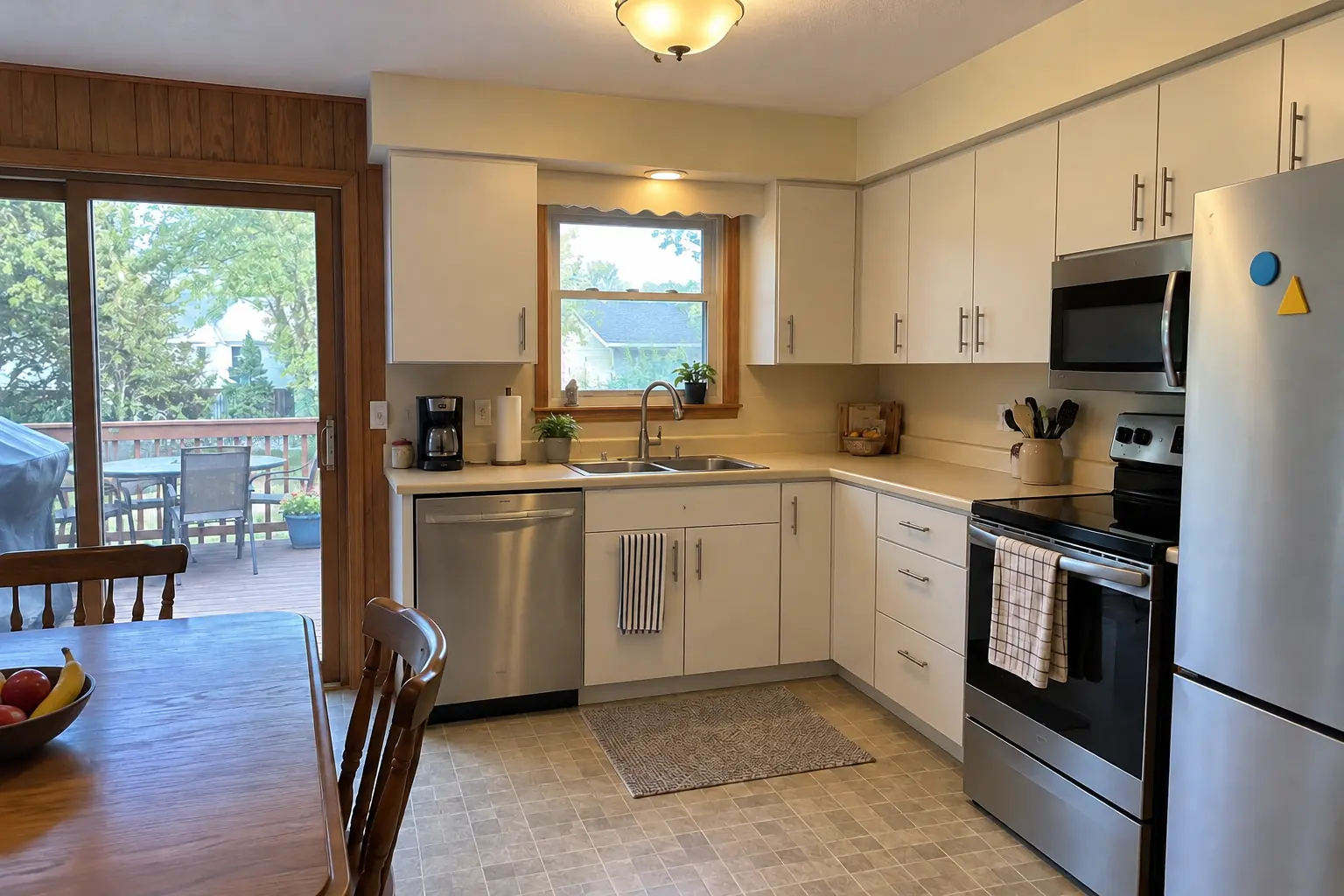
Can you resurface kitchen cabinets instead of replacing them? Usually yes, and the materials you choose decide how long the result lasts. Whether you are refacing, buying new doors only or shopping for kitchen cabinets as a full set, the same three questions come up: what the boxes are made of, what the doors are made of, and what hinges and slides hold it all together.
This guide explains common cabinet materials, door types and hardware in plain terms, then covers the do-it-yourself routes: cabinet refacing kits, peel-and-stick veneer, unfinished doors and where to buy kitchen cabinet doors only. It closes with stock vs custom kitchen cabinets, modifying cabinets for a new oven, and an honest look at the downside of cabinet refacing.
Cabinet box materials compared
The box, also called the carcass, carries the weight of the counters and everything stored inside. Its material matters most where water and weight are concentrated: the sink base, the dishwasher sides and any cabinet holding heavy pots.
| Material | Strengths | Weak points | Typical use |
|---|---|---|---|
| Plywood | Strong, holds screws, handles moisture | Edges need banding | Semi-custom and custom boxes |
| Particleboard | Flat and stable when dry | Swells when wet, weak screw holes | Stock and ready-to-assemble boxes |
| MDF | Very smooth, no grain | Heavy, poor with standing water | Painted doors and panels |
| Solid wood | Repairable, takes stain well | Moves with humidity | Face frames, doors, drawer fronts |
General characteristics; quality varies by manufacturer and grade.
Door materials and styles
Door material affects how the cabinet can be finished and how it ages. Choose it with the finish in mind: stain, paint or a factory surface.
Door materials
- Solid wood frame with a veneer or solid center panel: the traditional choice for stained and painted doors.
- One-piece MDF: popular for painted kitchens because there are no joints to crack at the corners.
- Thermofoil: MDF wrapped in vinyl film. Easy to clean, but can peel near heat and cannot be reliably painted.
- Laminate and melamine: flat and durable on the face, with the edges as the weak point.
Door styles and cabinet construction
Common styles are Shaker (a five-piece door with a flat center panel), slab or flat-panel, raised panel, and inset doors that sit flush inside the frame. Framed cabinets have a face frame around the openings; frameless cabinets, common in European-style and many ready-to-assemble lines, have doors that cover the whole box front.
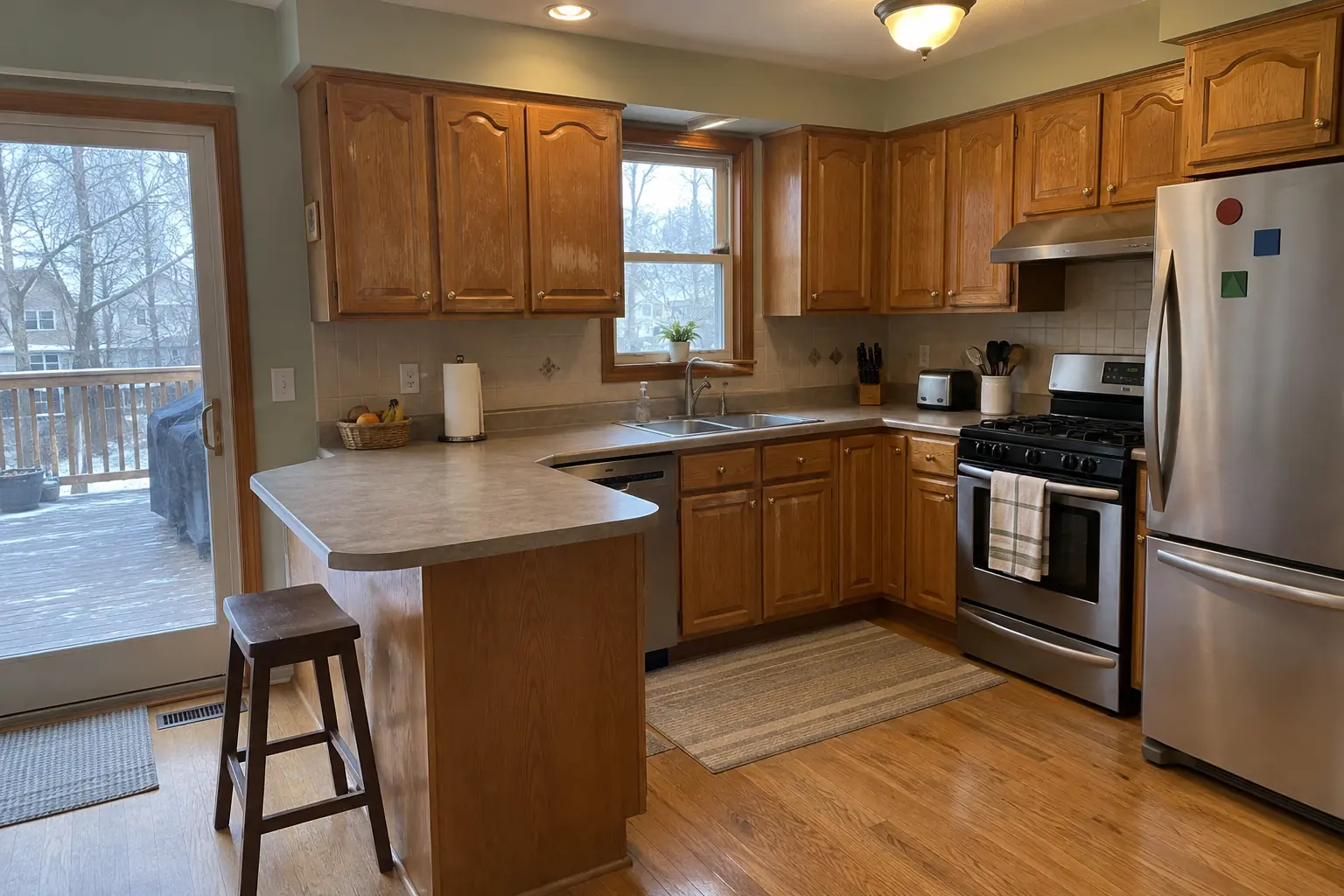 Before
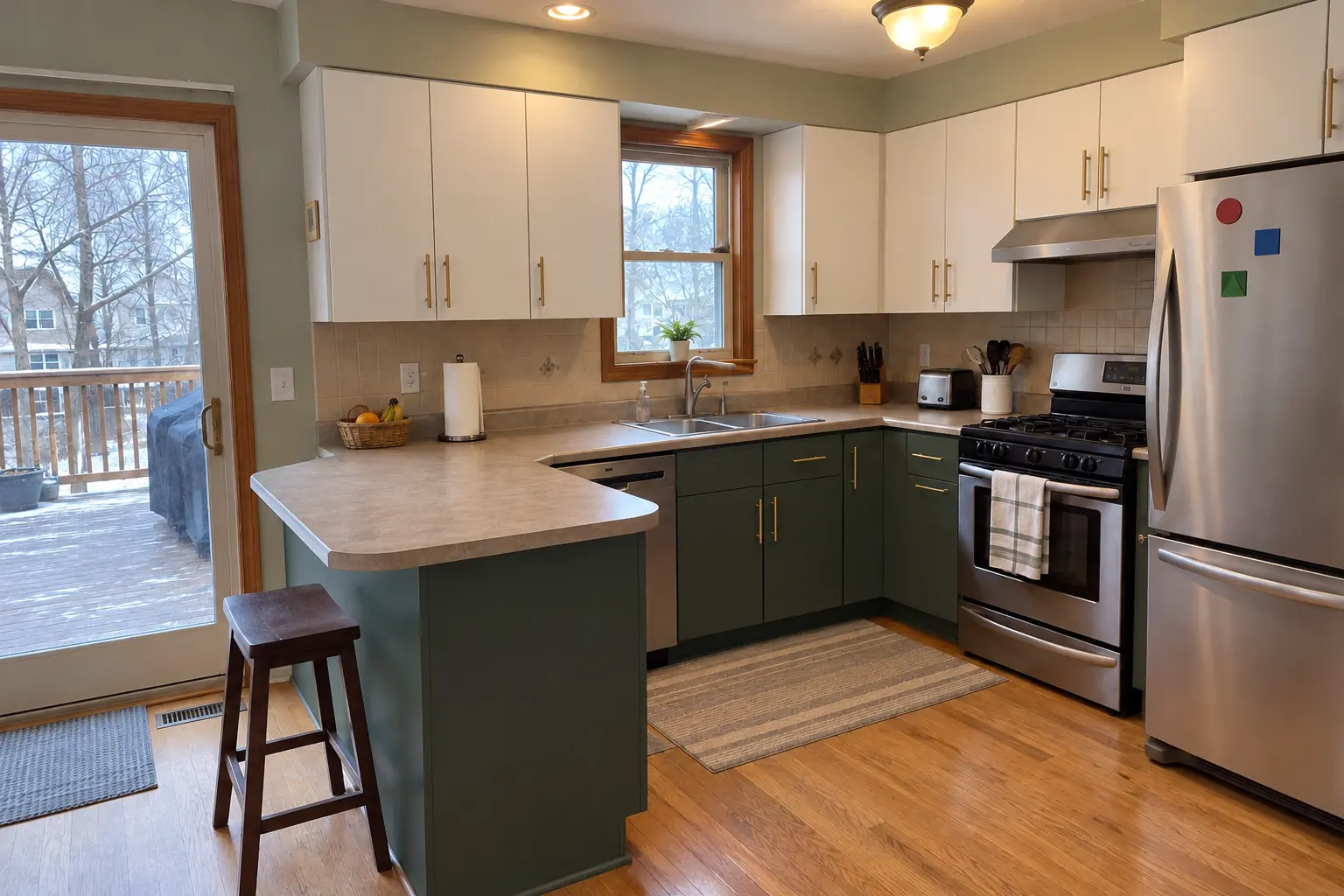 After
Hinges, slides and pulls
Hardware is what you touch every day, and it is the easiest part to upgrade during a resurface.
- Concealed hinges adjust in several directions, and soft-close versions stop doors from slamming. They must match the door overlay and the face-frame or frameless mounting.
- Exposed hinges are traditional or decorative, with less adjustment.
- Drawer slides come in side-mount, center-mount and undermount. Full-extension slides reach the back of the drawer; soft-close is common on newer cabinets.
- Pulls and knobs: measure the existing hole spacing before buying, or plan to fill and redrill.
Cabinet refacing kits and peel-and-stick veneer
A kitchen cabinet refacing kit usually includes veneer or thin panels for the face frames and ends, and sometimes matching doors and drawer fronts. Home centers, including Home Depot, sell veneer sheets and door products, and some stores offer refacing as an installed service. Online suppliers sell made-to-measure doors and veneer packages. Ask whether the doors in any cabinet refacing kit are made to your measurements or sold in set sizes.
Cabinet refacing peel-and-stick products are the simplest option: an adhesive-backed veneer or vinyl applied over clean, sanded frames. They work best on flat, smooth face frames in a dry area. Thin products can bubble or lift near the dishwasher, range and sink, and they will not hide dents or uneven joints.
| Option | Bond | Holds up near heat and water | DIY difficulty |
|---|---|---|---|
| Peel-and-stick vinyl | Pressure adhesive | Poor | Low |
| Peel-and-stick wood veneer | Pressure adhesive | Fair | Moderate |
| Wood veneer with contact cement | Solvent or water-based cement | Good | High |
| Rigid thermofoil or laminate skins | Adhesive plus fasteners | Good away from heat | Moderate to high |
Performance depends on prep, adhesive and how flat the frames are.
Kitchen cabinet refacing DIY: what it takes
DIY refacing is a careful carpentry job, not a weekend craft. It goes well for owners with patience, basic tools and simple, square cabinets, and gets harder with out-of-square frames, many small openings or doors that need new hinge boring.
- Measure every openingRecord width and height of each door and drawer opening, and decide the overlay. Made-to-measure doors cannot be returned easily, so measure twice.
- Strip and repairRemove doors, drawer fronts and hardware. Fill dents and loose joints, then sand the frames smooth and clean them of grease.
- Apply veneer to frames and endsLay veneer with contact cement or pressure-sensitive backing, rolling it firmly from the center out.
- Trim the edgesTrim flush with a sharp knife or a router with a flush-trim bit, and ease sharp edges with a fine sanding block.
- Hang doors and frontsMount new hinges, hang the doors, attach drawer fronts and adjust gaps until they are even.
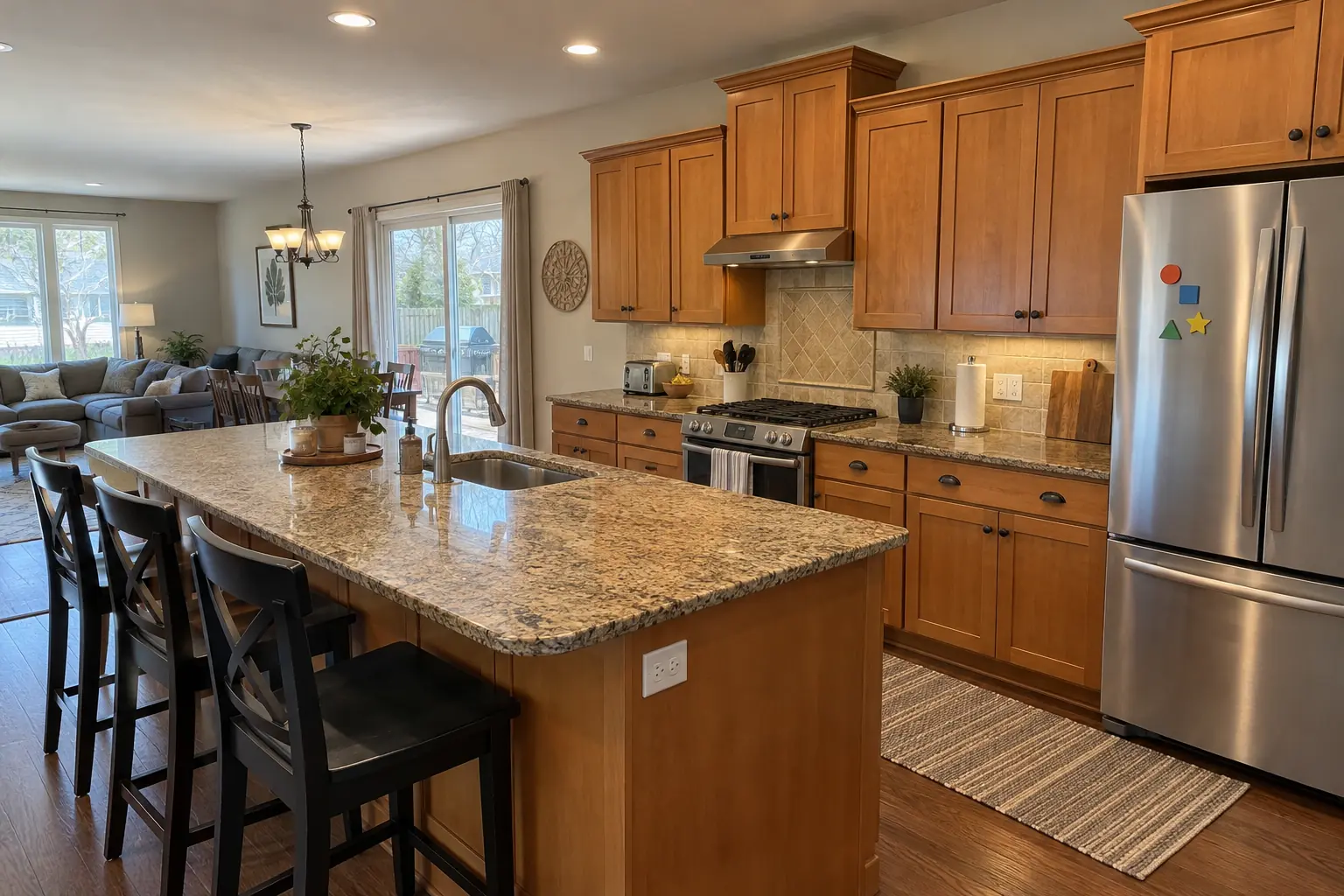 Before
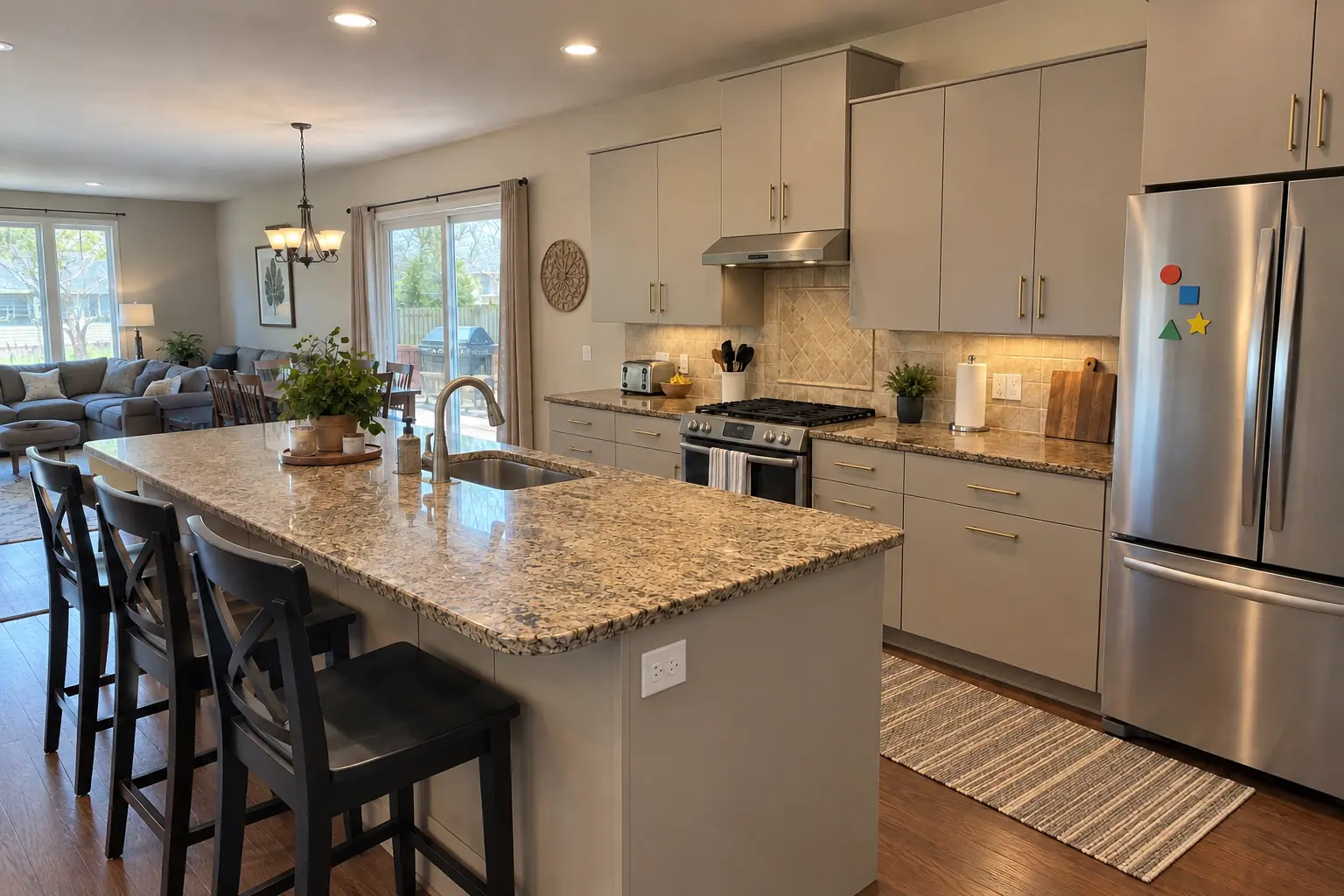 After
Where to buy kitchen cabinet doors only
Replacement doors and drawer fronts are sold by online door makers, local cabinet shops and home centers. You can find cabinet doors for sale finished, primed or unfinished. Unfinished cabinet doors cost less up front, but you take on the sanding, priming and finishing, ideally sprayed. Primed MDF doors are a good middle ground if you plan to paint.
Order with the exact overlay (how much the door covers the frame), hinge type and boring, and grain direction for drawer fronts. If you would rather shop kitchen cabinets as a full set, stock and ready-to-assemble lines come in fixed sizes, which leads to the next decision.
Stock vs custom kitchen cabinets
The three tiers differ in size options, finish choices and how well they handle an irregular room. A kitchen cabinet layout tool, such as the online planners many manufacturers and home centers offer, helps you see sizes and build an order, but check measurements on site before ordering, especially around windows, radiators and appliances.
| Tier | Sizes | Lead time | Good fit for |
|---|---|---|---|
| Stock | Standard widths in 3-inch steps | Shortest | Square rooms, standard layouts |
| Semi-custom | More sizes and modifications | Moderate | A few odd dimensions |
| Custom | Built to the room | Longest | Sloped ceilings, alcoves, crooked walls |
Lead times vary by manufacturer and season.
Modifying cabinets for a new oven or appliance
Can you modify cabinets for a new oven? Often, yes. A wall oven cabinet can sometimes be recut for a different cutout size, and a base cabinet can be removed or narrowed for a wider range or a dishwasher. Check the appliance installation guide for cutout dimensions and clearances first, and confirm whether the new unit needs a different electrical or gas connection.
If the new size does not fit within the existing frame, one cabinet may need to be rebuilt or replaced to match. Finding matching door material and finish is usually the harder part, so plan for that before the appliance is ordered.
Frequently asked questions
What is the downside of cabinet refacing?
Can you resurface kitchen cabinets yourself?
Is plywood better than particleboard for cabinets?
Are unfinished cabinet doors a good idea?
Does Home Depot sell a cabinet refacing kit?
Can I put new doors on old cabinet boxes?
Which is better, stock or custom cabinets?
Custom Kitchen Cabinets in your town
- Carol Stream
- Naperville
- Schaumburg
- Wheaton
- Glen Ellyn
- Bloomingdale
- Bartlett
- Roselle
- Hanover Park
- Glendale Heights
- West Chicago
- Winfield
- Warrenville
- Lisle
- Downers Grove
- Lombard
- Villa Park
- Elmhurst
- Oak Brook
- Addison
- Itasca
- Wood Dale
- Elk Grove Village
- Hoffman Estates
- Arlington Heights
- Palatine
- Mount Prospect
- Des Plaines
- Park Ridge
- Skokie
- Evanston
- Northbrook
- Glenview
- Highland Park
- Buffalo Grove
- Lake Zurich
- Oak Park
- Berwyn
- Tinley Park
- Orland Park
- Bolingbrook
- Aurora
- Elgin
- St. Charles
- Geneva
- Batavia
- Crystal Lake
- Plainfield
- Woodridge
Keep reading
-
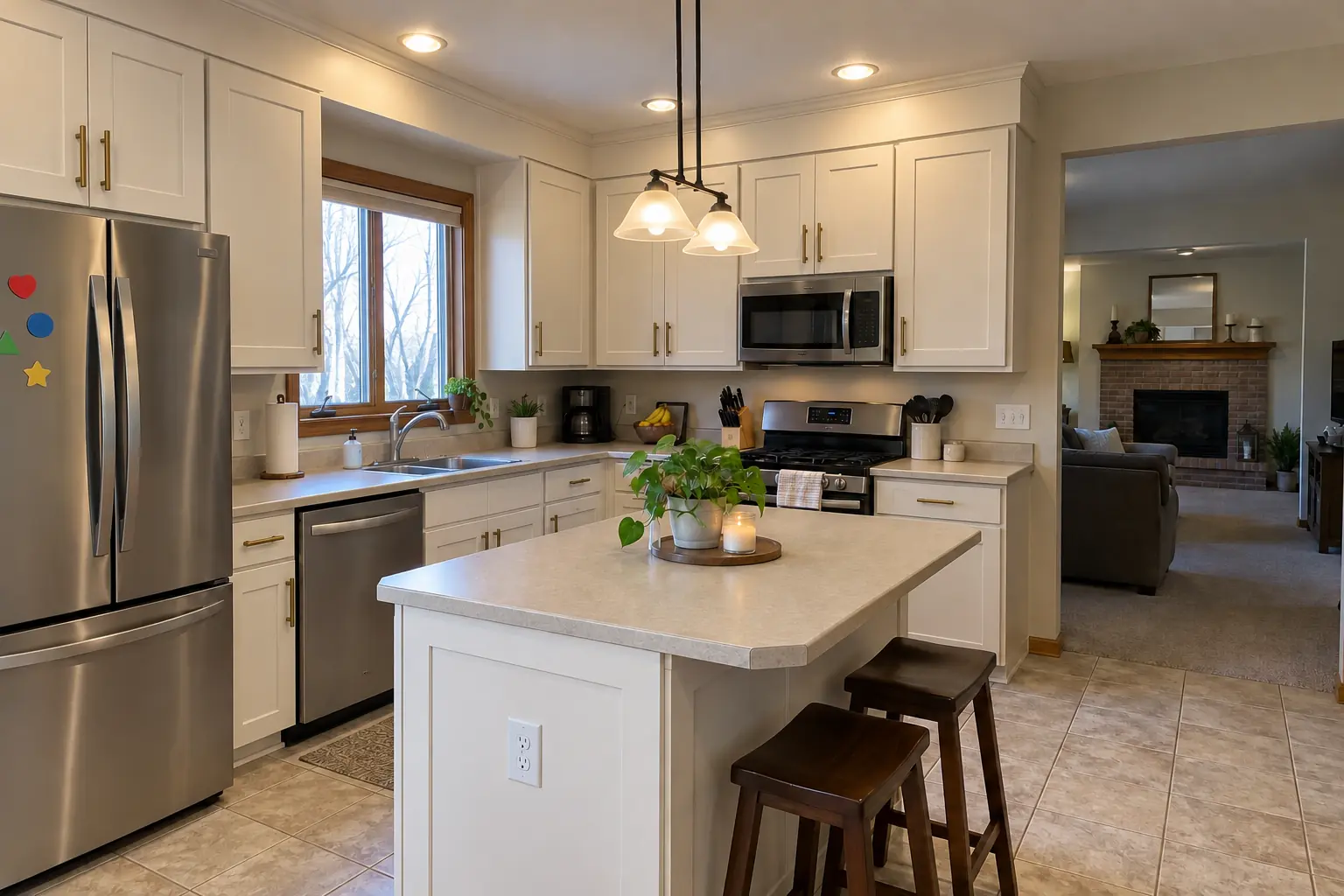 CabinetsCabinet Refacing vs Painting vs Replacement: How to ChooseIn cabinet refacing vs painting vs replacement, start with the boxes. Sound boxes and only a color complaint: paint. Sound boxes but a dated or…4 min read
-
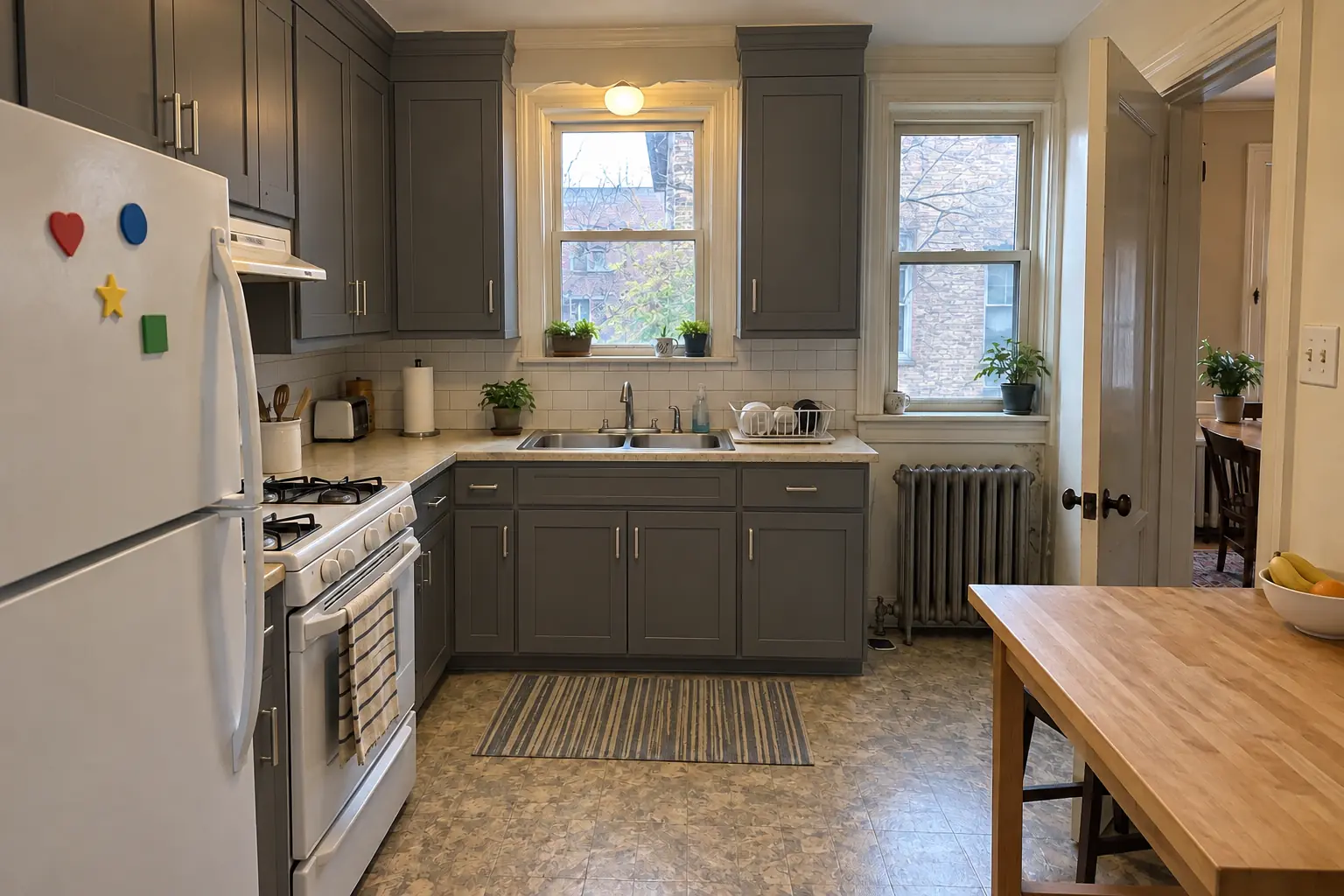 Costs and budgetingCabinet Refacing Cost: What Refacing Kitchen Cabinets Costs and WhyPublished national cost guides put kitchen cabinet refacing at roughly $4,000 to $13,500 for most kitchens, or about $150 to $450 per linear foot of…3 min read
-
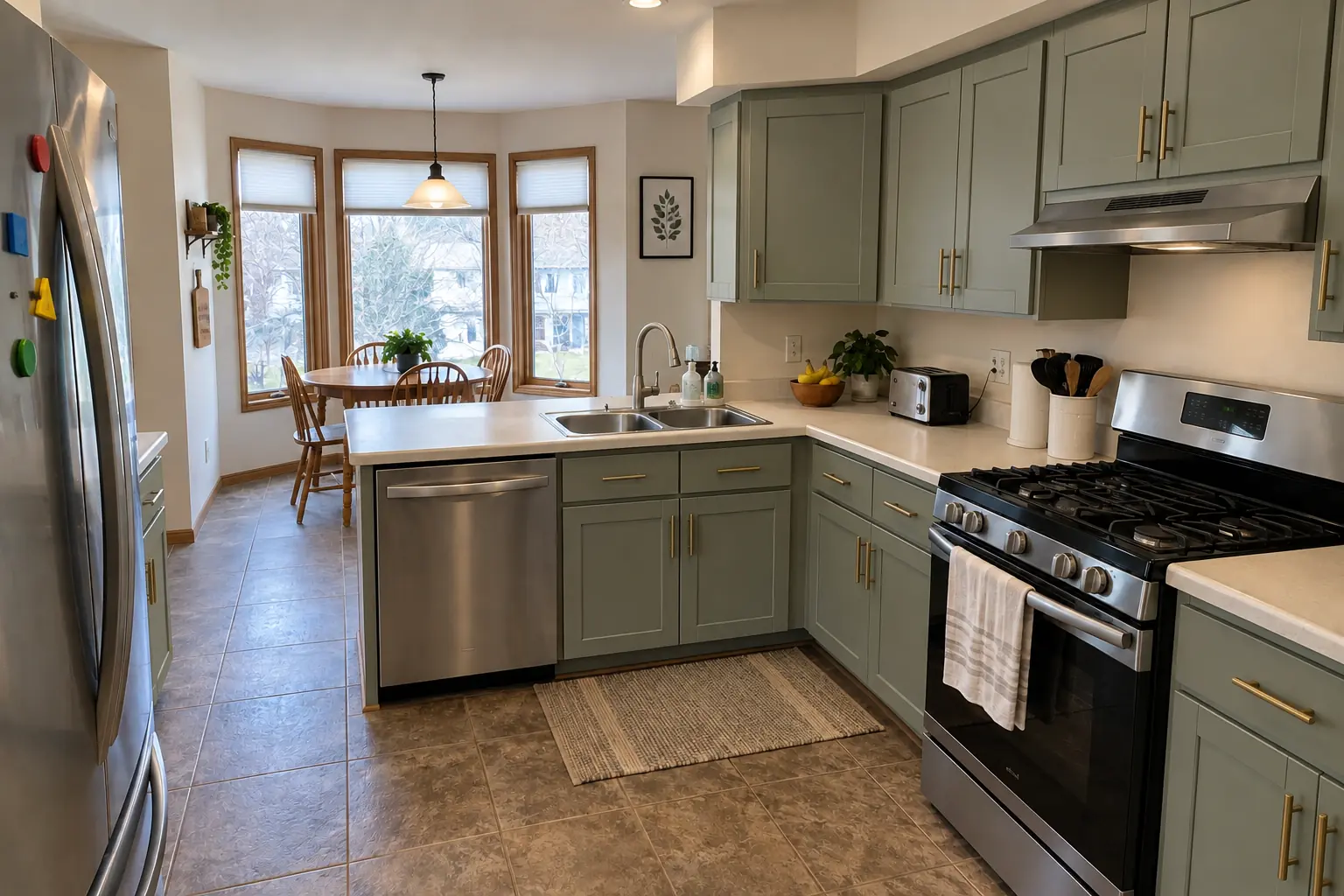 CabinetsHome Depot Cabinet Refacing and Quartz Countertop Installation: What to Know Before You ChooseHow much does Home Depot charge to reface cabinets or install quartz countertops? There is no fixed number; the price comes from a written quote…3 min read