Cabinet Refacing vs Painting vs Replacement: How to Choose
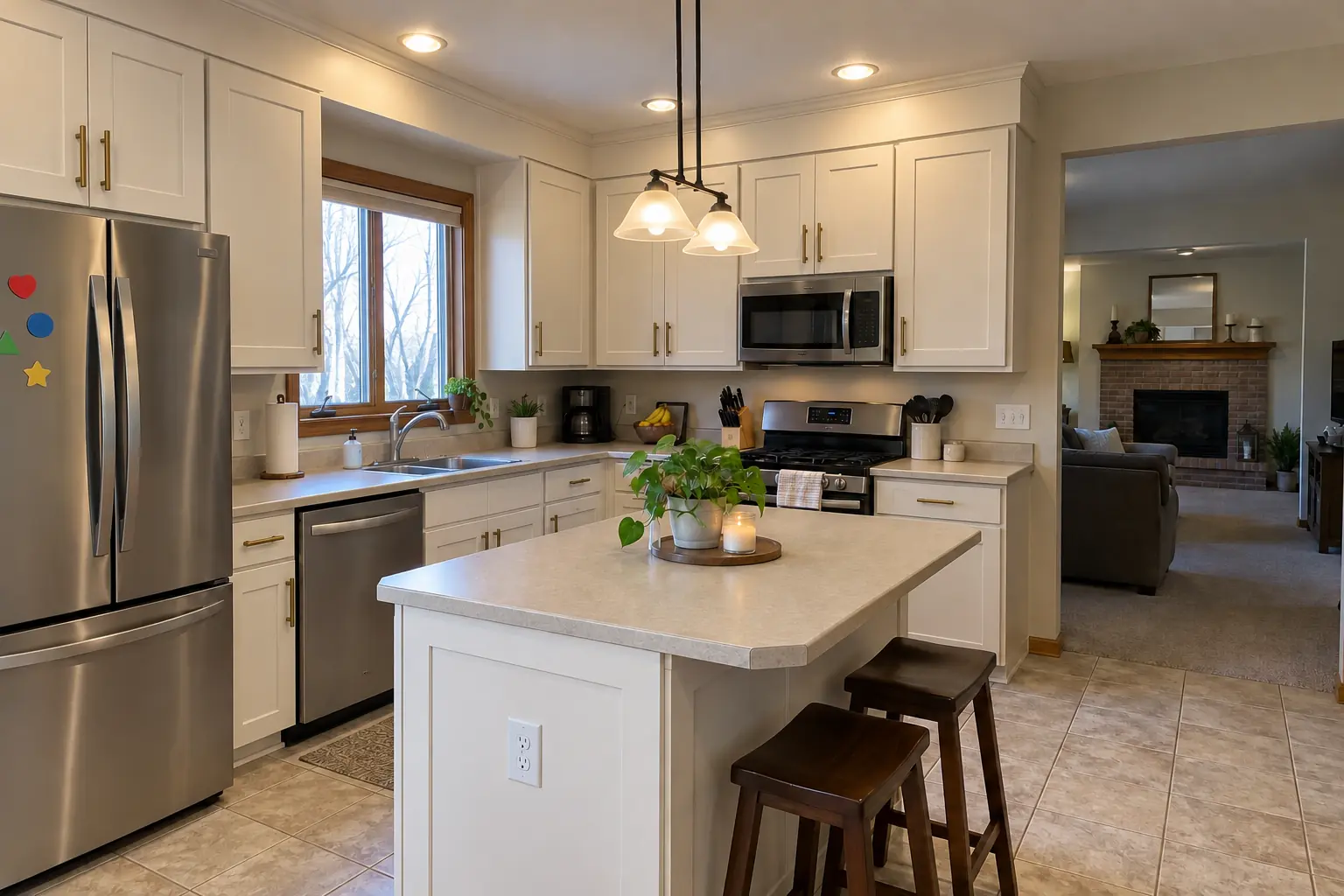
Cabinet refacing vs painting vs replacement comes down to one question: what is actually wrong with your cabinets? If the boxes are sound and you only dislike the color, painting is usually enough. If the boxes are sound but the door style is dated or the doors are failing, refacing replaces everything you see and keeps the structure. If the boxes are damaged, the layout does not work or you are changing countertops anyway, replacing the cabinets is usually the honest answer.
This guide compares the three options side by side: what each one changes, how long the kitchen is out of use, how the cost usually compares, and the problems with refacing kitchen cabinets that sales pitches tend to skip. In our experience, most Chicago-area kitchens fall clearly into one of the three once someone opens the doors and looks at the boxes, the sink base and the frames.
Refacing vs painting vs replacing: what each option changes
The three options touch different parts of the cabinet, and knowing which parts stay is the fastest way to see which option solves your problem.
Painting
The existing doors, drawer fronts and frames stay; only the color and finish change. Hardware and hinges can be updated at the same time.
Refacing
The cabinet boxes, countertops and plumbing stay. Doors and drawer fronts are replaced, and the face frames and exposed ends are covered with veneer, laminate or a matching skin. New hinges and pulls usually come with it.
Replacement
The old cabinets come out and new boxes, doors and hardware go in. The layout can change, and the countertop usually has to be replaced because stone rarely survives removal.
| Factor | Painting | Refacing | Replacement |
|---|---|---|---|
| Doors and fronts | Kept, recolored | New | New |
| Face frames | Painted | Covered with veneer | New |
| Boxes and interiors | Kept | Kept | New |
| Layout | Same | Same, minor changes | Can change |
| Countertops | Stay | Stay | Usually replaced |
| Kitchen out of use | About a week | A few days on site | Longest |
| Relative cost | Lowest | Middle | Highest |
Cabinet refacing vs painting
Kitchen cabinet refacing vs painting is the most common comparison, because both keep the layout and the counters. The difference is the door. Paint changes color but not shape: a cathedral-arch or heavy raised-panel door painted white is still a cathedral-arch door. Refacing gives you a new door style, such as Shaker or slab, on the same boxes.
Painting also depends on the existing surface. Solid wood and wood veneer doors paint well with proper prep. Thermofoil (vinyl-wrapped) doors and many laminate doors do not hold paint well, and peeling thermofoil cannot be painted over at all. For those kitchens, refacing or new doors is the realistic fix.
Cabinet refacing vs painting cost and timing
Painting is usually the lower-cost and faster option. Doors are typically sprayed off-site while the frames are painted in place, and most kitchens are back in normal use within about a week. Refacing usually costs more because you are buying new doors and fronts, but the on-site work is only a few days once the doors are made.
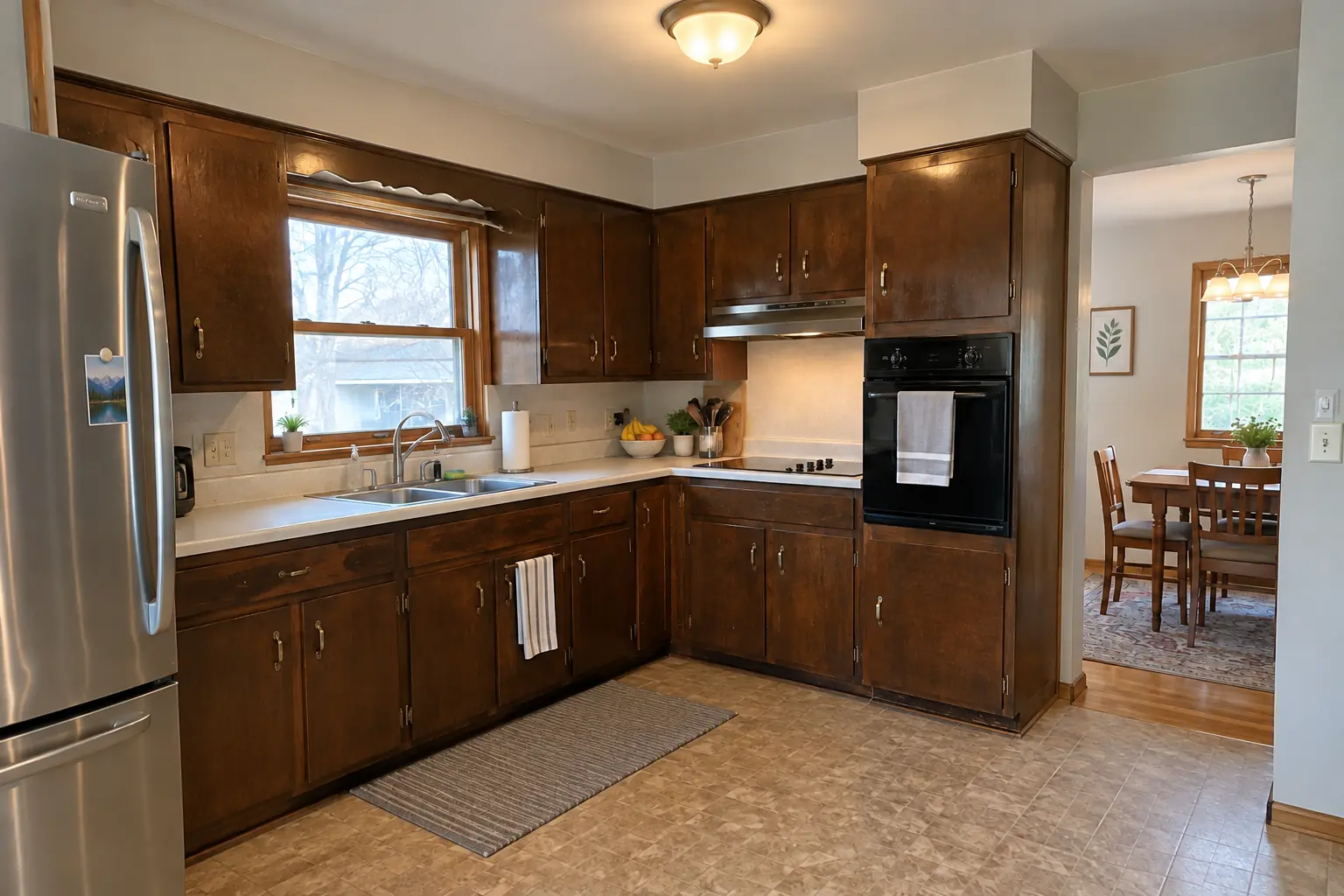 Before
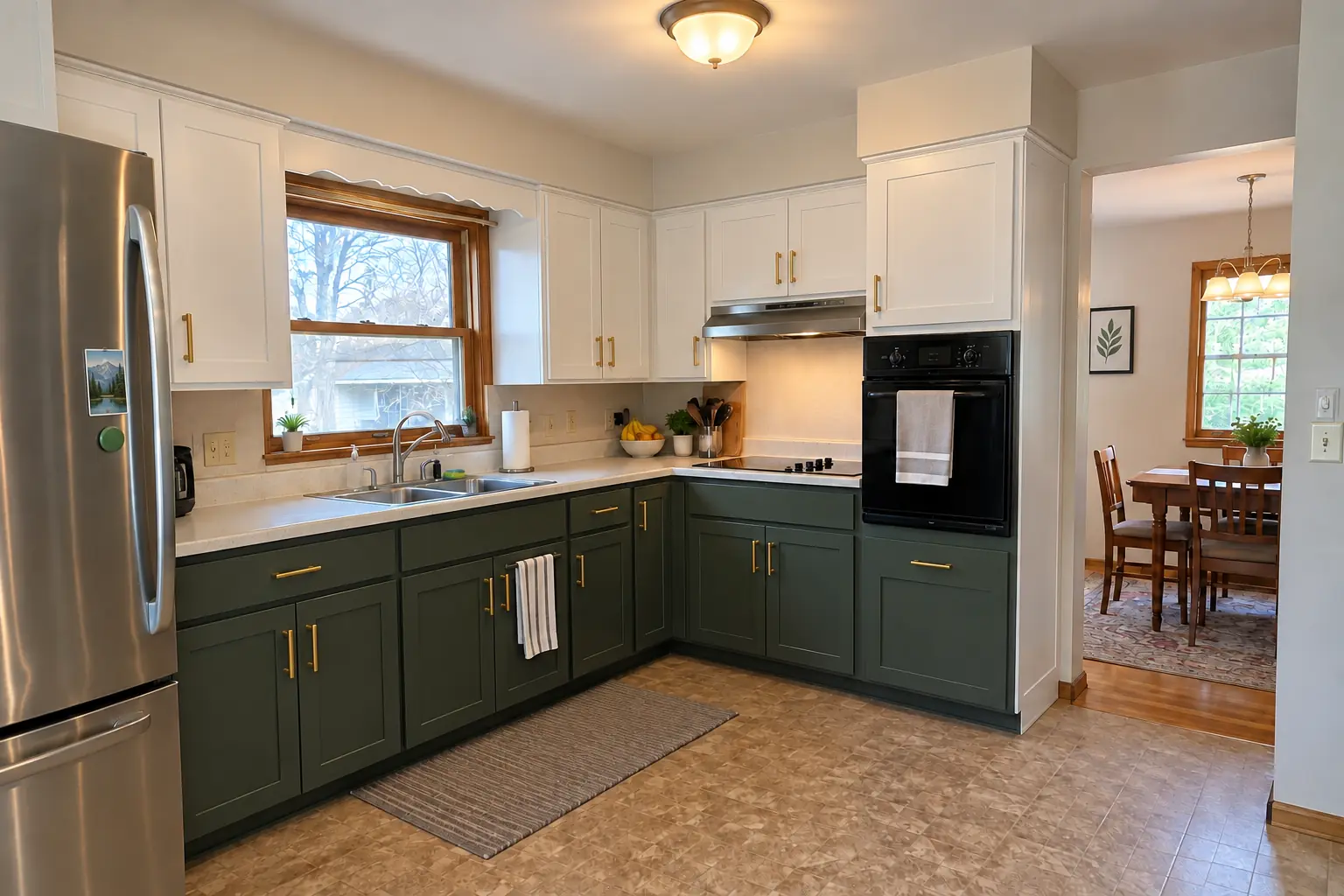 After
Cabinet refacing vs replacement
Refacing vs replacing cabinets is a question about the boxes. Refacing only makes sense when the boxes are dry, square and solid. If the sink base is swollen from years of leaks, the shelves sag or the frames are loose, new doors will hang on a weak structure.
Replacement is also the right call when the layout is the problem. Refacing cannot move the sink, add an island, make a corner usable or fit a larger refrigerator into an opening that is too small, although a single cabinet can often be modified. If you want new countertops anyway, the main advantage of refacing, keeping the existing stone in place, disappears.
Kitchen cabinet refacing vs replacement also differs in disruption. Replacement means disconnecting the sink and appliances, removing counters and living without a working kitchen for a while. Refacing keeps the sink, range and fridge working through most of the job.
Painting cabinets vs replacing them
Painting cabinets vs replacing them is the widest gap of the three: painting keeps everything and changes only the finish, while replacement changes everything. Painting is the right choice when the cabinets are well built and the layout works, but the wood tone dates the kitchen: golden oak, honey maple or dark cherry next to newer floors and counters.
Painting is the wrong choice when the cabinets are failing. Paint will not fix drawers that fall apart, doors that will not stay closed because the frames have shifted, or a layout that does not work. It also will not hide water damage. In those kitchens, paying for a careful paint job only delays a replacement.
Problems with refacing kitchen cabinets
Refacing has real limits, and it is better to know them before signing anything. These are the problems we see most often, both in quotes and in kitchens refaced years ago.
- Interiors stay the same. Worn or stained boxes and shelves remain unless you pay to line or replace them.
- Bad boxes stay bad. Refacing over water-damaged or loose boxes looks fine at first and fails later.
- Veneer and skins can lift. Thin peel-and-stick veneer and poorly bonded laminate can bubble or peel, especially near the dishwasher, range or a steamy sink area.
- Layout does not change. Awkward corners, missing drawers and short uppers stay unless cabinets are added or modified.
- Matching added cabinets takes planning. A new pantry or island has to be built in the same door style and material to look like one set.
- Quality varies widely. Door material, veneer thickness and hinge quality decide how long a reface lasts; a low quote often means thinner materials.
Pros and cons of refacing kitchen cabinets
On the plus side, you get a new door style and finish on existing boxes, the counters and plumbing stay, and the kitchen stays usable through most of the work. On the minus side, interiors and layout do not change, it only works on sound boxes, and cheap veneer can peel.
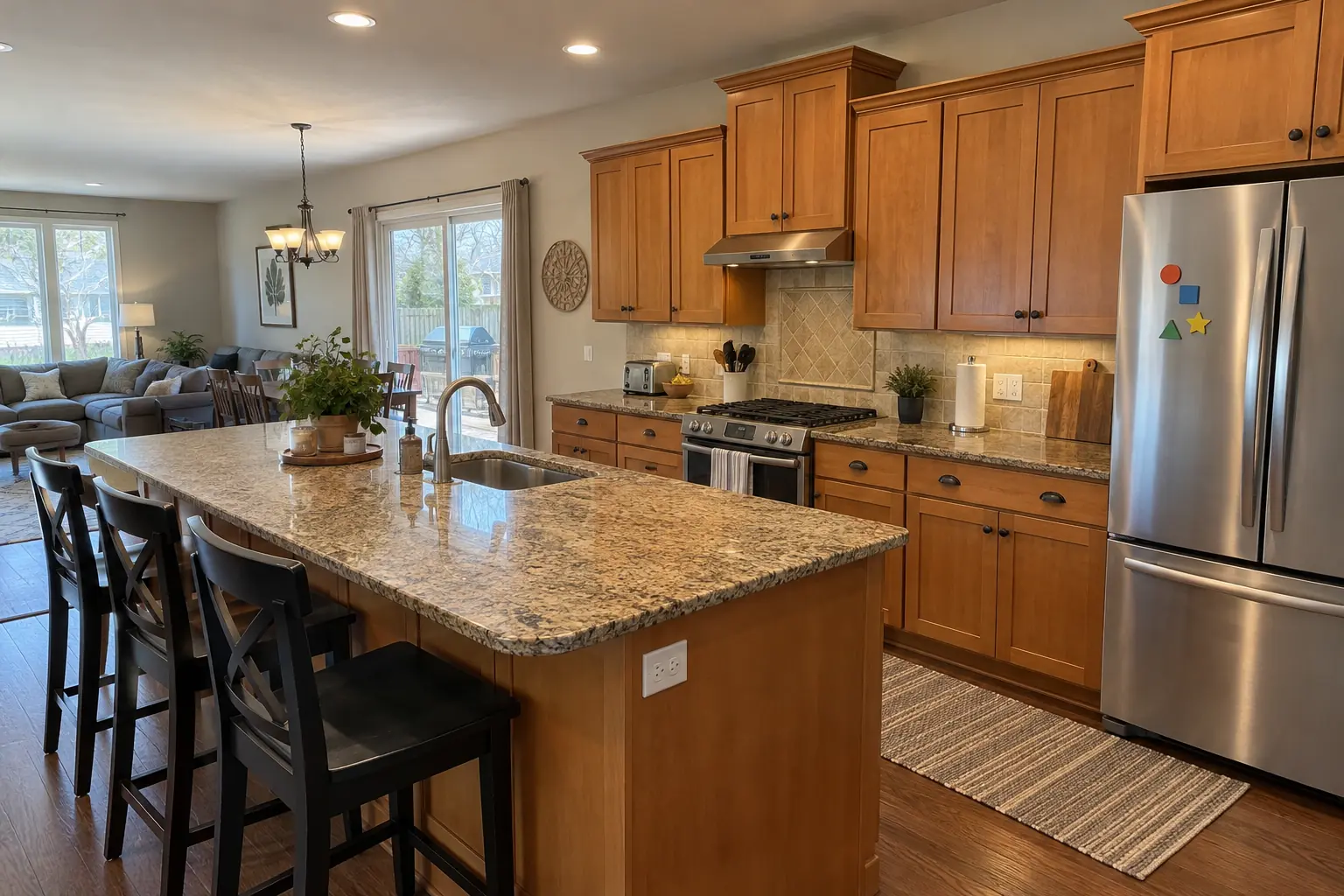 Before
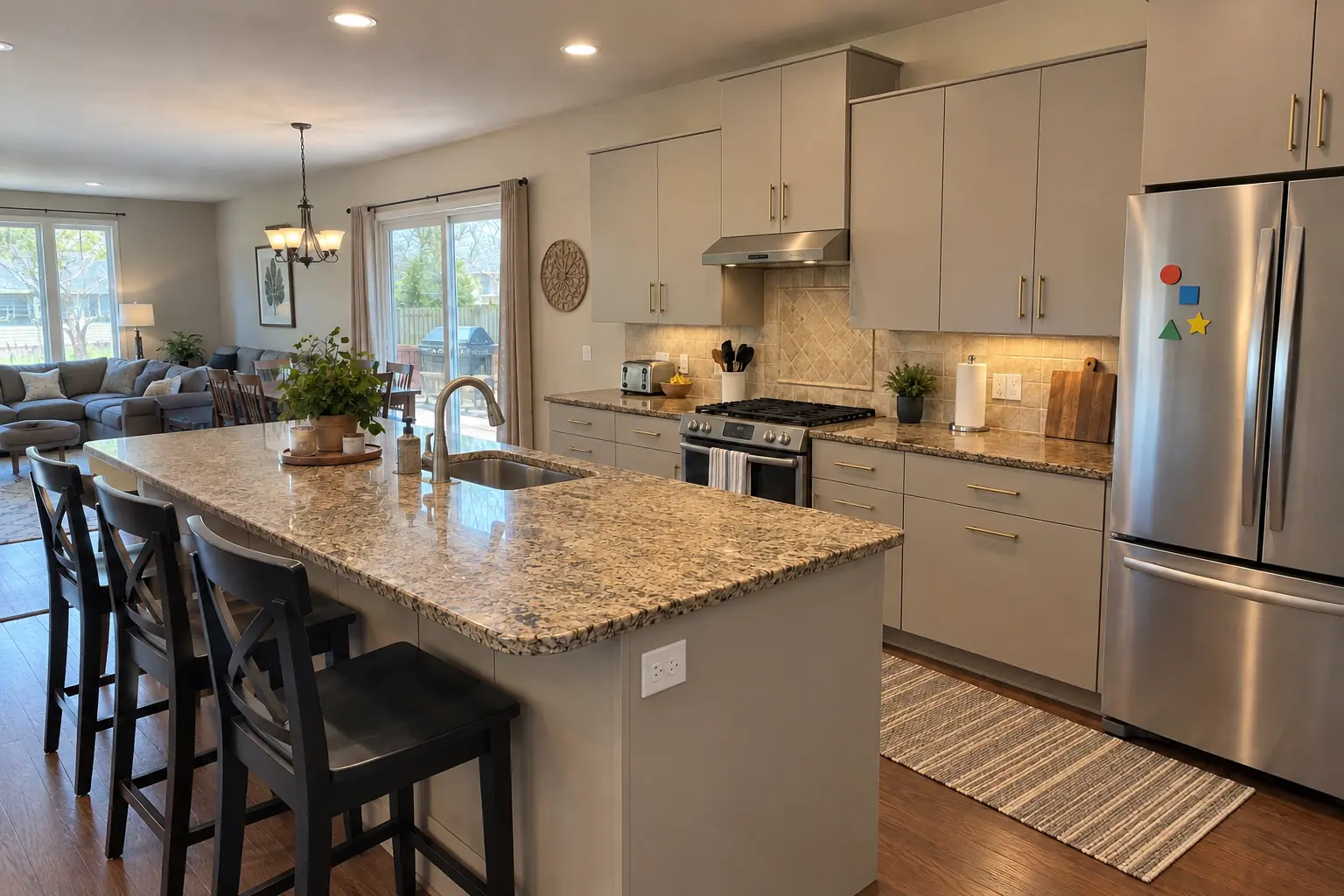 After
Cost of refacing kitchen cabinets vs replacing
People search for cabinet refacing vs new cabinets cost because the gap can be large, but the honest answer depends on the kitchen. As a rule, painting costs least, refacing sits in the middle, and new cabinets cost the most once you add countertop replacement, plumbing reconnection and wall repairs.
- The gap narrows in a small kitchen with simple cabinets, which can be replaced for not much more than a high-end reface.
- Stock cabinets can cost less than custom-sized refacing doors in solid wood.
- Good granite or quartz counters usually favor refacing, because keeping the stone avoids a large second purchase.
- Our refacing cost and cabinet cost guides cover current market ranges; the real price for your kitchen is set by a written estimate after measuring.
Is it worth it to reface or repaint kitchen cabinets?
Both are worth it when they fix the real problem and not worth it when they hide one.
Is it worth it to reface kitchen cabinets?
Refacing is usually worth it when the boxes are solid, you like the layout and you want to keep your countertops. It is also a good fit when the door style, not just the color, is what bothers you, or when thermofoil doors are peeling. It is usually not worth it when the boxes are damaged, the layout will change within a few years or the counters are going anyway.
Is it worth it to repaint kitchen cabinets?
Repainting is worth it when the cabinets are real wood or wood veneer, the doors are a style you can live with, and the only complaint is color or a worn finish. The finish lasts only if the prep is right: thorough degreasing, sanding, a bonding primer and a cabinet-grade enamel.
Cabinet painting vs refinishing
Refinishing keeps the wood grain visible with a new stain and clear coat, while painting covers it. Refinishing suits solid wood you like; painting suits wood tones you want gone.
Frequently asked questions
What are the pros and cons of refacing kitchen cabinets?
Is refacing better than painting cabinets?
Can you reface cabinets that have water damage?
Do I have to replace my countertops if I replace my cabinets?
How long does each option take?
Which option adds the most value when selling?
Kitchen Cabinet Painting in your town
- Carol Stream
- Naperville
- Schaumburg
- Wheaton
- Glen Ellyn
- Bloomingdale
- Bartlett
- Roselle
- Hanover Park
- Glendale Heights
- West Chicago
- Winfield
- Warrenville
- Lisle
- Downers Grove
- Lombard
- Villa Park
- Elmhurst
- Oak Brook
- Addison
- Itasca
- Wood Dale
- Elk Grove Village
- Hoffman Estates
- Arlington Heights
- Palatine
- Mount Prospect
- Des Plaines
- Park Ridge
- Skokie
- Evanston
- Northbrook
- Glenview
- Highland Park
- Buffalo Grove
- Lake Zurich
- Oak Park
- Berwyn
- Tinley Park
- Orland Park
- Bolingbrook
- Aurora
- Elgin
- St. Charles
- Geneva
- Batavia
- Crystal Lake
- Plainfield
- Woodridge
Keep reading
-
 Costs and budgetingCabinet Refacing Cost: What Refacing Kitchen Cabinets Costs and WhyPublished national cost guides put kitchen cabinet refacing at roughly $4,000 to $13,500 for most kitchens, or about $150 to $450 per linear foot of…3 min read
-
 Costs and budgetingKitchen Cabinet Replacement Cost: New Cabinets, Installation and LaborKitchen cabinet replacement cost usually starts around $150 and runs to $500 per linear foot installed, or about $4,500 to $15,000 for an average…3 min read
-
 Costs and budgetingCabinet Painting Cost: What It Costs to Have Kitchen Cabinets PaintedCabinet painting cost for an average kitchen usually runs about $2,000 to $6,500, or about $30 to $70 per linear foot and $70 to $125 per door…3 min read