Quartz vs Granite Countertops: Durability, Care, Heat, Looks and Why Quartz Is in Decline
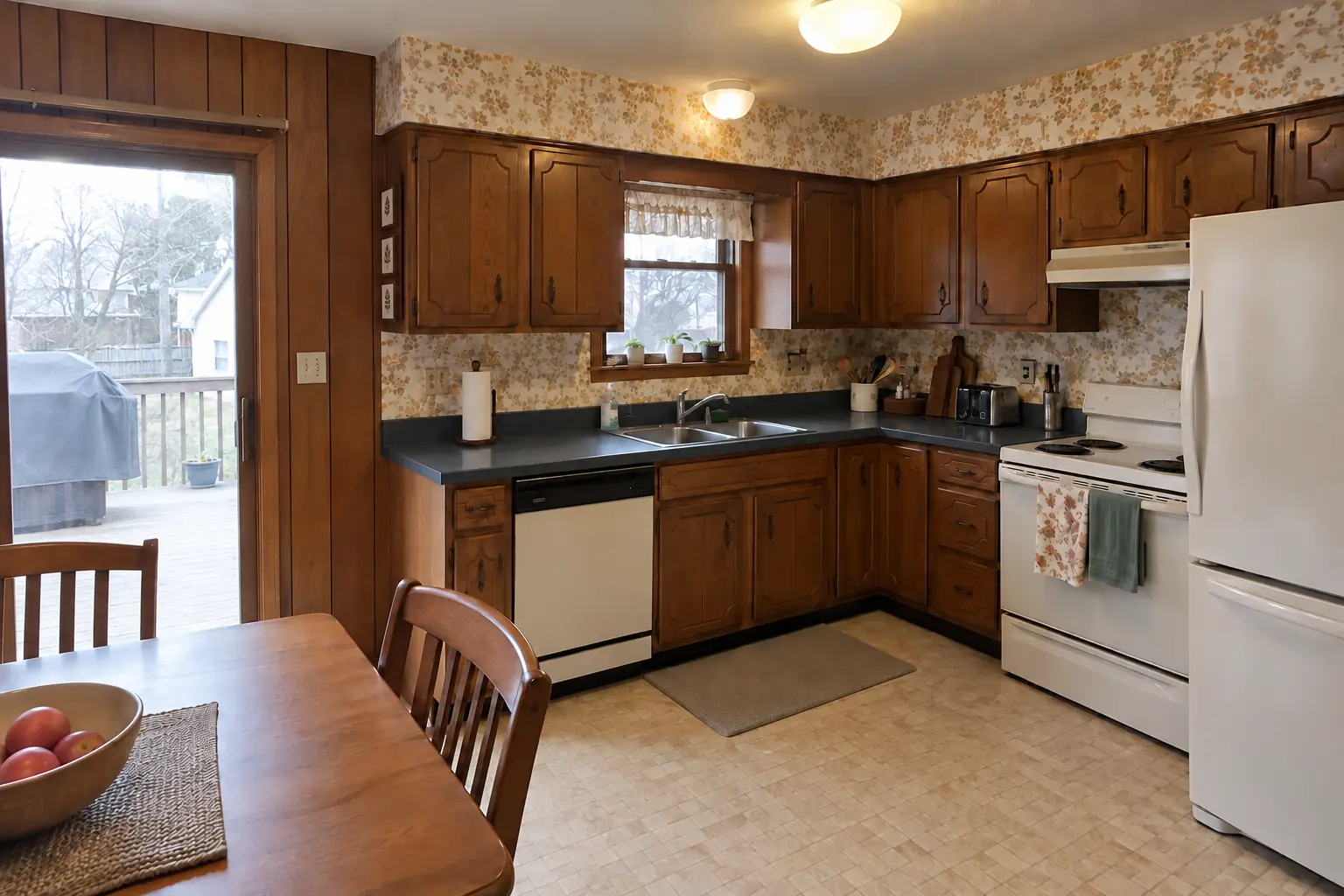
Quartz and granite are the two most common stone countertops in Chicago-area kitchens, and both are good choices. They are templated, fabricated and installed the same way, and they sit in overlapping price ranges, so the decision usually comes down to how they behave in daily life: how each handles a hot pan, a glass of red wine left overnight, a sunny window and the occasional dropped pot.
This guide compares quartz vs granite countertops point by point: what each material is, durability and chips, heat, stains and sealing, looks and slab selection, and which kitchens suit which stone. It also covers why quartz is in decline in some markets, a question many homeowners now ask after news about fabricator safety.
Quartz vs granite countertops at a glance
The differences come down to one fact: granite is quarried rock, and quartz is crushed mineral held together with resin. Almost every practical difference, from sealing to heat to sun exposure, follows from that.
| Factor | Granite | Quartz |
|---|---|---|
| What it is | Natural quarried stone | Engineered: quartz plus resin |
| Sealing | Periodic, often every 1-2 years | Not needed |
| Heat | Tolerates brief hot pans | Resin can scorch; use trivets |
| Stains | Light stones absorb oil sooner | Non-porous; resists most stains |
| Look | Unique, varies across the slab | Consistent color and pattern |
| Sunlight | Not affected | Can fade or yellow over years |
| Chip repair | Blends well in busy patterns | Shows more on solid colors |
What quartz and granite actually are
Knowing how each slab is made explains how it behaves on your cabinets.
Granite
Granite is quarried rock, cut into slabs, polished and sealed. Each slab is different, and what suppliers sell as granite often includes other natural stones with similar properties. Because it is natural, it has small pits, fissures and veins that are part of the stone rather than defects.
Quartz (engineered stone)
Quartz countertops are made from crushed quartz mineral bound with polymer resin and pigments, pressed into slabs and cured. The resin makes quartz non-porous and uniform. It is also the source of its weaker points, because heat and UV light can affect the binder.
Quartz is not quartzite
Quartzite is a natural metamorphic stone that is very hard and usually needs sealing. It behaves much more like granite than like engineered quartz, so do not let similar names steer the choice.
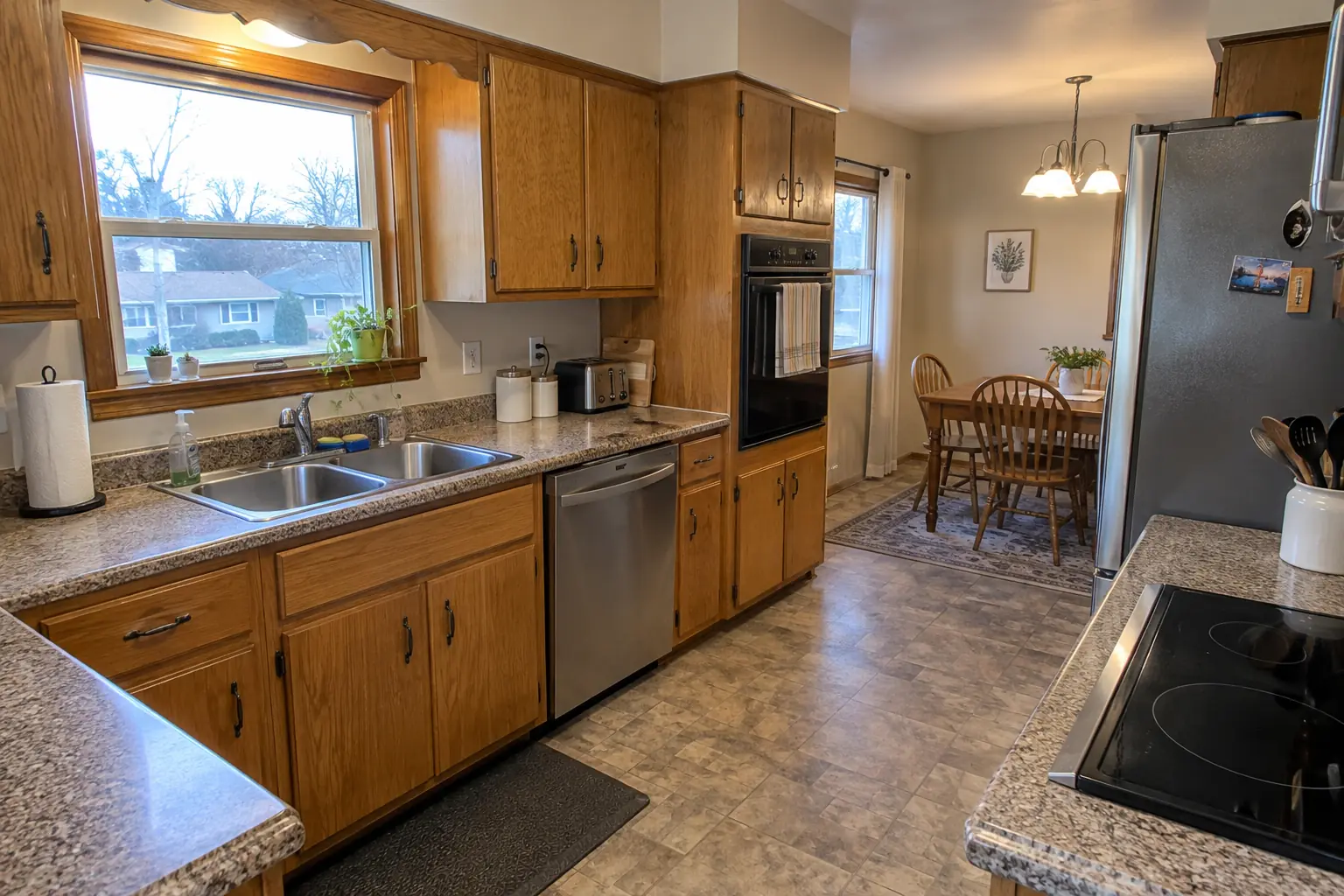 Before
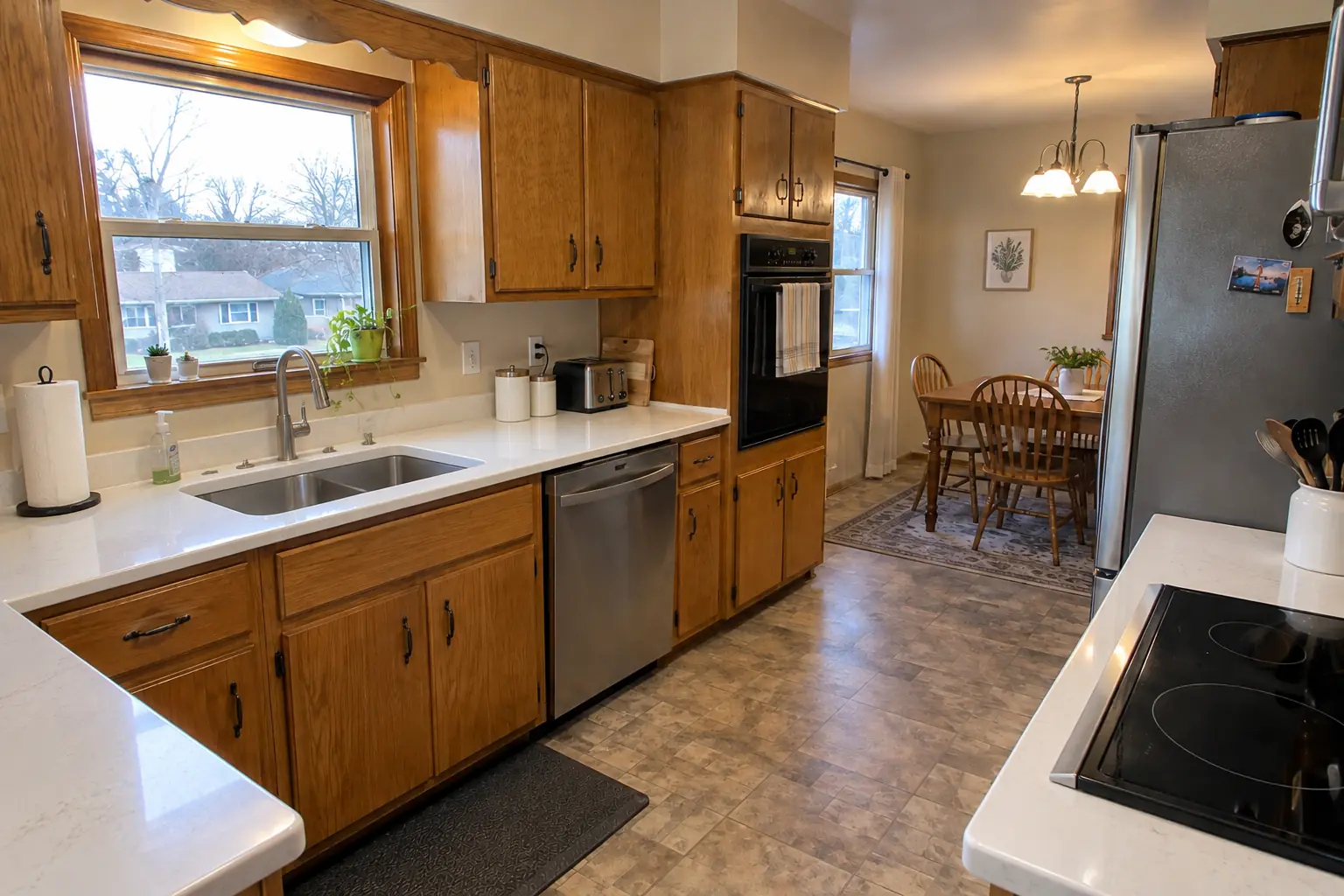 After
Durability and chips
Both materials are hard and scratch-resistant in normal kitchen use. Knives dull on either one before they leave much of a mark, though a cutting board is still the right habit. Quartz is slightly more flexible because of the resin, so it is somewhat less prone to cracking in transport and installation. Granite can have natural fissures that look like cracks but are part of the stone.
Both can chip at the edges when hit with a heavy pot, especially on sharp square edges. An eased or rounded profile holds up better on either material. Chips can usually be repaired with color-matched resin, though a fill in a busy granite pattern blends in better than one in a solid-color quartz.
Heat: hot pans, coffee cups and the stove
Granite wins on heat. Setting a hot pan on it briefly is unlikely to harm it, although sudden extreme temperature changes can stress any stone, and trivets are still a good habit. Quartz is different: the resin can scorch, discolor or crack under a very hot pan, a slow cooker or an electric griddle left in one spot. Quartz manufacturers generally recommend trivets or hot pads for anything from the stove or oven.
Can I put a hot cup of coffee on quartz?
Yes. Normal mug temperatures are far below what damages the surface. The concern is cookware straight from the burner or oven and appliances that give off heat for a long time, such as air fryers, toaster ovens and slow cookers.
Stains, sealing and everyday care
Quartz is the low-maintenance option: it is non-porous and never needs sealing. Wine, coffee and oil wipe off with mild soap and water. Harsh chemicals such as oven cleaner or strong solvents can damage the resin, so check the manufacturer's care guide.
Granite is porous to varying degrees. Most granite counters are sealed at installation and resealed periodically, often every year or two, depending on the stone and use. If water drops darken the stone within a few minutes, it is time to reseal. Lighter granites tend to absorb more and show oil stains sooner, and acidic or ammonia-based cleaners wear the sealer down over time.
- Quartz: soap and water, no sealing, avoid harsh solvents and high heat.
- Granite: pH-neutral stone cleaner, reseal when water starts to darken the stone.
- Both: cutting boards for knives, trivets as a habit, wipe spills promptly.
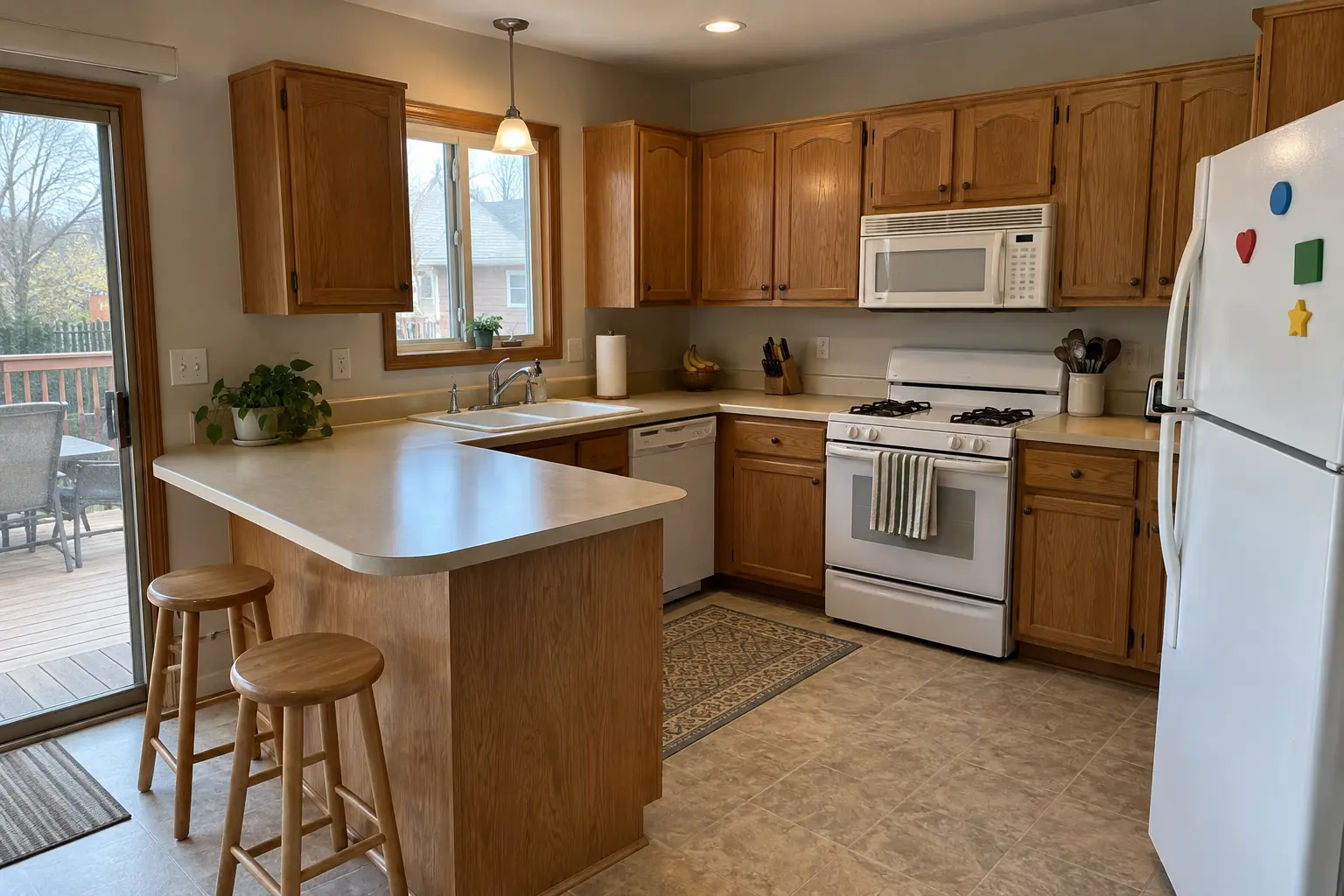 Before
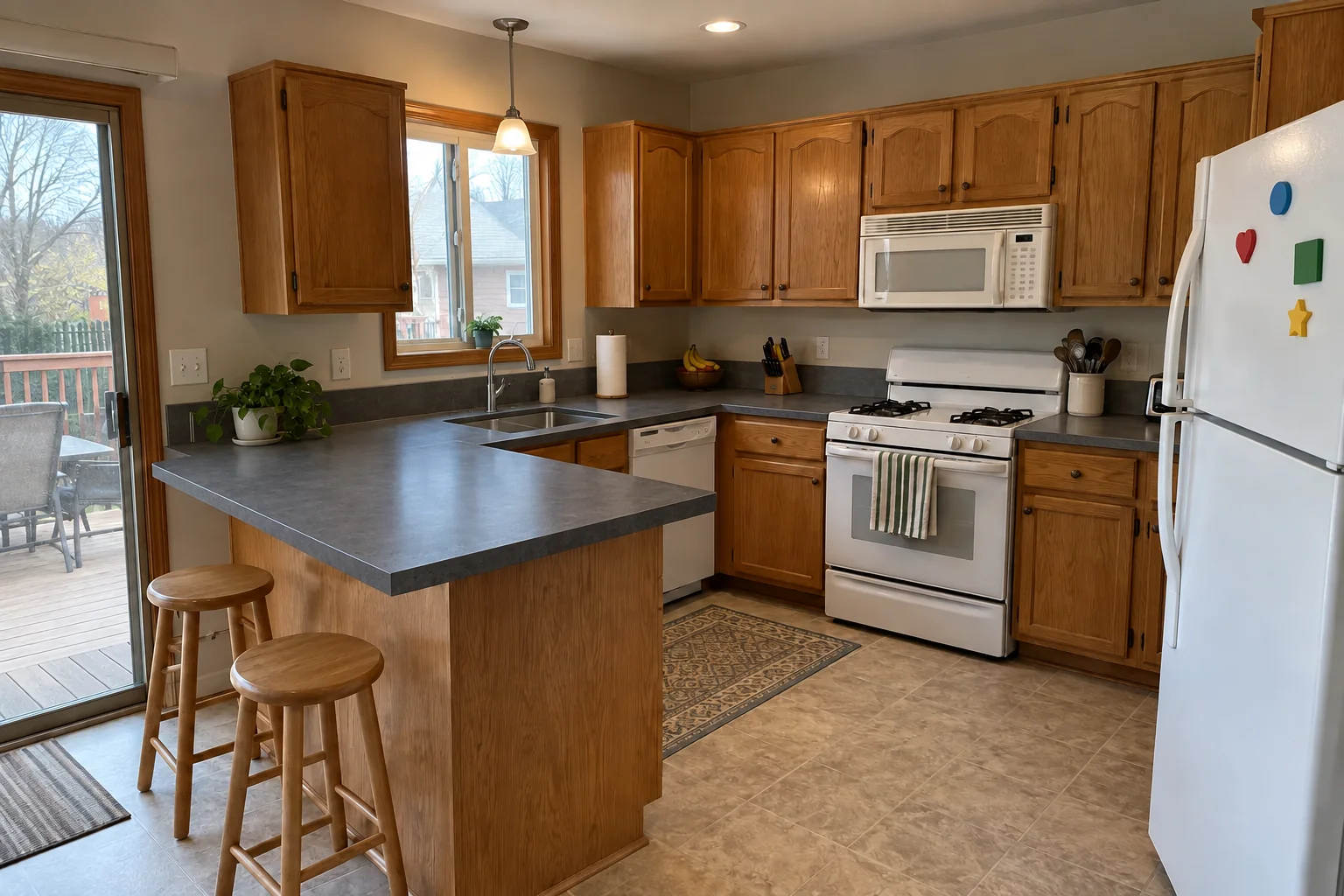 After
Looks and slab selection
Granite offers natural variation no factory can repeat: movement, crystals and color shifts across a slab. Quartz offers consistency: clean solid whites and grays and marble-look patterns that match from slab to slab. Each strength comes with a planning task.
Choosing granite slabs
See the actual slabs before fabrication, because a small sample can look very different from the full piece. Seams are easier to hide in busy patterns, and you can ask the fabricator to lay out where each piece will come from.
Choosing quartz colors
Consistency makes quartz easy to order and match, but long veins on marble-look quartz need careful seam planning. Quartz exposed to direct sun for years can fade or yellow, which matters next to a large south-facing window and rules it out for most outdoor kitchens.
Why is quartz in decline?
When people ask why quartz is on the decline, the main reason is worker safety. Cutting and grinding engineered stone releases fine respirable crystalline silica dust, and engineered stone typically contains much more silica than granite or marble. Health agencies, including the CDC, have reported cases of silicosis, a serious and irreversible lung disease, among workers who fabricate engineered stone, especially in shops without proper water suppression and ventilation.
In response, Australia banned the use of engineered stone starting in July 2024, and regulators in the United States, including OSHA and California's workplace safety agency, have increased focus on silica exposure in countertop shops. Some designers and homeowners have shifted toward natural stone, porcelain slabs or newer low-silica engineered surfaces as a result.
What it means for an installed quartz countertop
A quartz countertop that is already installed does not release silica dust in normal use; the risk is in cutting and grinding. If you choose quartz, it is reasonable to ask the fabricator how they control dust in the shop, such as wet cutting and ventilation. Any health question belongs with a medical professional, not a contractor.
Which is better for your kitchen?
Match the stone to how you cook and how much upkeep you accept. Both feel far more substantial than laminate, and both are installed the same way: templated after cabinets are set, fabricated, and set on level base cabinets.
- Choose granite if you cook with a lot of heat, like natural variation and do not mind resealing.
- Choose quartz if you want a low-maintenance surface with a consistent look and use trivets.
- Lean toward granite or another natural stone where the counter sits in strong direct sun.
- Lean toward quartz for solid whites and grays or a uniform marble look across a long run.
Let the slab make the final call
In our experience, the deciding factor for many Chicago homeowners is the slab itself. Look at full slabs of both in person, check them under kitchen-like lighting, and think about how the seams will fall on your layout before you decide.
Frequently asked questions
Is quartz or granite better for a kitchen?
Can I put a hot cup of coffee on quartz?
Why is quartz on the decline?
Does granite need to be sealed?
Does quartz stain?
Is quartz the same as quartzite?
Countertop Installation in your town
- Carol Stream
- Naperville
- Schaumburg
- Wheaton
- Glen Ellyn
- Bloomingdale
- Bartlett
- Roselle
- Hanover Park
- Glendale Heights
- West Chicago
- Winfield
- Warrenville
- Lisle
- Downers Grove
- Lombard
- Villa Park
- Elmhurst
- Oak Brook
- Addison
- Itasca
- Wood Dale
- Elk Grove Village
- Hoffman Estates
- Arlington Heights
- Palatine
- Mount Prospect
- Des Plaines
- Park Ridge
- Skokie
- Evanston
- Northbrook
- Glenview
- Highland Park
- Buffalo Grove
- Lake Zurich
- Oak Park
- Berwyn
- Tinley Park
- Orland Park
- Bolingbrook
- Aurora
- Elgin
- St. Charles
- Geneva
- Batavia
- Crystal Lake
- Plainfield
- Woodridge
Sources
Keep reading
-
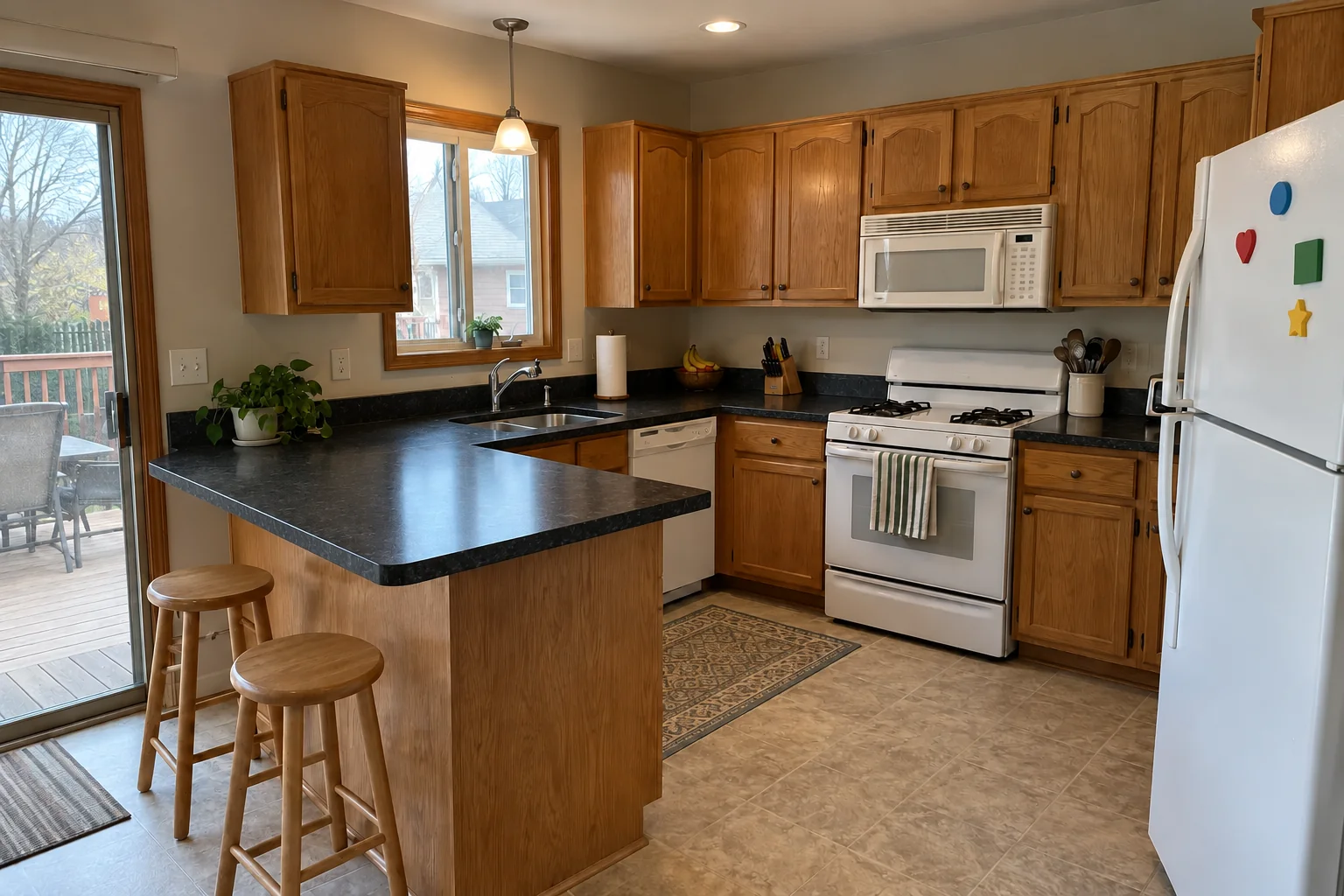 Costs and budgetingCountertop Replacement Cost: What Kitchen Countertops Cost to Replace and InstallKitchen countertop replacement cost usually runs about $50 to $150 per square foot installed, or roughly $1,500 to $6,000 for an average kitchen with…3 min read
-
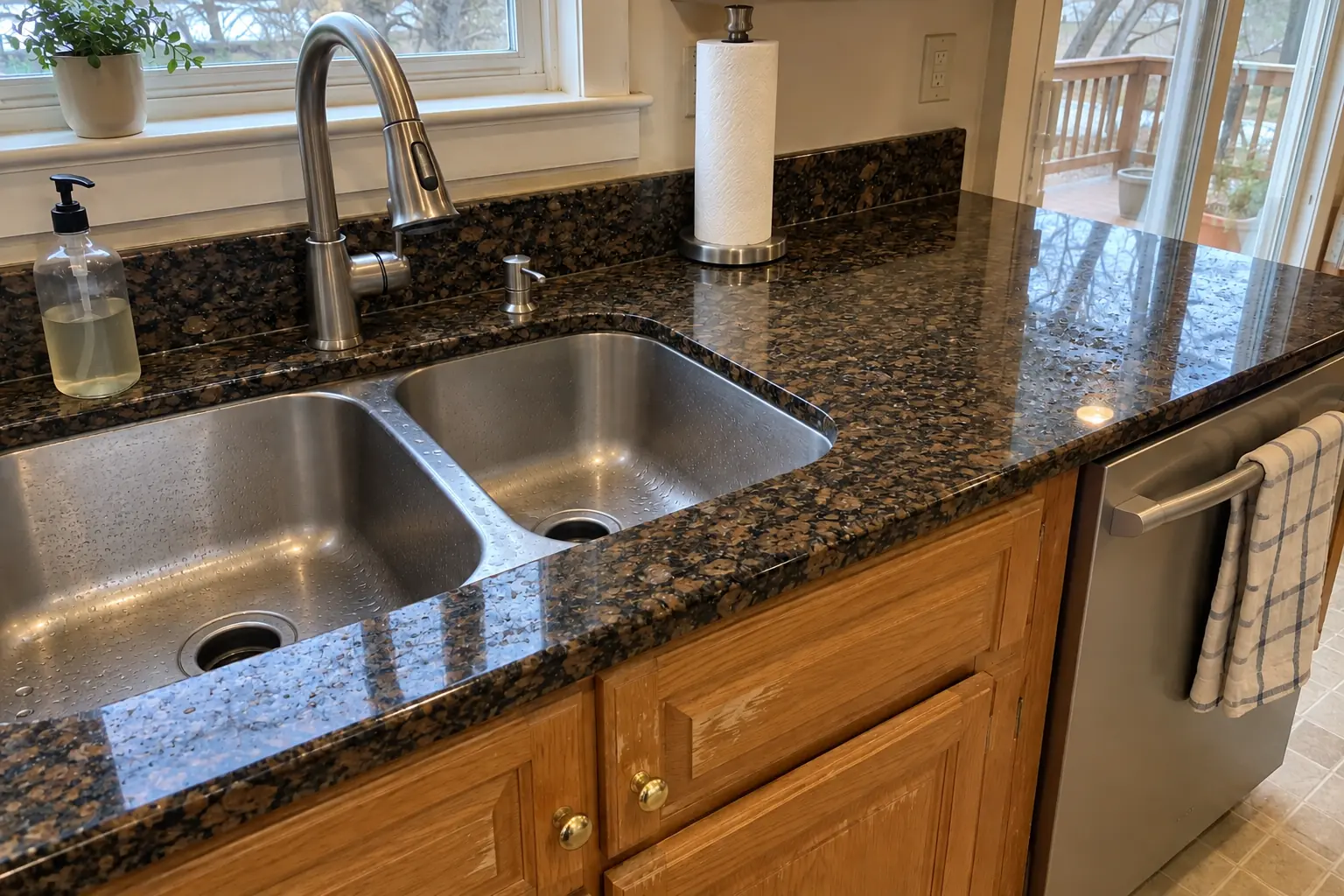 Countertops, tile and floorsCountertop Care and Finish Options: Stone Restoration, Butcher Block Finishes and Laminate EdgesEach countertop material needs one thing done right. Granite and marble need a pH-neutral cleaner and resealing when water soaks in. Quartz needs…3 min read
-
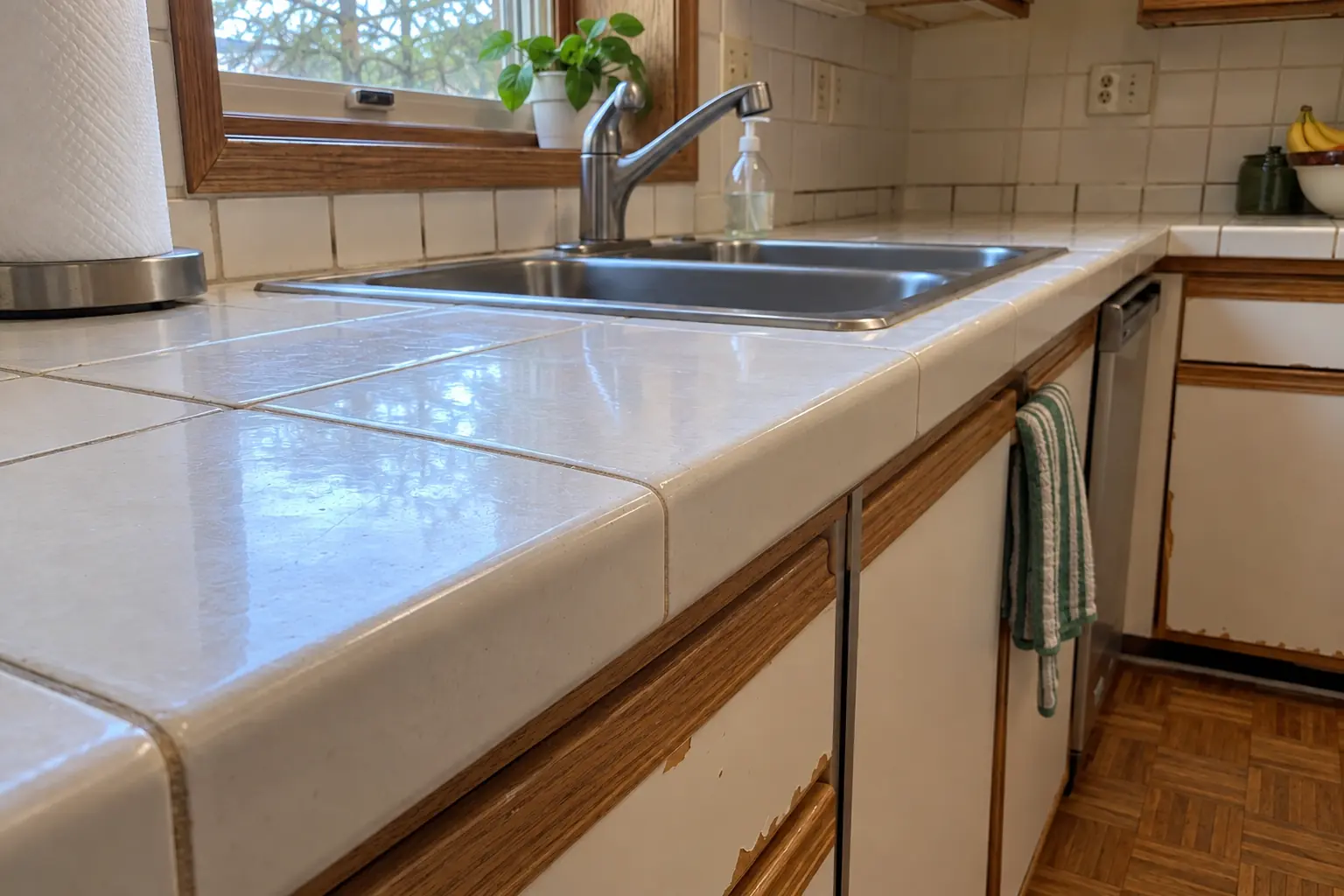 Countertops, tile and floorsCountertop Repair, Refinishing or Replacement: Quartz, Granite, Laminate, Corian and WoodYes, a quartz countertop can usually be repaired: chips are filled with color-matched resin and polished, and hairline cracks can be stabilized.…4 min read