Countertop Care and Finish Options: Stone Restoration, Butcher Block Finishes and Laminate Edges
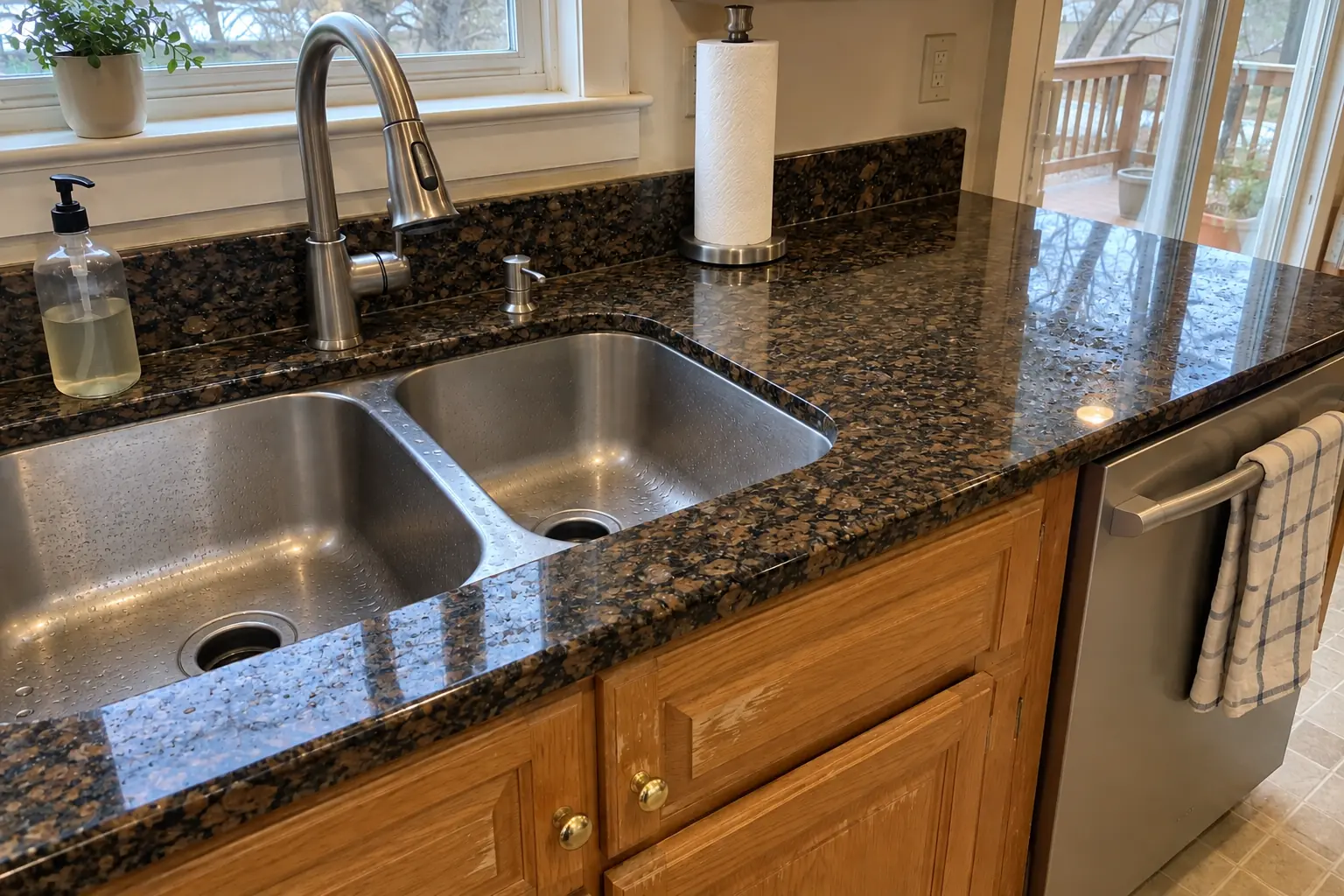
Most countertop problems we are called about come from a mismatch between the surface and the routine: an acidic cleaner on marble, a griddle parked on quartz, a butcher block that went a winter without oil, or a laminate edge left open near the dishwasher. Each material has a short list of habits that keep it looking right, and one or two mistakes that cause lasting damage.
This guide walks through countertop finish options for stone, wood and laminate, daily care for each, when stone restoration makes sense, how to finish a wood countertop including the oil, film and epoxy choice for butcher block, and how to finish the edge of a laminate top so water stays out.
Countertop finish options at a glance
The finish is the surface texture and protection on top of the material, and it decides how a counter looks, how it shows wear and how much upkeep it needs. Choose it as carefully as the material itself.
| Material and finish | Look | Shows wear | Upkeep |
|---|---|---|---|
| Polished stone | Glossy, deep color | Etching on marble; hides it on granite | Periodic sealing |
| Honed stone | Matte, soft | Hides etching; shows oily prints | Sealing, more wiping |
| Leathered or brushed stone | Textured, low sheen | Hides smudges well | Periodic sealing |
| Quartz | Factory polished, matte or textured | Heat scorch; matte can burnish | Mild soap only |
| Wood, oiled | Natural, low sheen | Dries out, takes knife marks | Re-oil regularly |
| Wood, film or epoxy | Satin to glossy | Scratches in the coating | Sand and recoat |
| Laminate | Matte, textured or gloss | Edge and seam swelling | Keep edges sealed |
Caring for granite, marble and quartzite
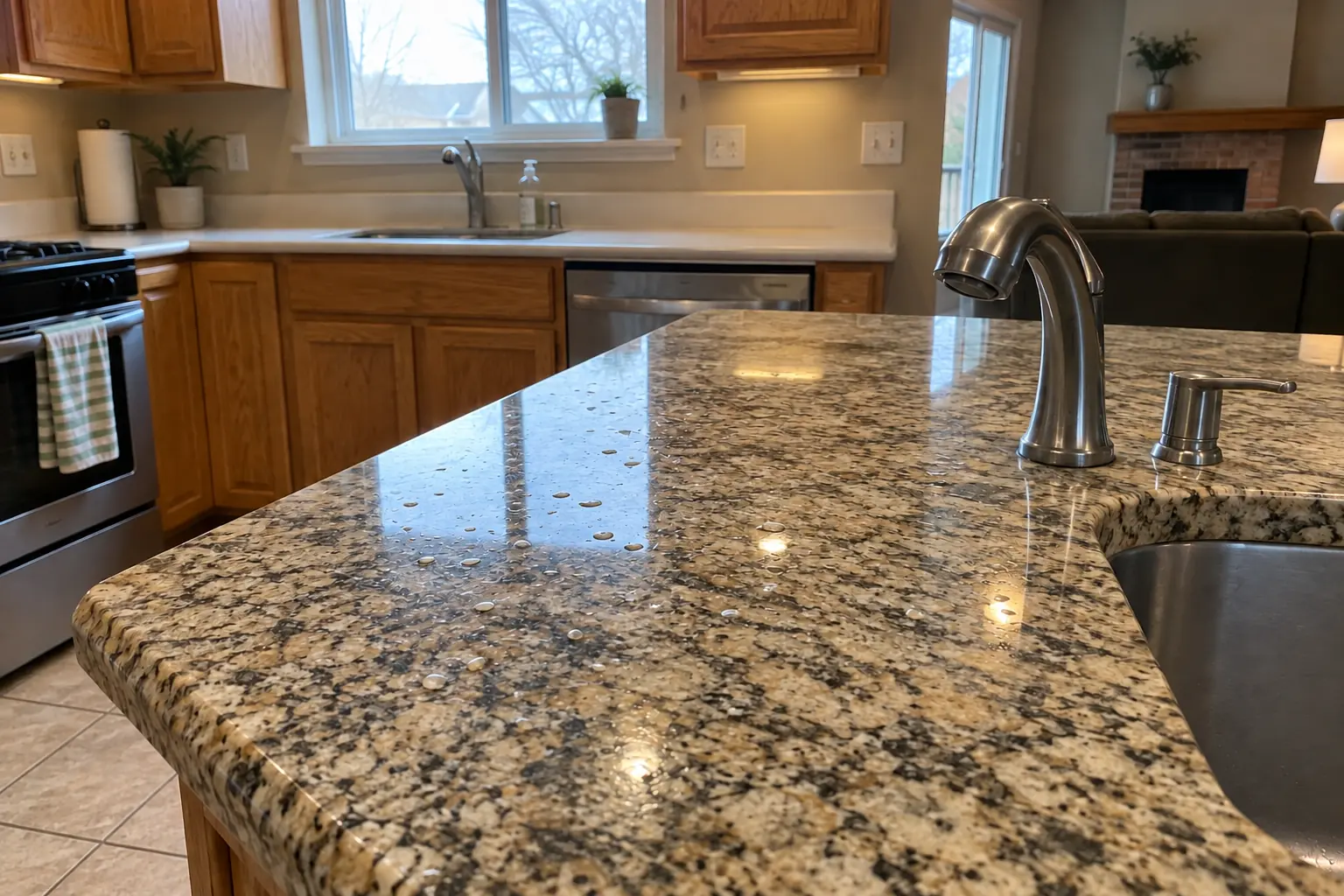
Clean natural stone with warm water and a pH-neutral stone cleaner or mild dish soap, and reseal only when the stone starts absorbing water. Vinegar, lemon, bleach and ammonia-based cleaners are the enemies: acids etch marble and limestone, and harsh cleaners wear down sealer on any stone. Wipe up oil, wine, coffee and citrus promptly, especially on light stones.
- Run the water-drop testPut a few drops of water on the busiest spot, usually near the sink and cooktop. If the stone darkens within several minutes, it is time to reseal.
- Clean and dryWash the surface with a stone cleaner, rinse and let it dry fully, ideally overnight near the sink.
- Apply a penetrating sealerSpread it evenly and let it soak in for the time on the label.
- Wipe off every bit of excessBuff the surface dry so the sealer does not leave a haze, then keep it dry for the cure time the manufacturer lists.
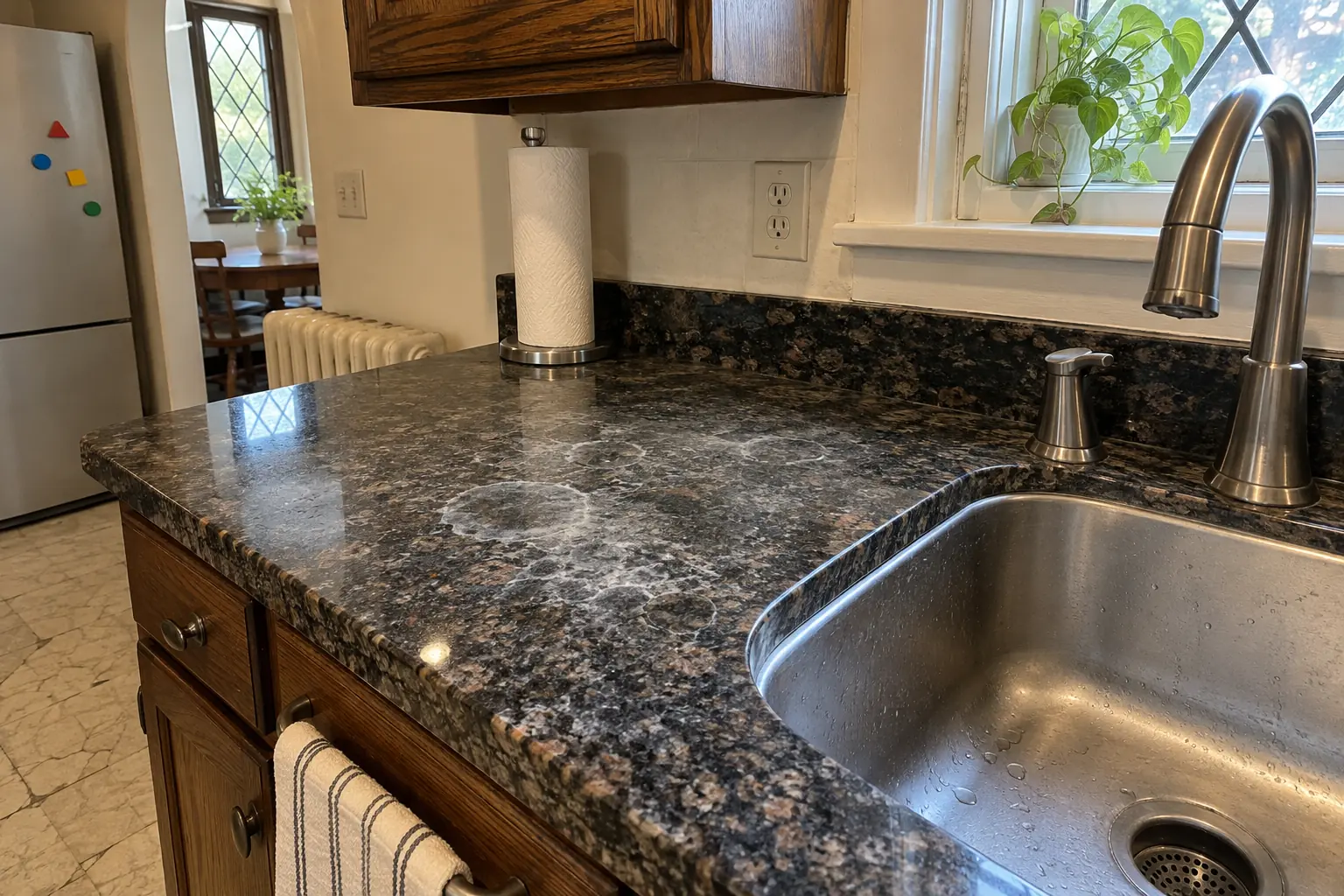 Before
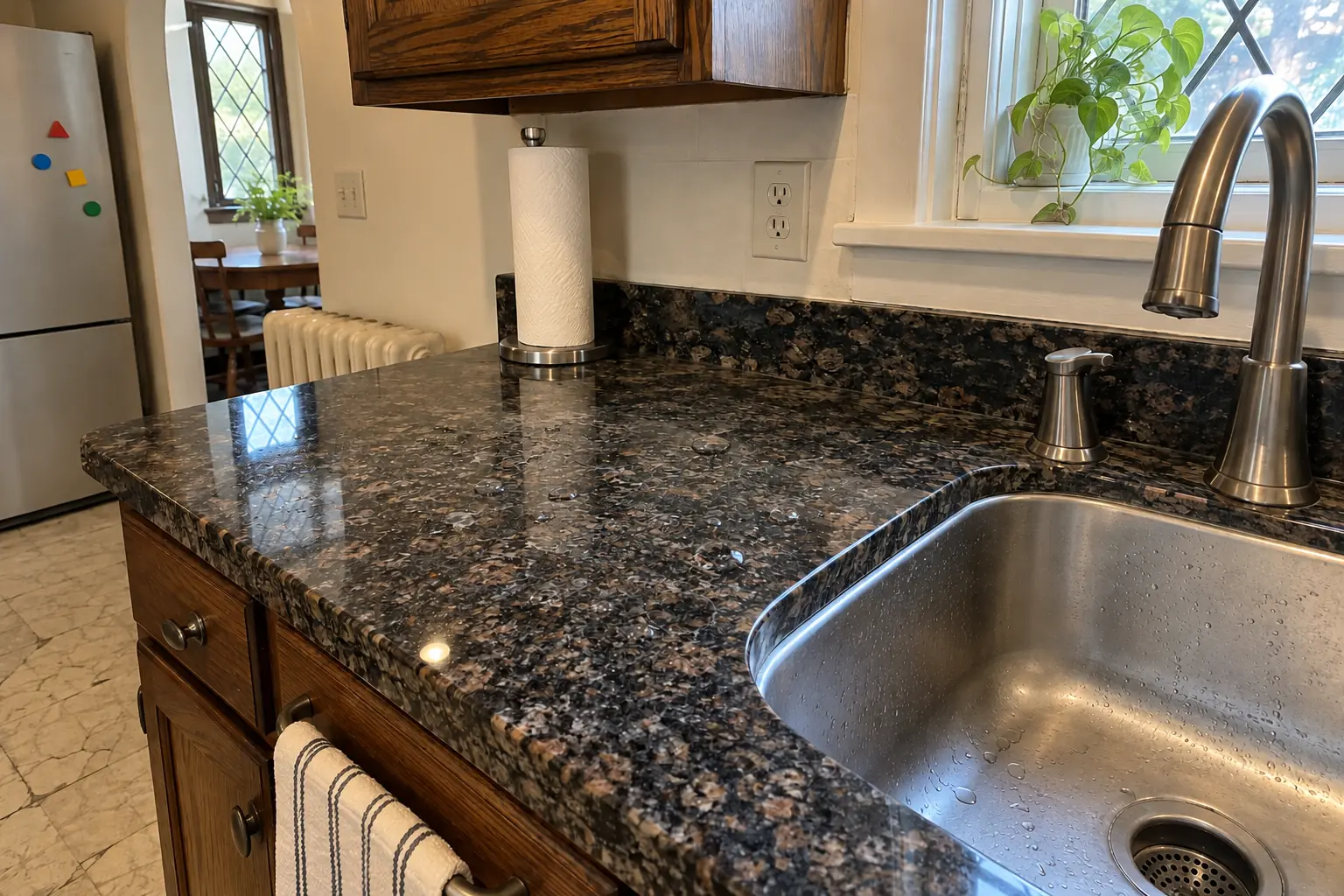 After
Can I put a hot cup of coffee on quartz?
Yes. A hot cup of coffee or tea is fine on quartz. What damages quartz is high, sustained heat: a pan from the burner or oven, a slow cooker, an air fryer or an electric griddle sitting on the bare surface. The resin in quartz can scorch or discolor, and those marks usually cannot be polished out.
For daily care, mild soap and a soft cloth are enough, and dried food lifts with a plastic scraper. Avoid oven cleaner, paint strippers and high-alkaline degreasers, which can attack the resin, and skip abrasive pads on matte quartz, which can burnish shiny spots.
Stone countertop restoration: honing, polishing and stain removal
When granite looks hazy, marble is covered in etch rings or a stain will not clean out, the installed counter can usually be restored rather than replaced. A restoration tech uses diamond abrasive pads to hone out etching and fine scratches, then polishes back to the original sheen or stops at a honed finish. Oil and water-based stains are drawn out with a poultice, a paste that pulls the stain from the pores as it dries. The stone is resealed at the end.
Restoration can also switch a polished marble top to a honed finish, which many owners choose for kitchens because it hides future etching. Quartz cannot be honed or repolished like natural stone because its surface is resin-bound, so damage there is a repair question.
| Problem | Likely cause | Usual fix |
|---|---|---|
| Etch rings on marble | Acid from citrus, wine or vinegar | Honing and polishing |
| Dull, worn granite | Years of wear and harsh cleaners | Polishing compound or diamond pads |
| Oil stains near the range | Cooking oil absorbed | Poultice, sometimes repeated |
| Water rings by the sink | Moisture trapped below the surface | Poultice or time to dry |
| Hazy film after sealing | Excess sealer left on top | Strip residue and buff |
How to finish a wood countertop
The right finish for a wooden countertop depends on two questions: will you cut on it, and how close is it to the sink? Wood counters, including butcher block, need some finish to resist water and stains, and the three families behave very differently.
Penetrating oils
Food-safe mineral oil or oil-and-wax blends soak into the wood instead of forming a film. They are easy to renew: wipe on, let soak, wipe off, often at first and then monthly or when the wood looks dry. You can cut on an oiled top and sand out scratches. The trade-off is less water resistance and more attention, especially near a sink.
Hardwax and curing oils
Tung oil products, polymerized oils and hardwax oils harden inside the wood. They give more protection than plain oil while keeping a natural look, and worn areas can usually be spot-refreshed.
Film finishes
Water-based polyurethane or varnish forms a hard layer on top that resists water and stains well. It should not be cut on, and worn spots must be sanded and recoated.
- Sand through the gritsWork up to a smooth finish and remove all dust.
- Raise the grainWipe with a damp cloth, let it dry and sand lightly once more.
- Seal every faceFinish the top, edges, underside and sink cut-out to limit movement and warping.
- Respect the cure timeWait the full time on the label, and confirm the product is food-safe once cured if you will prep food directly on it.
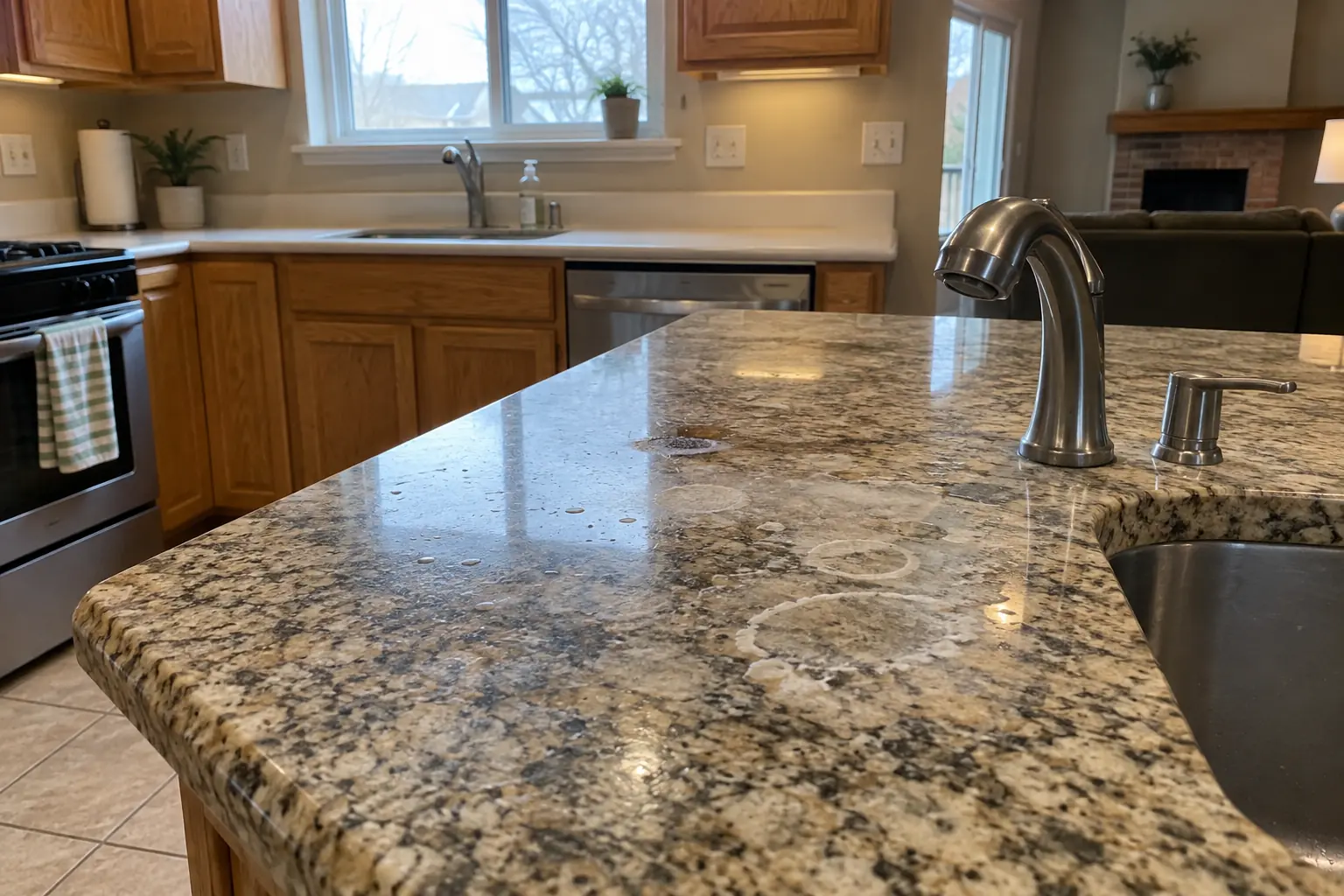 Before
 After
Butcher block countertop epoxy finish: pros and cons
Epoxy makes sense on a decorative bar top and is a poor fit for a working kitchen counter. It pours a thick, glossy, waterproof coat over the wood that looks like glass, but it changes the character of the wood, can yellow in sunlight, scratches and shows marks, cannot be cut on and can be marked by hot pans. Repairs usually mean sanding the epoxy off.
Wood movement is the other issue. Chicago's dry winters and humid summers make seasonal movement noticeable, and oil finishes move with the wood while a thick, rigid coating may crack at joints if the top was not dry and stable when coated.
| Finish | Water resistance | Cut on it? | Repair |
|---|---|---|---|
| Mineral oil or oil-wax | Low to moderate | Yes | Sand and re-oil |
| Hardwax or curing oil | Moderate to good | Light use | Spot refresh |
| Polyurethane or varnish | Good | No | Sand and recoat |
| Epoxy | Very good | No | Sand off and redo |
How to finish the edge of a laminate countertop
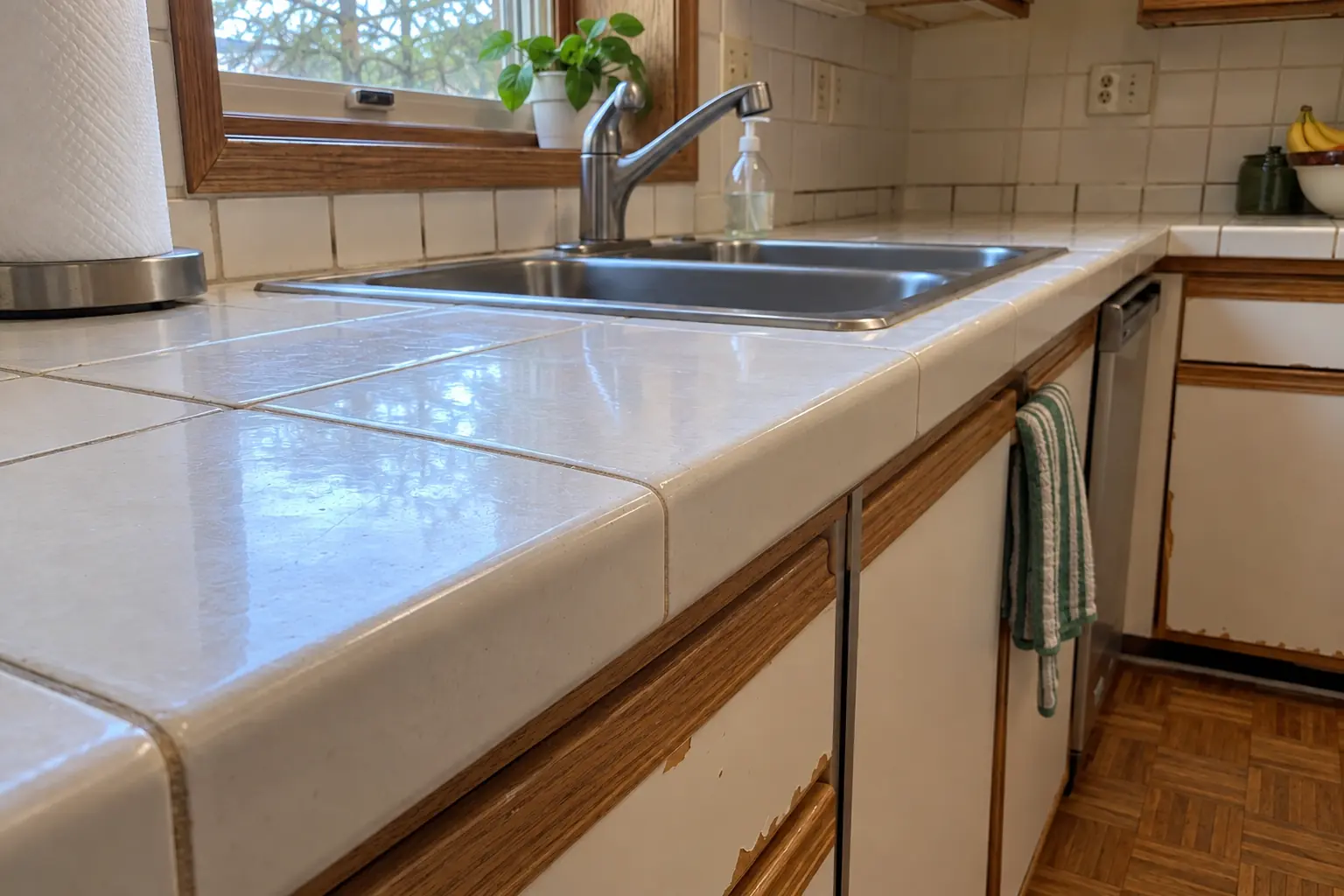
Laminate tops come with a post-formed edge, where the laminate wraps a rounded front, or a flat edge that needs a separate strip. Finishing a cut end or a flat edge is a short job if the glue and trimming are done carefully.
- Cut the stripUse matching laminate or pre-glued edge banding, slightly oversize.
- Bond itApply contact cement to both surfaces, let it tack, then press the strip firmly in place.
- Trim flushUse a router with a flush-trim bit or a laminate file, filing at an angle so you do not lift the top sheet.
- Ease and sealLightly ease sharp corners so they do not chip, use end caps on post-formed tops, and run a small bead of silicone at the backsplash and sink.
Frequently asked questions
How often should granite countertops be sealed?
What is the best finish for a wooden countertop?
Is epoxy a good finish for a butcher block countertop?
Can etching on a marble countertop be removed?
Can quartz countertops be polished?
What should I not use to clean stone countertops?
Stone Countertop Restoration in your town
- Carol Stream
- Naperville
- Schaumburg
- Wheaton
- Glen Ellyn
- Bloomingdale
- Bartlett
- Roselle
- Hanover Park
- Glendale Heights
- West Chicago
- Winfield
- Warrenville
- Lisle
- Downers Grove
- Lombard
- Villa Park
- Elmhurst
- Oak Brook
- Addison
- Itasca
- Wood Dale
- Elk Grove Village
- Hoffman Estates
- Arlington Heights
- Palatine
- Mount Prospect
- Des Plaines
- Park Ridge
- Skokie
- Evanston
- Northbrook
- Glenview
- Highland Park
- Buffalo Grove
- Lake Zurich
- Oak Park
- Berwyn
- Tinley Park
- Orland Park
- Bolingbrook
- Aurora
- Elgin
- St. Charles
- Geneva
- Batavia
- Crystal Lake
- Plainfield
- Woodridge
Sources
Keep reading
-
 Countertops, tile and floorsQuartz vs Granite Countertops: Durability, Care, Heat, Looks and Why Quartz Is in DeclineIn the quartz vs granite countertops choice, granite is natural stone that handles heat well and has one-of-a-kind patterns but needs periodic…3 min read
-
 Countertops, tile and floorsCountertop Repair, Refinishing or Replacement: Quartz, Granite, Laminate, Corian and WoodYes, a quartz countertop can usually be repaired: chips are filled with color-matched resin and polished, and hairline cracks can be stabilized.…4 min read
-
 Repairs, cleaning and damageHow to Remove Grease From Kitchen Cabinets, Plus a Post-Renovation Kitchen Cleaning ChecklistTo remove grease from kitchen cabinets, wipe them with warm water and a few drops of grease-cutting dish soap on a damp microfiber cloth, rinse with…3 min read