Kitchen Remodel Return on Investment: Should You Remodel Before Selling?
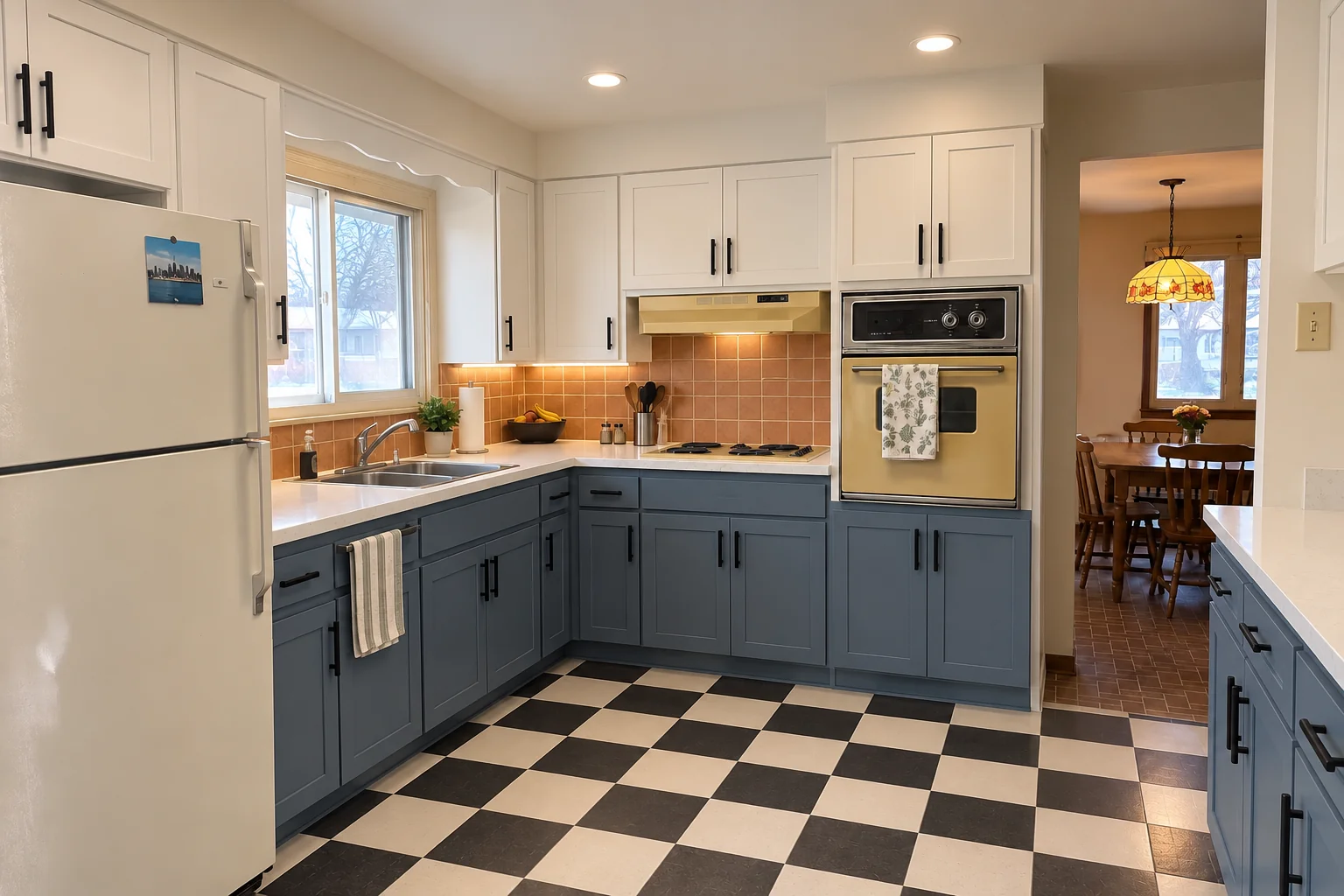
Kitchen remodel return on investment is rarely a simple number. A kitchen shapes how quickly a house sells and how buyers feel about it more than almost any other room, but the value a remodel adds depends on the house, the neighborhood and how well the new kitchen fits both. Projects that fix obvious problems and bring a kitchen in line with similar homes nearby hold their value best. Very personal or high-end choices in a modest house tend to return less at sale.
Should you remodel your kitchen before selling? Often the better answer is a targeted refresh: repair what is broken, update the most visible surfaces and leave major design decisions to the buyer. If you plan to stay for years, the calculation shifts toward what makes the kitchen work for you. This guide explains how buyers and appraisers look at kitchens, without leaning on national statistics, so you can weigh the decision for your own house.
How buyers and appraisers judge a kitchen
Buyers and appraisers look at the same room through different lenses. Buyers react to condition and feel; appraisers measure the kitchen against recent sales nearby. A remodel pays back best when it satisfies both.
What buyers notice
Buyers form an impression quickly, and listing photos make the kitchen one of the first images they see. A kitchen that looks dated, worn or damaged signals work and expense, and buyers often overestimate what it will cost to fix. A kitchen that is clean, bright and functional, even if it is not new, removes that worry.
Condition comes before style: cabinet doors that sag, chipped counters, stained grout, mismatched or failing appliances, poor lighting and water damage under the sink. Layout problems register too, such as no room for two people to work or a fridge that blocks a doorway.
What appraisers look at
Appraisers compare your home with recent sales of similar homes nearby. An updated kitchen generally rates better on condition and quality, but the starting point is what comparable homes sold for. If your remodel brings the kitchen up to the standard of nearby sales, it supports the value. If it goes far beyond the neighborhood, the appraisal may not reflect everything you spent.
Permits matter here too. Appraisers, inspectors and buyers' agents may ask about recent work, and a record of permits and inspections makes a remodel easier to credit.
Kitchen updates compared: buyer impact vs disruption
Not every project earns its keep at sale. The table compares common kitchen updates by how much they usually change a buyer's impression and how much work they involve. It is a general guide, not a prediction for any one house.
| Update | Buyer impact | Disruption | Before selling? |
|---|---|---|---|
| Repairs: leaks, hinges, outlets, tile | High | Low | Always |
| Paint or reface dated cabinets | High | Low to moderate | Often |
| New durable countertops | High | Moderate | Often |
| Lighting and fresh neutral paint | Moderate to high | Low | Yes |
| Matching working appliances | Moderate | Low | If mismatched or failing |
| Moving walls or plumbing | Varies | High | Rarely |
| Pro-grade or very personal finishes | Low to moderate | Varies | Rarely |
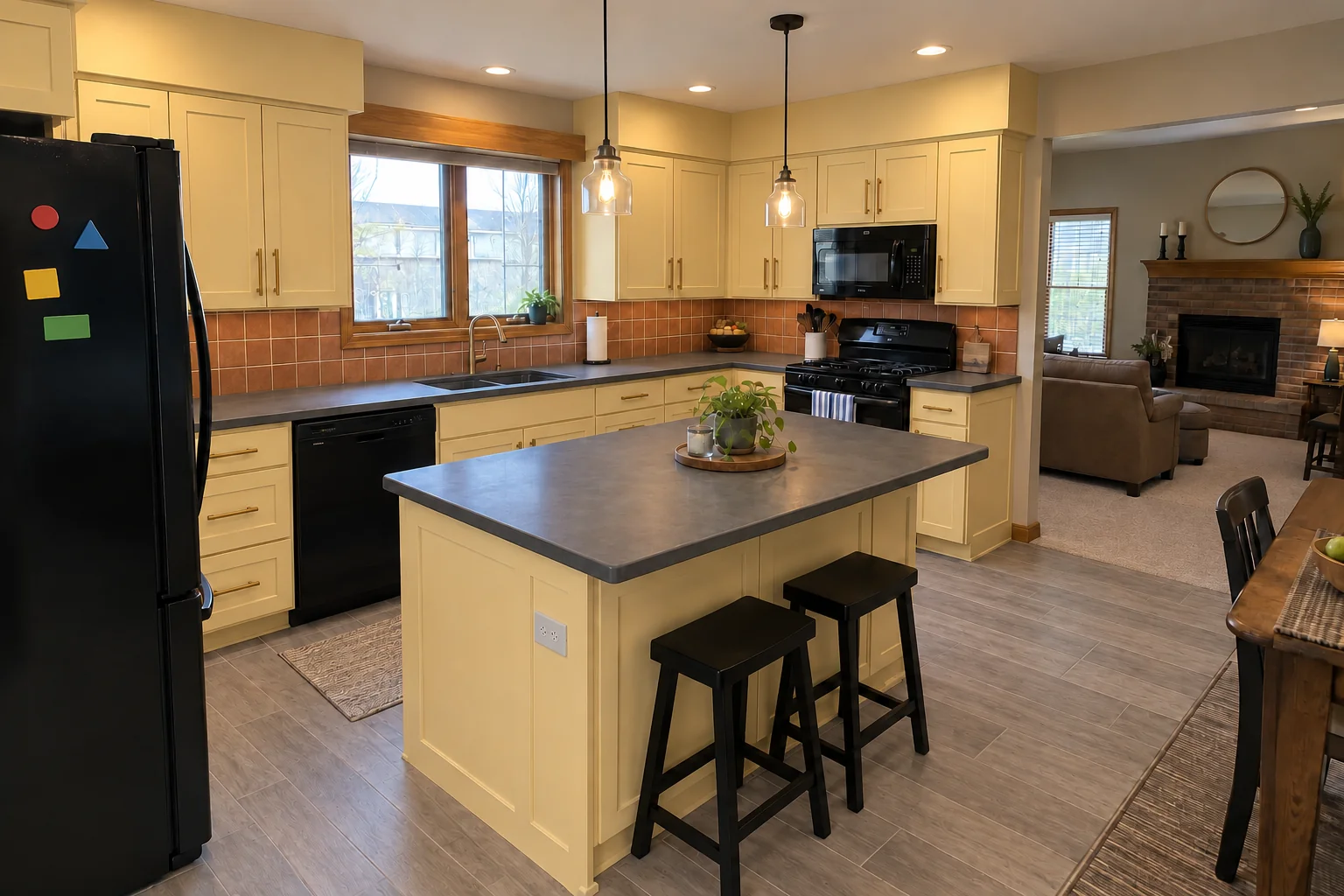
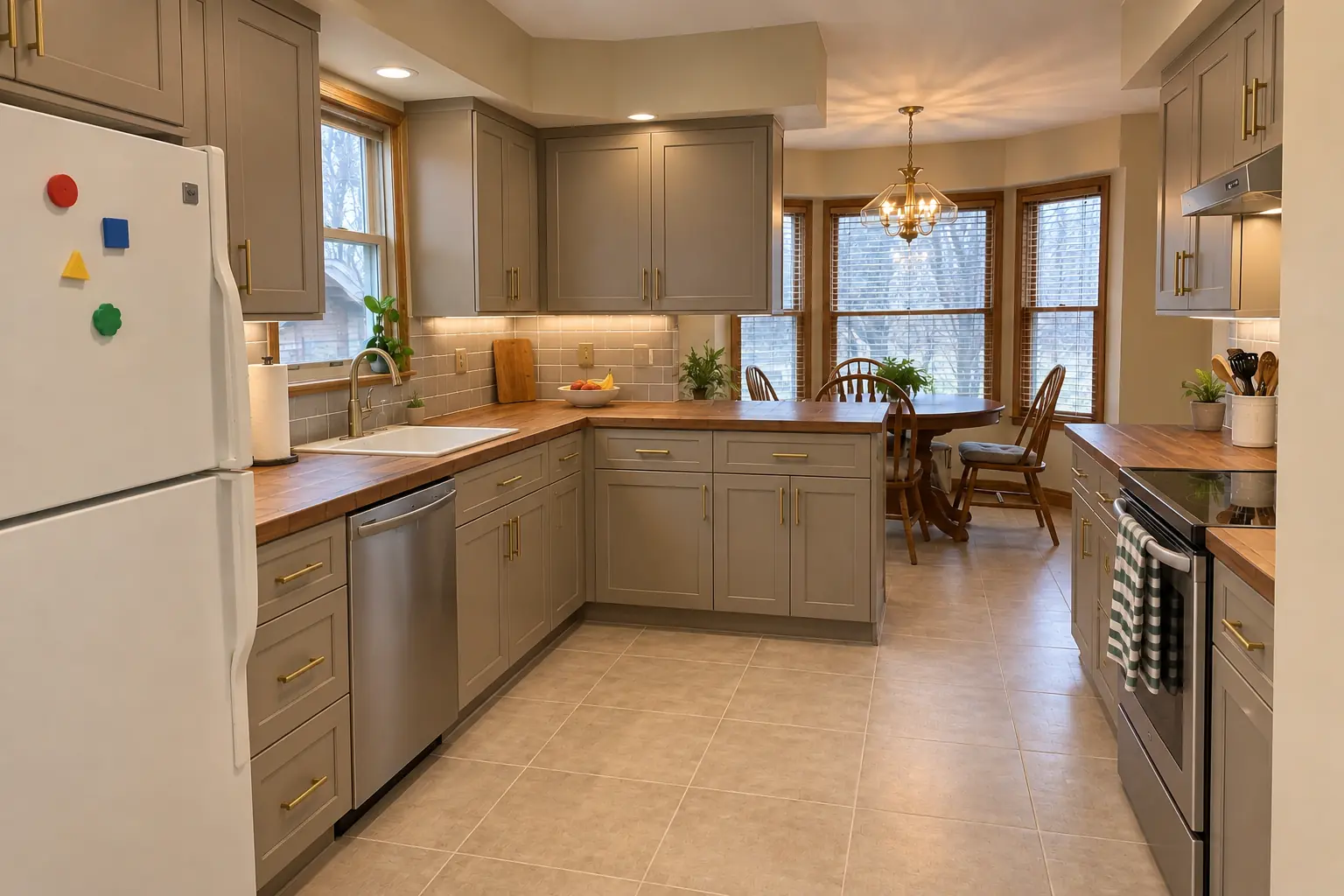
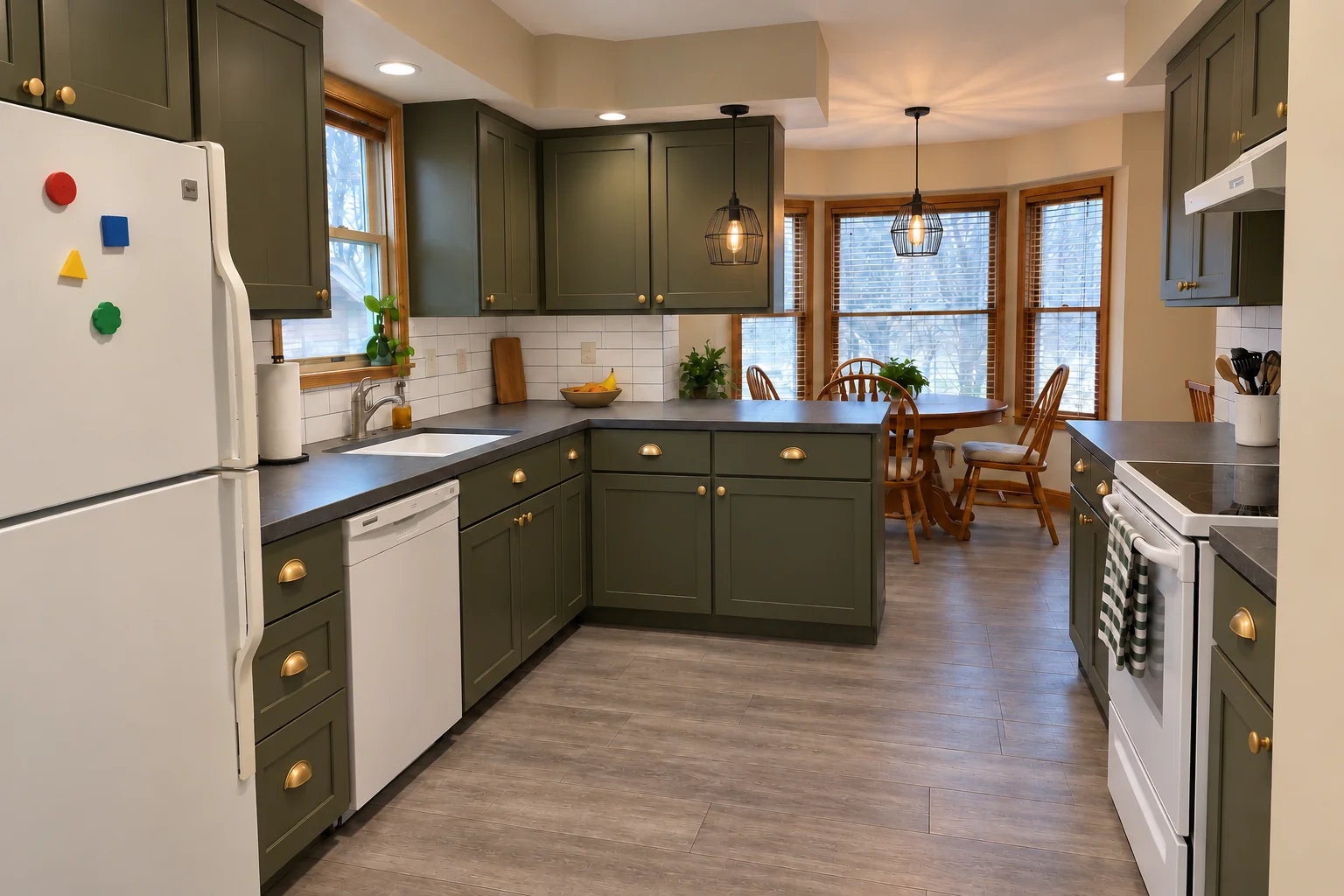
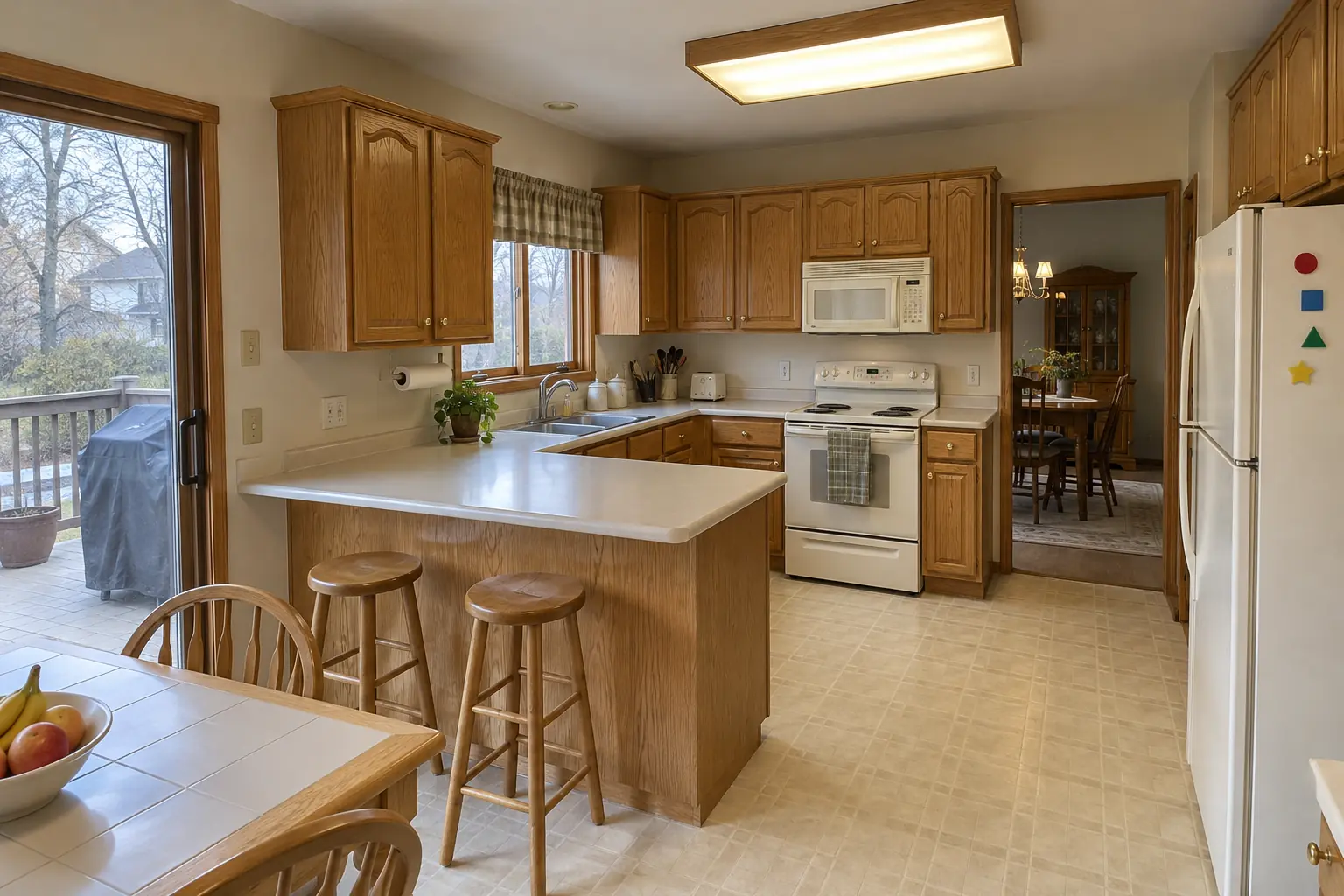 Before
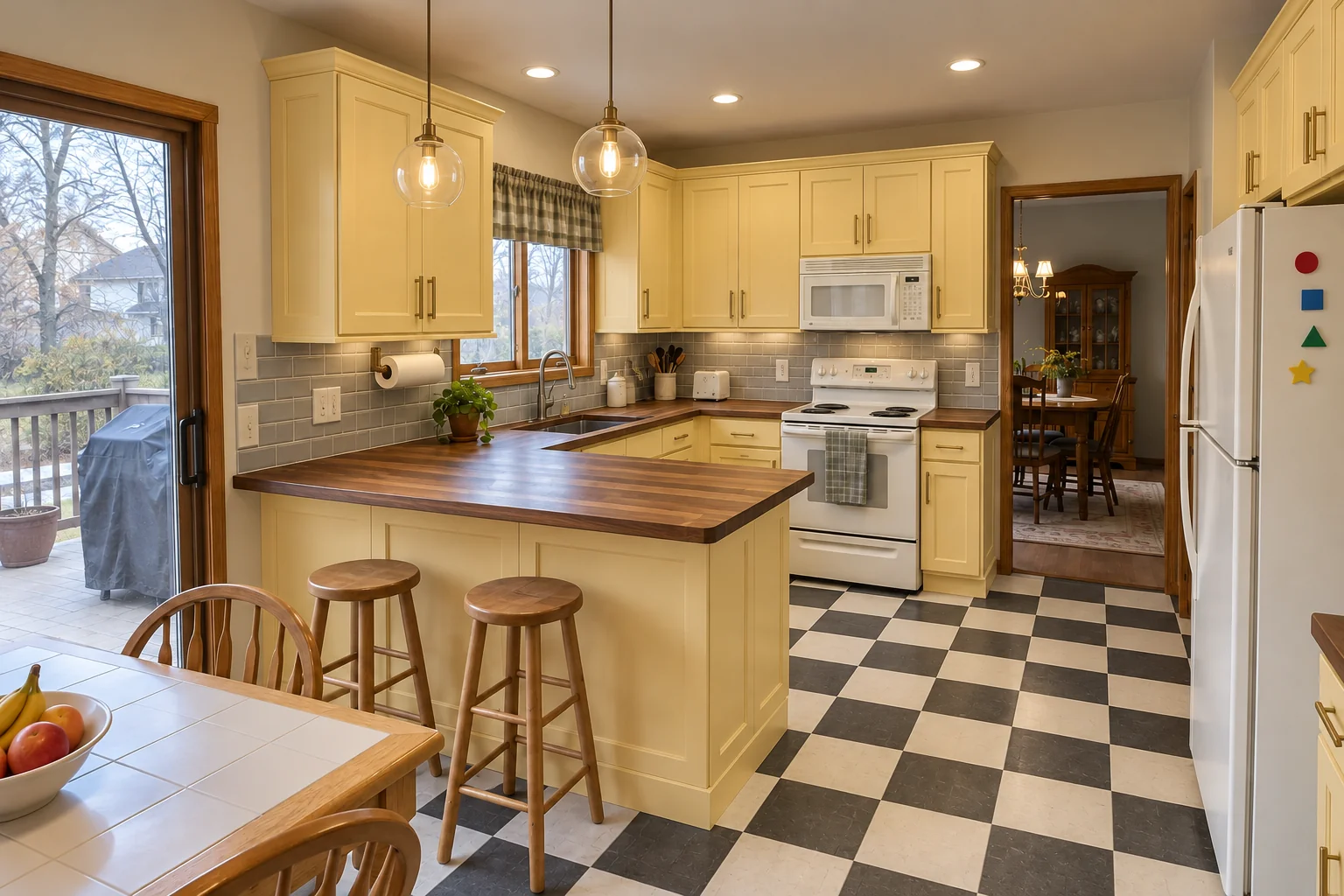 After
Updates that usually matter to buyers
These updates tend to change a buyer's impression the most relative to the disruption involved. Most of them can be done without taking the kitchen out of service for long.
- Repairing anything broken: leaks, damaged cabinet boxes, loose hinges, cracked tile, dead outlets.
- Painting or refacing dated cabinets and replacing hardware.
- Replacing worn or dated countertops with a durable, widely liked material.
- A simple, neutral backsplash.
- Better lighting: under-cabinet lights and brighter, updated ceiling fixtures.
- A matching set of working appliances, especially when the current ones are mismatched or failing.
- A modern sink and faucet, and fresh wall paint in neutral colors.
Updates that may not pay back at sale
Some projects are worth doing for your own enjoyment but are less likely to be fully reflected in the sale price, particularly on a short time frame:
- Professional-grade appliances in a house where nearby homes have standard ones.
- Bold colors, unusual materials or very personal design choices.
- Expensive custom features buyers may not value, such as specialized storage for a hobby.
- Moving plumbing and walls purely for a different look when the existing layout works.
- Work done without permits, which can become a negotiation problem instead of a selling point.
Should I remodel my kitchen before selling?
Start with a local real estate agent, not a contractor. Ask how your kitchen compares with homes that recently sold nearby, then match the scope to the gap.
The drawbacks of a full remodel just before listing
It takes time, it carries the risk of delays, and the buyer may not share your taste. Each approach can make sense; the right one depends on the kitchen's condition, the market and your timeline.
- Benchmark against recent salesAsk your agent to show you kitchens in comparable homes that sold recently in your area.
- If you are roughly in lineFocus on cleaning, repairs, paint and lighting. Little else is likely to pay back.
- If you are clearly behindA refresh of cabinets, counters and fixtures is usually a more measured step than a full remodel and can often be finished within a few weeks.
- If the kitchen needs a full remodelWeigh doing it against pricing the house to reflect the dated kitchen and letting the buyer remodel to their own taste.
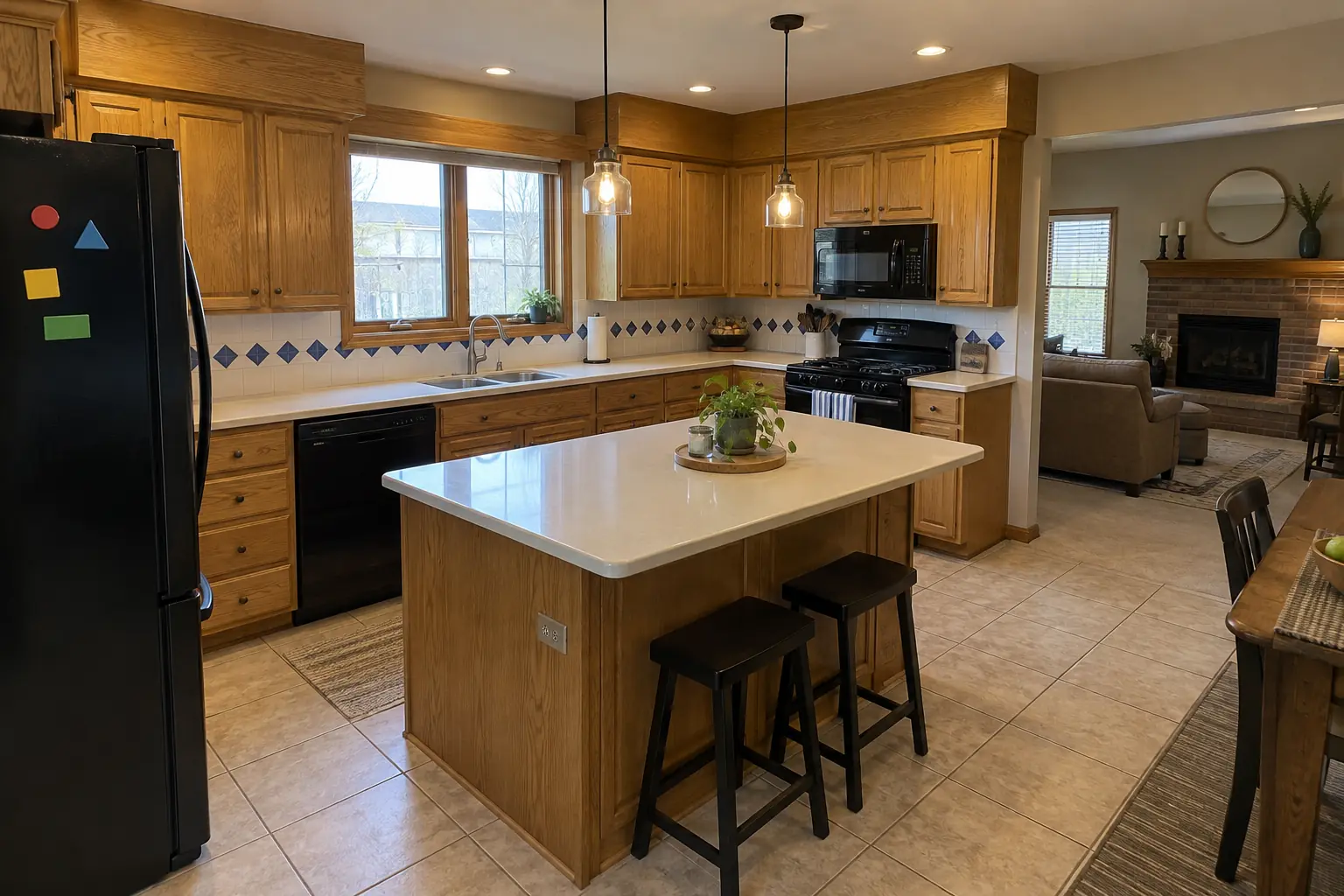 Before
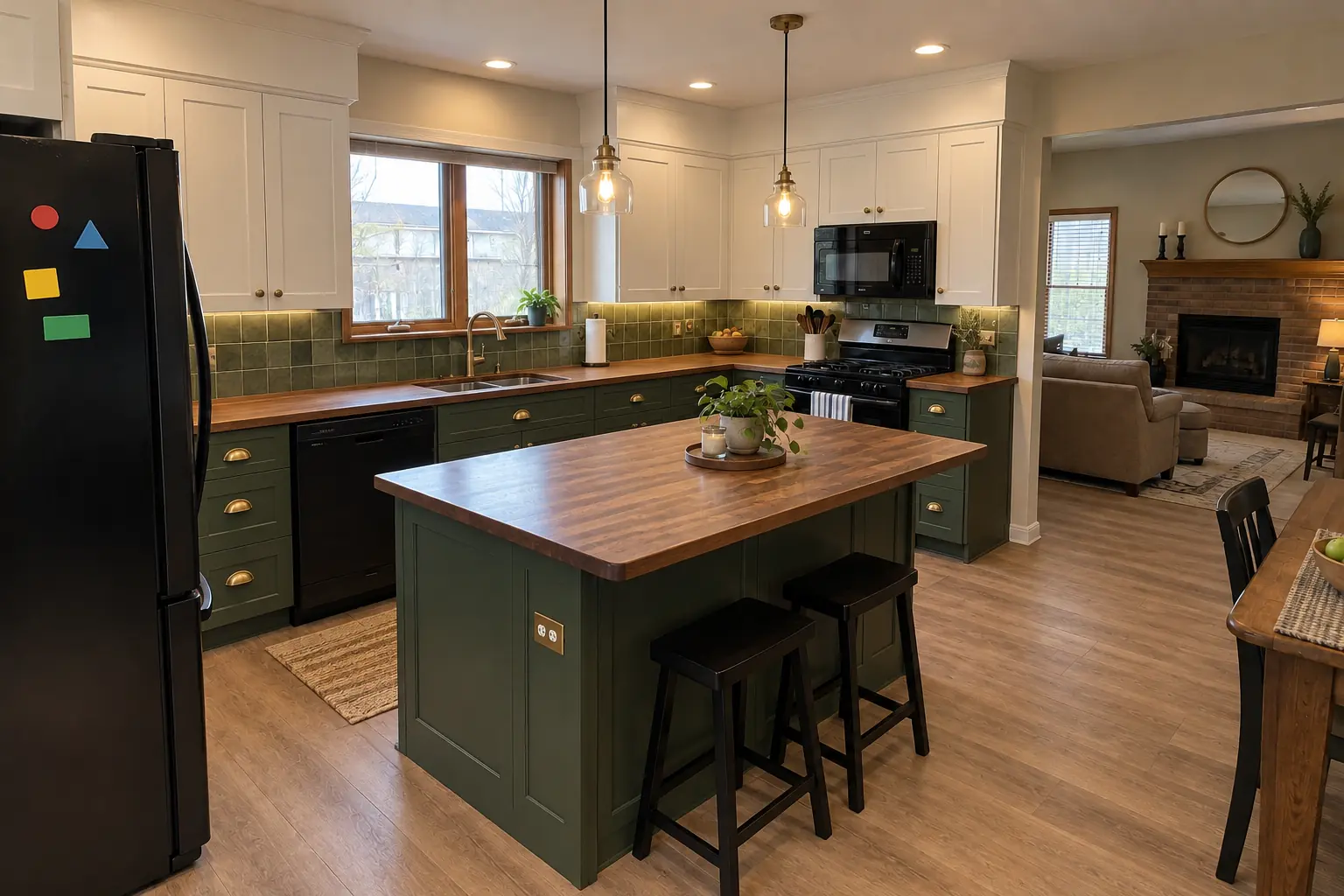 After
Get the basics right before any finishes
Home inspectors look past finishes. A new kitchen with a slow drain, an ungrounded outlet near the sink or a range hood that vents into the cabinet above will show up in the inspection report and can undo the impression the remodel made. Make sure the fundamentals are sound before spending on visible upgrades.
- GFCI protection on countertop outlets and proper circuits for major appliances.
- No active leaks under the sink, behind the dishwasher or at the fridge water line.
- A hood or exhaust that actually removes cooking moisture and odors.
- Cabinet doors and drawers that open, close and align properly.
- Permits and inspection records for any electrical, plumbing or structural work.
If you plan to stay
When you expect to live in the house for years, resale is only one factor. A kitchen that fits how you cook, entertain and live has a value that does not show up in an appraisal. Even so, avoid choices that would be costly to undo, keep the kitchen in proportion to the house, and favor durable materials and a sound layout. Those decisions protect resale whenever it comes.
Chicago-area considerations
Expectations differ across the region. A city condo, a vintage two-flat, a mid-century ranch in an older suburb and a newer home in an outer suburb each have different buyer pools and comparable sales.
Condos
Buyers often compare units within the same building, so a kitchen that matches or slightly exceeds nearby units is usually the target.
Older housing stock
Buyers may value updated electrical and plumbing behind the walls as much as new finishes, and a permit record helps show that the work was done properly.
Frequently asked questions
Does a kitchen remodel increase home value?
Should I remodel my kitchen before selling?
What kitchen updates add the most value?
Is it worth remodeling a kitchen if I am selling in a year or two?
Do appraisers care about kitchen remodels?
Does unpermitted kitchen work affect resale?
Kitchen Remodeling in your town
- Carol Stream
- Naperville
- Schaumburg
- Wheaton
- Glen Ellyn
- Bloomingdale
- Bartlett
- Roselle
- Hanover Park
- Glendale Heights
- West Chicago
- Winfield
- Warrenville
- Lisle
- Downers Grove
- Lombard
- Villa Park
- Elmhurst
- Oak Brook
- Addison
- Itasca
- Wood Dale
- Elk Grove Village
- Hoffman Estates
- Arlington Heights
- Palatine
- Mount Prospect
- Des Plaines
- Park Ridge
- Skokie
- Evanston
- Northbrook
- Glenview
- Highland Park
- Buffalo Grove
- Lake Zurich
- Oak Park
- Berwyn
- Tinley Park
- Orland Park
- Bolingbrook
- Aurora
- Elgin
- St. Charles
- Geneva
- Batavia
- Crystal Lake
- Plainfield
- Woodridge
Keep reading
-
 Running the projectKitchen Refresh vs Full Remodel: How to Choose the Right ScopeChoose a kitchen refresh when the cabinet boxes are solid and the layout works: paint or reface cabinets, replace counters, add a backsplash and…3 min read
-
 Costs and budgetingKitchen Remodel Cost in Chicago: Budget Breakdown, Cost per Square Foot and LaborKitchen remodel cost is driven by scope more than size. National cost guides put a typical project between about $14,600 and $41,600, with an average…3 min read
-
 Running the projectKitchen Remodel Permits: Do I Need a Permit to Remodel My Kitchen?Usually yes. Kitchen work that touches plumbing, electrical wiring, gas lines, ventilation or the structure almost always needs a permit and…3 min read