Kitchen Refresh vs Full Remodel: How to Choose the Right Scope
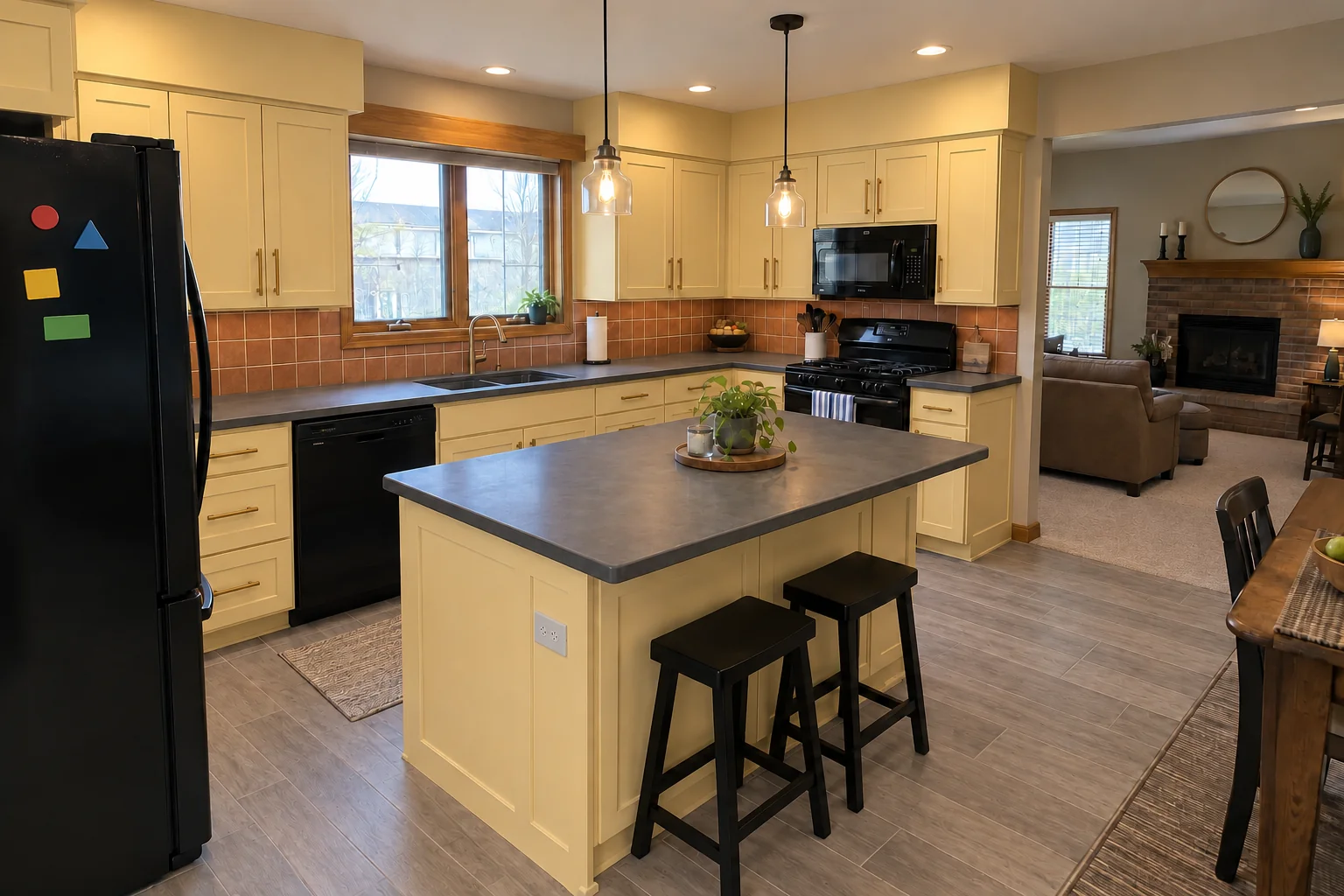
The choice between a kitchen refresh and a full remodel usually comes down to two questions: do the cabinet boxes and the layout still work, and how long do you plan to stay? If the boxes are solid and the layout suits you, a refresh can change the look of the kitchen in days or a few weeks. If the layout fights you every day, the cabinets are failing, or the wiring and plumbing are outdated, a full remodel is usually the better investment of time and money.
Many projects land in between: a partial remodel that keeps the layout but replaces cabinets and counters, or a refresh combined with one targeted change such as an added island or a moved microwave. This guide compares kitchen refresh vs full remodel side by side, lists the signs that point to each, and gives you a simple way to decide for your own kitchen.
Kitchen refresh vs full remodel at a glance
The difference is depth. A refresh works on the surfaces you see and touch. A full remodel takes the room back to the walls, and often the studs, and rebuilds it. A partial remodel sits between them.
| Factor | Refresh | Partial remodel | Full remodel |
|---|---|---|---|
| Layout | Stays | Mostly stays | Can change |
| Cabinet boxes | Kept | Usually replaced | Replaced |
| Plumbing and wiring | Stay in place | Mostly stay | Updated or moved |
| Permits | Often limited | Often needed | Required |
| Kitchen out of service | Little or briefly | Some weeks | Several weeks or more |
| Planning lead time | Short | Moderate | Design, ordering, permits |
Permit needs vary by municipality and by the exact work.
What a kitchen refresh includes
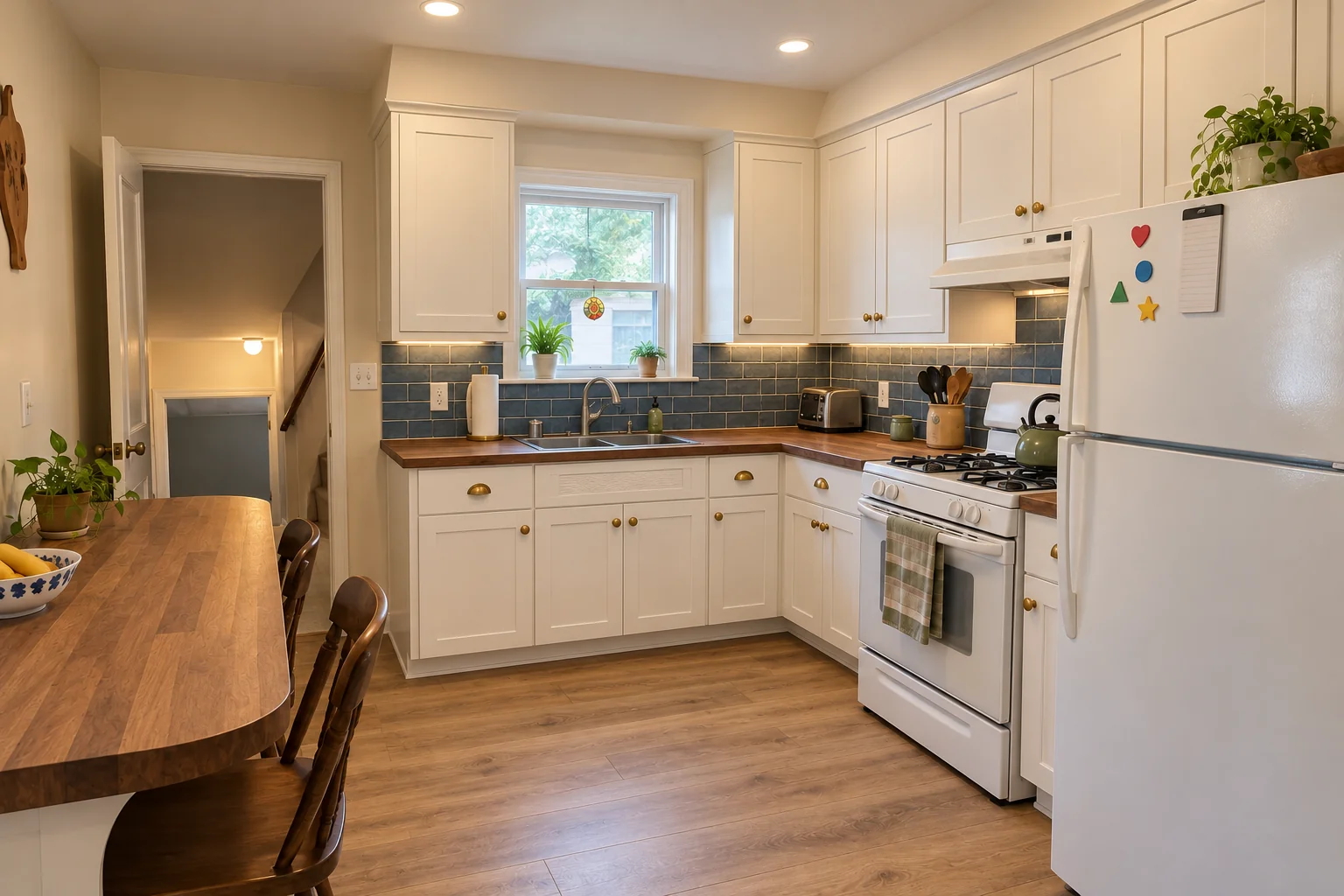
A refresh keeps the existing layout and cabinet boxes and changes what you see and touch. The plumbing and appliance locations stay, so permits are often limited or not needed, depending on the municipality and the exact work.
Cabinet updates
- Cabinet painting or refinishing, often about a week for a typical kitchen.
- Cabinet refacing: new doors, drawer fronts and veneer over the existing boxes.
- New hardware, soft-close hinges and pull-out organizers inside existing cabinets.
Surfaces, lighting and fixtures
- Countertop replacement, with a new sink and faucet.
- A new backsplash.
- Under-cabinet lighting and updated light fixtures.
- Appliance replacement in the same locations.
- Wall paint and, sometimes, new flooring.
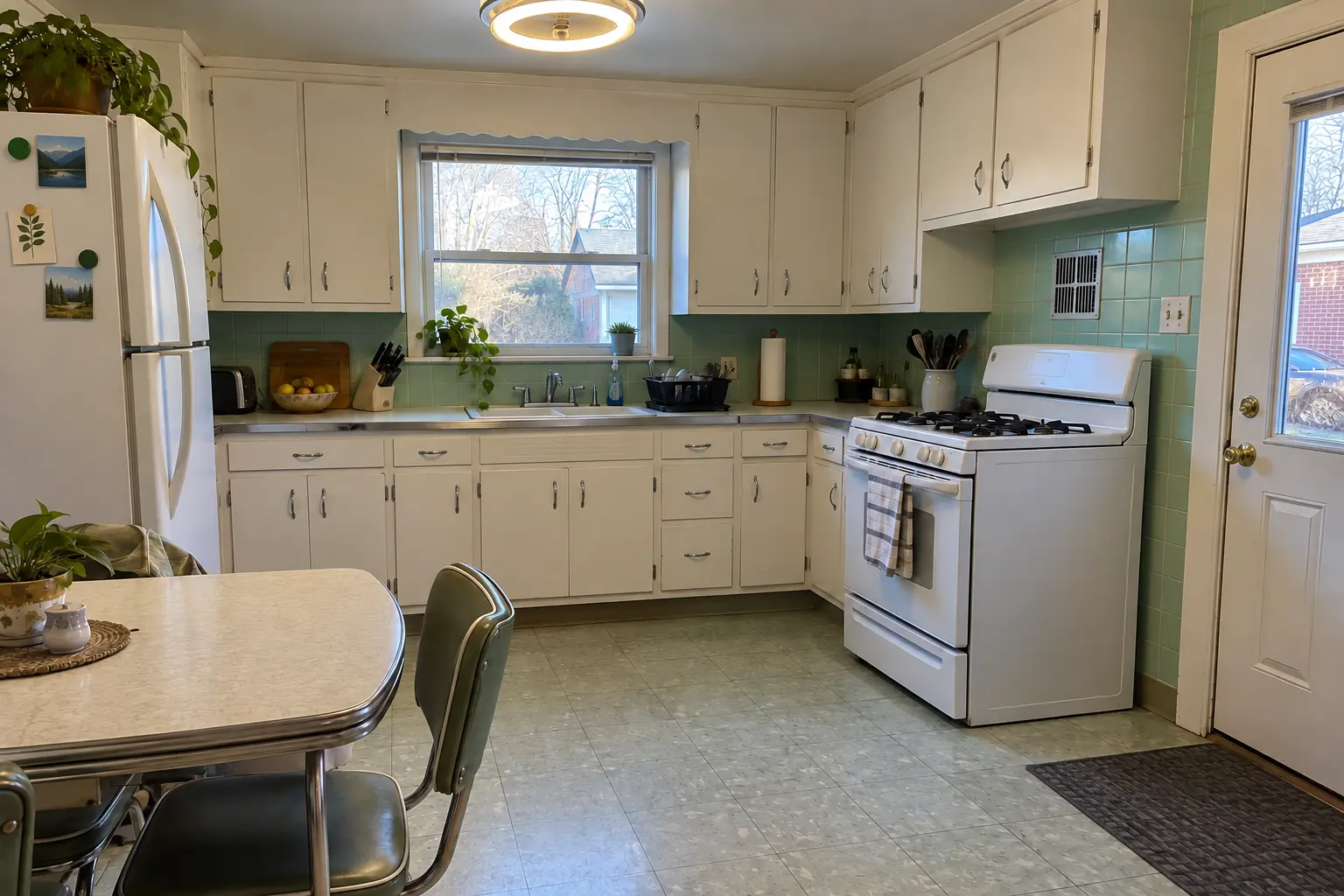 Before
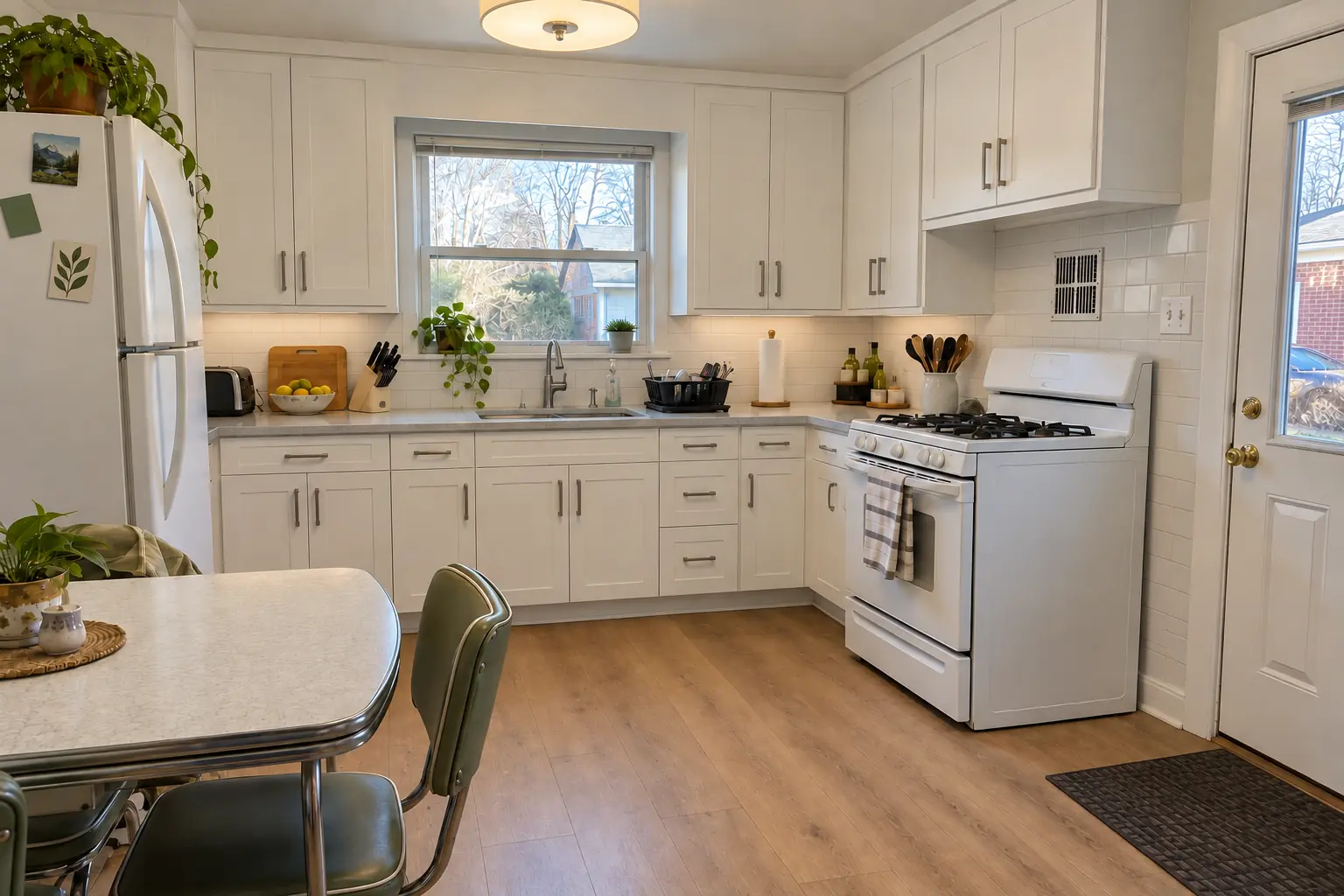 After
What a full remodel includes
A full remodel takes the kitchen down to the walls and rebuilds it. That allows changes a refresh cannot make: a new layout, a larger or relocated sink, an island with plumbing or power, a vented hood, more circuits and outlets, better insulation, and, where the structure allows, an opened wall.
It requires permits and inspections, and the kitchen is out of service for the length of construction: typically several weeks for a same-layout remodel and longer when walls or plumbing move.
- Design and selectionsLayout, cabinets, counters, appliances and fixtures are chosen.
- Ordering and permitsCabinet lead times and permit review run before work starts.
- DemolitionThe old kitchen comes out, often down to the studs.
- Rough-in and inspectionsNew plumbing, wiring and venting, inspected before walls close.
- Drywall, cabinets and countersWalls are closed, cabinets set, counters templated and installed.
- Finishes and final inspectionBacksplash, fixtures, appliances, trim and sign-off.
Signs a refresh is enough, and signs you need a full remodel
Walk the kitchen with these two lists. If most of your answers fall on one side, the scope is usually clear.
A refresh is usually enough when
- Cabinet boxes are solid wood or plywood, square and dry, with no water damage.
- The sink, range and fridge are reasonably placed and there is enough counter space.
- Storage is adequate, or can be fixed with organizers.
- Electrical and plumbing are in good condition and meet your needs.
- You want a visible change quickly, or you plan to sell within a few years.
A full remodel is usually the answer when
- Cabinet boxes are swollen, delaminating or falling apart, especially under the sink.
- There is no landing space by the range, a blocked walkway or a fridge in the wrong place.
- You want to open the kitchen to another room, add an island with a sink, or relocate appliances.
- Wiring is outdated, circuits are too few for modern appliances, or plumbing is old and failing.
- Flooring is damaged under the cabinets, or there is a history of leaks.
- You plan to stay long enough to benefit from a kitchen designed around how you live.
The middle ground: partial remodels
A partial remodel keeps the footprint but replaces more than a refresh would. Because plumbing and walls mostly stay put, these projects are usually shorter and simpler than a full remodel, while solving more than finishes alone.
- New cabinets and counters in the same layout.
- A refresh plus one change, such as converting a peninsula to an island.
- Keeping the perimeter cabinets and adding a new island and pantry.
A simple way to decide
List everything you would change if there were no limits, then mark each item as cosmetic, functional or structural. If almost everything is cosmetic, a refresh will satisfy you. If the list is full of functional and structural items, refreshing first may mean paying twice.
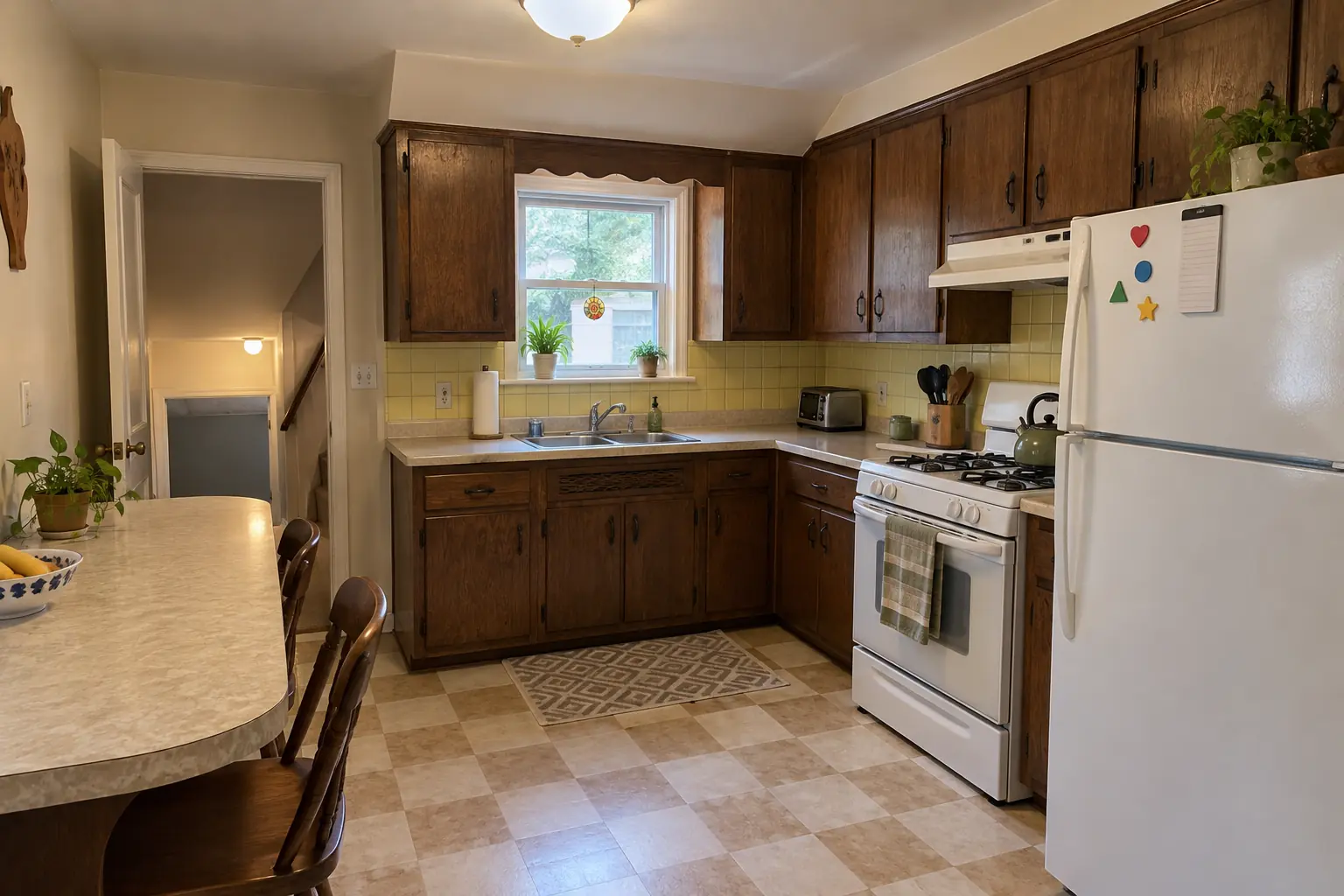 Before
 After
Timeline and disruption compared
A refresh is less disruptive. Cabinet painting or refacing usually keeps the counters, sink and appliances in use; countertop replacement takes the sink out of service for a short period between removal and installation. A full remodel takes the kitchen out of service for weeks, calls for a temporary kitchen and follows the longer sequence above.
Planning time differs too. A refresh can often start soon after selections are made. A full remodel needs design, cabinet lead times and permit review before work begins.
Questions to ask before you decide
Walking through a few questions with whoever will do the work usually makes the right scope clear. A contractor who looks at the boxes, the floor under the sink and the electrical panel can tell you which option your kitchen supports.
- Which of my problems are cosmetic, and which are about layout or systems?
- Will my current cabinets accept new doors, paint or organizers without problems?
- Will new counters fit the existing cabinets, or are the boxes out of level?
- Does the electrical panel have room for the circuits a new kitchen would need?
- What would a refresh not solve that I would still want fixed in a few years?
- How long can my household manage without a working kitchen?
Thinking about resale and long-term plans
If you expect to sell in the next few years, a refresh that makes the kitchen look clean and current is often the more measured choice, since buyers may have their own plans for a full remodel. If you are staying for many years, a remodel that fixes the layout and updates systems is easier to justify.
Either way, avoid spending heavily on finishes for cabinets that will need replacing soon, and avoid installing new counters on a layout you already plan to change.
Frequently asked questions
What is the difference between a kitchen refresh and a full remodel?
How do I know if my cabinets are worth keeping?
Is refacing cabinets a refresh or a remodel?
Does a kitchen refresh need a permit?
Can I refresh now and remodel later?
How long does a kitchen refresh take compared with a remodel?
Kitchen Remodeling in your town
- Carol Stream
- Naperville
- Schaumburg
- Wheaton
- Glen Ellyn
- Bloomingdale
- Bartlett
- Roselle
- Hanover Park
- Glendale Heights
- West Chicago
- Winfield
- Warrenville
- Lisle
- Downers Grove
- Lombard
- Villa Park
- Elmhurst
- Oak Brook
- Addison
- Itasca
- Wood Dale
- Elk Grove Village
- Hoffman Estates
- Arlington Heights
- Palatine
- Mount Prospect
- Des Plaines
- Park Ridge
- Skokie
- Evanston
- Northbrook
- Glenview
- Highland Park
- Buffalo Grove
- Lake Zurich
- Oak Park
- Berwyn
- Tinley Park
- Orland Park
- Bolingbrook
- Aurora
- Elgin
- St. Charles
- Geneva
- Batavia
- Crystal Lake
- Plainfield
- Woodridge
Keep reading
-
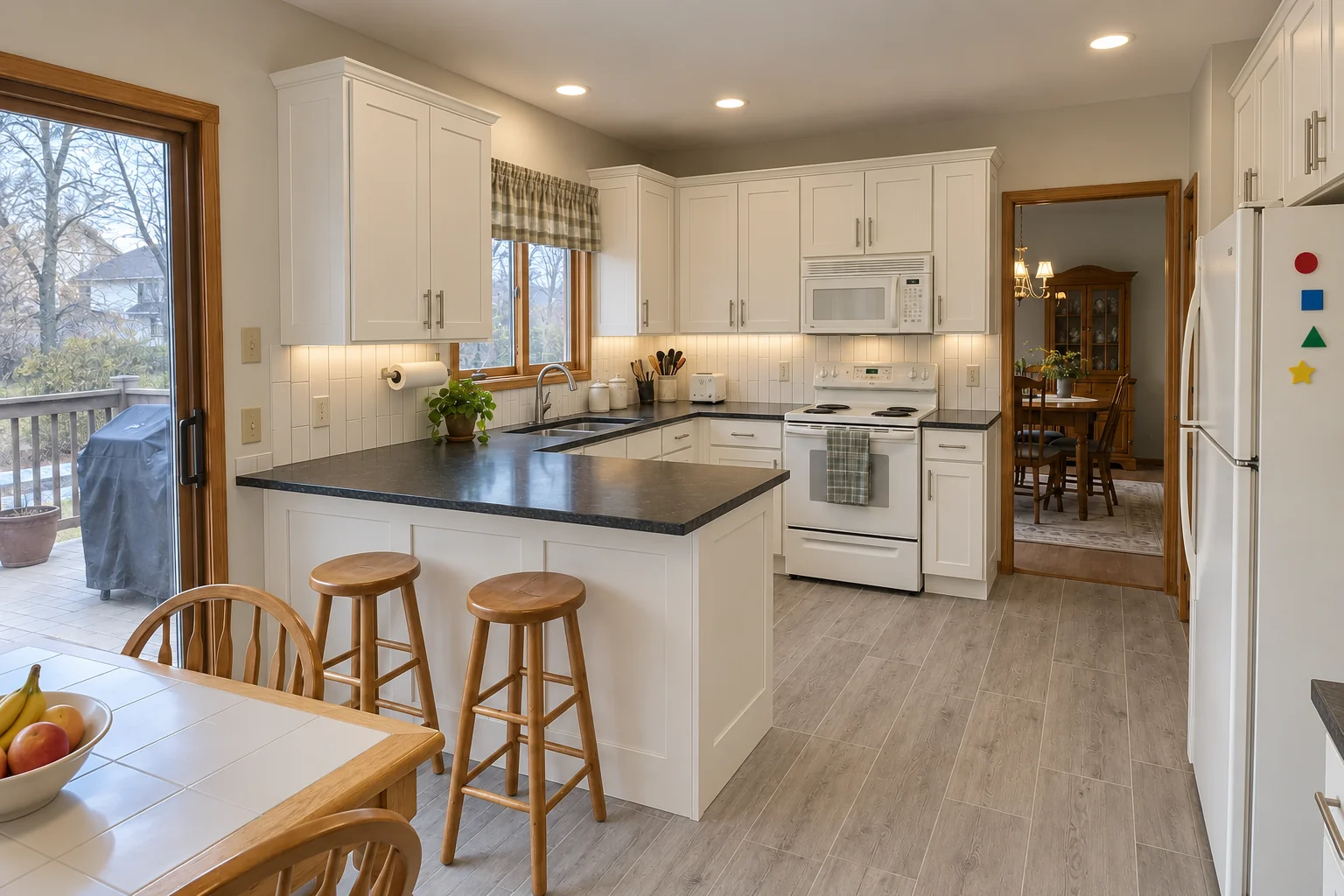 Running the projectKitchen Remodel Timeline & Checklist: How Long Does a Kitchen Remodel Take?How long does a kitchen remodel take? For a same-layout kitchen, construction usually runs about four to eight weeks once cabinets and materials are…3 min read
-
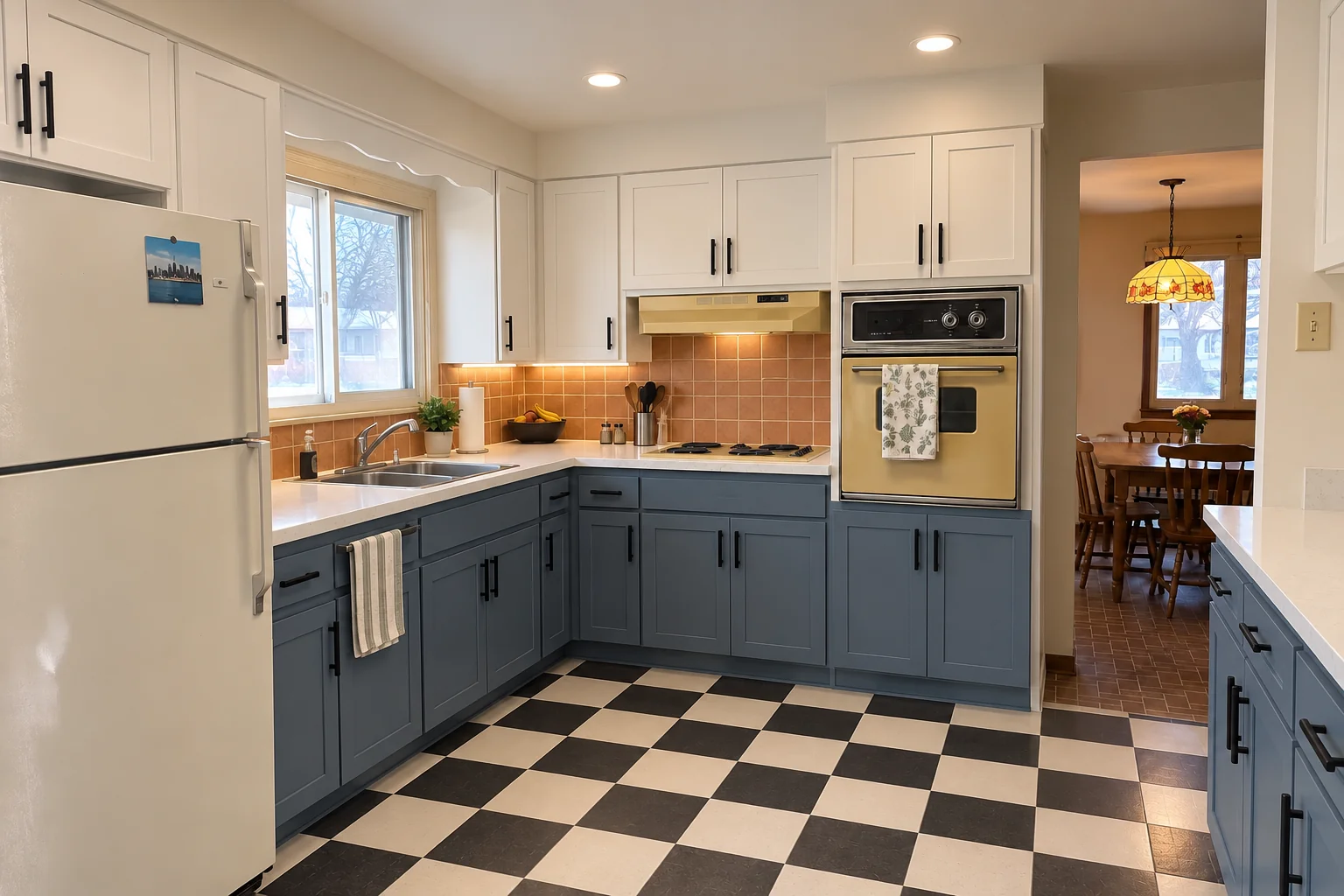 Costs and budgetingKitchen Remodel Return on Investment: Should You Remodel Before Selling?A kitchen remodel usually helps a house sell and supports its value, but it rarely returns everything it costs. Return on investment is strongest…3 min read
-
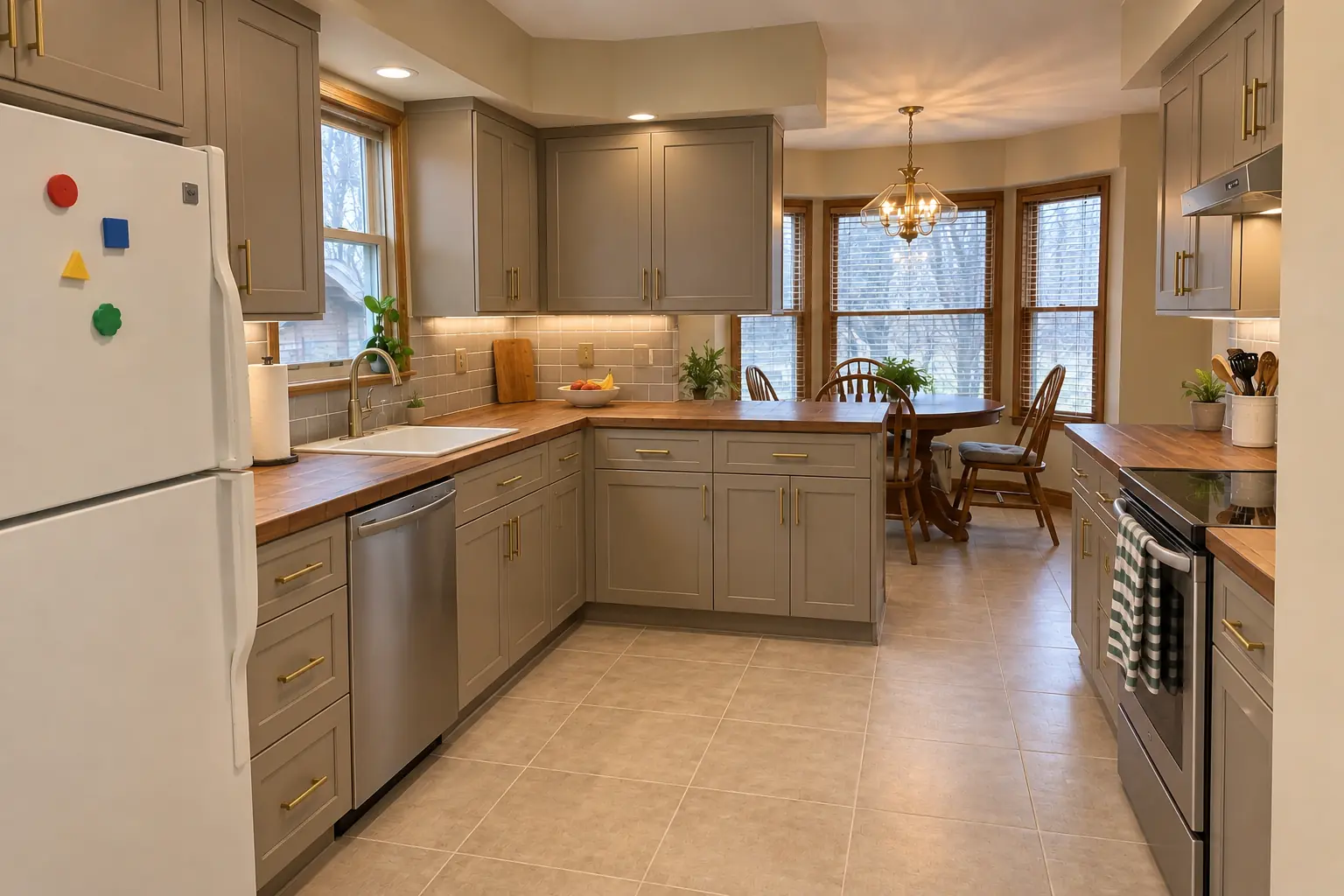 Costs and budgetingKitchen Remodel Cost in Chicago: Budget Breakdown, Cost per Square Foot and LaborKitchen remodel cost is driven by scope more than size. National cost guides put a typical project between about $14,600 and $41,600, with an average…3 min read