Wet Bar vs Dry Bar: Which Home Bar Fits Your Space?
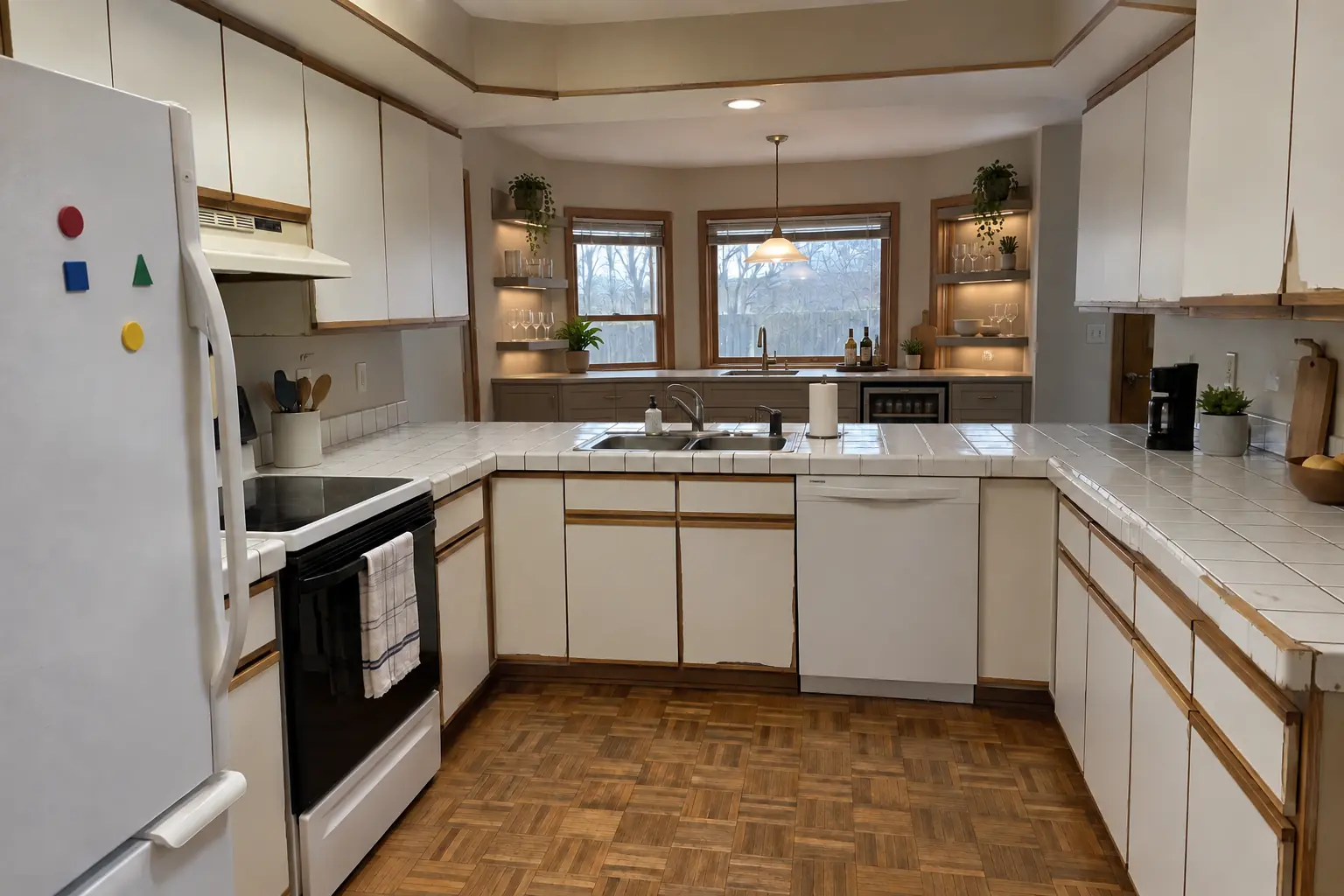
The difference between a wet bar and a dry bar is the sink. A wet bar has a sink with running water and a drain; a dry bar has cabinets, a counter and storage, often with a beverage fridge, but no plumbing. That one difference decides most of the planning: a wet bar needs supply lines, a drain and a vent, usually a plumbing permit and work by a licensed plumber, while a dry bar can go almost anywhere there is a wall and an outlet.
If water and drain lines are close, such as on a wall shared with the kitchen or near a basement bathroom, a wet bar is often practical and makes entertaining easier. If plumbing is far away, a dry bar usually covers what people actually use it for. This guide compares wet bar vs dry bar options, explains what each needs behind the walls, and covers appliances, placement and materials for kitchens, dining rooms and basements in Chicago-area homes.
Wet bar vs dry bar at a glance
From across the room, a wet bar and a dry bar can look identical. The differences show up in planning, daily use and upkeep, and they are easiest to see side by side.
| Factor | Wet bar | Dry bar |
|---|---|---|
| Sink | Yes, for rinsing and mixing | No |
| Plumbing | Supply, drain and vent | None |
| Placement | Limited by drain reach | Almost any wall |
| Permits | Plumbing permit usually | Electrical only if new circuits |
| Trades | Plumber, electrician, carpenter | Carpenter, often electrician |
| Upkeep | Usual sink leak risk | Fewer things to fail |
What a wet bar needs behind the walls
A bar sink is plumbed like any other sink, so the hidden work is the same as in a kitchen. In Illinois, that work is done by IDPH-licensed plumbers, and most villages require a permit and inspection for a new fixture.
- Hot and cold supply lines with shut-off valves.
- A trap and a drain that slopes to the main stack.
- A vent, sized and routed to code.
- Power for any appliances and lighting at the bar.
Wall bars near existing plumbing
A wet bar on a wall backing up to the kitchen sink or a bathroom can often tie into nearby lines. This is the simplest and most predictable wet bar to build.
Basement wet bars below the sewer line
A bar in the middle of a basement may sit below the sewer line. Then the drain needs a pump to lift water to the main line, which adds equipment and maintenance.
Island-style wet bars
An island bar needs a vent designed for an island, usually a loop vent. We do not plan around air admittance valves, since Illinois restricts them.
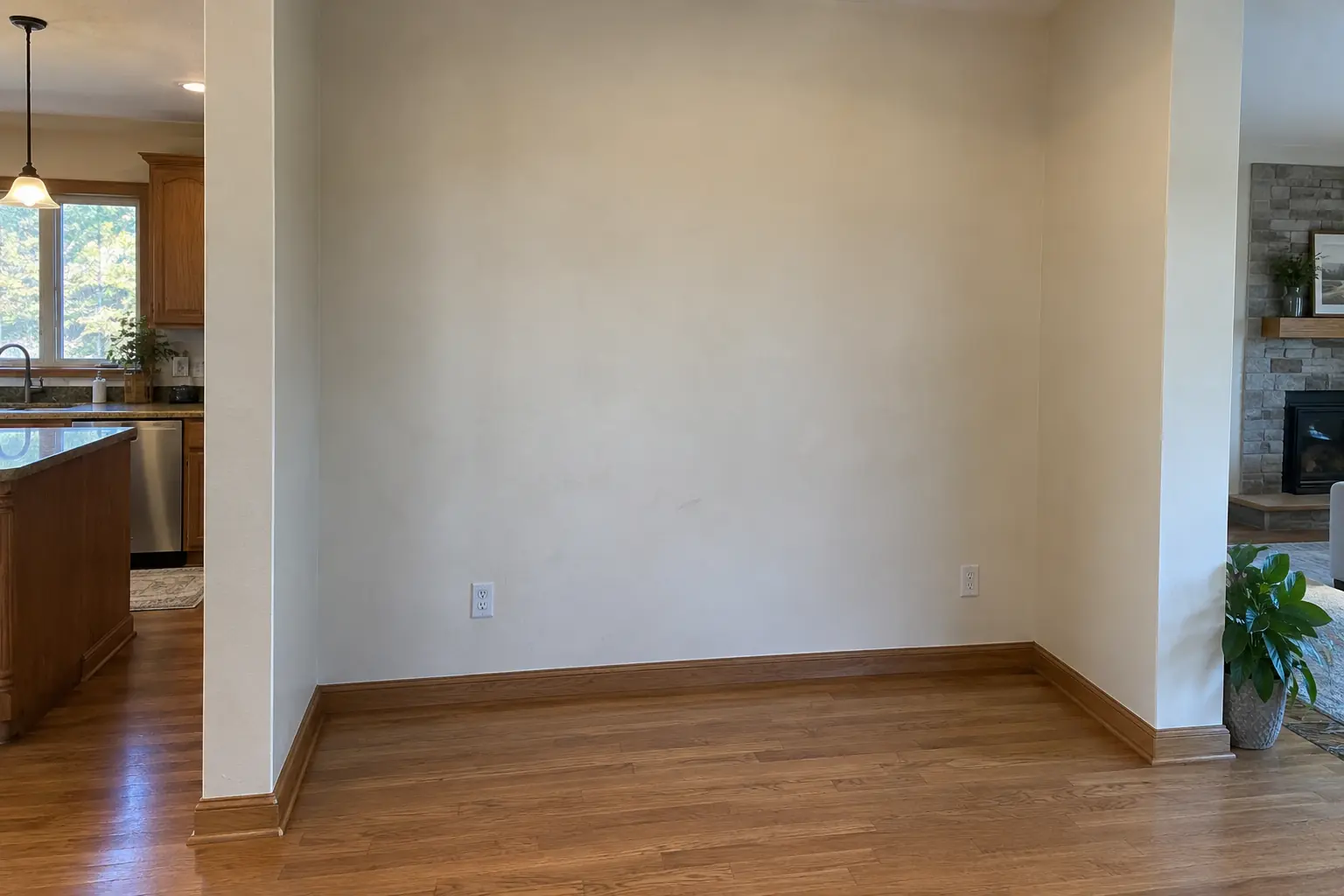 Before
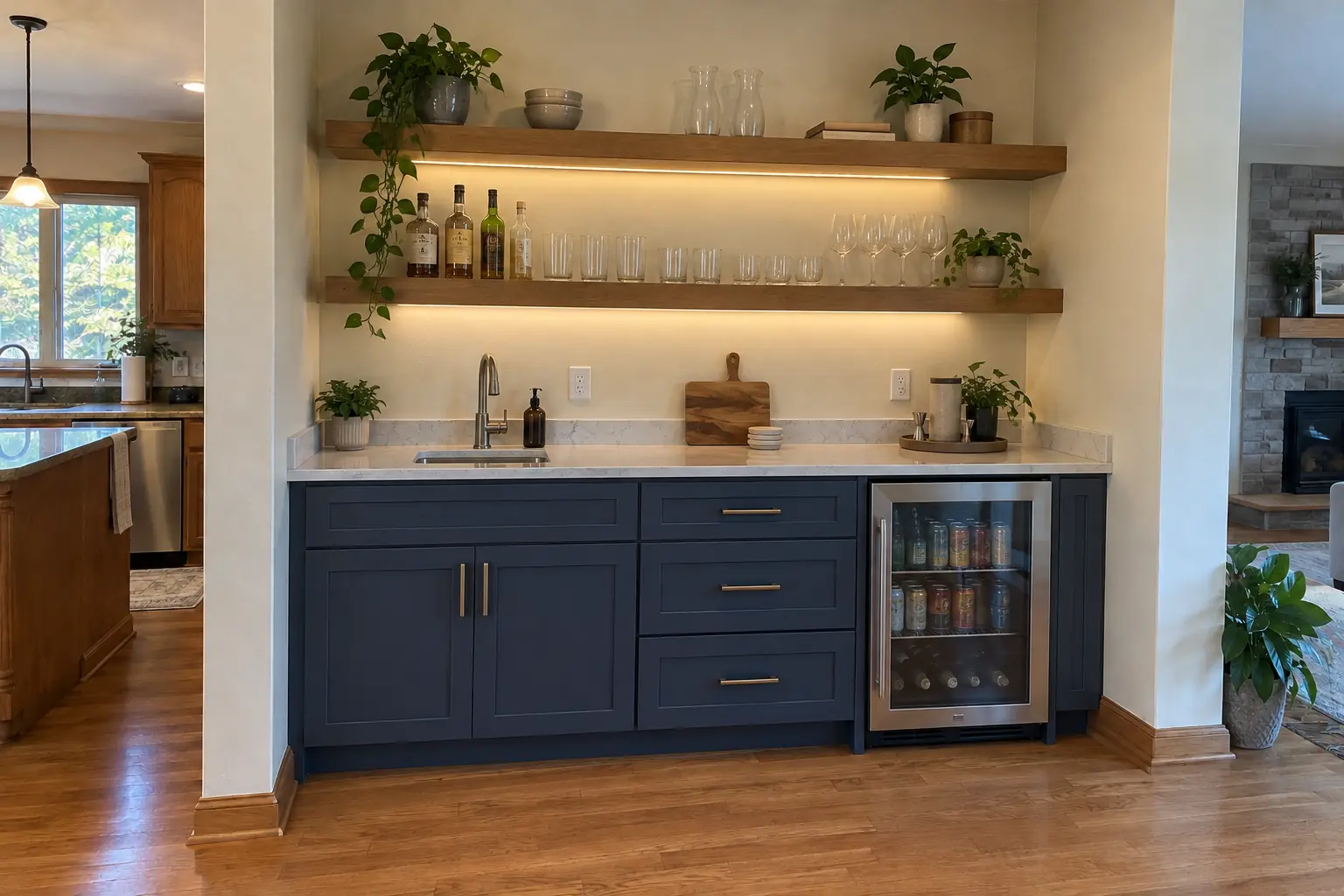 After
What a dry bar needs
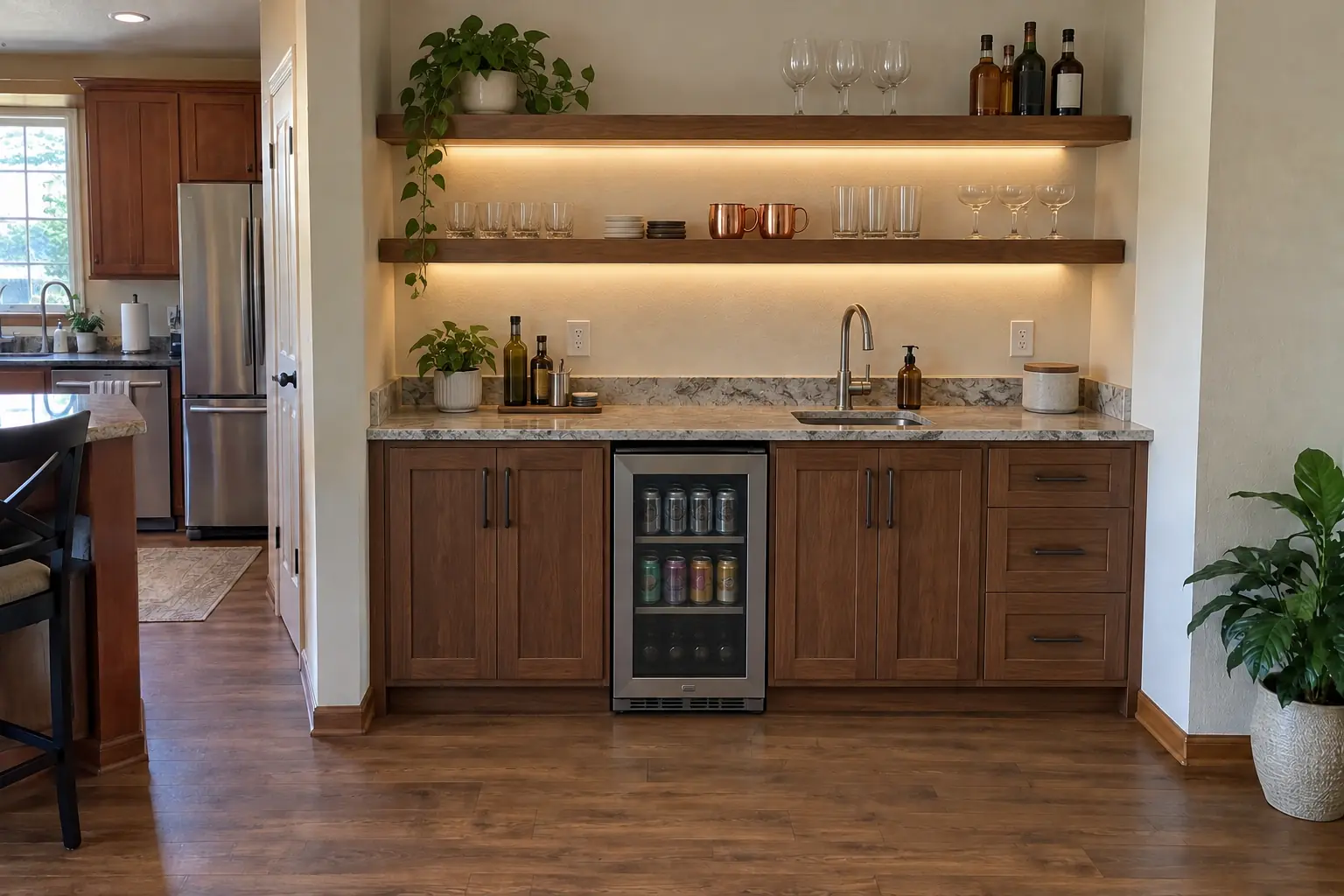
A dry bar is mostly carpentry: base cabinets, a countertop, upper cabinets or open shelves, and lighting. The main utility is electrical. A beverage fridge, wine cooler or ice maker each draws power, and a coffee station with an espresso machine can need a dedicated circuit of its own.
Because there is no plumbing, a dry bar is quicker to build and easier to place for sightlines and traffic. It is a common choice for a dining room wall, a living room alcove or a nook off the kitchen. Many people keep a pitcher or a small water dispenser nearby and rinse glasses in the kitchen.
Appliances for a home bar
Under-counter appliances are what turn a run of cabinets into a bar. Built-in models are designed to vent from the front, so they can sit flush with the cabinets; freestanding models need clearance around them and can overheat if boxed in.
Appliances that work in either bar
- Beverage center or under-counter fridge.
- Wine cooler; dual-zone models keep reds and whites at different temperatures.
Appliances that bring plumbing with them
- Ice maker: many clear-ice models need a water line and a drain or drain pump, which effectively makes it a wet bar.
- Dishwasher drawer: practical in a busy wet bar; needs water, drain and power.
- Plumbed coffee machine: needs a water line and often a dedicated circuit.
Where a home bar works best
In Chicago-area homes, the basement is the most common spot for a full wet bar, especially where a bathroom or laundry room already has plumbing nearby. Finished basements also have room for seating and a counter overhang.
Dining rooms and kitchen walls suit dry bars and smaller wet bars. A bar along a wall shared with the kitchen can borrow the kitchen's plumbing and keeps entertaining close to the cooking. Coffee stations follow the same logic on a smaller scale, often with just an outlet, a counter and drawers.
- Keep the bar out of the main kitchen work triangle so guests do not block the cook.
- Allow enough counter depth for appliances and a working surface.
- Plan task lighting under upper cabinets or shelves and accent lighting for glassware.
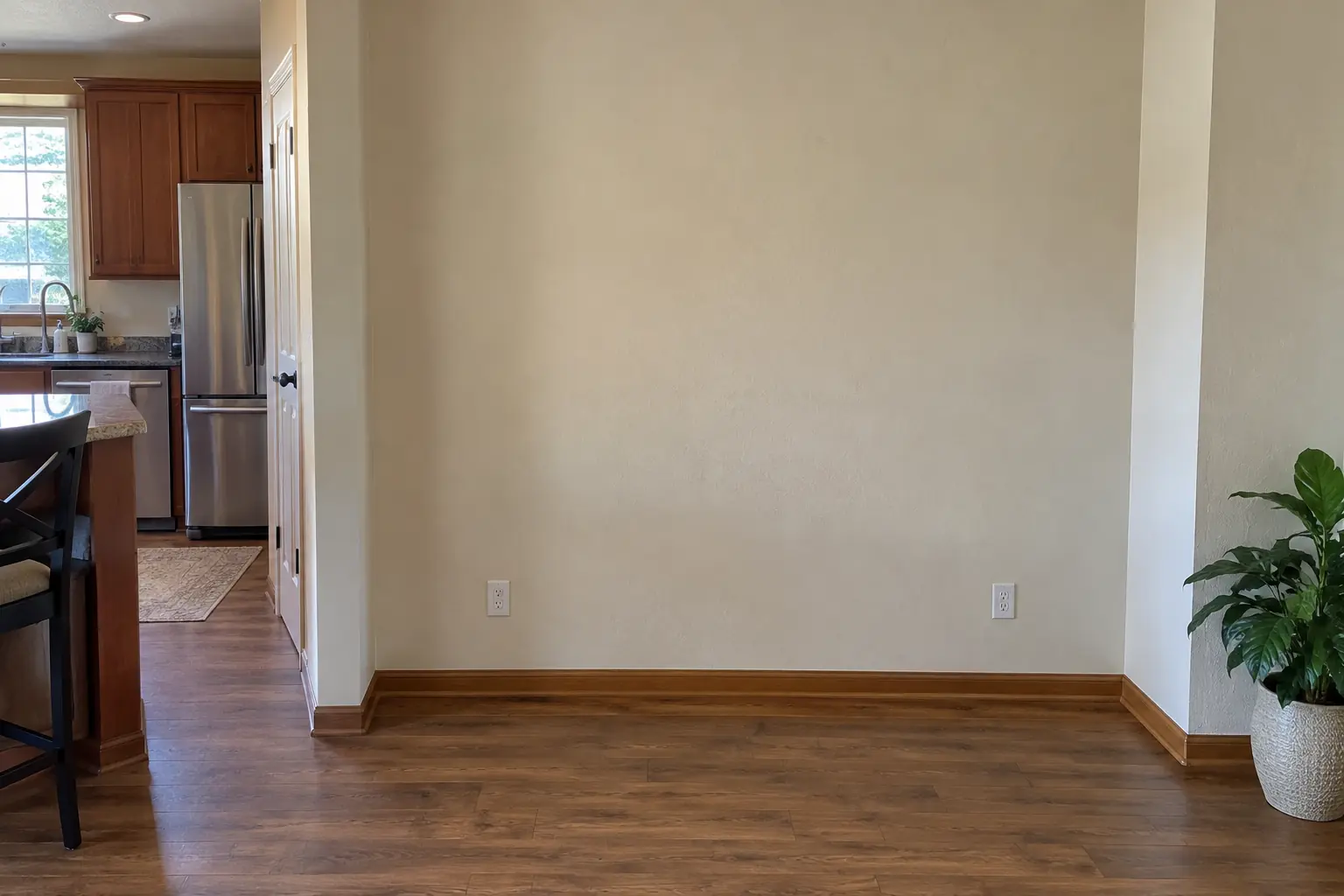 Before
 After
Cabinets, counters and finishes
Bar cabinets are usually the same boxes as kitchen cabinets, so a bar can match the kitchen or stand apart with a different color. Wine racks, stemware holders, pull-out bottle storage and drawers for bar tools make the space more useful than plain shelves.
Countertop choice depends on whether there is a sink. For a wet bar, choose a surface that handles water, citrus and alcohol: quartz is low maintenance, while marble and some granites can etch or stain from acidic drinks and need sealing. A backsplash around the sink protects the wall. For a dry bar, almost any countertop works, and a wood or stone top can tie it to nearby furniture.
Planning steps before you build a home bar
In our experience, the best bars come from deciding how you will use the space before choosing finishes. A bar for quiet evenings needs less than one for large gatherings.
- Decide what you will serveList what you will store and pour: wine, spirits, beer, coffee, soft drinks.
- Locate the plumbingFind the nearest water supply, drain and vent before deciding on a sink.
- Check the panelConfirm there is room for new circuits for appliances and lighting.
- Pick appliances firstChoose models before cabinets so the openings fit them.
- Confirm permits and approvalsCheck with your village; condo buildings may also need association approval for plumbing.
Frequently asked questions
What is the difference between a wet bar and a dry bar?
Is a wet bar worth it?
Can you add a wet bar in a basement?
Does a dry bar need a permit?
Can I turn a dry bar into a wet bar later?
Does an ice maker need a drain?
Home Bars & Coffee Stations in your town
- Carol Stream
- Naperville
- Schaumburg
- Wheaton
- Glen Ellyn
- Bloomingdale
- Bartlett
- Roselle
- Hanover Park
- Glendale Heights
- West Chicago
- Winfield
- Warrenville
- Lisle
- Downers Grove
- Lombard
- Villa Park
- Elmhurst
- Oak Brook
- Addison
- Itasca
- Wood Dale
- Elk Grove Village
- Hoffman Estates
- Arlington Heights
- Palatine
- Mount Prospect
- Des Plaines
- Park Ridge
- Skokie
- Evanston
- Northbrook
- Glenview
- Highland Park
- Buffalo Grove
- Lake Zurich
- Oak Park
- Berwyn
- Tinley Park
- Orland Park
- Bolingbrook
- Aurora
- Elgin
- St. Charles
- Geneva
- Batavia
- Crystal Lake
- Plainfield
- Woodridge
Sources
Keep reading
-
 Plumbing, appliances and electricalKitchen Sink Replacement and Plumbing: What Drives the Cost and Can You Move a Sink?Kitchen sink replacement cost stays modest when the new sink fits the same countertop opening and the drain stays put. It rises when the sink changes…4 min read
-
 Plumbing, appliances and electricalKitchen Lighting and Electrical Planning: Dedicated Circuits and Under Cabinet LightingDoes a kitchen appliance need a dedicated circuit? Often, yes. Electric ranges and wall ovens, built-in microwaves, dishwashers and disposals usually…3 min read
-
 Planning and designKitchen Storage and Pantry Planning: Islands With Seating and Storage, Pantries and Small-Kitchen FixesTo add storage to a small kitchen, make the cabinets you have work harder first: pull-out shelves and drawers in deep base cabinets, a fixed blind…4 min read