Commercial Kitchen Hood Installation Requirements and Grease Trap Cleaning Frequency
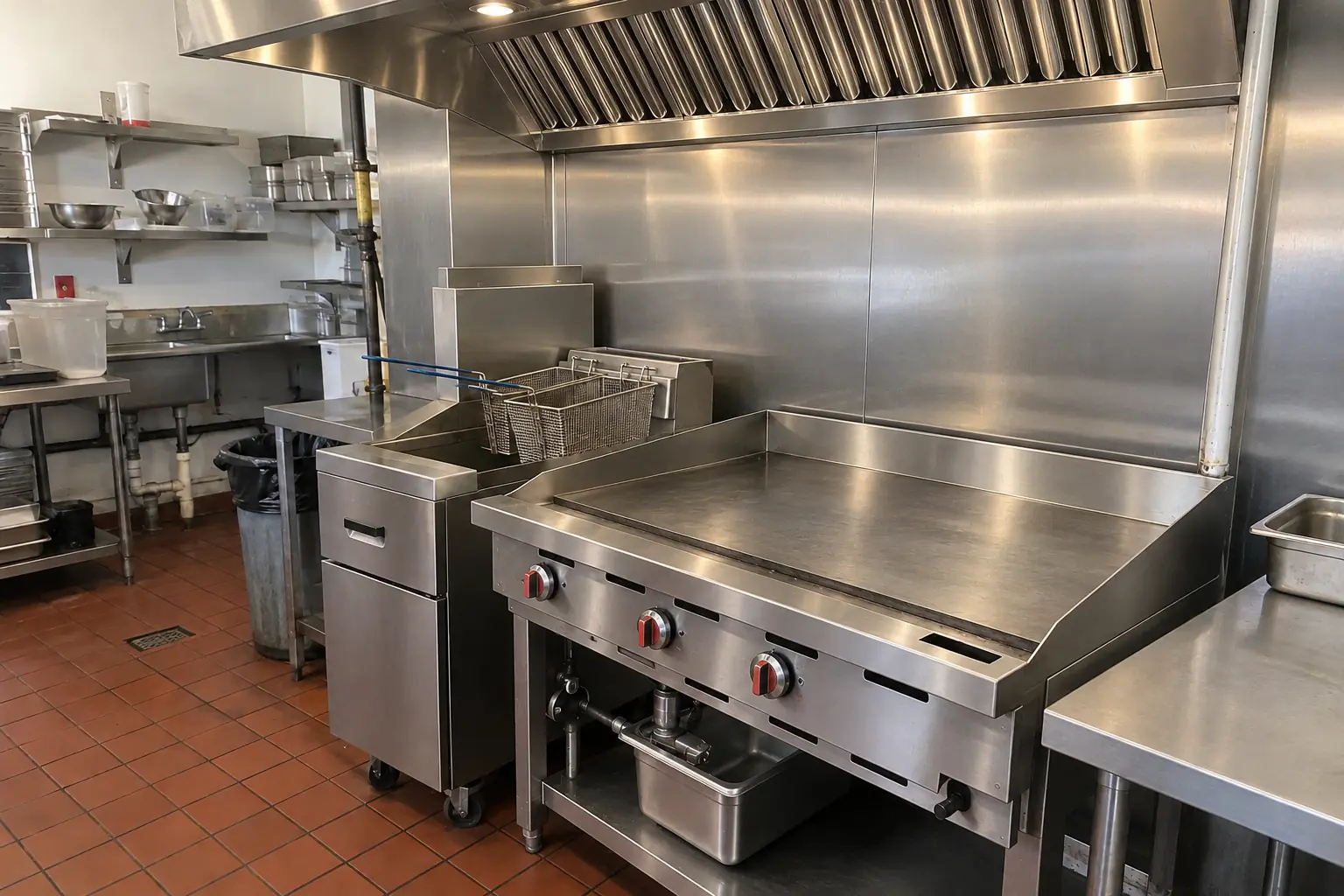
For restaurant owners and kitchen managers, two systems cause more inspection trouble than almost anything else: the exhaust hood over the cook line and the grease trap under or behind the kitchen. Commercial kitchen hood installation requirements come mainly from NFPA 96, the fire code standard for commercial cooking ventilation, together with the mechanical and fire codes your village or the City of Chicago has adopted. Grease trap rules come from the local sanitary district or municipality.
This guide walks through hood types, what a compliant installation includes, the NFPA 96 inspection and cleaning schedule, grease trap cleaning frequency and the habits that make inspections routine. Details vary by jurisdiction, so always confirm specifics with your building department, fire department and sanitary authority before you buy equipment or sign for work.
Type I and Type II hoods: which one you need
The hood type follows the equipment under it. Whether a specific appliance needs a Type I hood is decided under the code your jurisdiction uses and by the plan reviewer, so bring your full equipment list, with model numbers, to the design stage.
| Type I | Type II | |
|---|---|---|
| Purpose | Grease and smoke | Heat, steam and vapor |
| Typical equipment | Fryers, griddles, charbroilers, ranges, woks | Many dishwashers and some ovens |
| Grease filters or baffles | Yes | No |
| Welded grease duct | Yes | No |
| Fire suppression | Yes | Not usually |
Final hood type is set by the adopted code and the plan reviewer.
Commercial kitchen hood installation requirements
Every jurisdiction reviews hood plans a little differently, but the same core requirements show up in almost every Chicago-area project.
Hood and grease duct
- A hood listed for its use, sized to overhang the cooking equipment as the code and listing require.
- A liquid-tight, continuously welded grease duct of the steel gauge NFPA 96 specifies, sloped to drain back toward the hood, with cleanout access along the run.
- Required clearances from hood and duct to combustible materials, or a listed enclosure or wrap.
Fan, makeup air and fire suppression
- An exhaust fan rated for grease exhaust, with the discharge located away from air intakes and roof edges as required.
- Makeup air sized to replace what the hood exhausts, so doors do not whistle and burners do not starve.
- A fire suppression system over the cooking surfaces, plenum and duct, with automatic fuel or power shutoff.
Permits and inspections
Expect permits and inspections from the building department, and usually a fire department review of the suppression system. Inspectors look at the hood, duct, fan and suppression as one system.
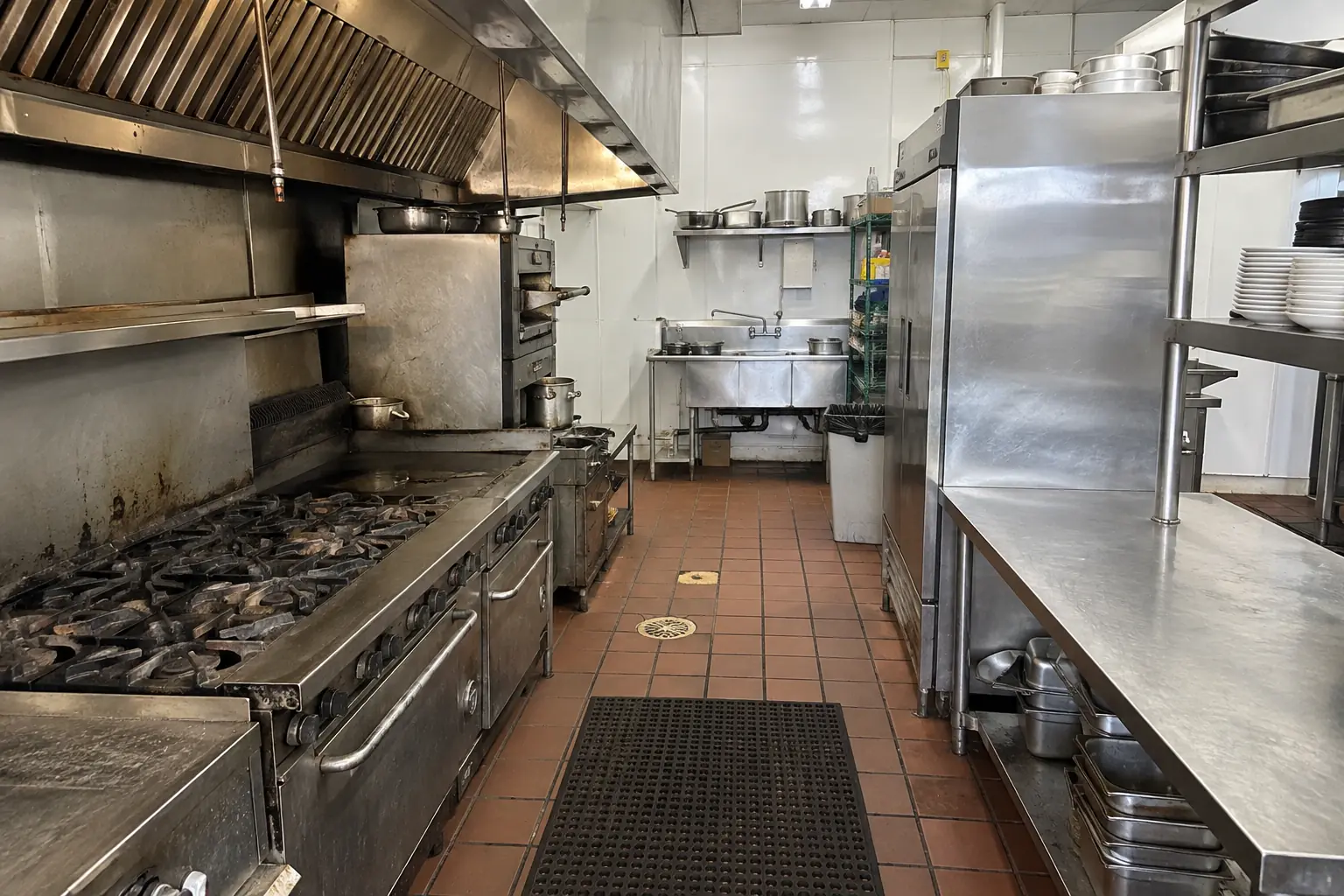 Before
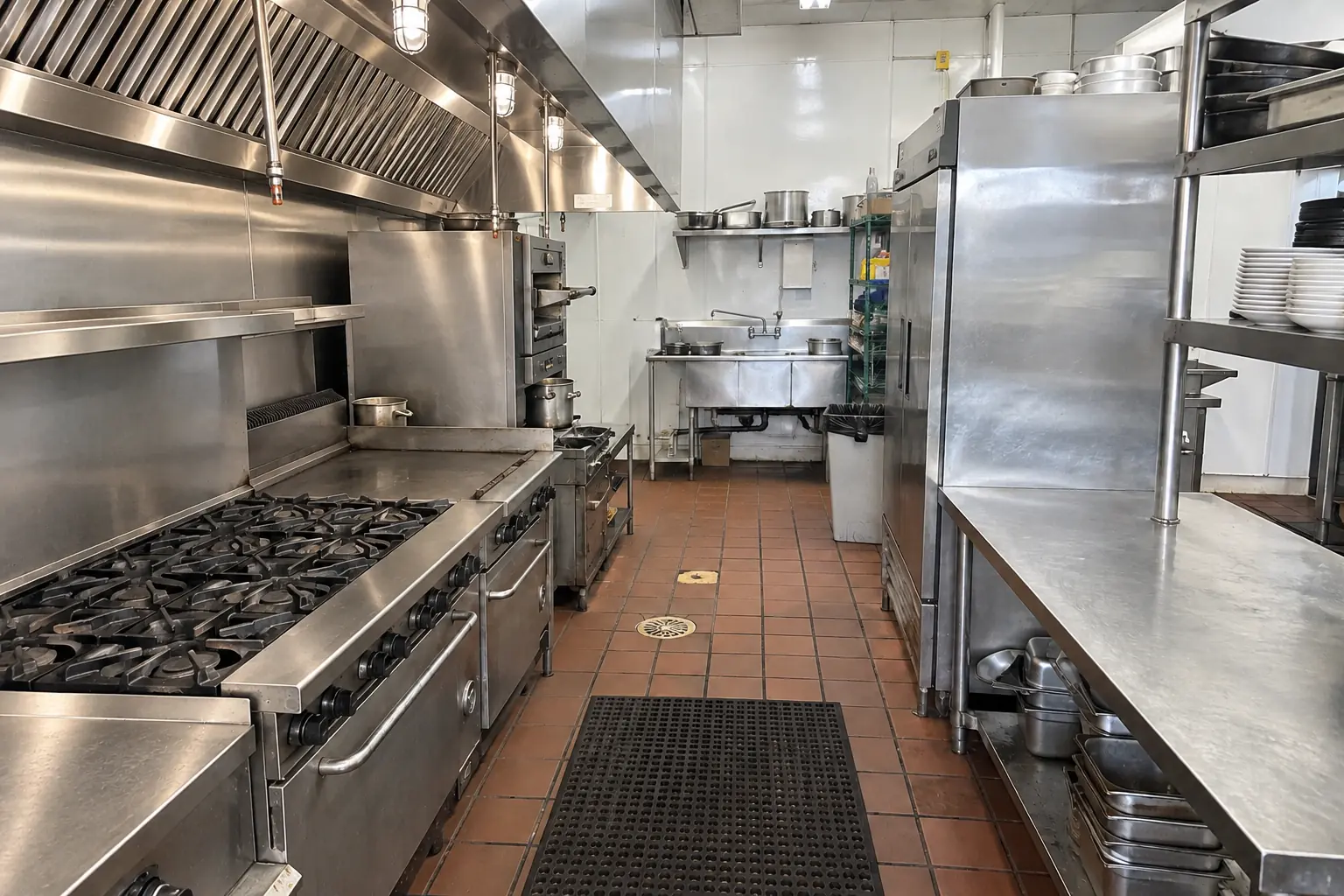 After
Installing a commercial hood: the usual sequence
Hood projects run smoothest when design, permits and trades are lined up before anything is ordered.
- Finalize the equipment listList every cooking appliance with model numbers, fuel type and position on the line.
- Design the systemSize the hood, duct route, exhaust fan and makeup air, and lay out the suppression coverage.
- Submit for permitsFile drawings with the building department, and the suppression design with the fire authority where required.
- Install and weldHang the hood, weld and support the duct, set the fan and makeup air unit, and wire controls.
- Inspect and testComplete rough and final inspections, test the suppression system and confirm the fuel or power shutoff works.
NFPA 96 hood cleaning frequency
NFPA 96 sets inspection frequencies for the exhaust system based on the type and volume of cooking, and the system must be cleaned when inspection finds grease buildup. These are inspection intervals: a busy kitchen may find that every inspection calls for cleaning, while a light-use kitchen may not. Your fire inspector or insurer can also ask for a tighter schedule.
| Cooking operation | Examples | Inspection interval |
|---|---|---|
| Solid fuel | Wood or charcoal cooking | Monthly |
| High volume | 24-hour operations, charbroiling, wok cooking | Quarterly |
| Moderate volume | Kitchens between high and low volume | Semiannually |
| Low volume | Churches, day camps, seasonal businesses, senior centers | Annually |
Source: NFPA 96. Clean whenever inspection finds grease buildup.
What a proper hood cleaning includes
A hood cleaning that satisfies a fire inspector covers the whole exhaust path, not just the visible canopy: filters, plenum, the full duct run to the roof and the exhaust fan. The cleaning company should leave a certificate or label on the hood showing the date and what was cleaned, and report areas they could not reach. Keep those records with your fire suppression inspection reports.
Between professional cleanings, staff should clean or swap baffle filters regularly, often daily or weekly depending on volume, and empty grease cups. Dirty filters reduce airflow and let more grease into the duct.
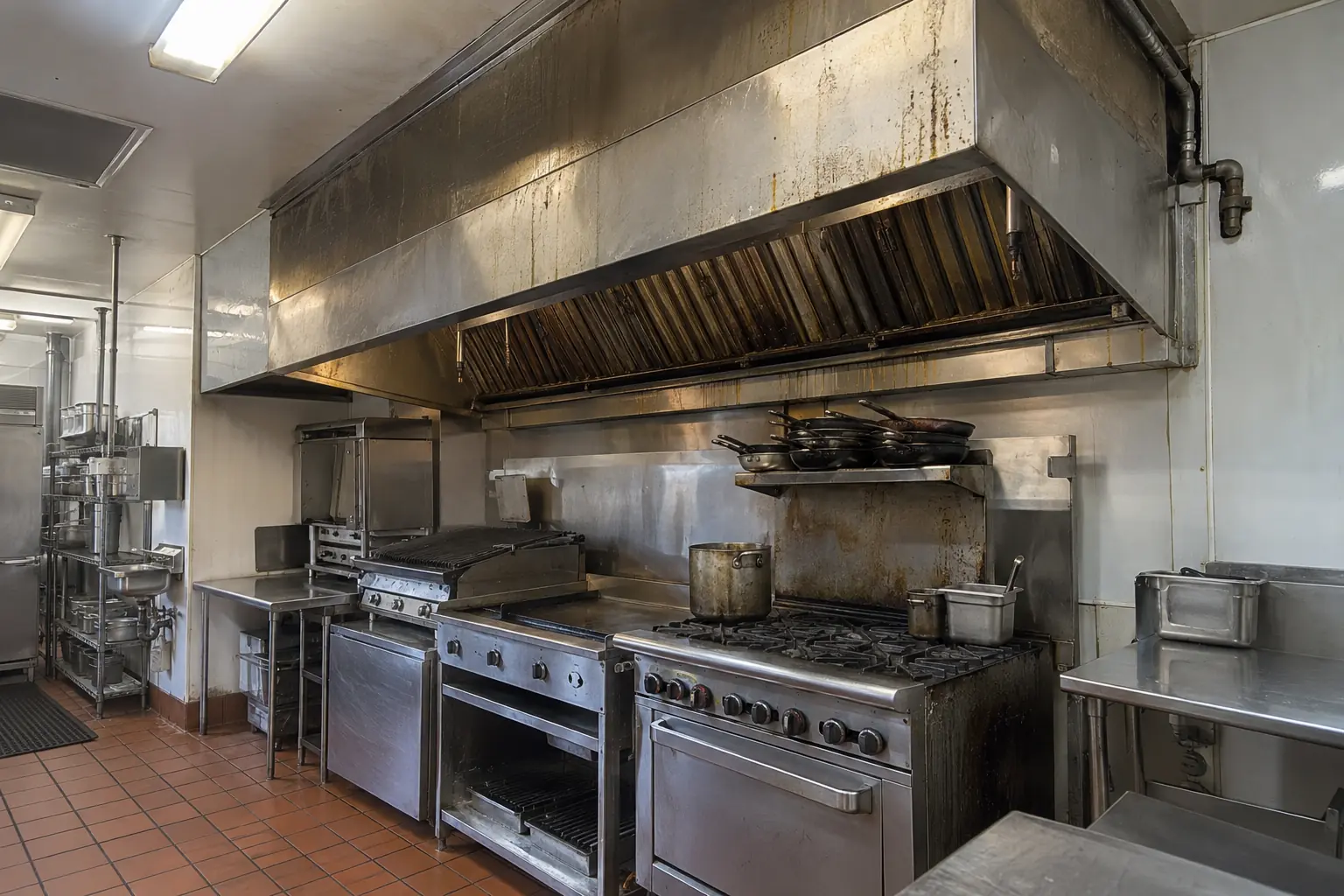 Before
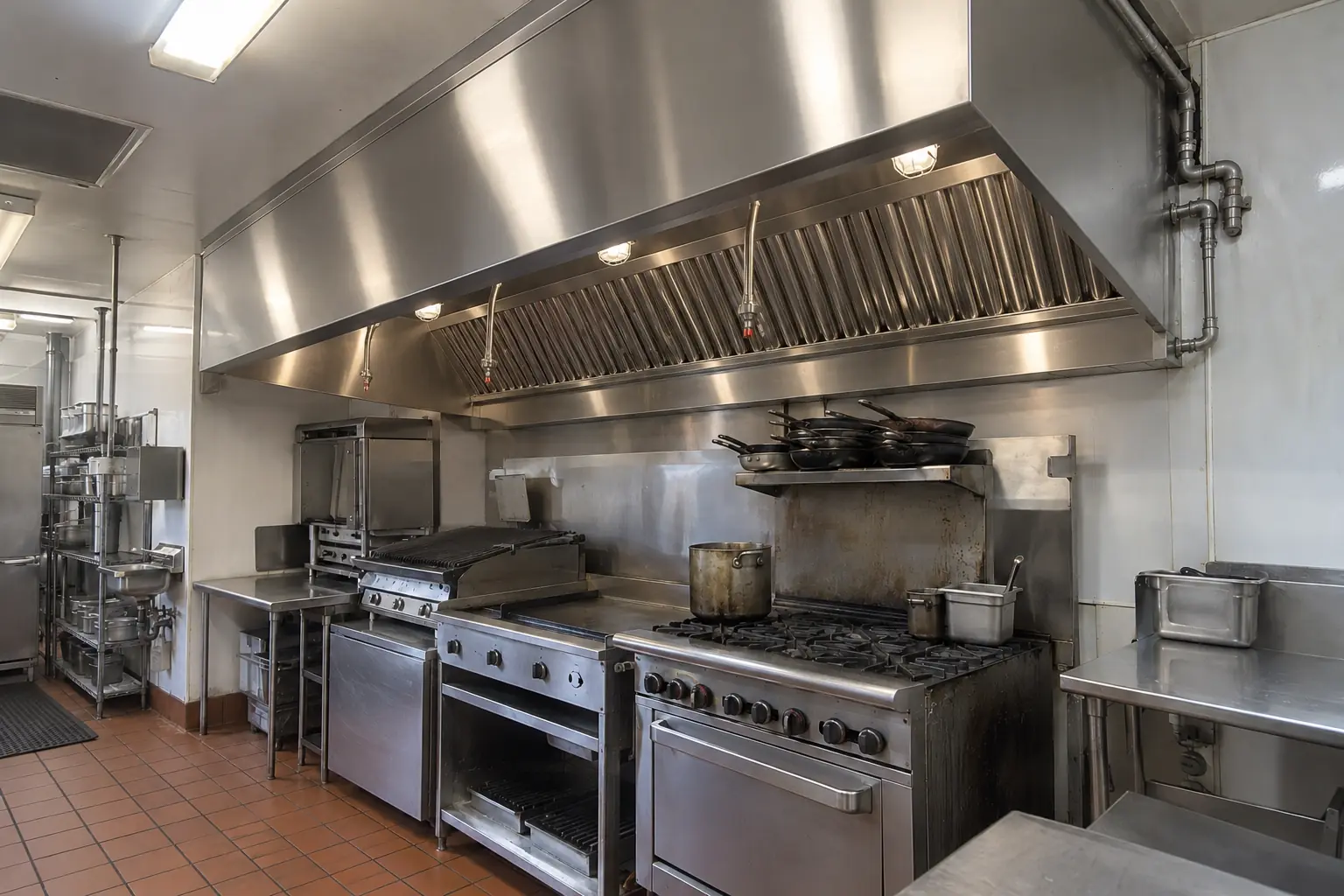 After
Grease trap cleaning frequency
There is no single answer, because it depends on the size of the trap or interceptor and how much grease goes down the drains. Many municipal programs use a version of the quarter rule: the trap must be cleaned before fats, oils, grease and settled solids take up about 25 percent of its depth.
The rules that actually apply to you come from your local sanitary district or village. In the Chicago area that can mean requirements from the municipality, the regional wastewater district or both. They may set a minimum pumping interval, require a licensed hauler and ask you to keep a maintenance log on site.
| Trap type | Where it sits | Common service pattern |
|---|---|---|
| Small under-sink trap | At the fixture | Weekly or more often in busy kitchens |
| Any trap or interceptor | Anywhere on the line | Before grease and solids reach about 25 percent of depth |
| Large in-ground interceptor | Outside or below grade | Often monthly to quarterly |
Your sanitary authority's limit, commonly the quarter rule, takes priority over any pattern.
Signs the grease trap needs service sooner
A schedule is a starting point; your kitchen tells you when it is not enough.
- Slow sinks or floor drains, or water backing up into floor sinks.
- Sewer or rancid smells near the trap or the back door.
- Grease visible on the outlet side or in the downstream manhole.
- A notice from the village or sanitary district about fats, oils and grease in the sewer line.
Keeping inspections smooth
The restaurants that pass inspections without drama usually share the same habits.
- One binder or digital folder with hood cleaning certificates, fire suppression reports, grease trap pumping receipts and permit documents.
- Plates scraped and pans wiped before washing, and strainers in every sink.
- Used fryer oil collected for recycling instead of poured down the drain.
- A check of hood and suppression coverage before any new or moved cooking equipment arrives; an appliance outside the capture area or nozzle coverage is a common reason for a failed inspection.
Frequently asked questions
Does every restaurant need a Type I hood?
How often should a commercial kitchen hood be cleaned?
How often should a grease trap be cleaned?
Who sets grease trap rules in the Chicago area?
Can I install a commercial hood without a permit?
Can I use enzymes or additives instead of pumping the grease trap?
Commercial Kitchen Hood Installation in your town
- Carol Stream
- Naperville
- Schaumburg
- Wheaton
- Glen Ellyn
- Bloomingdale
- Bartlett
- Roselle
- Hanover Park
- Glendale Heights
- West Chicago
- Winfield
- Warrenville
- Lisle
- Downers Grove
- Lombard
- Villa Park
- Elmhurst
- Oak Brook
- Addison
- Itasca
- Wood Dale
- Elk Grove Village
- Hoffman Estates
- Arlington Heights
- Palatine
- Mount Prospect
- Des Plaines
- Park Ridge
- Skokie
- Evanston
- Northbrook
- Glenview
- Highland Park
- Buffalo Grove
- Lake Zurich
- Oak Park
- Berwyn
- Tinley Park
- Orland Park
- Bolingbrook
- Aurora
- Elgin
- St. Charles
- Geneva
- Batavia
- Crystal Lake
- Plainfield
- Woodridge
Sources
Keep reading
-
 Plumbing, appliances and electricalDucted vs Ductless Range Hood: Installation Height, Venting and What Shapes the CostDucted vs ductless range hood: a ducted hood sends smoke, grease, heat and moisture outside and performs better whenever a duct path exists; a…4 min read
-
 Running the projectKitchen Remodel Permits: Do I Need a Permit to Remodel My Kitchen?Usually yes. Kitchen work that touches plumbing, electrical wiring, gas lines, ventilation or the structure almost always needs a permit and…3 min read
-
 Repairs, cleaning and damageHow to Remove Grease From Kitchen Cabinets, Plus a Post-Renovation Kitchen Cleaning ChecklistTo remove grease from kitchen cabinets, wipe them with warm water and a few drops of grease-cutting dish soap on a damp microfiber cloth, rinse with…3 min read