Serving 49 Chicago-area suburbs

Commercial Kitchen Hood Installation in Chicago & the Suburbs

Type I and Type II exhaust hoods, grease duct, exhaust fans and makeup air installed for restaurants and food-service kitchens in Chicagoland.

  • Commercial kitchens across the Chicago suburbs, from Naperville to Evanston
  • Nights, early mornings and closed days
  • Coordination with the fire and health inspectors

Prefer a callback?

Leave your number and a Chicagoland commercial hood installer will call you.

Hood and ventilation problems we solve for Chicagoland kitchens

A commercial hood is a system, not a box on the wall: the canopy, the welded grease duct, the roof fan, makeup air and a fire suppression system all have to work and pass inspection together. We install that system for restaurants, cafes, bakeries and institutional kitchens in Chicagoland, built to NFPA 96 and the village's mechanical code.

Old hood with no fire suppression or an outdated system

Many older hoods carry suppression systems that predate the current standard for modern cooking oils. We plan the hood work so a licensed fire suppression contractor can bring the system up to date.

Doors whistle and the kitchen is under heavy negative pressure

Exhaust without matching makeup air leaves the space fighting for air. We size tempered makeup air so doors close normally and the hood pulls the way it should.

Taking over a space with a used hood

Reusing a hood left by a previous tenant can save time, but only if the size, duct and suppression suit your cooking. We assess it and list what needs upgrading.

Landlord or property manager requirements

Property managers often need roof work, curb details and contractor insurance in hand before a hood goes in. We prepare that paperwork alongside the permit set.

Duct too close to combustibles

Grease duct needs clearance to wood framing and other combustibles, or an approved enclosure or wrap. We correct runs that were installed too tight.

Smoke rolls out past the hood

When smoke and heat escape the canopy, the hood is undersized, the fan is weak or there isn't enough makeup air. We measure the system and fix the part that's short.

Inspector flagged the hood or duct

A failed fire or mechanical inspection usually comes with a list: clearances, a duct joint, a missing access panel, a fan without a hinge kit. We work through the write-up item by item and get it reinspected.

School, church or daycare kitchen upgrade

Institutional kitchens often run old hoods that were fine for warming food but not for frying or griddle work. We match the hood to how the kitchen is used today.
What we handle on site

  • Site survey and equipment reviewA walk of the kitchen and roof with your equipment schedule in hand, to see what the system has to cover.
  • System design and sizingWe size the canopy, airflow, fan and replacement air to match the appliances underneath.
  • Roof penetration and curbRoof opening framed, curb set and flashed to carry the exhaust fan.
  • Grease duct installationContinuous welded duct from hood to fan, with access panels and the required clearances or a listed enclosure.
  • Exhaust fan installationAn upblast exhaust fan on a hinged base with grease containment, wired to the hood controls.
  • Start-up and airflow checkFans and makeup air started, balanced and checked so the hood captures smoke at full cooking.
  • Inspections and closeoutFinal inspections attended, corrections made and the permit closed.

Equipment and options

Baffle filtersListed stainless or aluminum baffles that trap grease and keep flame out of the duct.
Wall canopy and island hoodsWall hoods sit against a back wall over a cook line; island hoods hang over a free-standing line and need more overhang.
Duct wrap and rated enclosuresListed grease duct wrap or a fire-rated shaft where the duct passes through floors, ceilings or near combustibles.
Upblast exhaust fanA roof-mounted fan that throws exhaust up and away from the roof, with a grease box.
Type II hoodUsed where the load is steam or heat, not grease; it can use lighter duct.

Commercial Kitchen Hood Installation: before and after

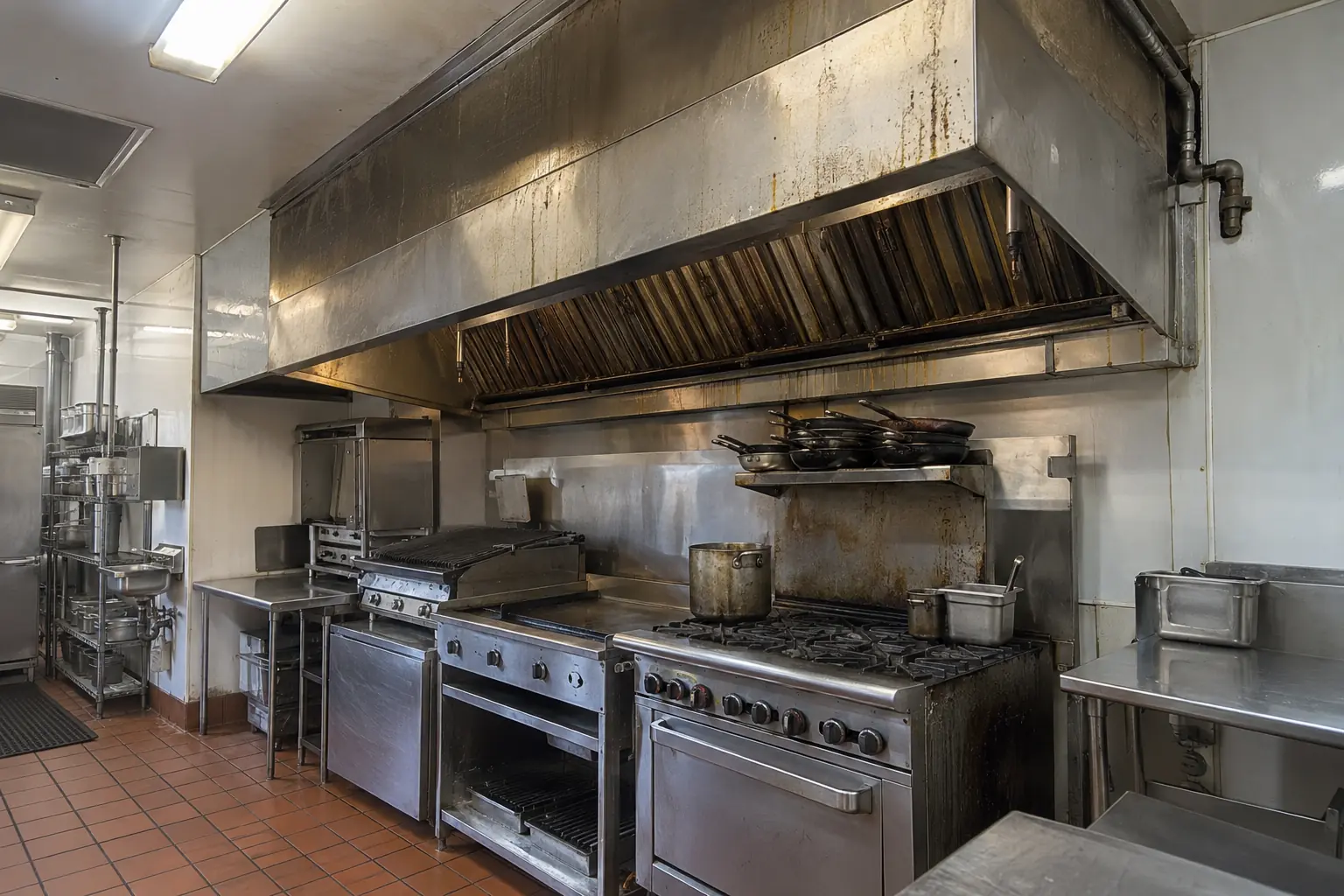
Commercial Kitchen Hood Installation — beforeBefore
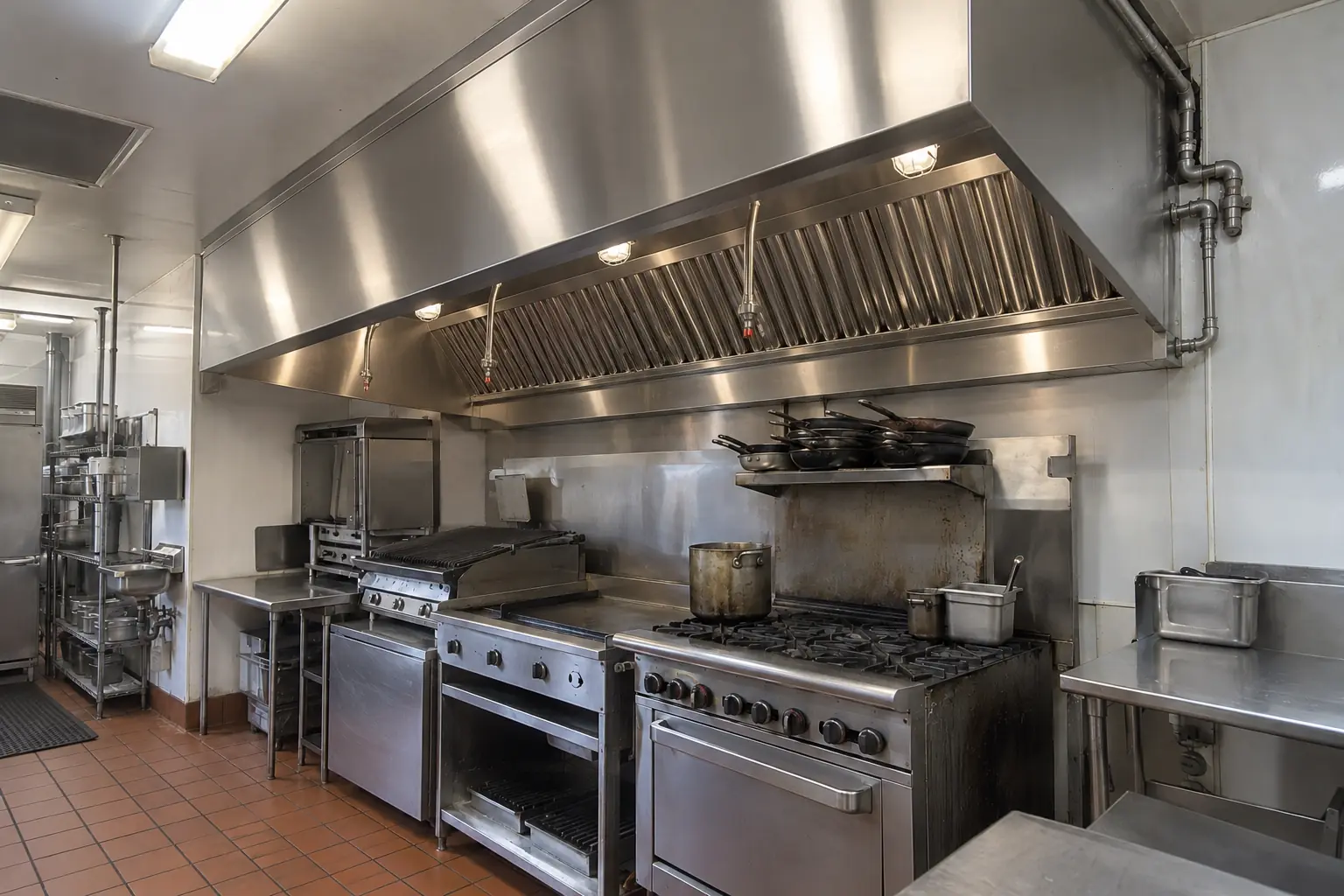
Commercial Kitchen Hood Installation — afterAfter

Oak Brook kitchen, bakery kitchen: commercial kitchen hood installation

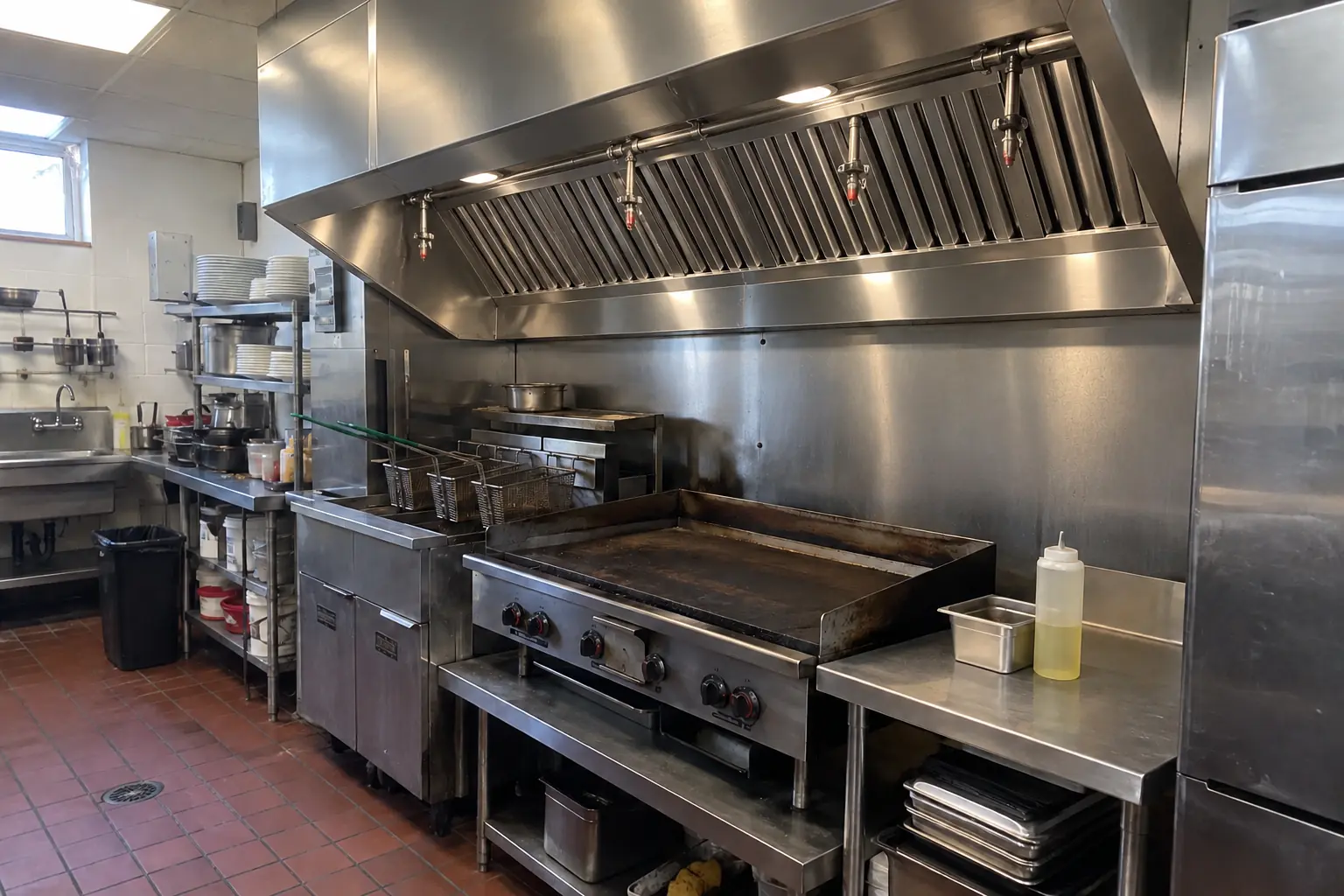
A bakery kitchen in Oak Brook, a typical kitchen for Oak Brook. What bothered the owners most: an exhaust system that had been written up at inspection. The result: a new stainless type I exhaust hood with fire suppression nozzles over the cook line. Work included site survey and equipment review, roof penetration and curb, plus inspections and closeout.

Commercial Kitchen Hood Installation in Oak Brook →
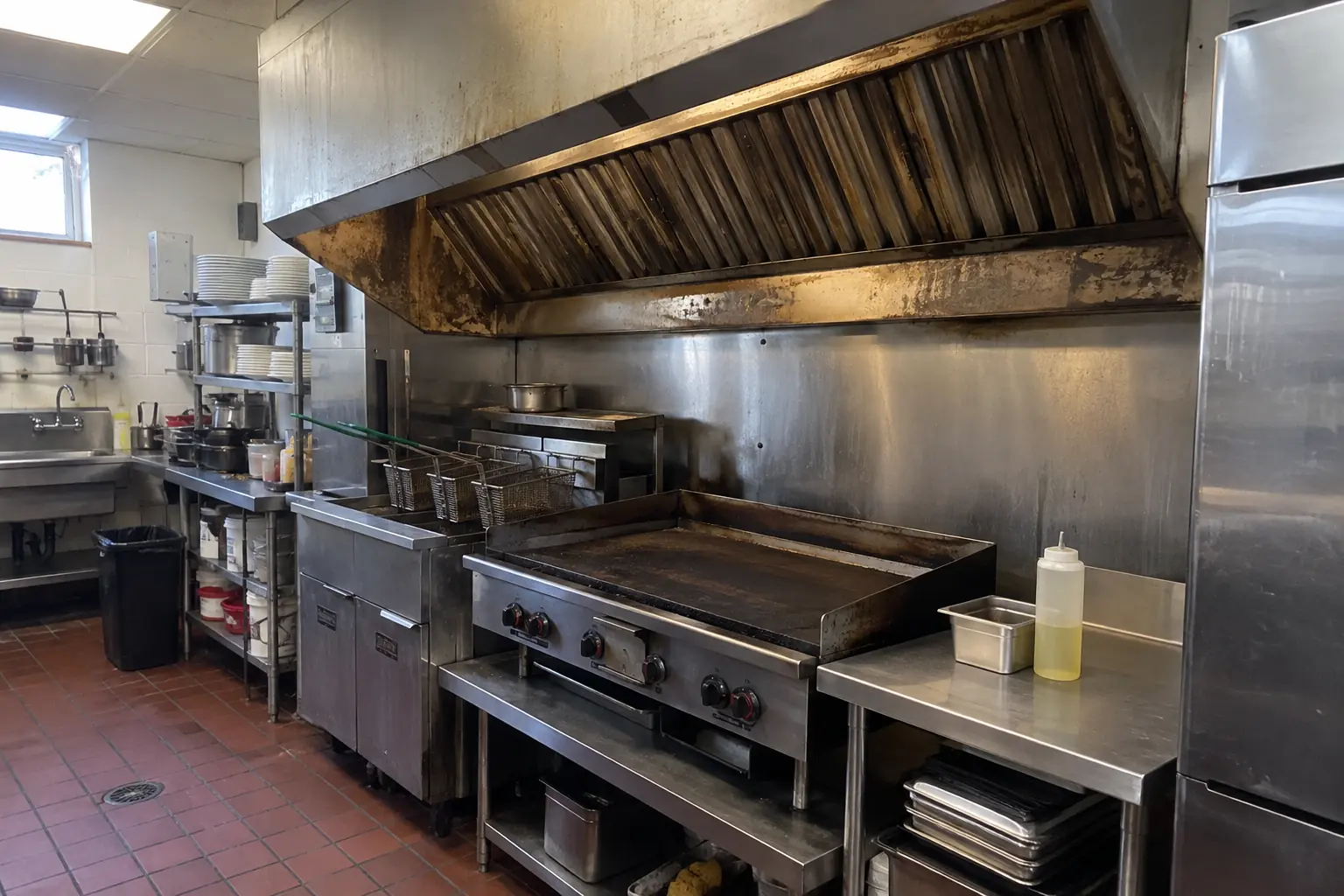
Commercial Kitchen Hood Installation — beforeBefore
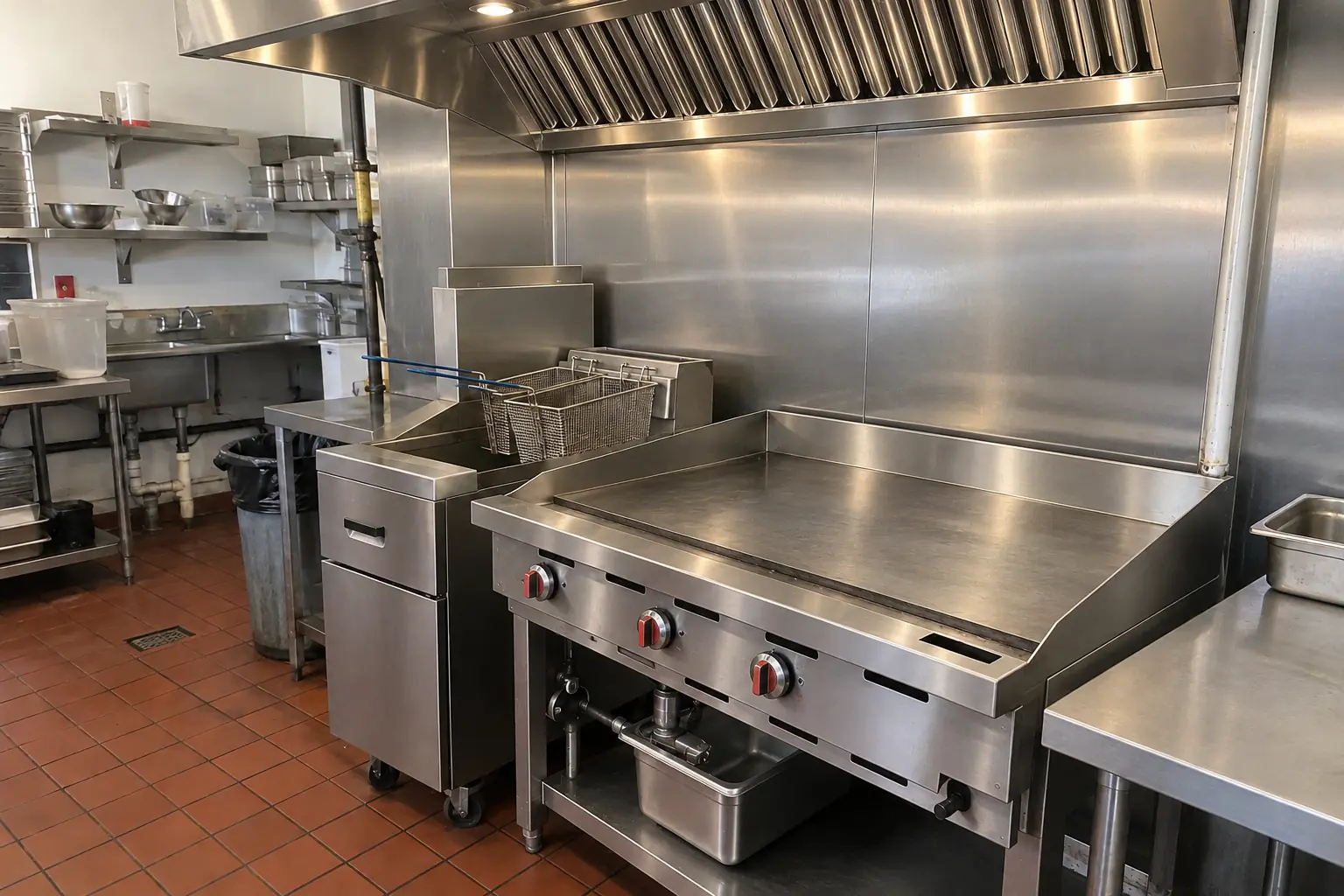
Commercial Kitchen Hood Installation — afterAfter

A Wheaton commercial kitchen: before and after

This one is a commercial kitchen near Danada Square area. What bothered the owners most: a hood that let smoke roll into the kitchen. After: a new stainless type I exhaust hood with fire suppression nozzles over the cook line. Work included site survey and equipment review, roof penetration and curb, plus exhaust fan installation.

Commercial Kitchen Hood Installation in Wheaton →

Scheduling around service

  1. Call with your equipment listSend the equipment schedule, floor plan or a few photos of the line and the roof.
  2. Site surveyA visit to measure the line and see how exhaust and makeup air can run.
  3. Written proposal and permitsAn itemized scope in writing, followed by the permit set for the village and fire department.
  4. InstallationHood, duct, fan and makeup air go in, often scheduled around your build-out or off-hours.
  5. Testing and inspectionThe system is started, balanced and inspected, and you get the closeout paperwork.

Commercial Kitchen Hood Installation: common questions

What is the difference between a Type I and Type II hood?
Grease decides it. Equipment that makes grease-laden vapor needs a Type I hood; equipment that only gives off heat or moisture usually gets a Type II.
How long does a hood installation take?
It depends on the size and the route. The paperwork and hood lead time usually set the schedule more than the install does.
What code does a commercial hood have to meet?
The main standard is NFPA 96. Your village's mechanical code and fire prevention office set how it's applied and inspected locally.
What type of contractor installs a commercial kitchen hood?
Hood installation is mechanical work under a permit. We install the hood, grease duct, fan and makeup air and work alongside your suppression contractor.
Can you install after hours to keep us open?
On replacements we often stage work so the kitchen loses as little service time as possible, including nights and closed days.
Which towns do you serve?
Chicago and 49 suburbs, from Naperville and Aurora to Evanston, Schaumburg and Orland Park. Pick your town below for local details and ZIP codes.

Questions about commercial kitchen hood installation?

Call us — we'll check your ZIP, answer your questions and book an in-home estimate.

Call now (708) 400-7049
Call (708) 400-7049Callback