Kitchen Cabinet Repair: Doors, Drawers, Veneer and Water Damage
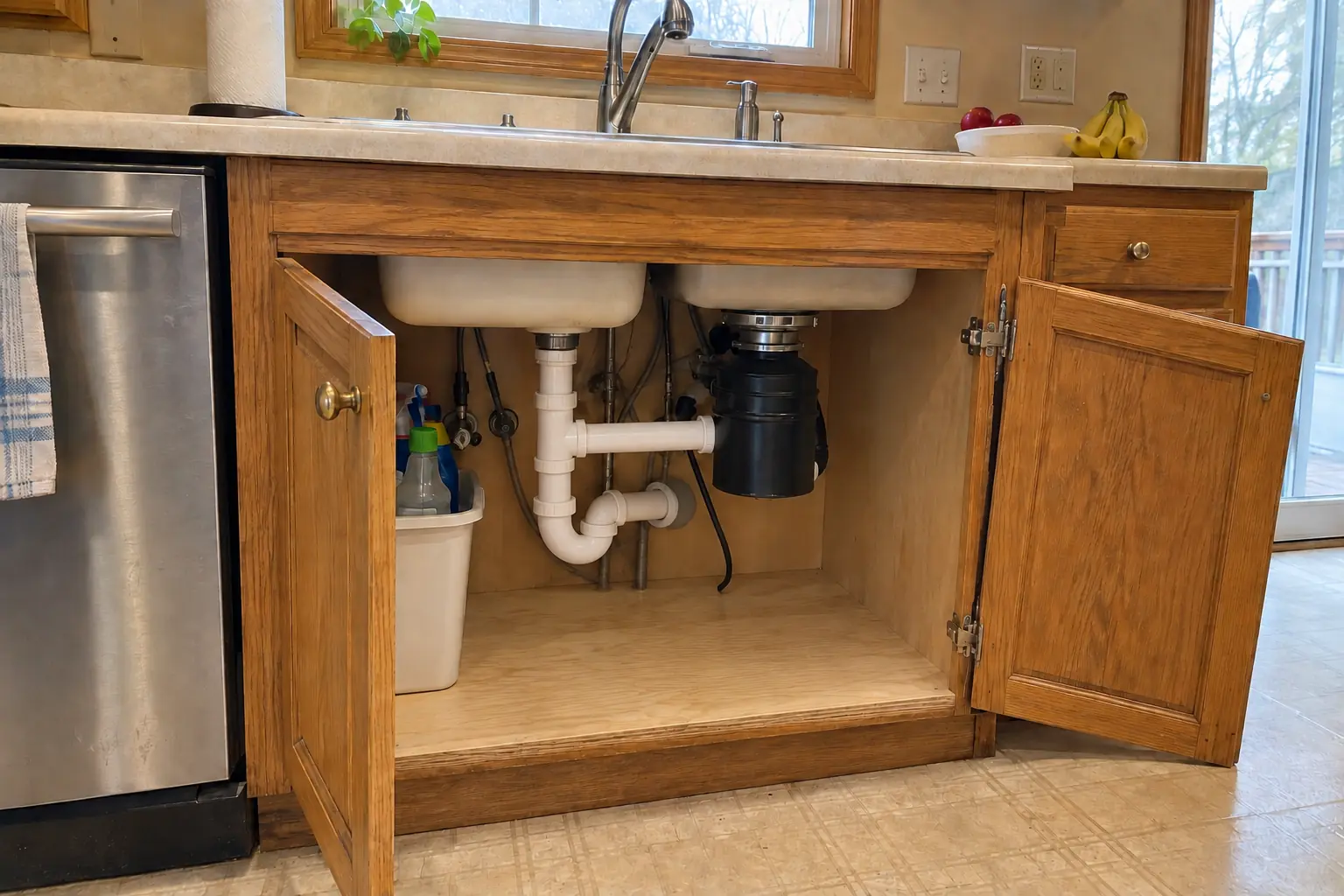
Most kitchen cabinet problems can be fixed without replacing the cabinets. The repair depends on what the cabinet is made of: solid wood, plywood, MDF and particleboard each fail and fix differently. Solid wood and plywood forgive a lot; particleboard holds up well when dry but loses its grip on screws and swells for good once it gets wet.
This guide answers the common cabinet repair questions in the order we see them, with DIY cabinet repair steps where they are realistic and clear signs of when a part or a whole cabinet needs replacing. In our experience, a large share of repair calls in Chicago-area kitchens come down to hinges, drawer slides and sink bases.
How to repair cabinets: match the fix to the problem
Start by naming the symptom and the material. The table below covers the repairs most kitchens need and whether they are a reasonable DIY job.
| Problem | Usual cause | Typical fix | DIY? |
|---|---|---|---|
| Door rubs, sags or will not close | Hinge out of adjustment | Adjust or replace hinge | Yes |
| Hinge screws spin | Stripped particleboard | Dowel, filler or repair plate | Yes |
| Drawer drops or jumps track | Worn or bent slides | Replace slides as a pair | Yes |
| Lazy Susan wobbles or slips | Loose collar or worn bearing | Tighten or replace kit | Usually |
| Veneer or laminate lifting | Failed glue, heat | Reglue and clamp | Yes, if core is dry |
| Swollen sink base floor | Slow leak | Cut out and replace panel | Sometimes |
| Mold or damage below the floor | Long-term leak | Professional repair | No |
General guidance; inspect the cabinet before buying parts.
Cabinet doors not closing properly
Most modern cabinets use concealed European-style hinges with adjustment screws, so a door that rubs its neighbor, sags or will not close flush can often be fixed in a few minutes.
- Check the mounting screwsTighten the screws holding the hinge to the cabinet and the door. If one spins, fix the hole first (see the next section).
- Adjust side to sideTurn the screw nearest the door edge to move the door left or right and even out the gap with its neighbor.
- Adjust in and outUse the depth screw to pull the door tight against the frame or move it out if it hits.
- Adjust heightOn hinges with a height adjustment, loosen the mounting plate screws, raise or lower the door, and retighten.
- Replace a worn hingeIf the door still drifts open, replace the hinge with the same type, matching the overlay and mounting plate. If several doors drift, check whether the cabinet itself has shifted out of level.
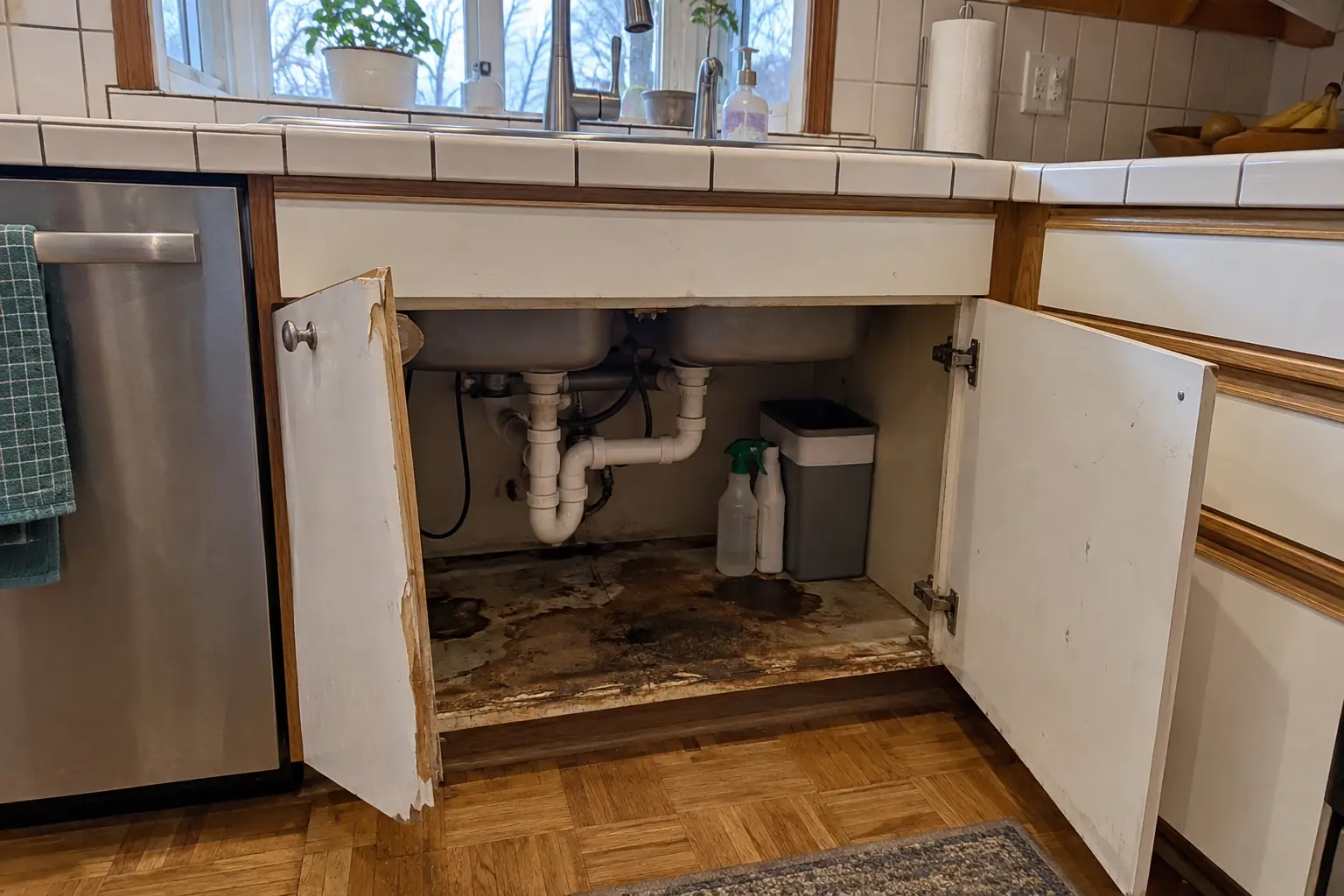 Before
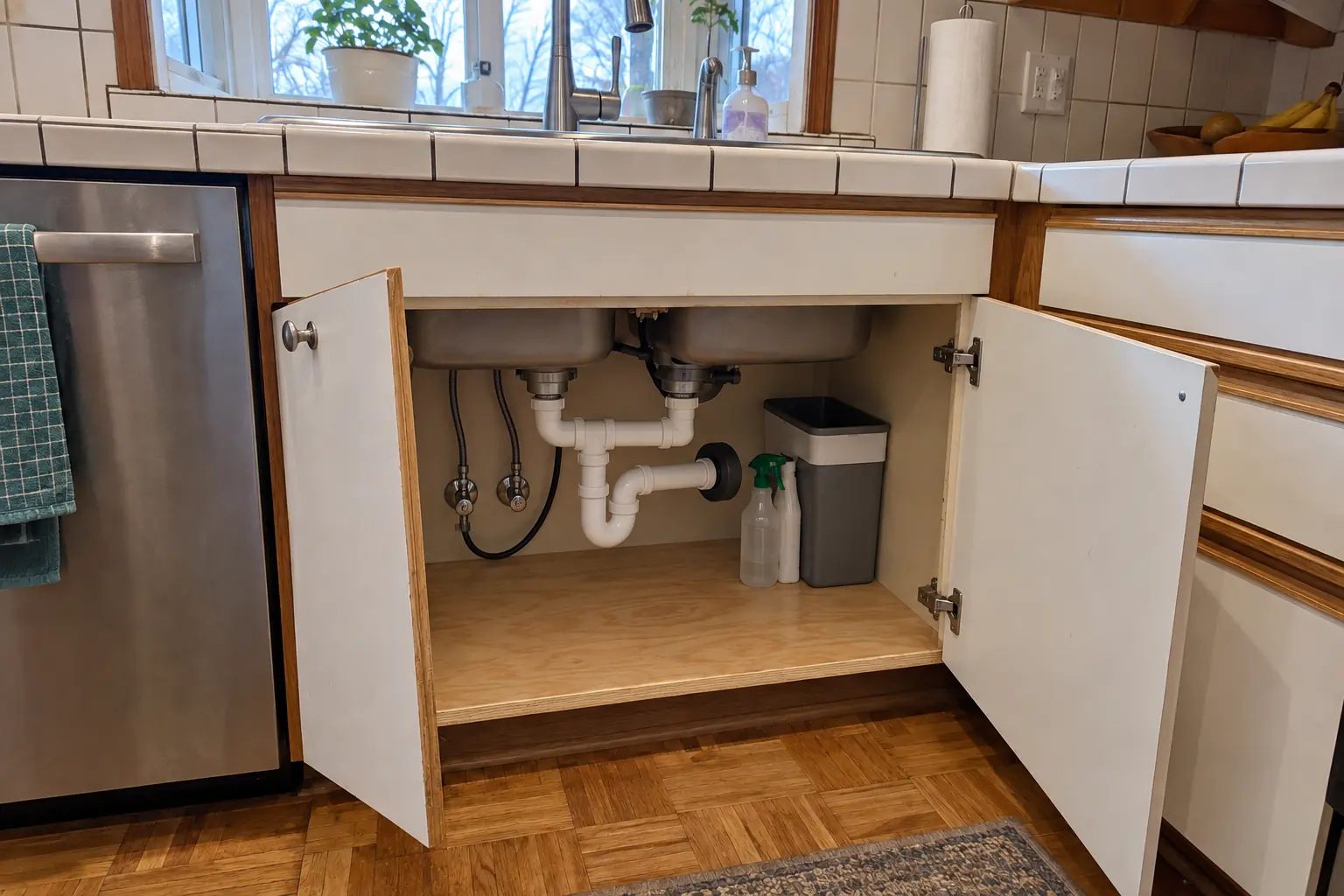 After
How to repair cabinet door hinges with stripped screw holes
When hinge screws spin without tightening, the material around them has broken down, which is common in particleboard sides. Longer screws only delay the problem. Better fixes:
- Fill the hole with glued hardwood dowel or toothpicks, let it dry, trim flush and redrill a pilot hole.
- Use a two-part wood filler or epoxy made for screw holes, then redrill.
- Install a hinge repair plate that spreads the load over fresh material.
- For hinge cup holes torn out of a door, use a repair kit or plan on a new door.
How to repair kitchen cabinet drawers
Drawer problems are usually either the slides or the box itself.
Slides
A drawer that drops, jumps its track or tips forward usually has worn rollers or a bent slide. Replace the slides as a pair, matching length and mounting type (side, center or undermount). Full-extension and soft-close slides are often an easy upgrade if the opening allows.
The drawer box
Stapled corners can be reglued and reinforced with small corner blocks, and a fallen bottom can be refit or replaced with a new panel. When the box is too far gone, a new plywood or dovetail box can be built behind the existing front so the kitchen looks the same.
How to repair a lazy Susan cabinet
Corner lazy Susans usually fail in one of three ways, and each has a direct fix.
- Trays slip down the center pole: tighten or replace the pole collar.
- Trays wobble or bind: the bearing or pole is worn; replace it with a matching kit, measured by tray diameter and cabinet height.
- The attached door catches the frame: loosen the door brackets, rotate the tray until the door sits flush, and retighten.
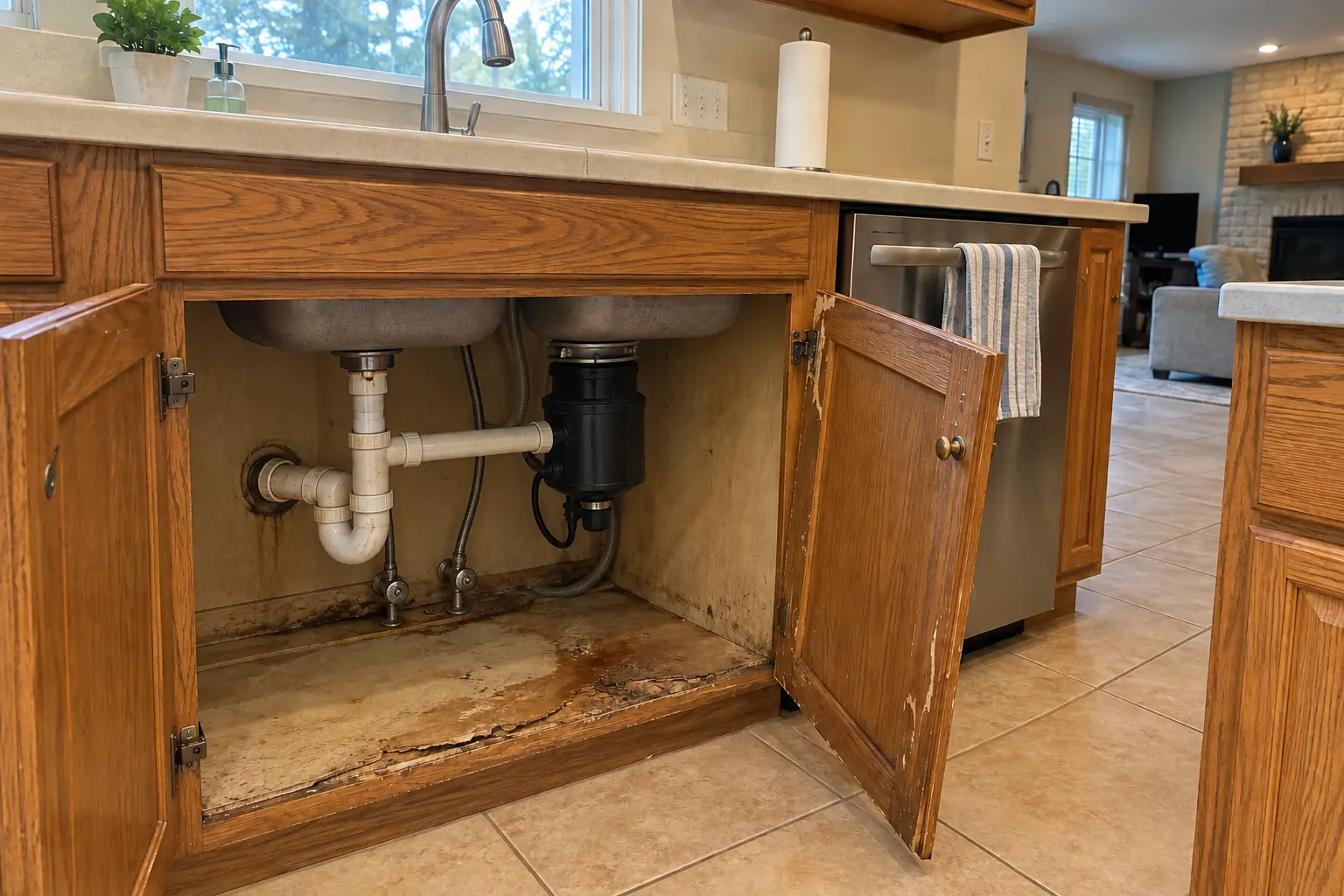 Before
 After
How to repair veneer cabinets and peeling laminate
Many cabinets have thin wood veneer or laminate over particleboard or MDF. The repair works only if the core underneath is dry and firm.
How to repair cabinet veneer
Clean out old glue and dust, apply contact cement or wood glue under the loose section, and clamp or press it flat until dry. Heat from an iron through a cloth can reactivate some older heat-set edge banding.
How to repair peeling laminate cabinet doors
The same approach works if the laminate is intact. If the core has swollen, the laminate will not lie flat again and the door or panel is replaced.
Thermofoil and refacing veneer
Peeling thermofoil, the vinyl wrap used on many MDF doors, usually lifts from heat, and once it peels the doors are typically replaced or the kitchen is refaced. Cabinet refacing veneer is a different product: new veneer applied over existing face frames when the whole kitchen is being refaced.
How to repair MDF and particle board cabinets
MDF and particleboard are stable when dry but weak at screw holes and edges, and they swell permanently when wet. Chipped edges can be filled with wood filler or a two-part filler, sanded and painted. Loose joints can be reglued and reinforced with corner brackets.
How to repair peeling veneer on particle board cabinets depends on the core: if the particleboard is firm, reglue the veneer; if it is crumbling, the section has to be cut out and replaced with new material.
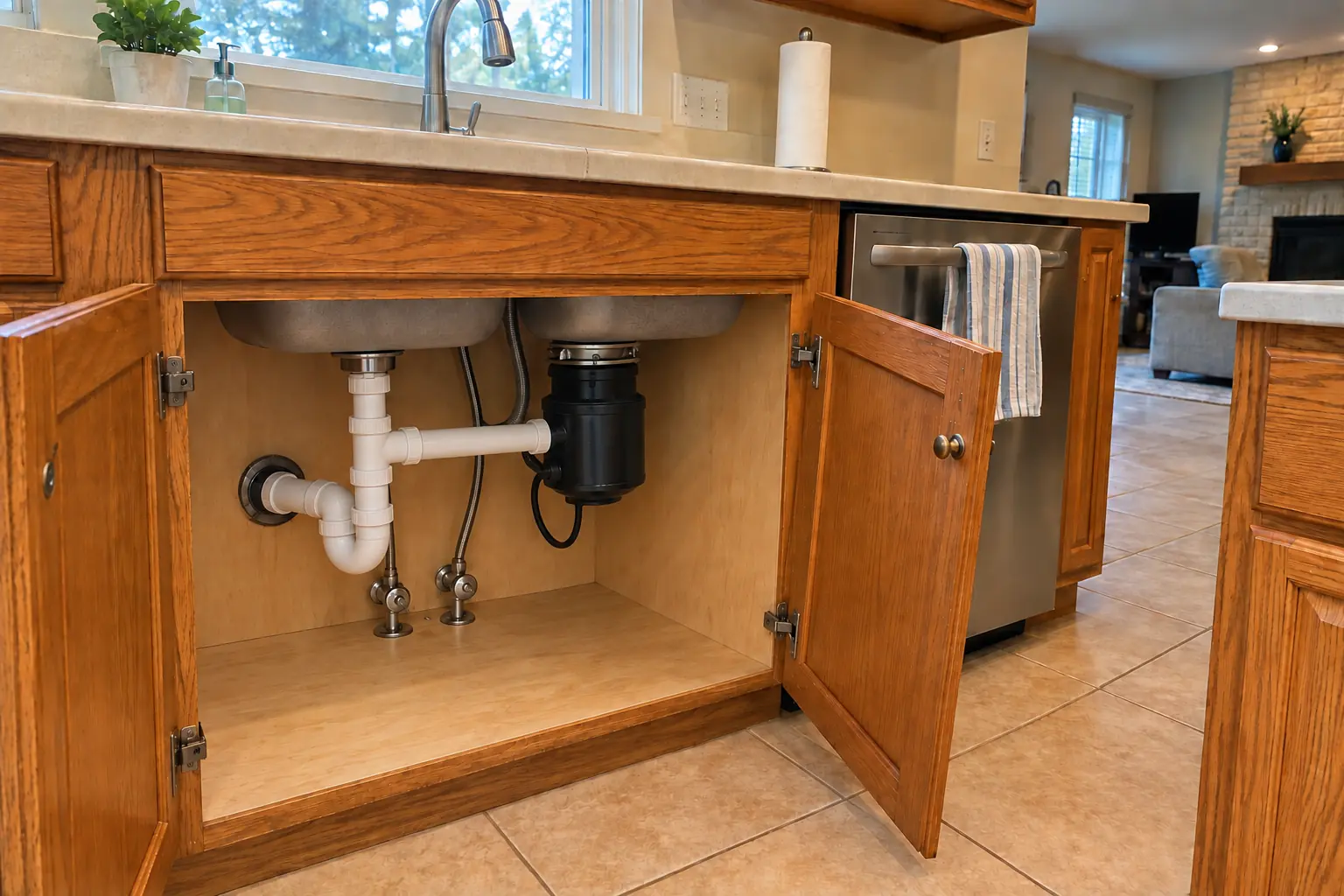
How to repair a water-damaged cabinet under the sink
Sink bases take the most damage in any kitchen, because a slow drip can go unnoticed for months.
- Find and fix the leakCheck the drain slip nuts, faucet supply lines, dishwasher connection and disposal. Run water and feel each joint with a dry paper towel.
- Dry and inspectEmpty the cabinet and let it dry fully with the doors open. A musty smell or dark spots that return after cleaning are a reason to bring in a professional for mold.
- Replace the floor panelSwollen particleboard does not shrink back. Cut out the damaged floor and install a new plywood or moisture-resistant panel, often with a waterproof mat on top.
- Repair or replace sides and toe-kickSwollen side panels or toe-kicks can be replaced or skinned to match. If the face frame and sides are badly damaged, replacing the sink base is often cleaner and can usually be done without removing the countertop.
DIY cabinet repair or a pro?
DIY cabinet repair is reasonable for hinge adjustments, stripped screw holes, slide replacement, regluing veneer and small filler repairs. A carpenter is worth calling for water damage that reaches the frame or the floor below, mold, a sink base replacement, broken face frames, custom-size drawer boxes, and matching a finish across several repaired parts.
Frequently asked questions
Why won't my cabinet door stay closed?
How do you repair water damaged particle board cabinets?
Can peeling thermofoil cabinet doors be repaired?
How do you repair a kitchen cabinet drawer that keeps falling out?
Is it worth repairing old kitchen cabinets?
How do I fix a sagging cabinet shelf?
How do I repair a hole in an MDF cabinet?
How do you repair kitchen cabinets laminates that are chipped?
Kitchen Cabinet & Drawer Repair in your town
- Carol Stream
- Naperville
- Schaumburg
- Wheaton
- Glen Ellyn
- Bloomingdale
- Bartlett
- Roselle
- Hanover Park
- Glendale Heights
- West Chicago
- Winfield
- Warrenville
- Lisle
- Downers Grove
- Lombard
- Villa Park
- Elmhurst
- Oak Brook
- Addison
- Itasca
- Wood Dale
- Elk Grove Village
- Hoffman Estates
- Arlington Heights
- Palatine
- Mount Prospect
- Des Plaines
- Park Ridge
- Skokie
- Evanston
- Northbrook
- Glenview
- Highland Park
- Buffalo Grove
- Lake Zurich
- Oak Park
- Berwyn
- Tinley Park
- Orland Park
- Bolingbrook
- Aurora
- Elgin
- St. Charles
- Geneva
- Batavia
- Crystal Lake
- Plainfield
- Woodridge
Keep reading
-
 CabinetsCabinet Refacing vs Painting vs Replacement: How to ChooseIn cabinet refacing vs painting vs replacement, start with the boxes. Sound boxes and only a color complaint: paint. Sound boxes but a dated or…4 min read
-
 CabinetsKitchen Cabinet Materials, Doors and Hardware: What to Know Before You BuyYes, you can usually resurface kitchen cabinets instead of replacing them, as long as the boxes are dry and solid. How long the result lasts depends…3 min read
-
 Repairs, cleaning and damageMold Under the Kitchen Sink and Water Damage Under Kitchen Cabinets: What to DoMold under the kitchen sink means moisture first. Stop the water source, dry the cabinet within 24 to 48 hours, then clean hard surfaces with…3 min read