Serving Batavia & nearby Geneva, St. Charles

Kitchen Water Damage Restoration in Batavia, IL

Dishwasher, sink or pipe leak in your Batavia kitchen? We stop the water, dry the structure and put the kitchen back together.

  • Crews covering Batavia ZIP 60510, 60539
  • We stop the cause first, then dry, clean and rebuild
  • Photos and notes you can share with your insurer

Prefer a callback?

Leave your number and a Batavia water damage technician will call you.

Kitchen water damage we handle in Batavia

A burst supply line or a dishwasher that flooded overnight needs fast, careful drying, not just mopping. Our Batavia crew extracts standing water, opens toe kicks and wet drywall, sets air movers and dehumidifiers and checks with meters until the wood and walls are dry.

Refrigerator ice maker line leak

Ice maker leaks hide behind the appliance. We move it out, find the wet boundary with a meter and dry or rebuild the floor.

Wet drywall behind the cabinets

Water climbs drywall by wicking. We measure how high it went, cut out wet drywall and insulation where they won't dry in place and open the cavity for air.

Flooring lifting, buckling or cupping

Laminate and wood floors swell and cup when water gets underneath. We dry the subfloor first, then tell you which boards can stay and which have to come up.

Water damage found during a remodel

Old leak damage behind cabinets is common. We fix it properly so the new kitchen isn't built over it.

Swollen cabinet bottoms and toe kicks

Particleboard and MDF swell when they get wet and don't shrink back. We remove toe kicks to dry beneath the cabinets and replace panels that have puffed up.

Musty smell after a leak

A damp smell days after a leak usually means moisture is still trapped somewhere. We meter the area to find it and dry it before mold has a chance to start.

Water under the kitchen sink

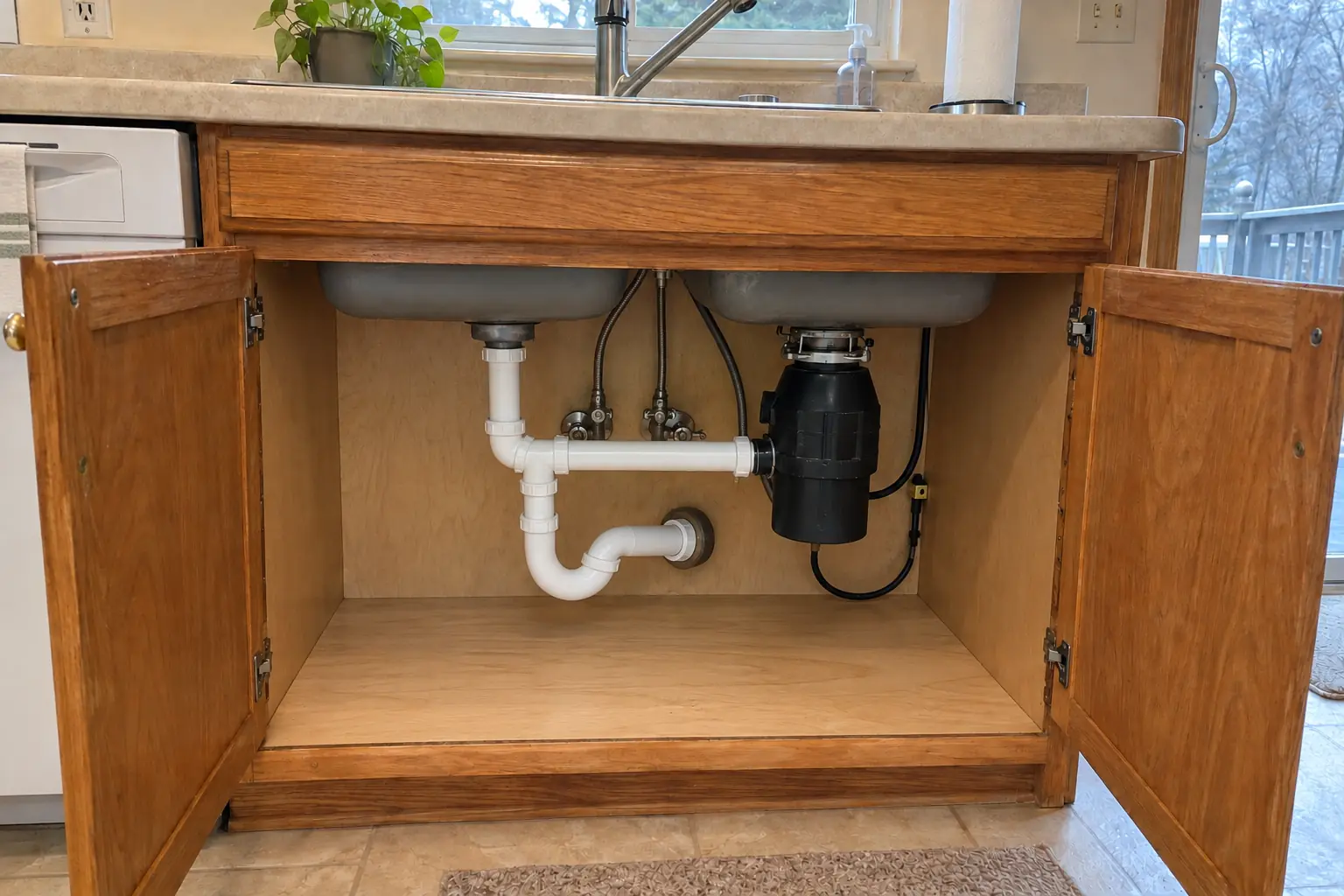
A slow drip below the sink can go unnoticed for weeks. We stop it, dry the cabinet and the space behind it and replace particleboard that has swollen.

Drain backup or dirty water

When the source is a drain, not a supply pipe, the rules change: we remove more and clean thoroughly before drying.
What we handle after the damage

  • Stopping the waterWe confirm the supply is shut off and fix or cap the leaking line, valve or appliance connection.
  • Water extractionWe pull up the pooled water first so drying equipment works on damp material, not a puddle.
  • Moisture mappingWe take readings across the kitchen to mark the wet boundary before anything is removed.
  • Removing toe kicks and wet materialsToe kicks come off, and soaked drywall, insulation and swollen cabinet panels are cut out.
  • Moving appliancesThe dishwasher, fridge or range is pulled out when water has run under it.
  • Drying equipmentAir movers and dehumidifiers are placed for the room and the wet materials and run until readings are normal.
  • Daily readingsWe recheck moisture levels during drying and log them, which also helps with an insurance claim.

Tools of the job

DehumidifiersEquipment that keeps room humidity low enough for drying to continue.
Air moversHigh-velocity fans that move air across wet floors, walls and cabinet bases.
Replacement cabinet panels and toe kicksNew bottoms, sides or toe kicks matched as closely as possible to the existing cabinets.
Moisture meters and thermal imagingPin and pinless meters plus an infrared camera to find wet areas you can't see.
Cavity dryingDirected airflow into spaces under cabinets and inside walls.

Kitchen Water Damage Restoration before and after — Batavia homes

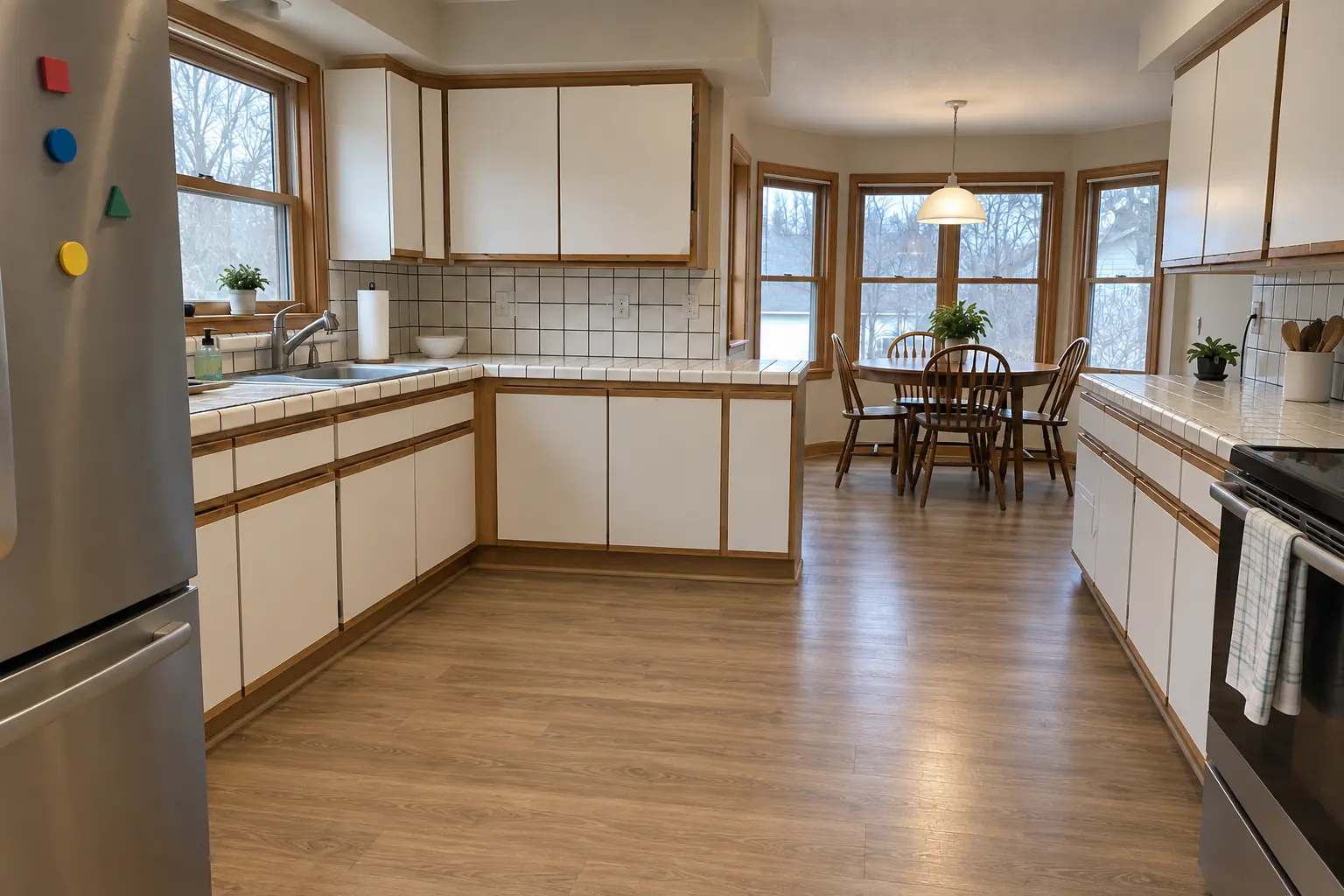
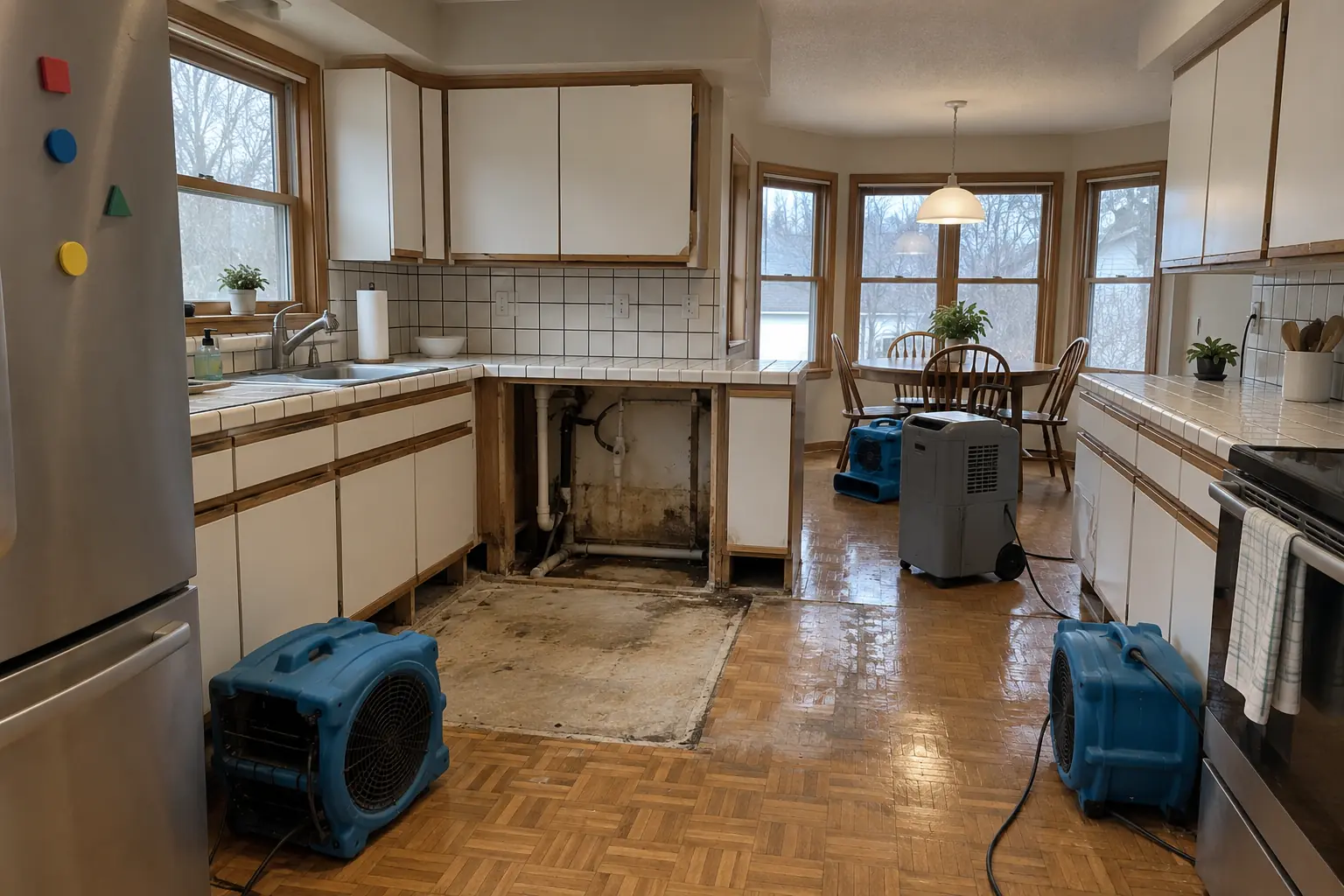
Kitchen Water Damage Restoration in a 1980s-1990s two-story colonial / tract house — problemProblem
Kitchen Water Damage Restoration in a 1980s-1990s two-story colonial / tract house — fixedFixed
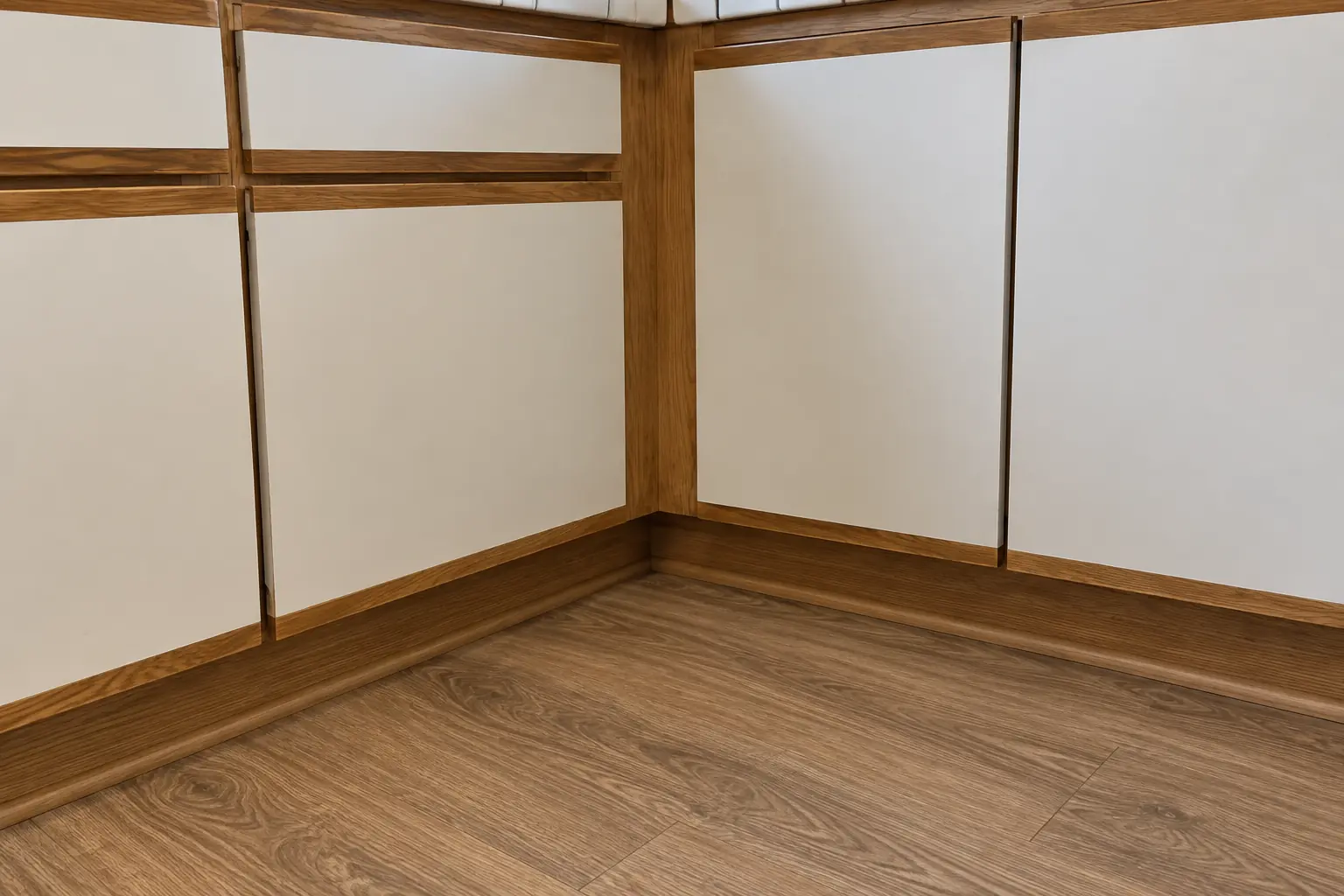
Kitchen Water Damage Restoration in a 1980s-1990s two-story colonial / tract house — detailDetail

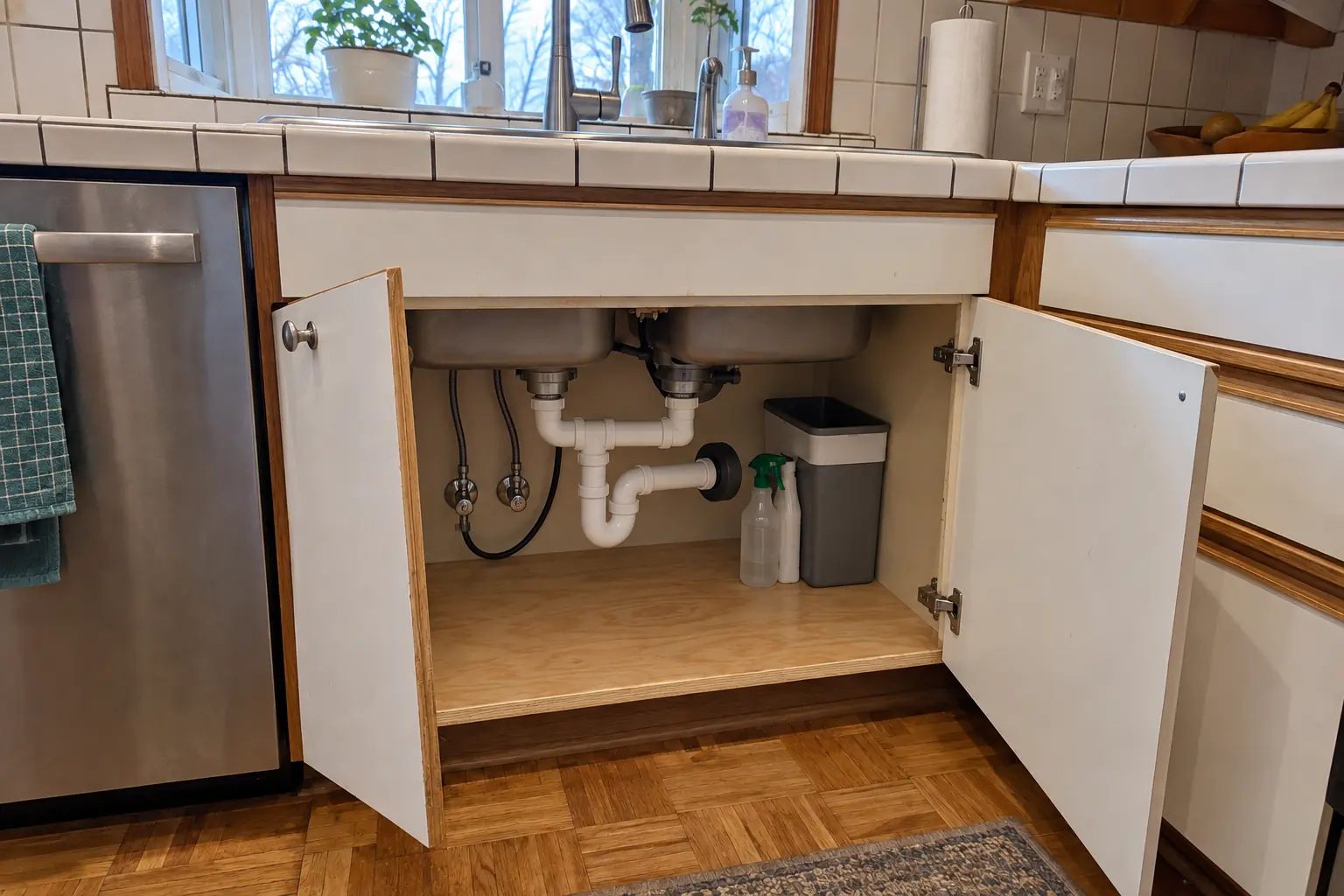
Before and after: a 1980s two-story in Batavia

A 1980s two-story in Batavia, a typical kitchen for Batavia. Before: oak parquet and white thermofoil cabinets peeling at the edges, oak trim. What bothered the owners most: a wood floor that lifted near the sink. The result: the kitchen dried out with meters confirming it, new flooring laid and new toe kicks and cabinet bottoms fitted. On site this meant moisture mapping, removing toe kicks and wet materials, plus daily readings.
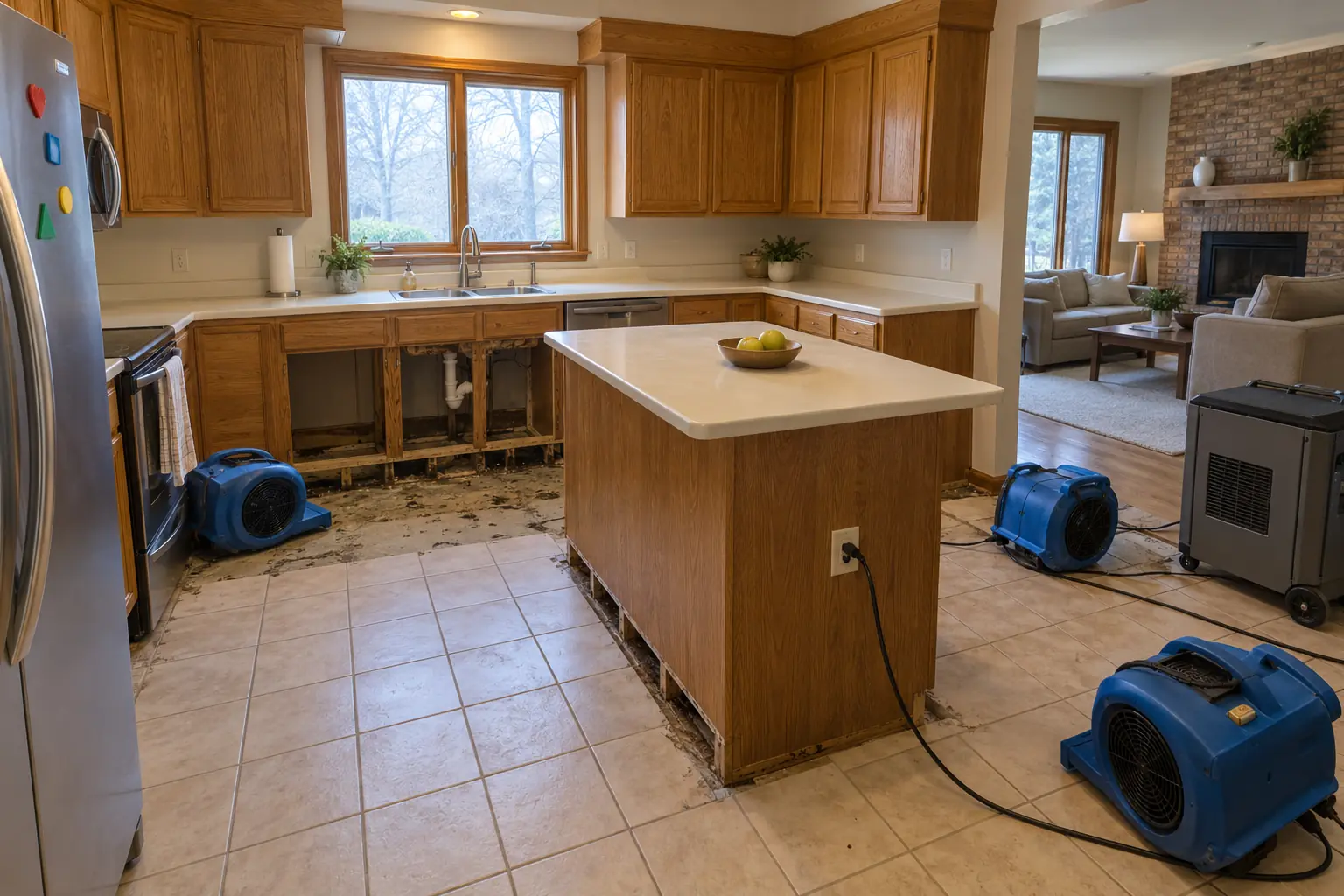
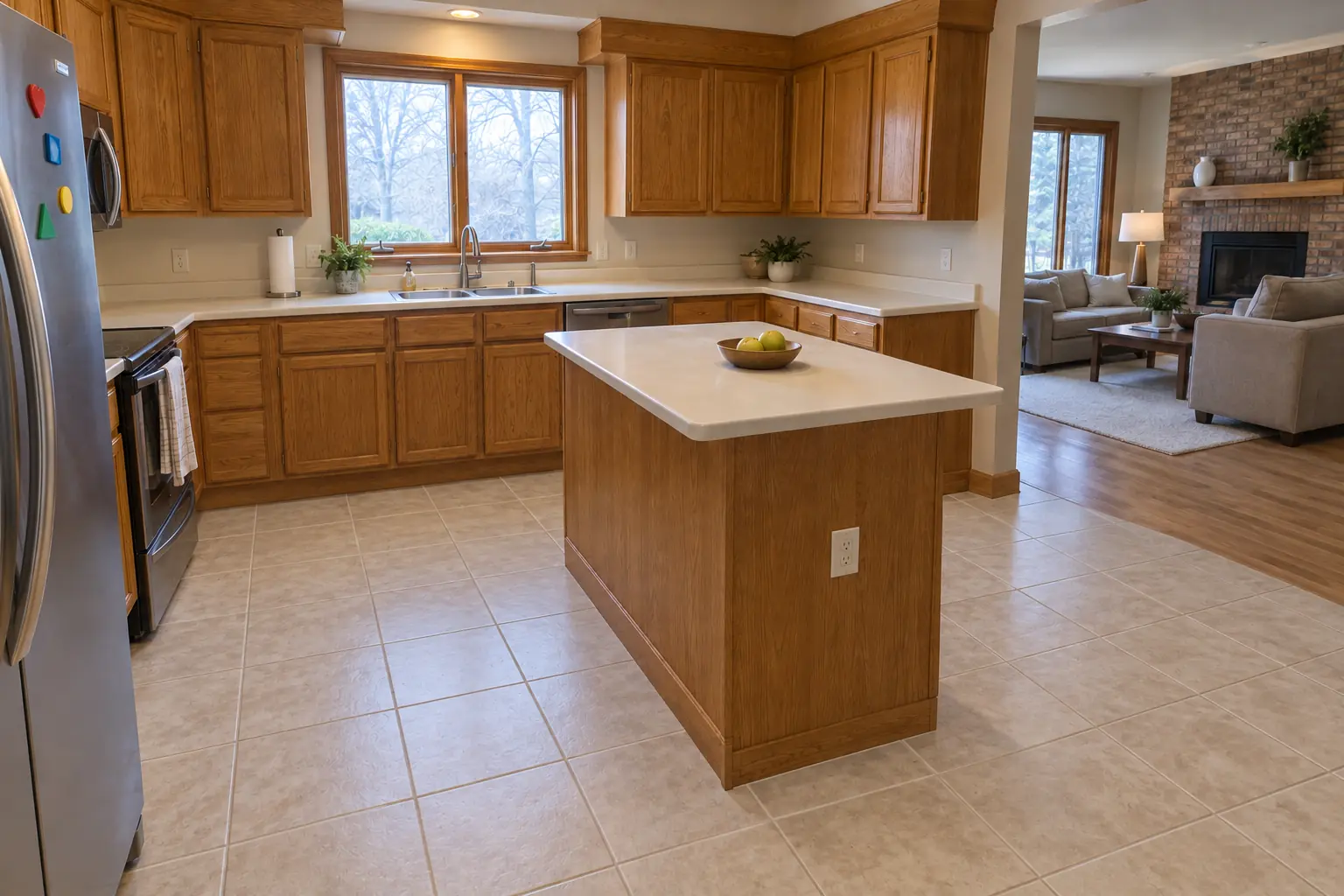
Kitchen Water Damage Restoration project in St. Charles, beforeBefore
Kitchen Water Damage Restoration project in St. Charles, afterAfter

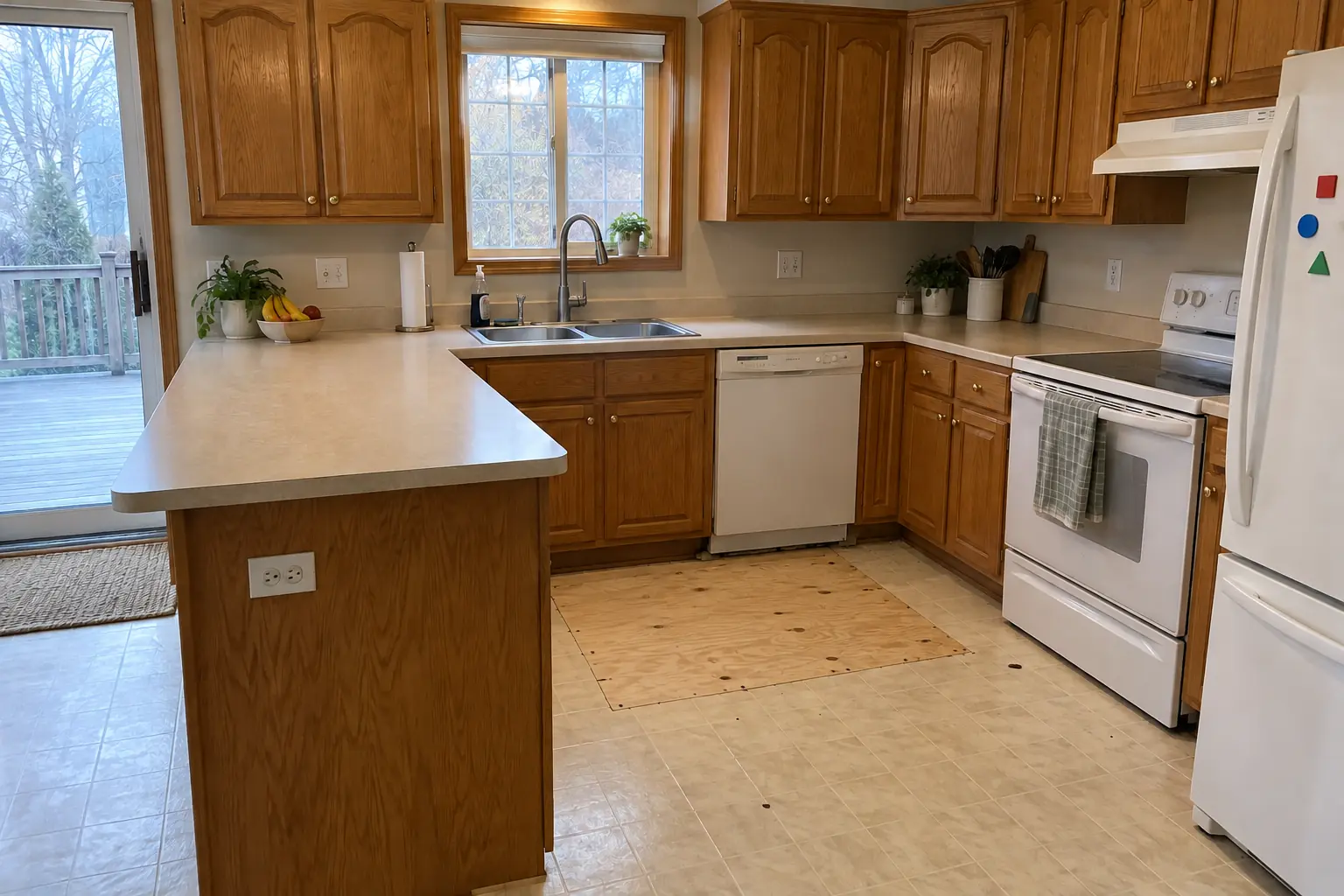
St. Charles kitchen, 1990s two-story colonial: kitchen water damage restoration

This one is a 1990s two-story colonial in St. Charles. What we started with: 12-inch beige ceramic tile and golden-oak cabinets with oak soffits above. What bothered the owners most: a wood floor that lifted near the sink. Finished kitchen: the kitchen dried out with meters confirming it, new flooring laid and new toe kicks and cabinet bottoms fitted. Work included water extraction, removing toe kicks and wet materials, plus moving appliances.

Kitchen Water Damage Restoration in St. Charles →
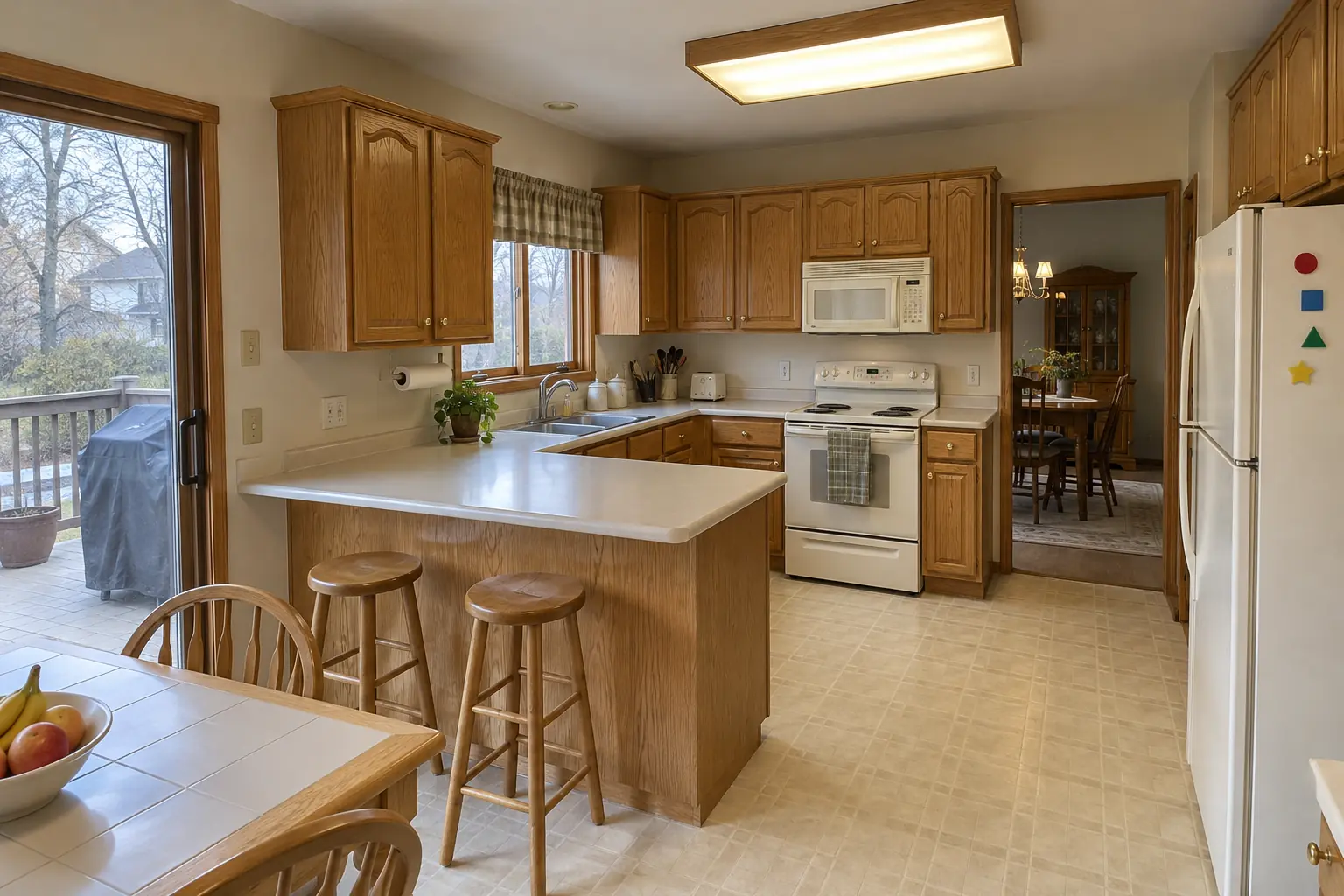
Kitchen Remodeling project near Batavia, beforeBefore
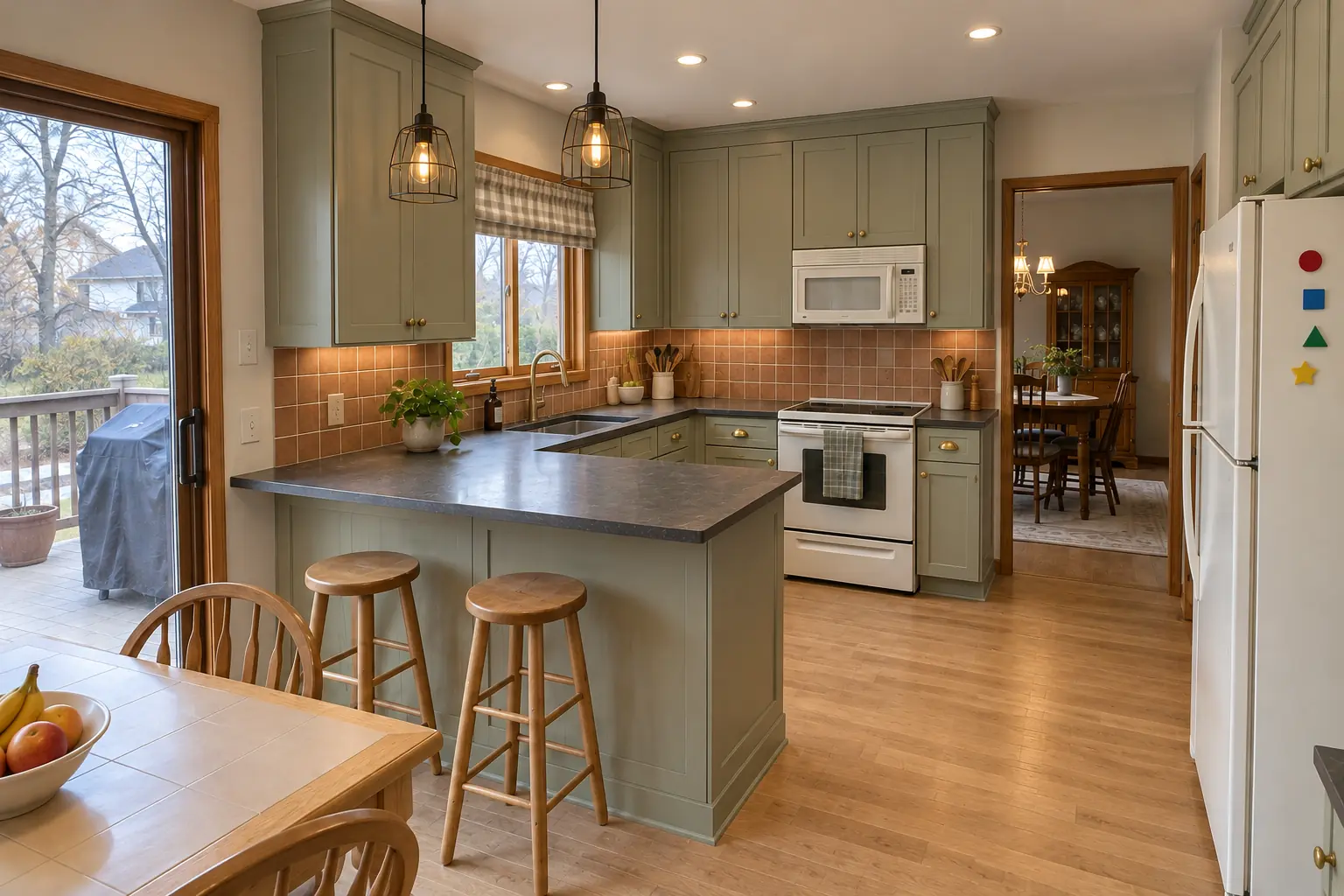
Kitchen Remodeling project near Batavia, afterAfter

Batavia kitchen, 1980s two-story: kitchen remodeling

What changed: cabinets in pale sage with unlacquered brass knobs and cup pulls, charcoal concrete-look quartz counters, a terracotta-look square tile backsplash, light oak hardwood flooring and black cage pendants and slim recessed lights.

Kitchen Remodeling in Batavia →
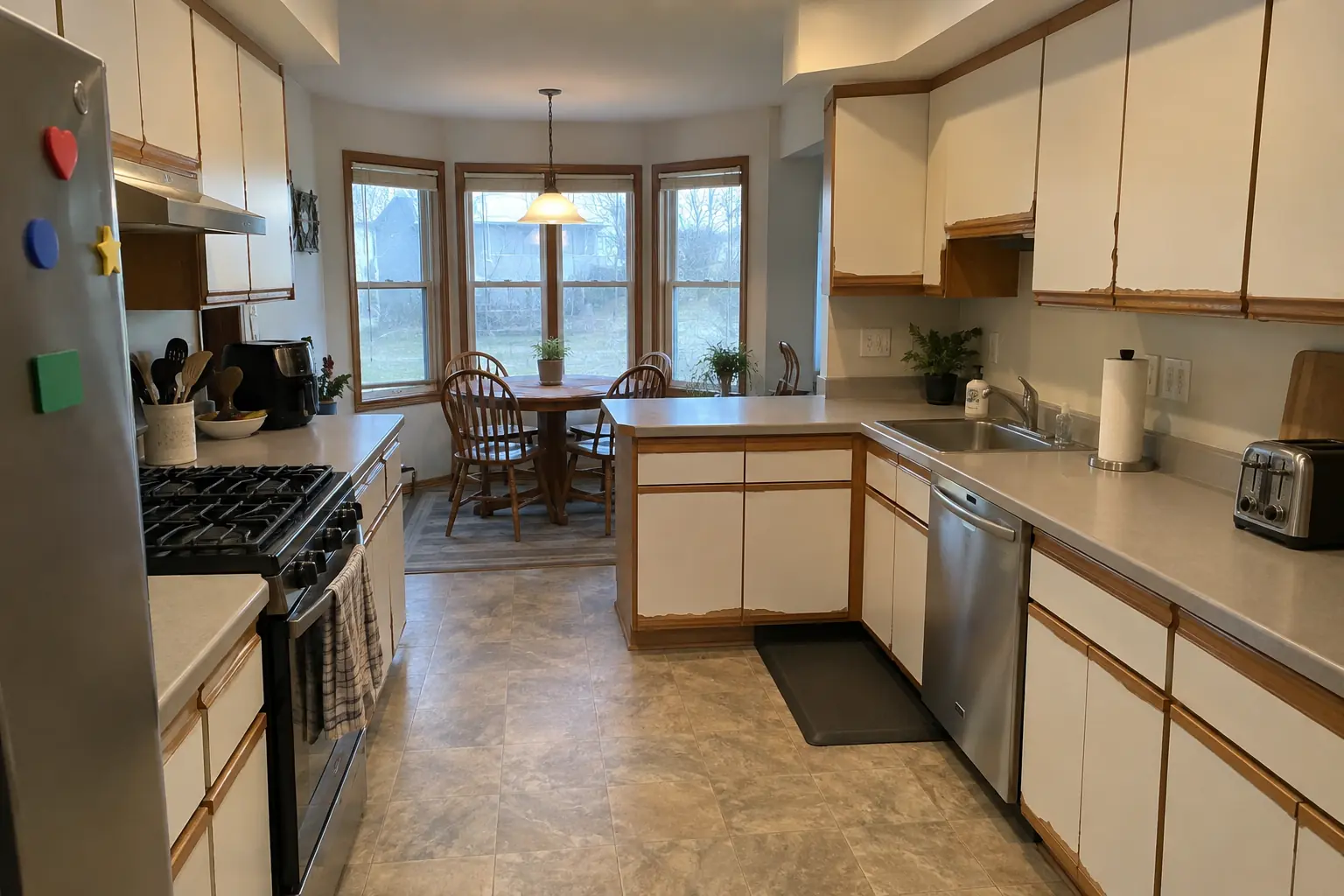
Kitchen Cabinet Painting project near Batavia, beforeBefore
Kitchen Cabinet Painting project near Batavia, afterAfter

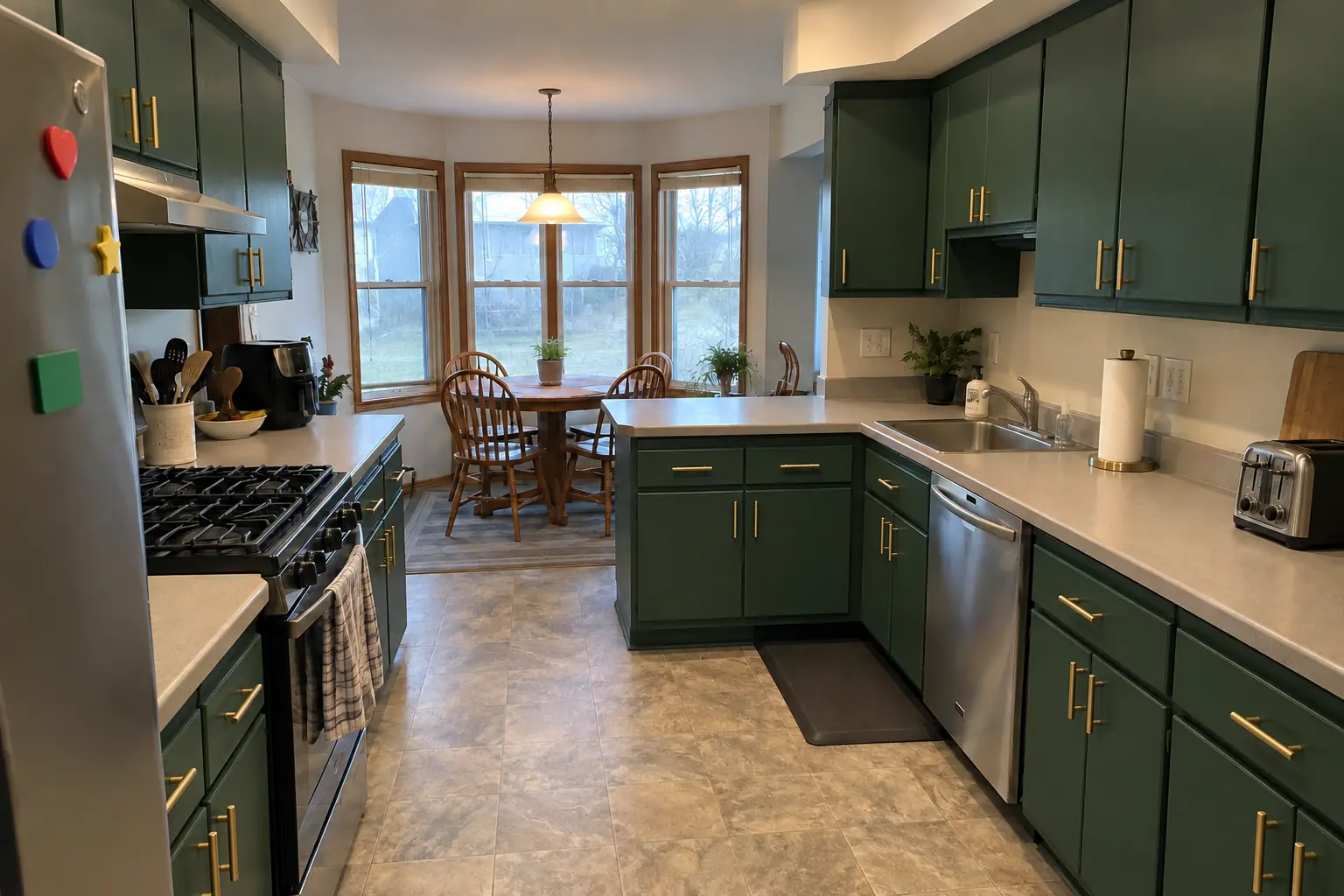
A Batavia two-story colonial from the 1990s: before and after

What changed: the same doors sprayed in forest green, new satin brass pulls; counters and floor stayed as they were.

Kitchen Cabinet Painting in Batavia →

How restoration goes

  1. Call and shut off the waterTurn off the water, keep away from wet outlets and call; we'll give you an arrival time.
  2. Assess and extractOn the first visit we measure, photograph and extract.
  3. Dry and monitorAir movers and dehumidifiers dry the structure, with readings to confirm it.
  4. Repair and rebuildDamaged drywall, cabinet parts and flooring are replaced and the kitchen is put back together.

Kitchen Water Damage Restoration questions from Batavia homeowners

What should I do first after a dishwasher leak?
Turn off the dishwasher and its water supply, shut the breaker if water is near outlets, soak up what you can and call us. Don't wait for the floor to look dry; water is likely under the cabinets.
Is dishwasher leak damage covered by insurance?
It depends on your policy and on how the leak happened. Sudden leaks are treated differently from long, slow ones. We document the damage and can work with your adjuster, but your insurer decides coverage.
Why is there water under my kitchen sink?
Common causes are a loose drain joint, a leaking shutoff valve, a failed supply line, the garbage disposal or the dishwasher drain connection. We find which one and fix it.
How do you dry out under a kitchen sink?
Fix the leak, remove items, open the cabinet and use airflow and dehumidification. If the bottom panel has swollen or the wall behind is wet, it needs more than a fan.
When should I call a water damage company?
If the leak lasted more than a few minutes or reached anything you can't wipe, call. Hidden moisture is where problems start.
Does kitchen water damage restoration need a Batavia building permit, and who files it?
Permits go through City of Batavia Community & Economic Development - Building Division, phone 630-454-2700. When your scope needs one, we prepare the application and schedule the inspections.
Do I need a permit for kitchen water damage restoration in Batavia?
It depends on the scope. Batavia's rule in short: Building permits are required for all construction; a Residential Alteration handout is available. We handle the permit when one is needed with City of Batavia Community & Economic Development - Building Division.
Do you work in my part of Batavia?
Yes. Our crews work across Batavia — ZIP 60510, 60539 — and nearby Geneva, St. Charles, West Chicago.

Working in Batavia

  • A lot of Batavia kitchens date from the 1990s. We know these layouts well and what is worth keeping.
  • Most Batavia homes are single-family. We protect floors and driveways and leave the site clean every day.
  • Live in the Downtown Historic District? Interior kitchen work is usually not reviewed. We check before anything touches the exterior.

ZIP 60510ZIP 60539

Kitchen Water Damage Restoration nearby

Planning a kitchen project in Batavia?

Call us — we'll check your ZIP, answer your questions and book an in-home estimate.

Call now (708) 400-7049
Call (708) 400-7049Callback