Garbage Disposal Repair vs Replacement: How to Decide
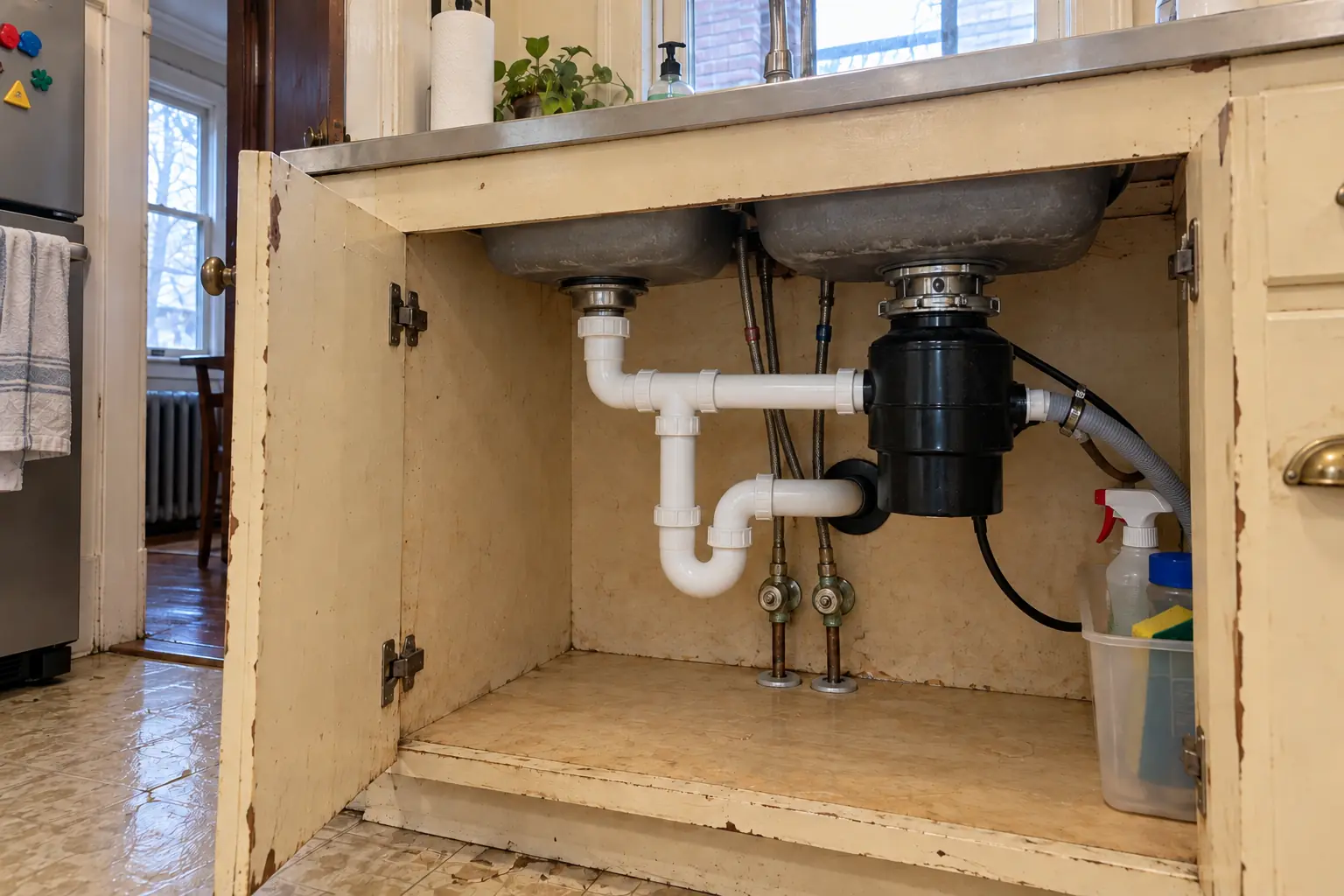
Most garbage disposal problems fall into two groups. A disposal that hums, stops or will not start is often jammed or has tripped its overload, and a reset or careful unjamming fixes it. A disposal that leaks from the body of the unit, grinds poorly after years of use or trips after every reset is usually at the end of its life. Leaks at the sink flange or drain connections sit in between and can often be repaired without a new unit.
This guide covers garbage disposal repair vs replacement in plain terms: the safe checks a homeowner can do, the signs that point to a new unit, what changes when you upgrade, how the disposal connects to the dishwasher and drain, and who handles wiring and plumbing. Whenever a step involves wiring or opening the plumbing beyond the trap, that is a job for a licensed plumber or electrician.
Garbage disposal repair vs replacement by symptom
The symptom usually tells you which way the decision goes before anyone opens a toolbox. Use this table as a first read, then work through the safe checks below.
| Symptom | Likely cause | Usual answer |
|---|---|---|
| Silent when switched on | Tripped overload or breaker | Reset; repair |
| Hums but does not turn | Jam at the grinding plate | Unjam with hex wrench; repair |
| Leak at the top, at the sink | Dried putty or flange gasket | Reseal; repair |
| Leak at the side hose | Loose clamp or cracked hose | Tighten or replace hose; repair |
| Leak from the bottom or body | Failed internal seals, corrosion | Replace the unit |
| Trips again and again | Worn motor | Replace the unit |
| Weak, slow or noisy grinding | Worn grinding parts | Usually replace |
| Slow sink drain | Clog in trap or line beyond | Drain cleaning, not the unit |
Safe first checks before you call anyone
Rule out the simple causes first, and do it safely. Turn the disposal off at the switch, and unplug it or switch off its breaker before putting anything near the opening. Never put your hand into the grinding chamber.
- Press the reset buttonIf the unit is silent, press the red reset button on the bottom of the unit, then try the switch again.
- Check the powerIf it is still silent, check the breaker panel and any GFCI outlet the disposal plugs into.
- Free a jamIf it hums but does not turn, cut the power and use the hex wrench that fits the socket on the bottom center to work the motor back and forth.
- Remove visible objectsLift out anything you can see with tongs or pliers, never fingers.
- Separate drain problemsIf the sink drains slowly, the trap or the line beyond it may be clogged, which is a drain issue more than a disposal issue.
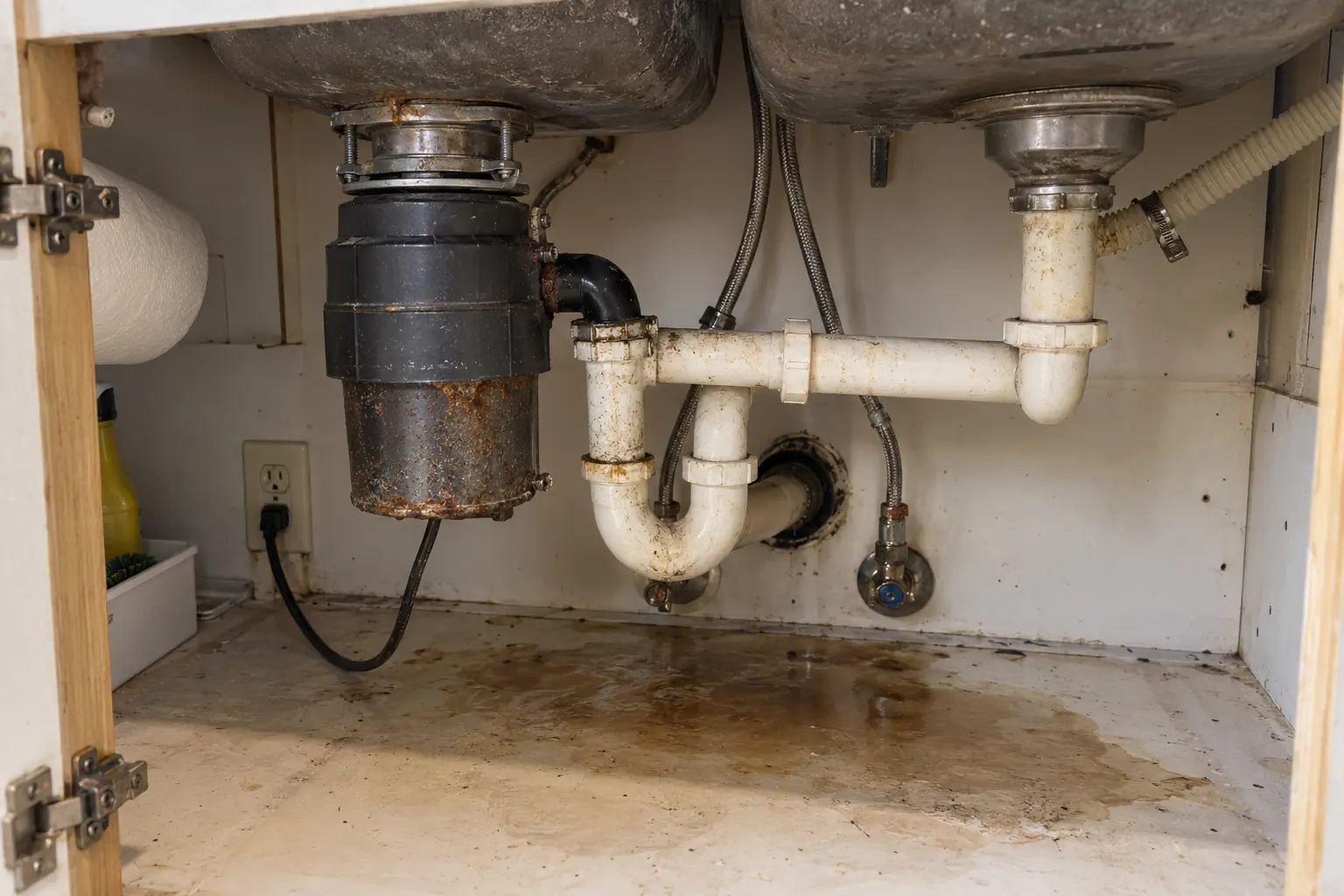 Before
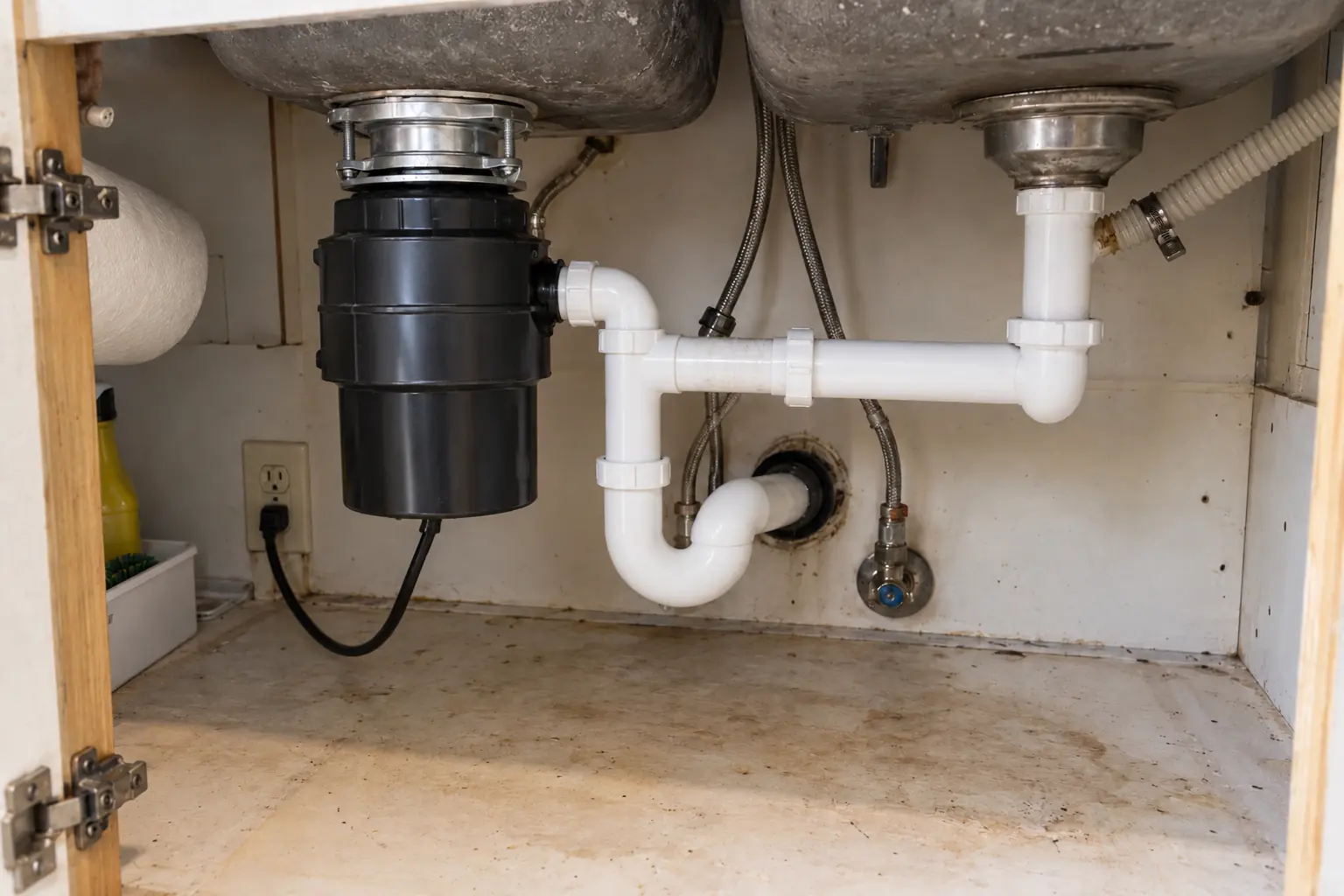 After
When garbage disposal repair makes sense
Repair when the disposal itself is sound and something around it failed. In our experience the repairs that last involve a dried-out putty seal, a loose clamp or a worn dishwasher hose connection, not the motor.
Leak at the top, where the disposal meets the sink
The sink flange may need new plumber's putty or a new gasket. Confirm by drying the unit, filling the sink and watching the flange from below.
Leak at the side or the discharge pipe
Where the dishwasher hose connects, the clamp or hose may be loose or cracked. At the discharge pipe, the gasket or bolts may need replacing.
Rattling, crooked unit or occasional jams
A unit that sits crooked or rattles may need its mounting ring reseated. Jams that clear with the hex wrench and do not come back are not a reason to replace anything.
When replacement is the better choice
Replace the disposal when the failure is inside the sealed motor and grinding housing. A disposal is a sealed appliance, and once its body is compromised the honest answer is a new unit.
- Water dripping from the bottom or the body of the unit, usually a sign the internal seals or housing have corroded.
- The reset button trips again and again under normal use.
- The motor hums but will not turn even after unjamming.
- Grinding is weak, slow or noisy even with cold water running.
- A burning smell from the motor.
- The unit is old and has already needed several repairs.
Upgrading: horsepower, noise and feed type
If you are replacing anyway, choose the new unit for how you cook and the space under your sink.
Clearance under the sink
A larger unit may sit lower, so measure the space against the trap and any filter or pull-out bins before you buy.
Homes on septic
Homes in some outer suburbs are on septic rather than sewer, and disposals add solids to the tank. Some manufacturers make units meant for septic homes, and the pumping schedule may need to change. Ask the plumber and your septic service before choosing a model.
| Feature | What it changes | What to check |
|---|---|---|
| Higher horsepower | Grinds tougher scraps, jams less | Larger body, more cabinet space |
| Sound insulation | Quieter operation | Usually on better models |
| Continuous feed | Runs while the wall switch is on | Most common setup |
| Batch feed | Runs only with the stopper in place | Preferred by some near children |
| Same-brand mount | Quicker swap | A new brand usually means a new mount ring |
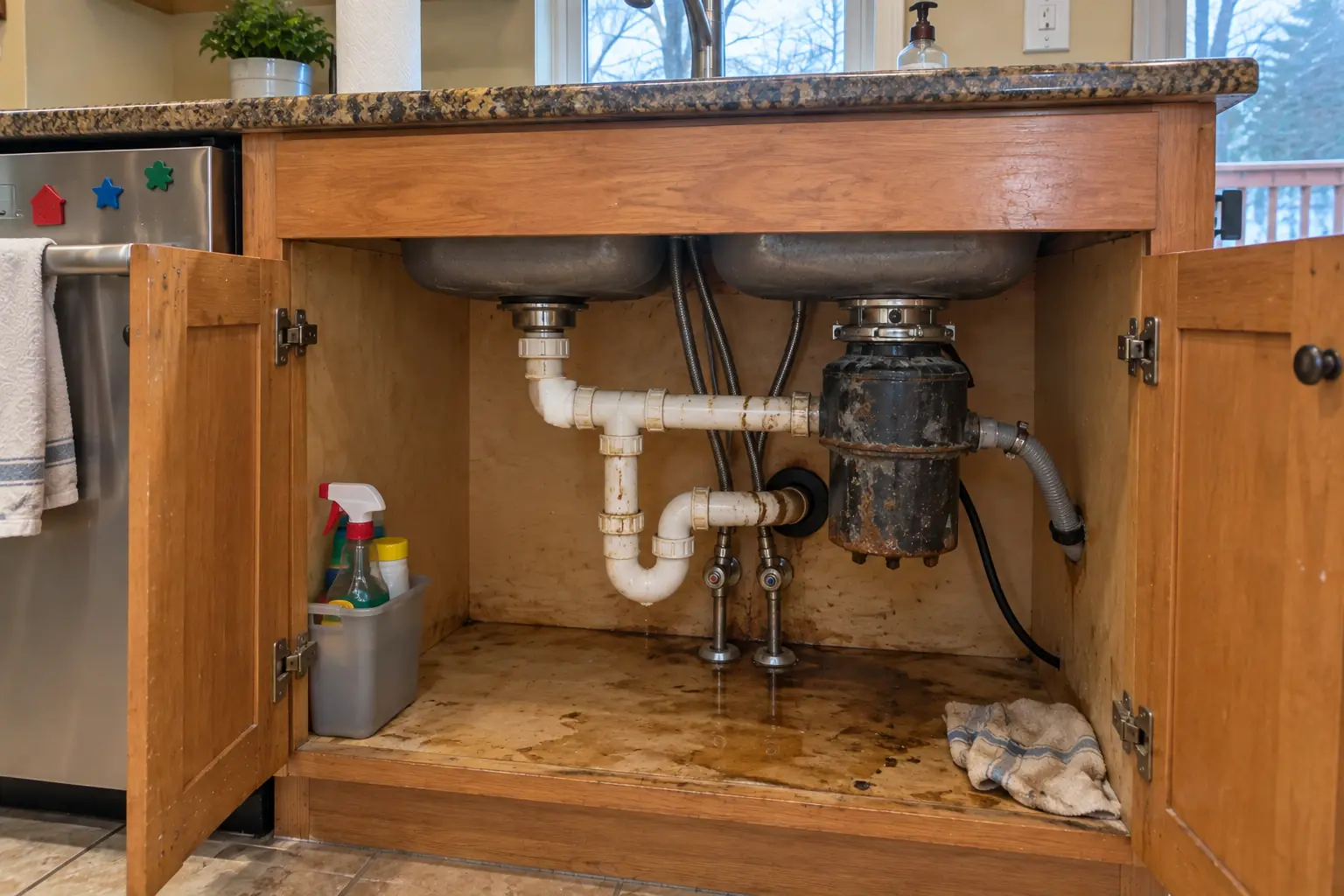 Before
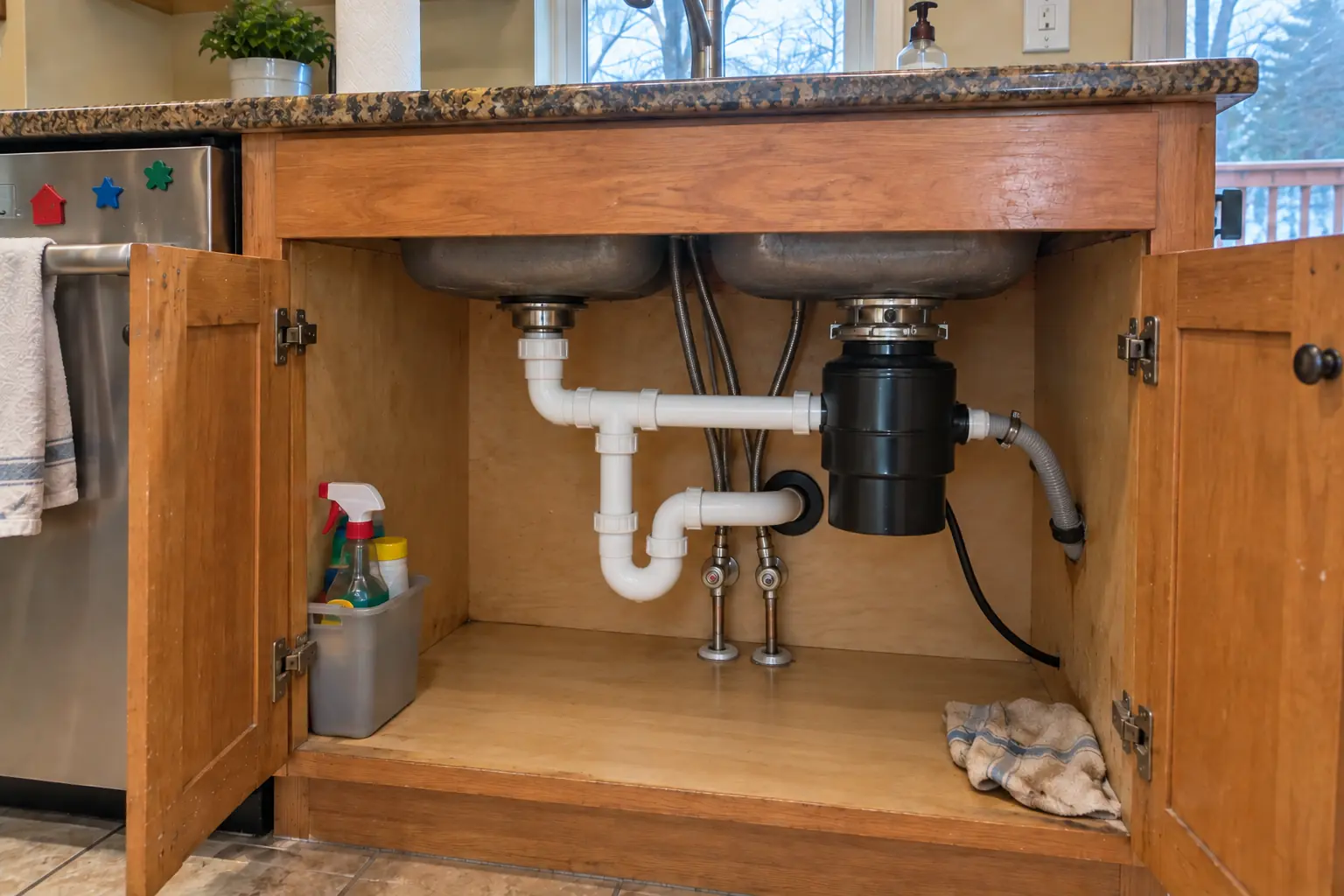 After
Dishwasher and drain connections
The dishwasher drain often connects to an inlet on the side of the disposal, and that connection causes the most common mistake with a do-it-yourself swap.
The knockout plug
A new disposal comes with a plug inside the dishwasher inlet. If a dishwasher is connected, the plug must be knocked out and removed from inside the unit, or the dishwasher will not drain.
High loop or air gap
Route the dishwasher hose with a high loop under the counter or through an air gap at the sink, as local code requires, so dirty water cannot flow back into the dishwasher.
Wiring and plumbing: who does what
A disposal swap on an existing setup is often homeowner work; anything new in the wall is not.
Electrical
A disposal is either plugged into a switched outlet under the sink or hard-wired to a switch. Adding a disposal where there was none, or moving the switch, is electrical work. Electricians in the Chicago area are licensed or registered by their municipality, since Illinois has no statewide electrician license.
Plumbing
Changes to the drain, the trap arm or the venting should be done by an IDPH-licensed plumber. If the disposal shares a sink with a slow or recurring clog further down the line, fixing the drain matters more than the unit.
Habits that help a disposal last
Disposals handle soft food scraps well and struggle with a few predictable things. These habits keep jams and clogs down.
- Run cold water before, during and after grinding.
- Keep grease, fat and oil out of the sink.
- Avoid fibrous peels, large bones, coffee grounds in quantity and eggshells in bulk.
- Feed scraps gradually rather than all at once.
- Run the disposal regularly so parts do not seize.
Frequently asked questions
Is it worth repairing a garbage disposal?
Why does my garbage disposal hum but not work?
Why is my garbage disposal leaking from the bottom?
Can I replace a garbage disposal myself?
Does a new disposal need a dedicated circuit?
How long does a garbage disposal usually last?
Why won't my dishwasher drain after a new disposal was installed?
Garbage Disposal Installation & Repair in your town
- Carol Stream
- Naperville
- Schaumburg
- Wheaton
- Glen Ellyn
- Bloomingdale
- Bartlett
- Roselle
- Hanover Park
- Glendale Heights
- West Chicago
- Winfield
- Warrenville
- Lisle
- Downers Grove
- Lombard
- Villa Park
- Elmhurst
- Oak Brook
- Addison
- Itasca
- Wood Dale
- Elk Grove Village
- Hoffman Estates
- Arlington Heights
- Palatine
- Mount Prospect
- Des Plaines
- Park Ridge
- Skokie
- Evanston
- Northbrook
- Glenview
- Highland Park
- Buffalo Grove
- Lake Zurich
- Oak Park
- Berwyn
- Tinley Park
- Orland Park
- Bolingbrook
- Aurora
- Elgin
- St. Charles
- Geneva
- Batavia
- Crystal Lake
- Plainfield
- Woodridge
Sources
Keep reading
-
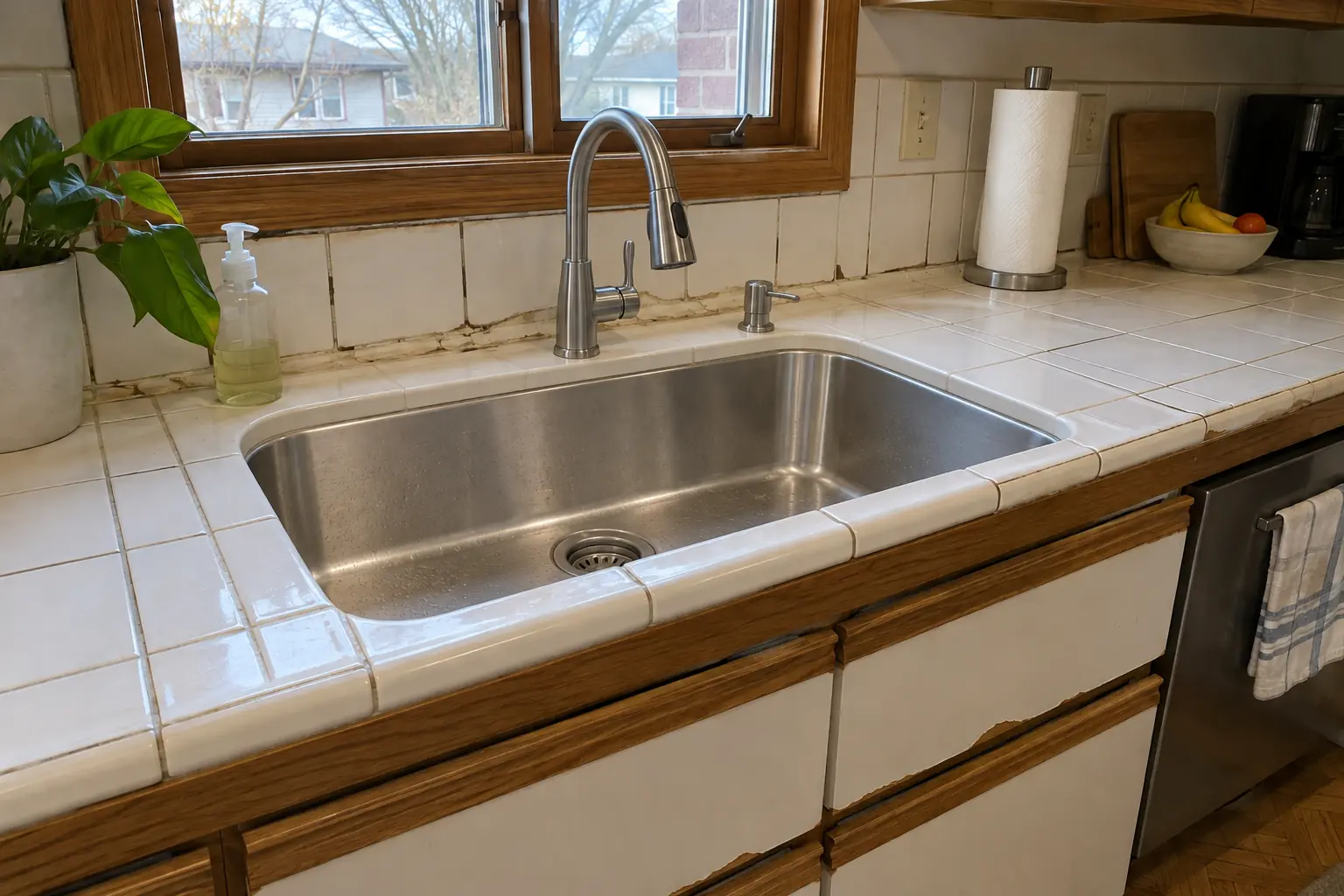 Plumbing, appliances and electricalKitchen Sink Replacement and Plumbing: What Drives the Cost and Can You Move a Sink?Kitchen sink replacement cost stays modest when the new sink fits the same countertop opening and the drain stays put. It rises when the sink changes…4 min read
-
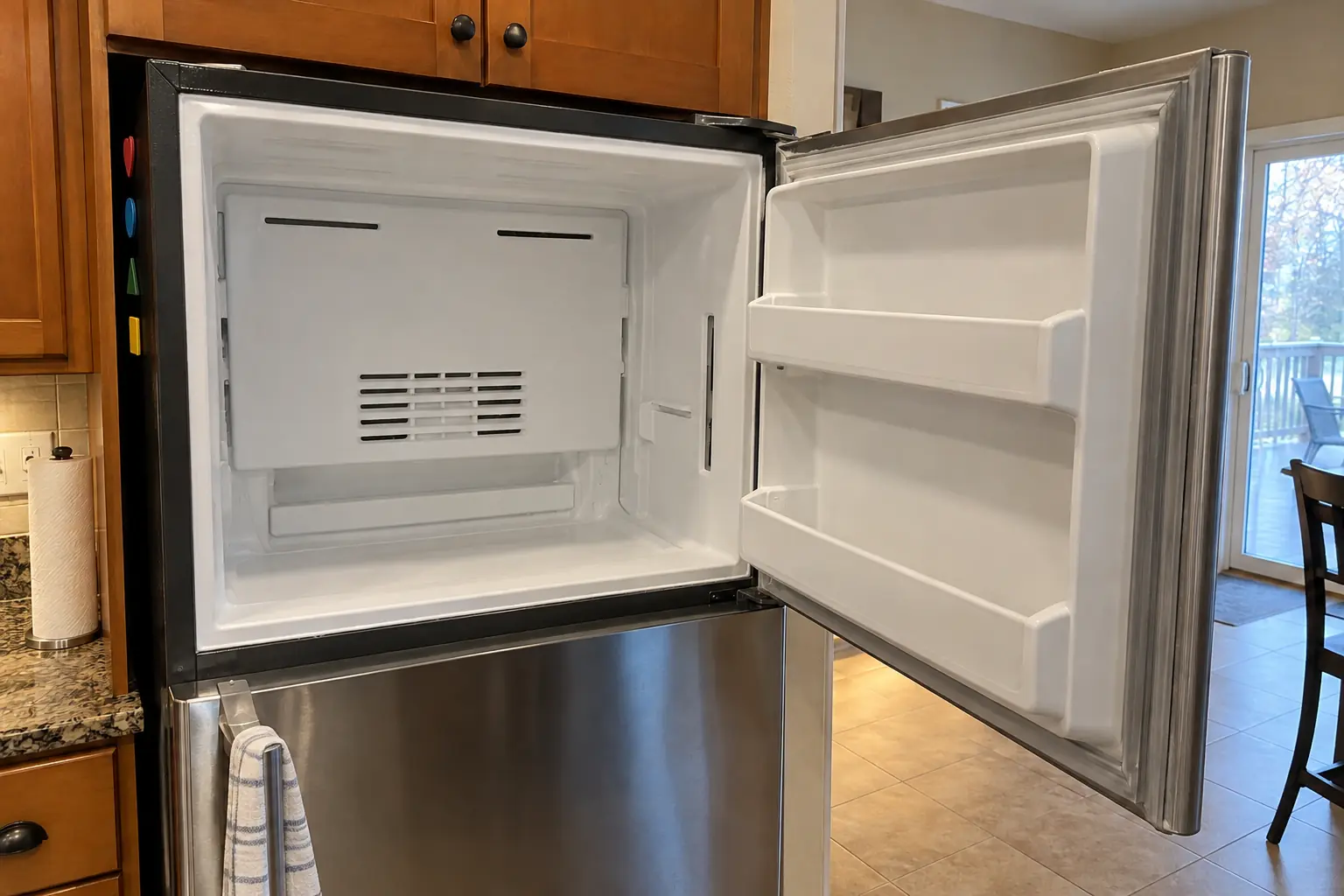 Plumbing, appliances and electricalKitchen Appliance Repair vs Replacement, from Dishwashers to OvensRepair a kitchen appliance when a single part has failed, the body is sound and parts are available: pumps, valves, latches, elements, igniters and…3 min read
-
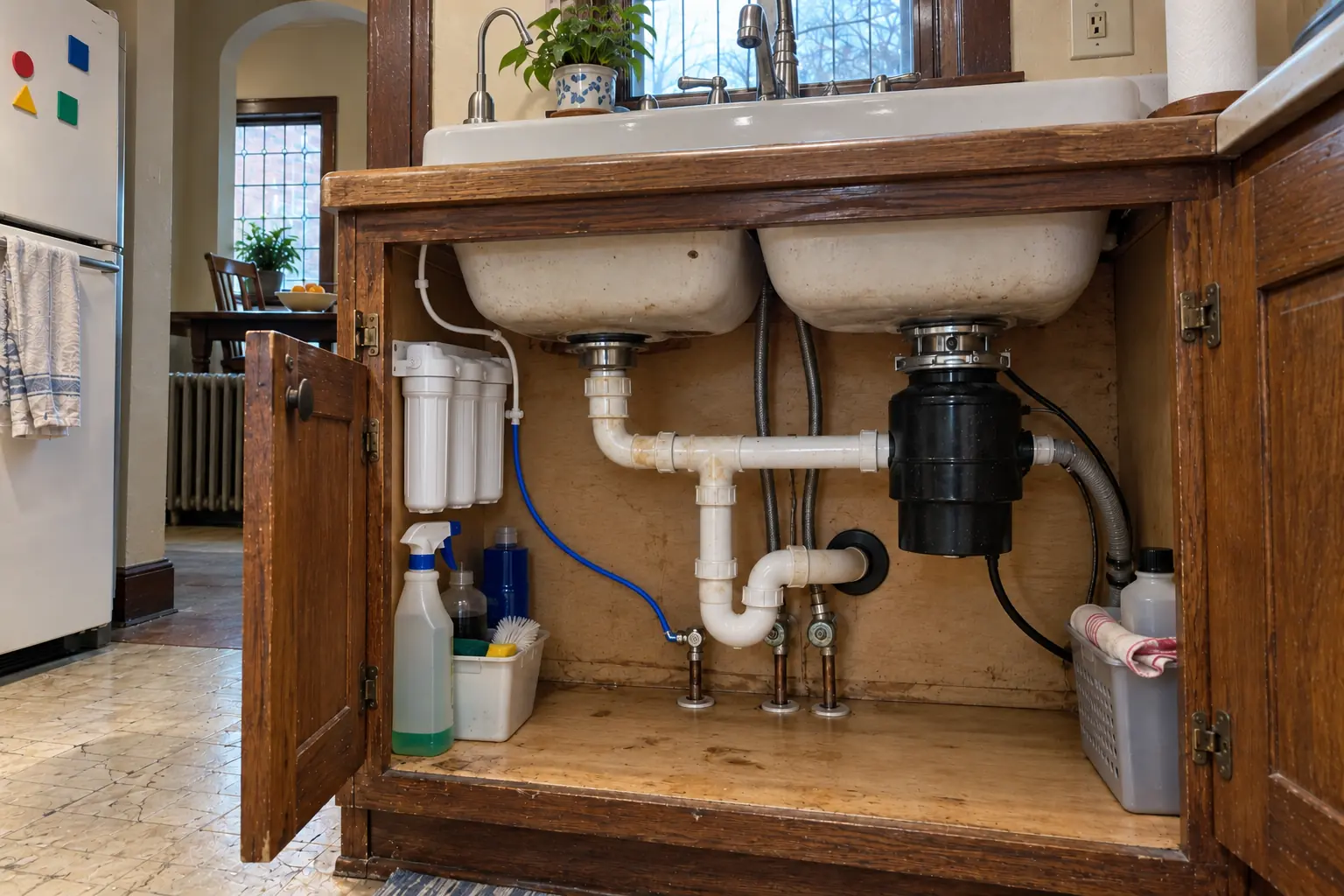 Plumbing, appliances and electricalUnder Sink Water Filter vs Reverse Osmosis: Choosing and Installing a Kitchen SystemUnder sink water filter vs reverse osmosis: a carbon filter mainly improves taste and odor and, when certified for it, reduces specific contaminants…3 min read