Kitchen Appliance Repair vs Replacement, from Dishwashers to Ovens
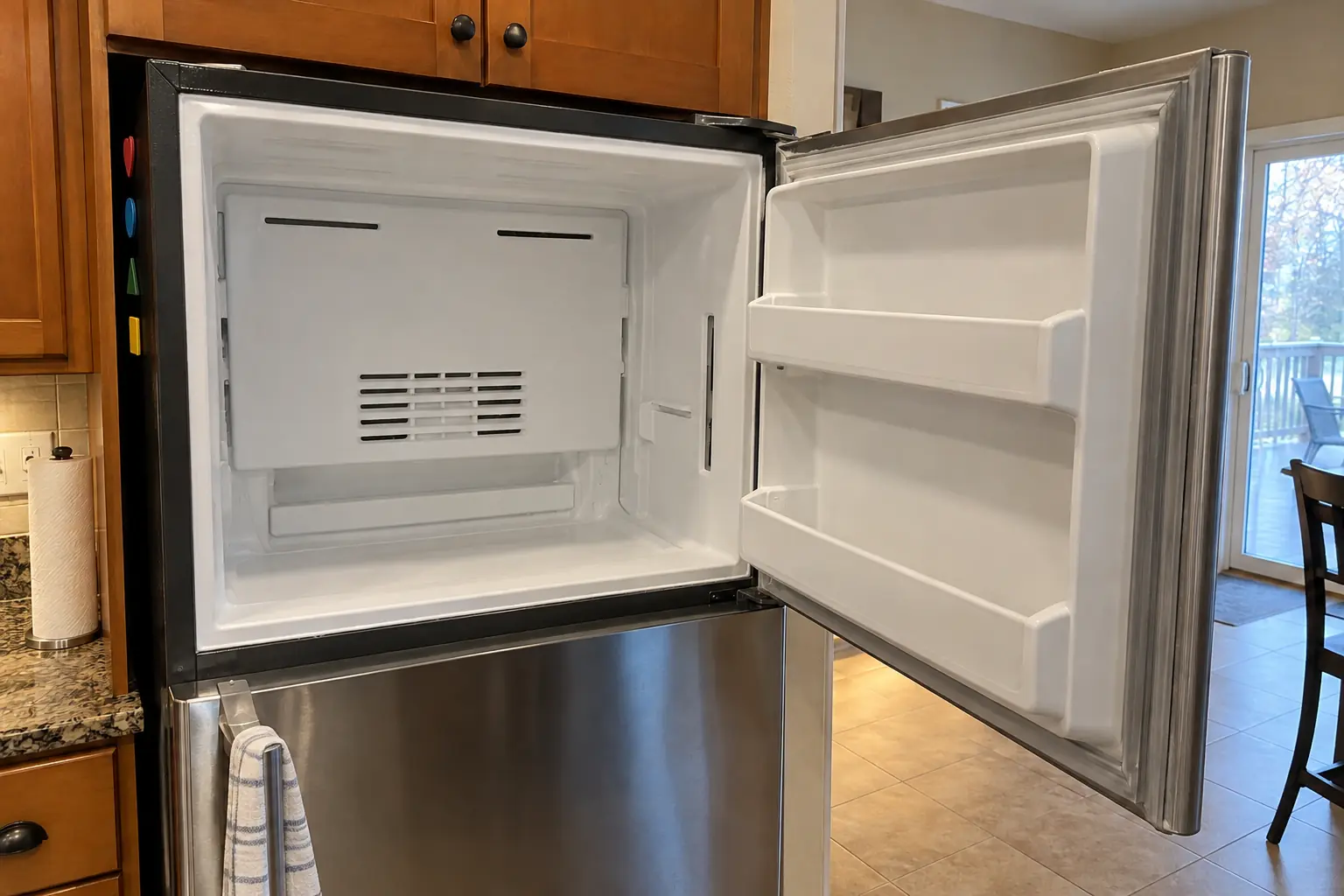
The repair or replace question usually comes down to three things: what failed, how old the appliance is, and whether it is still the appliance you want. A dishwasher with a clogged filter or a failed door latch, an oven with a burned-out bake element, or a refrigerator with a bad fan motor is normally worth repairing. A rusted-through dishwasher tub, a sealed-system failure in an older refrigerator, or an appliance that has needed several repairs in a short time usually points toward replacement.
This guide walks through dishwasher repair vs replacement first, since it is the question we hear most, then ovens, ranges, cooktops and refrigerators. It includes the safe checks to try before a service call, the signs that mean you should stop and call a technician, and how the decision connects to cabinet sizes if you are planning a remodel.
A simple framework for repair or replace
The failed part tells you most of what you need to know. Many common failures are inexpensive parts with straightforward labor: pumps, valves, switches, elements, igniters, fans and door gaskets. Failures in the structure of the appliance, such as a cracked tub, a rusted frame or a sealed refrigeration system, are harder to justify on an older unit.
Age and history come next. An appliance in the middle of its working life with a first problem is usually worth fixing. One near the end of its expected life, or one with a pattern of repairs, is often better replaced. Finally, ask whether you like it: if it is too small, too loud or the wrong size for a planned remodel, a repair may not be money well spent.
| Situation | Usual call | Why |
|---|---|---|
| Single part failure, sound body | Repair | Routine parts and labor |
| First problem, mid-life appliance | Repair | Years of service left |
| Older high-quality built-in | Often repair | Replacement means cabinet work |
| Repeated breakdowns | Replace | Next failure is likely |
| Structural or sealed-system failure | Replace on older units | Repair rarely pays back |
| Parts discontinued | Replace | Repair may be impossible |
Dishwasher repair vs replacement
Most dishwasher problems are worth diagnosing before you shop for a new one. The symptom usually points to a small, fixable cause.
Problems that are usually repairable
- Poor cleaning: often a clogged filter, blocked spray arms or a detergent issue.
- Water left in the bottom: often a clogged filter, a kinked drain hose or a blocked disposal inlet.
- Will not start: often a door latch or control fault.
- Leaking at the door: often a worn gasket or a unit that is out of level.
When replacing the dishwasher is the better call
Replace it when the tub is cracked or rusted, when the door hinges and frame are failing on an older unit, or when a leak has damaged the floor or cabinet and the machine is near the end of its life anyway. Deal with any leak quickly, because standing water under a dishwasher damages subfloors and cabinet bases.
- Clean the filterRemove and rinse the filter in the bottom of the tub.
- Check the spray armsMake sure they spin freely and their holes are clear.
- Inspect the drain hoseConfirm it is not kinked and has a high loop or air gap as local code requires.
- Check a new disposalIf a disposal was just installed, confirm its dishwasher knockout plug was removed.
- Check powerIf the unit is dead, check the breaker or the outlet under the sink.
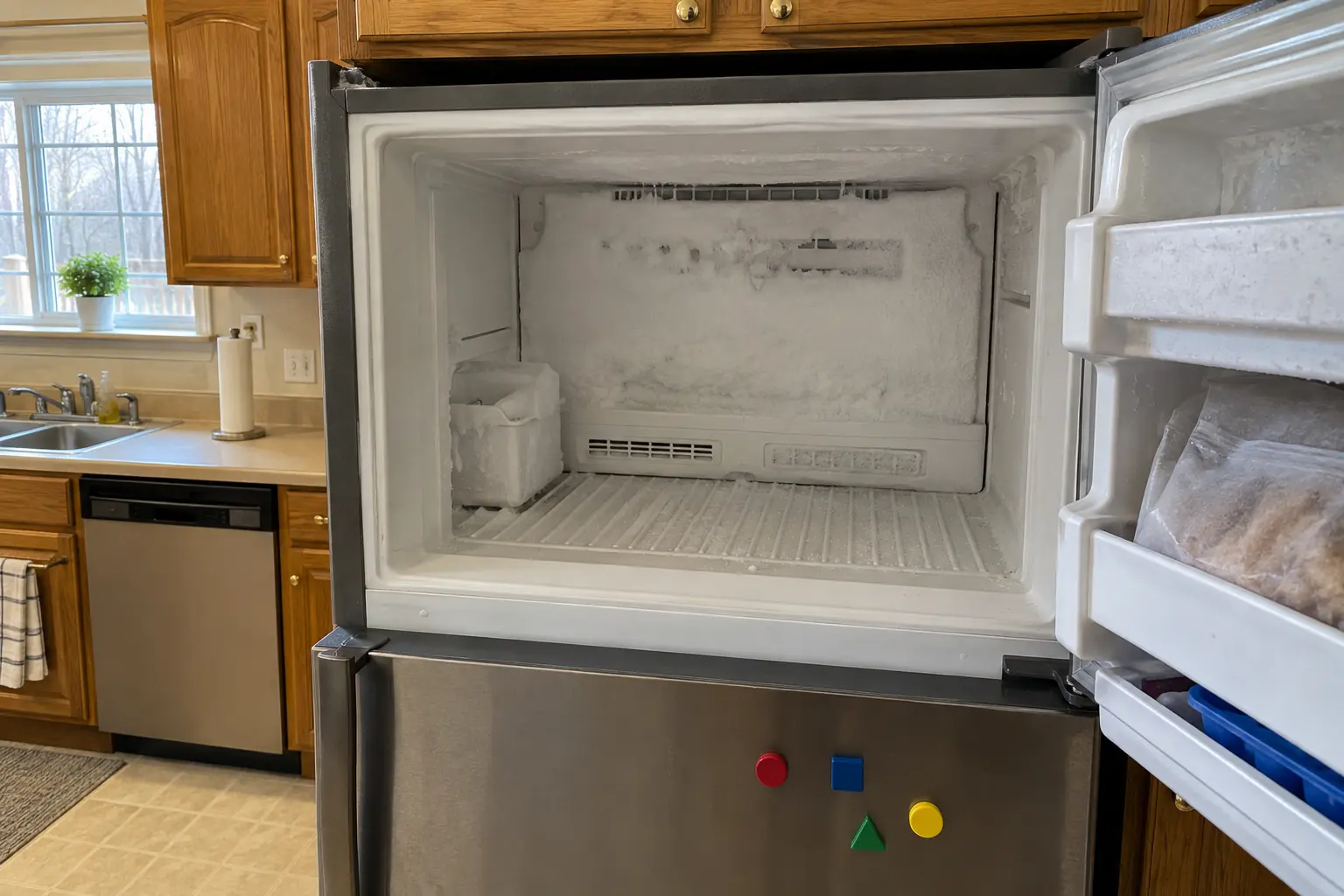 Before
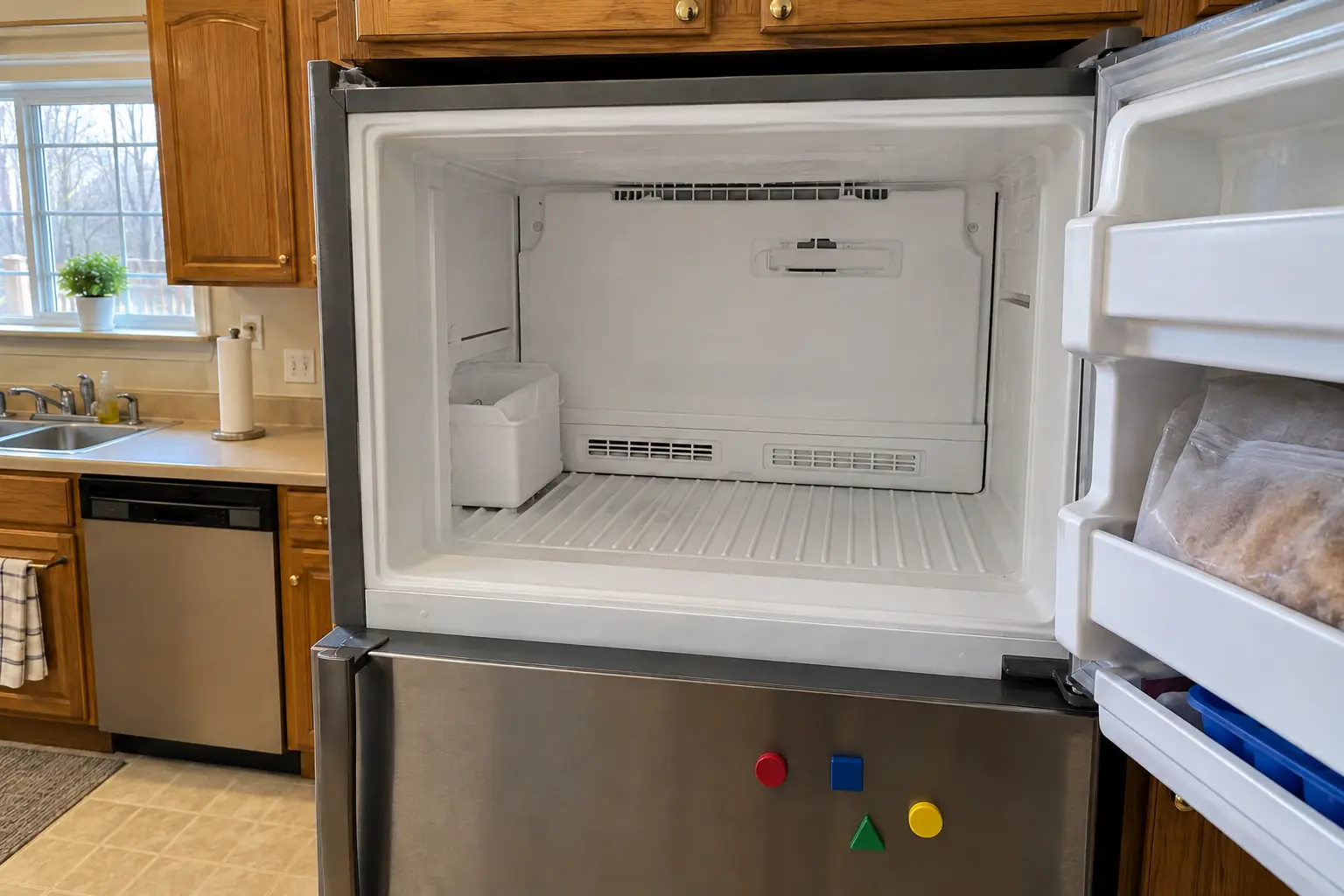 After
Ovens, ranges and cooktops
Most oven and range failures are element, igniter or sensor problems, which are routine repairs. The cases for replacement are fewer and easier to spot.
Common repairable oven and range problems
- Electric oven will not heat: often a failed bake or broil element.
- Gas oven will not light: often a weak igniter.
- Uneven baking: a faulty temperature sensor or a door gasket that no longer seals.
- Cooktop burner will not light: often dirty or wet burner caps and igniters.
When an oven or cooktop should be replaced
Cracked glass cooktops, control boards for discontinued models and badly rusted oven cavities are where replacement starts to make more sense. Gas appliance repairs should be done by a qualified technician who tests for leaks afterward.
Refrigerator and freezer repair or replacement
A refrigerator that runs but does not cool well usually has a fixable problem: dirty condenser coils, a failed fan or a defrost fault. Ice makers and water dispensers fail often and are usually repairable too.
Sealed-system problems, such as a refrigerant leak or a failed compressor, are more serious and require an EPA Section 608-certified technician to handle refrigerant. On a newer refrigerator this work may be covered by the manufacturer warranty, so check the paperwork first. On an older unit, a sealed-system failure is the most common reason we see owners choose replacement. Our refrigerator troubleshooting guide covers the safe checks in more detail.
Energy, size and the remodel question
Efficiency can tip a close decision, but it is rarely a reason on its own to replace a working appliance. Newer refrigerators and dishwashers are often more efficient than the units they replace, and ENERGY STAR labels make comparison easier.
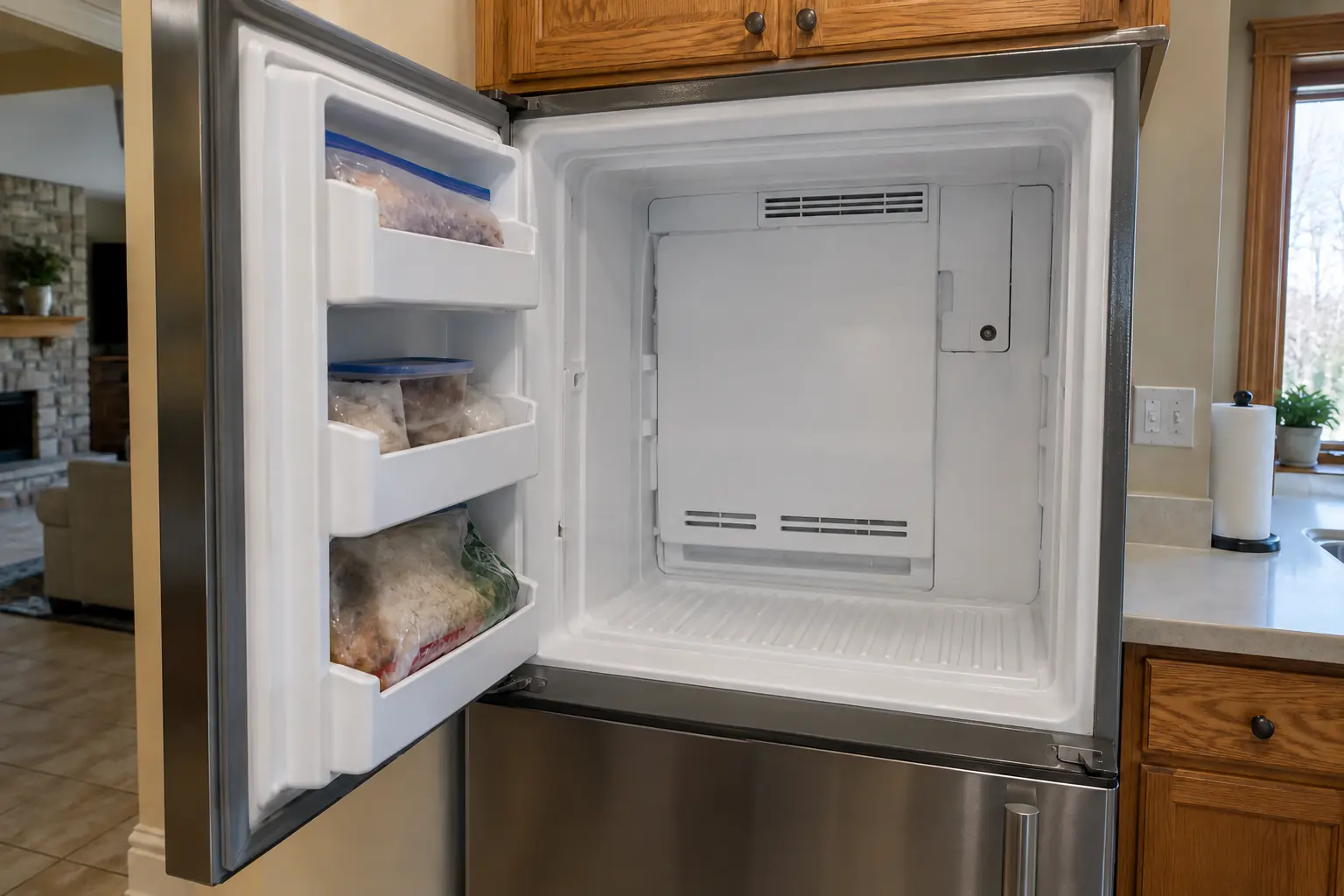
Size matters more if a remodel is coming. Dishwashers are usually a standard width, but refrigerators and ranges vary in width, depth and height. When new cabinets are planned, it is often smarter to repair the current appliance to keep it running and buy the replacement once the layout is set, so the cabinet openings match the new model.
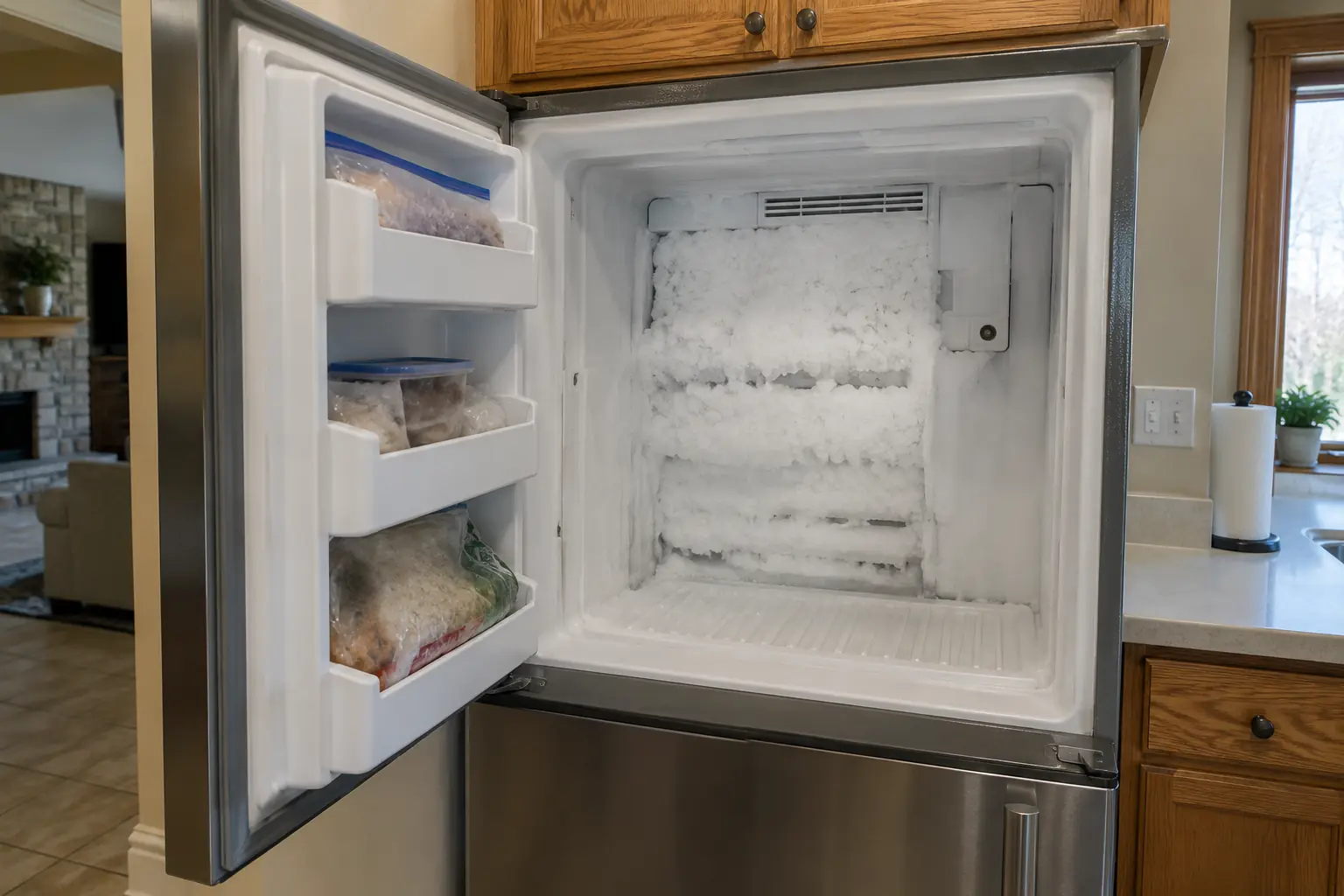 Before
 After
Safe checks before a service call
A handful of simple checks resolve a surprising number of calls. Always unplug the appliance or turn off its breaker before touching anything inside, and do not remove panels on gas appliances.
- Check the breaker, GFCI outlets and whether the appliance is plugged in firmly.
- Look for a control lock or child lock that may be enabled.
- Clean filters: dishwasher filter, range hood grease filters, refrigerator water filter if it is old.
- Vacuum refrigerator condenser coils and make sure vents are not blocked.
- Read the error code in the owner's manual; many codes point straight to the cause.
When to stop and call a technician
Some symptoms are safety issues rather than inconveniences. Stop using the appliance and call a qualified technician if you notice any of the following.
- Smell of gas, or a burner that lights with a large, yellow or lifting flame.
- Burning smell, scorch marks, sparking or a breaker that trips repeatedly.
- Water leaking onto the floor from a dishwasher or refrigerator line.
- Refrigerator not cooling after the simple checks, since refrigerant work requires certification.
- Oven door that will not unlock after a self-clean cycle has finished and cooled.
Frequently asked questions
Is it worth repairing a dishwasher?
Why is my dishwasher not draining?
Should I repair or replace an oven that will not heat?
Is a refrigerator compressor worth replacing?
Can I replace a dishwasher myself?
Should I replace all my appliances at once?
Kitchen Appliance Repair in your town
- Carol Stream
- Naperville
- Schaumburg
- Wheaton
- Glen Ellyn
- Bloomingdale
- Bartlett
- Roselle
- Hanover Park
- Glendale Heights
- West Chicago
- Winfield
- Warrenville
- Lisle
- Downers Grove
- Lombard
- Villa Park
- Elmhurst
- Oak Brook
- Addison
- Itasca
- Wood Dale
- Elk Grove Village
- Hoffman Estates
- Arlington Heights
- Palatine
- Mount Prospect
- Des Plaines
- Park Ridge
- Skokie
- Evanston
- Northbrook
- Glenview
- Highland Park
- Buffalo Grove
- Lake Zurich
- Oak Park
- Berwyn
- Tinley Park
- Orland Park
- Bolingbrook
- Aurora
- Elgin
- St. Charles
- Geneva
- Batavia
- Crystal Lake
- Plainfield
- Woodridge
Sources
Keep reading
-
 Plumbing, appliances and electricalRefrigerator Not Cooling? Safe Checks to Try and When to Call a TechnicianA refrigerator not cooling is often caused by something you can check yourself: a bumped temperature setting or demo mode, dirty condenser coils…3 min read
-
 Costs and budgetingKitchen Appliance Installation Cost: Dishwasher Installation Cost, Ranges, Cooktops and MoreDishwasher installation cost usually runs about $200 to $500 in labor to replace a unit in the same spot and $300 to $1,300 where there was no…3 min read
-
 Plumbing, appliances and electricalGarbage Disposal Repair vs Replacement: How to DecideIn the garbage disposal repair vs replacement decision, repair a unit that is jammed, tripped or leaking at the sink flange, dishwasher hose or…3 min read