Under Sink Water Filter vs Reverse Osmosis: Choosing and Installing a Kitchen System
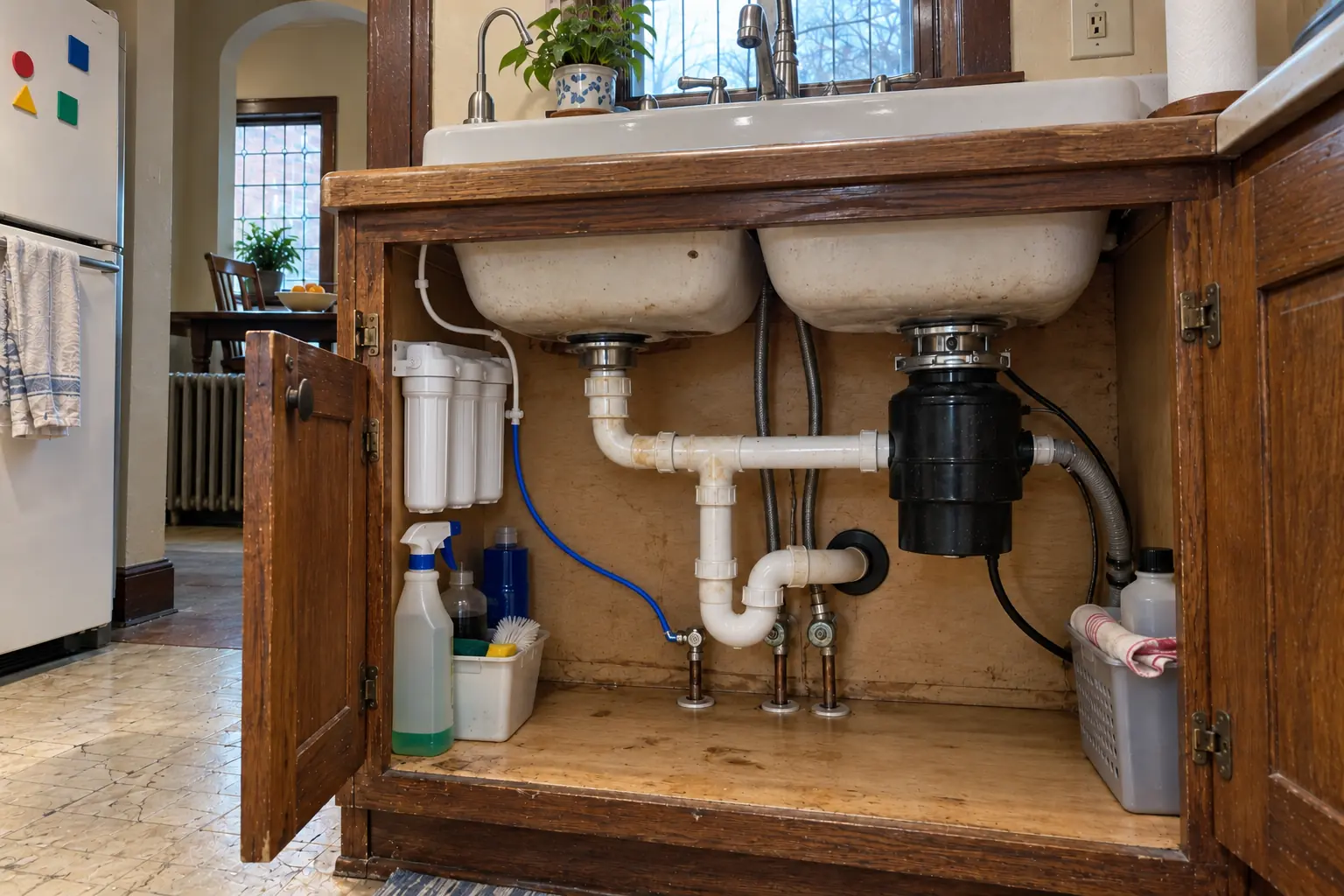
An under-sink carbon filter and a reverse osmosis (RO) system both give you filtered water at the kitchen sink, but they work differently. A carbon filter mainly improves taste and odor and, when certified for it, reduces specific contaminants such as lead. Reverse osmosis pushes water through a fine membrane and removes a much wider range of dissolved substances, including minerals, at the cost of a storage tank or a larger unit, a drain connection and some wastewater. If you mainly want better-tasting water, a good carbon filter is often enough. If you want the broadest reduction, RO is usually the stronger choice.
This guide compares an under sink water filter vs reverse osmosis in practical terms, explains how to read NSF/ANSI certifications, and describes what goes into installation: the faucet hole, the drain connection, space under the sink and filter changes. It also covers what shapes under sink water filter installation cost, without quoting prices, since that depends on your sink, counter and cabinet. For questions about your water and health, your water utility and a doctor are the right sources.
Under sink water filter vs reverse osmosis: side by side
The right system depends on what you want it to do, how much room there is under the sink and how much upkeep you are willing to do. Most of the practical differences come down to the RO membrane, which needs a drain, a tank or pump, and more space.
| Factor | Carbon filter | Reverse osmosis |
|---|---|---|
| Reduction range | Taste, odor, certified contaminants | Wider, including dissolved minerals |
| Cabinet space | Small corner | Much more, with a tank |
| Water to drain | None | Some, as normal operation |
| Flow at the tap | Near normal | Slower; tank can run low |
| Connections | Supply line and faucet | Supply, faucet and drain; sometimes power |
| Maintenance | Cartridge changes | Cartridges plus membrane |
How an under-sink carbon filter works
Carbon filters trap contaminants on activated carbon as water passes through. Under-sink models usually use one or two cartridges connected to the cold supply line and feed either a separate small faucet or a dual-handle faucet with a filtered side. Water flows at near-normal pressure and nothing goes to the drain.
Carbon is good at chlorine taste and odor and, in certified cartridges, can reduce lead and certain organic chemicals. Some water utilities disinfect with chloramine rather than chlorine; ordinary carbon removes chloramine poorly, and catalytic carbon is designed for it. Your utility's annual water quality report says which one it uses.
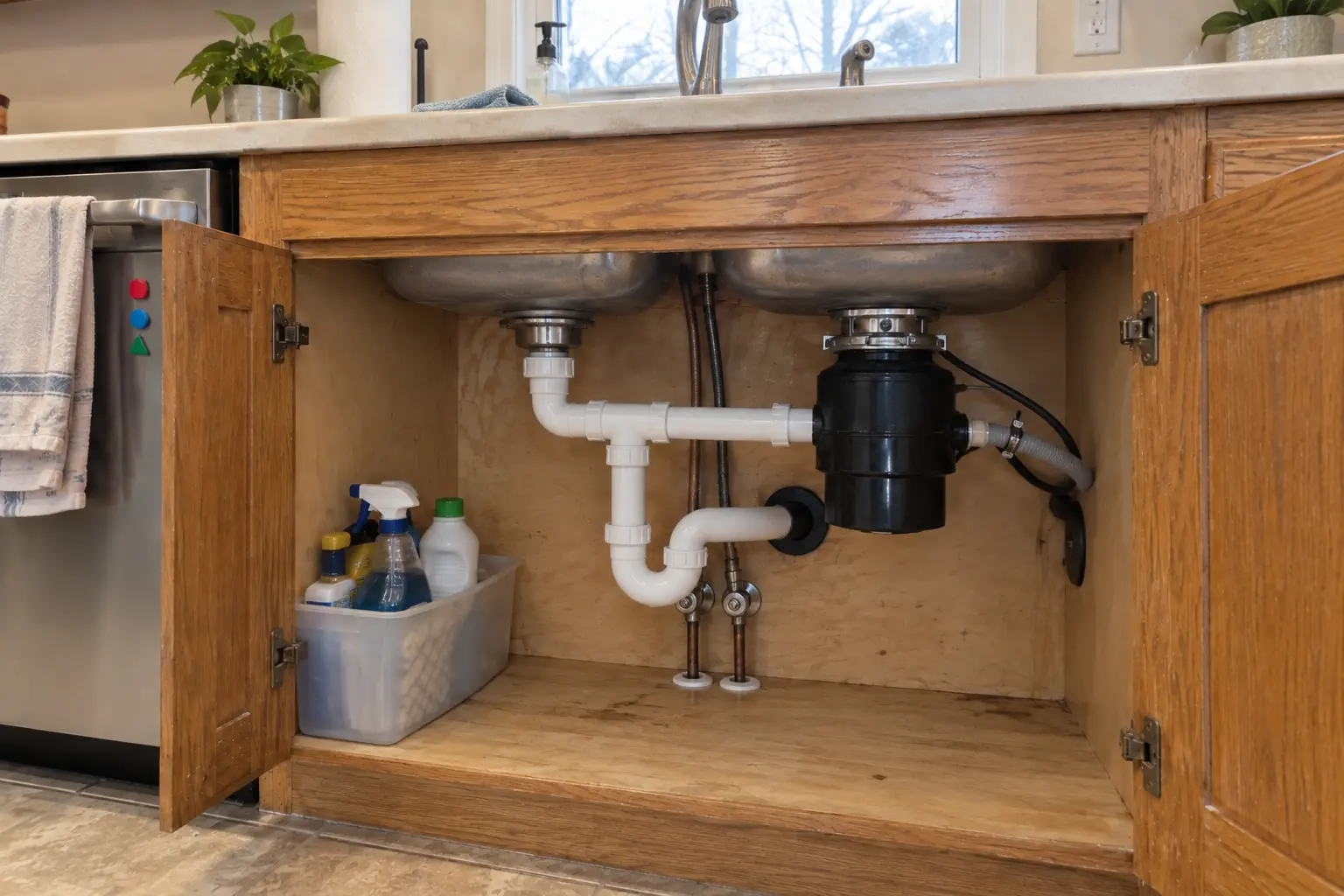 Before
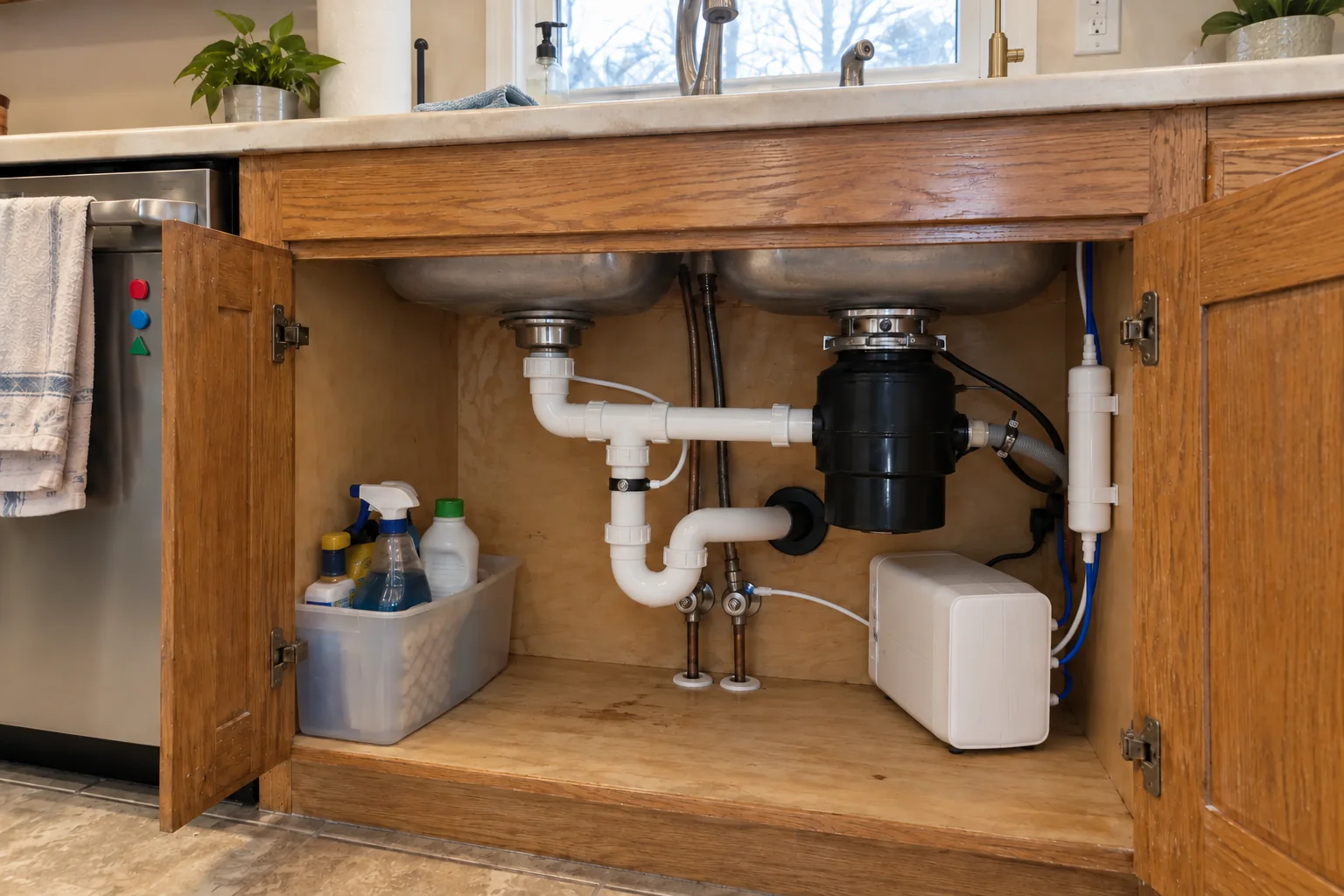 After
How reverse osmosis works
A reverse osmosis system works in stages, and each one protects the next.
- Sediment prefilterCatches sand, rust and particles that would clog the later stages.
- Carbon prefilterReduces chlorine, which can damage many RO membranes, along with taste and odor.
- RO membraneSeparates most dissolved solids from the water; the rejected water goes to the drain.
- Storage or on-demand deliveryTraditional systems store filtered water in a small pressurized tank; tankless units filter on demand but are larger and need power.
- Carbon postfilterPolishes the taste before the water reaches the faucet. Some systems add a remineralization stage here.
Reading NSF/ANSI certifications
The most reliable way to compare systems is by independent certification, not by marketing claims. NSF International and other accredited bodies test drinking water systems against standards and list exactly which contaminants each certified product reduces.
Check the specific contaminant on the certification listing, not just the standard number, because a product certified to a standard may be certified for only some of the contaminants it covers.
The standards you will see most
- NSF/ANSI 42: aesthetic effects such as chlorine taste and odor.
- NSF/ANSI 53: health-related contaminants such as lead and certain chemicals.
- NSF/ANSI 58: reverse osmosis systems.
- NSF/ANSI 401: certain emerging contaminants, including some pharmaceuticals and chemicals.
Lead and older Chicago-area plumbing
Many older homes in Chicago and inner suburbs still have lead service lines, and Illinois has required water utilities to inventory and replace them over time. Lead usually enters water from service lines, solder and fixtures, not from the treatment plant. A filter certified for lead reduction under NSF/ANSI 53 or 58 is a practical layer at the kitchen tap while a service line is still in place.
A filter is not a substitute for testing. If you are concerned about lead, your utility or the local health department can explain testing options, and a doctor can answer health questions.
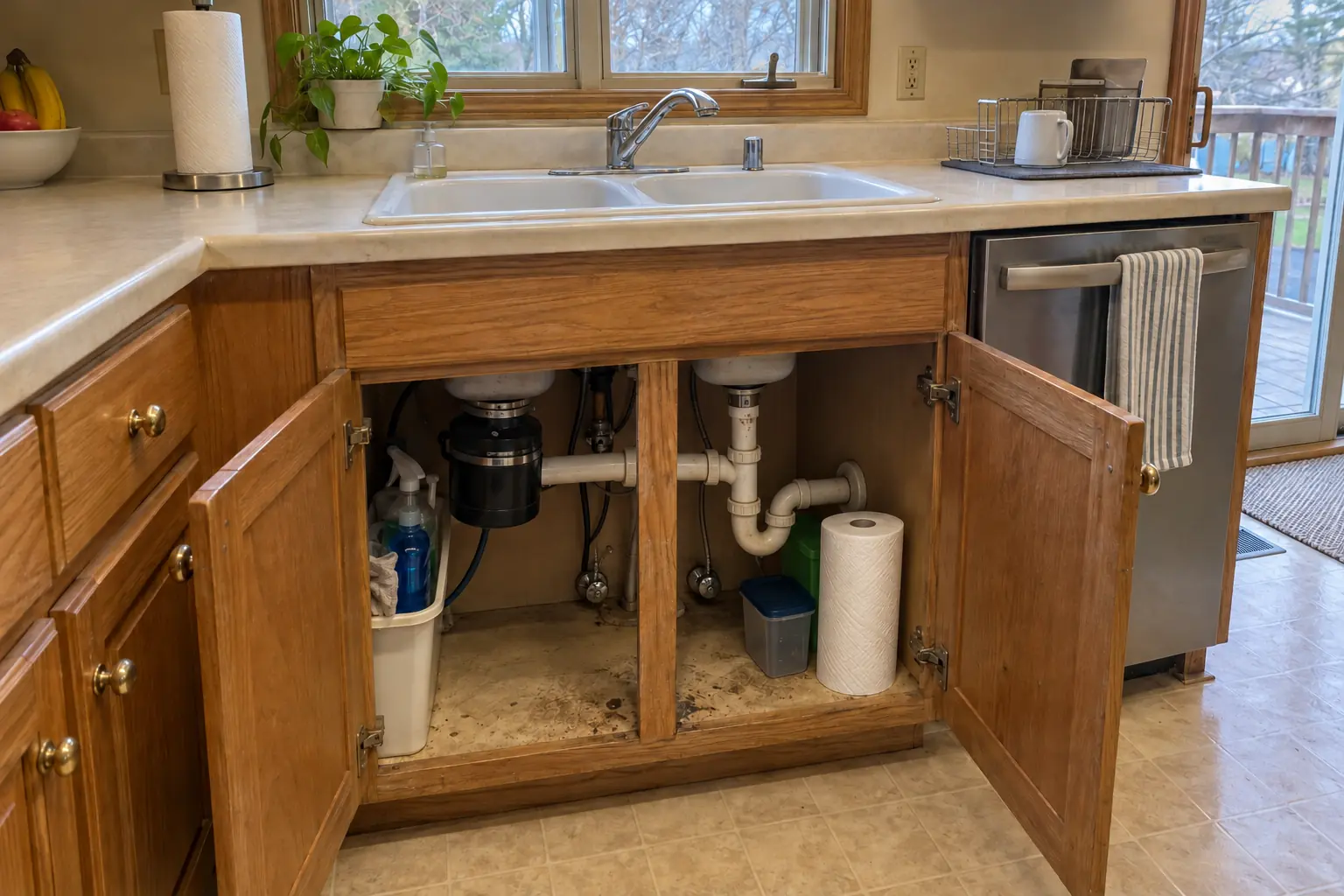 Before
 After
What shapes under sink water filter installation cost
We do not list prices here, but the factors are predictable. A carbon filter on a sink that already has a spare faucet hole and room under the counter is a short job. RO takes longer because of the drain connection, the tank and more tubing.
Faucet hole and countertop
If there is no spare hole or sprayer hole, one has to be drilled through the sink or the countertop. Drilling quartz or granite takes the right bit and more care than drilling a stainless steel sink deck.
Cabinet space and drain
A disposal, trash pull-out or deep sink bowl can leave little room for an RO tank. RO also needs a drain saddle or adapter on the sink drain, often with an air gap faucet or air gap device as local code requires.
Valves and extra connections
Old shut-off valves are often replaced at the same time. Connecting filtered water to the refrigerator or ice maker adds tubing and a fitting.
Maintenance and filter changes
Every system needs cartridge changes on the schedule its maker lists, and more often if your water has a lot of sediment. An overdue carbon filter stops doing its job and can slow the flow; an overdue RO prefilter can shorten the membrane's life. Many systems now use quick-change cartridges that twist out without tools.
Write the install date on the cartridges or set a reminder. If the system sits unused for a long time, flush it before drinking from it again, following the maker's instructions.
Frequently asked questions
Is reverse osmosis better than an under-sink filter?
Does reverse osmosis waste water?
Can an under-sink filter remove lead?
Do I need a separate faucet for a water filter?
Does an RO system need electricity?
Can a water filter connect to my refrigerator?
Who should install an under-sink system?
Under-Sink Water Filtration in your town
- Carol Stream
- Naperville
- Schaumburg
- Wheaton
- Glen Ellyn
- Bloomingdale
- Bartlett
- Roselle
- Hanover Park
- Glendale Heights
- West Chicago
- Winfield
- Warrenville
- Lisle
- Downers Grove
- Lombard
- Villa Park
- Elmhurst
- Oak Brook
- Addison
- Itasca
- Wood Dale
- Elk Grove Village
- Hoffman Estates
- Arlington Heights
- Palatine
- Mount Prospect
- Des Plaines
- Park Ridge
- Skokie
- Evanston
- Northbrook
- Glenview
- Highland Park
- Buffalo Grove
- Lake Zurich
- Oak Park
- Berwyn
- Tinley Park
- Orland Park
- Bolingbrook
- Aurora
- Elgin
- St. Charles
- Geneva
- Batavia
- Crystal Lake
- Plainfield
- Woodridge
Sources
Keep reading
-
 Plumbing, appliances and electricalKitchen Sink Replacement and Plumbing: What Drives the Cost and Can You Move a Sink?Kitchen sink replacement cost stays modest when the new sink fits the same countertop opening and the drain stays put. It rises when the sink changes…4 min read
-
 Plumbing, appliances and electricalGarbage Disposal Repair vs Replacement: How to DecideIn the garbage disposal repair vs replacement decision, repair a unit that is jammed, tripped or leaking at the sink flange, dishwasher hose or…3 min read
-
 Plumbing, appliances and electricalRefrigerator Not Cooling? Safe Checks to Try and When to Call a TechnicianA refrigerator not cooling is often caused by something you can check yourself: a bumped temperature setting or demo mode, dirty condenser coils…3 min read