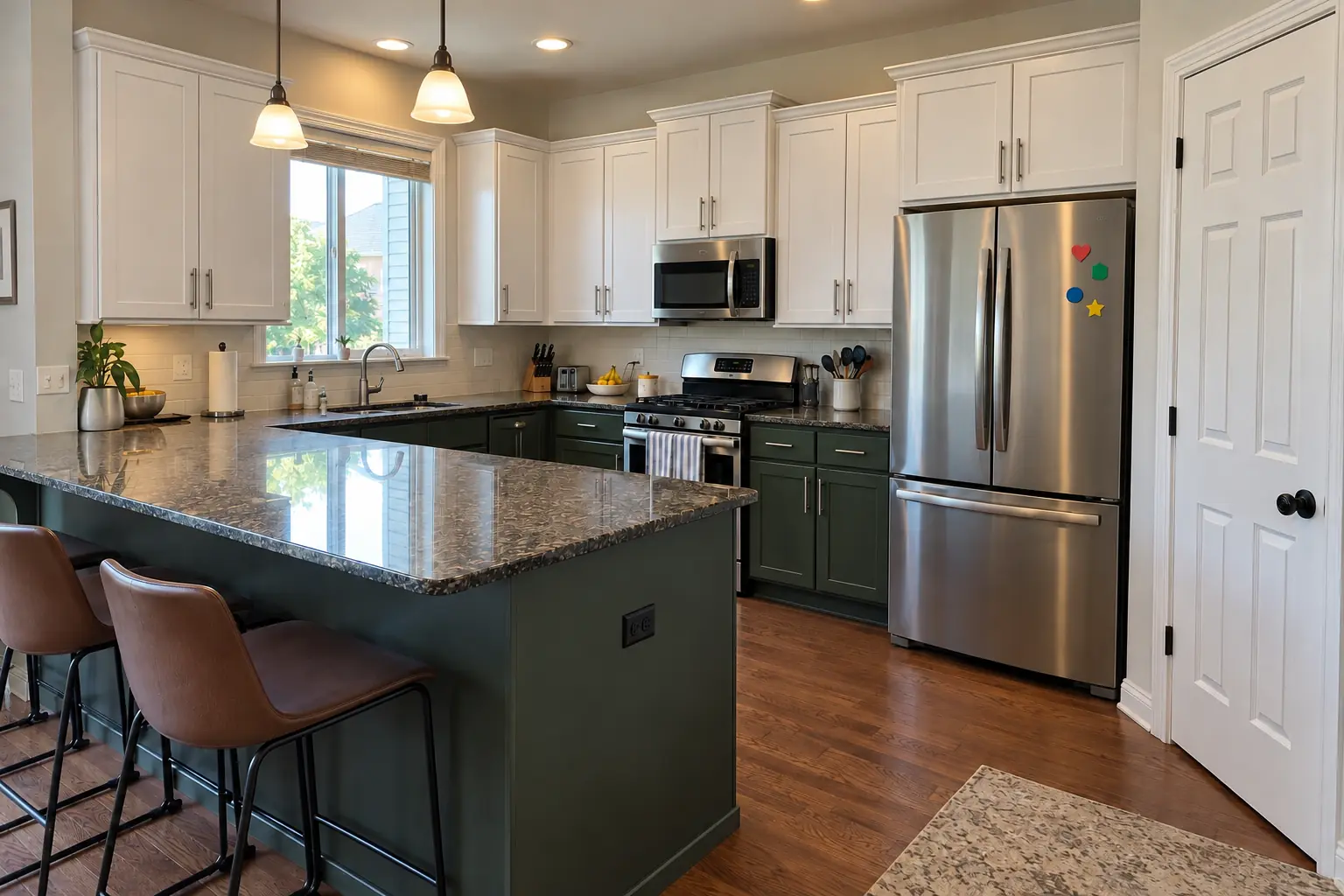
New cabinets don't match the old ones
When new cabinets sit next to older ones, the stain rarely matches out of the box. Refinishing the older run, or both, brings them together.
Serving 49 Chicago-area suburbs
Keep your solid wood cabinets in Chicagoland and give them a new stain and a hard clear finish, with the grain still showing.
Refinishing is for owners who like wood but not the color it is now. In Chicagoland we take doors to our shop, strip and sand them, re-stain or clear-coat them, and finish the face frames in place while your counters and layout stay untouched.
When new cabinets sit next to older ones, the stain rarely matches out of the box. Refinishing the older run, or both, brings them together.
Cherry darkens and reddens with light over the years. If it now reads too red, a toner or a browner stain can pull it back toward a neutral tone.
Uneven, splotchy doors from a do-it-yourself stain job can be corrected. Stripping, a wash coat and the right stain type give a consistent tone.
Painted-over wood cabinets can often go back to a stained finish. The test door tells us how much paint is locked in the pores.
To move from golden oak to a deep brown or espresso tone, we often skip full stripping and build the new color with toner coats under the clear finish.
Once the topcoat wears away, water soaks into the wood and darkens it. Sanding, re-staining and a fresh clear finish close it up again.
Dark rings and streaks on the sink base are water damage in the wood itself. We treat and sand what we can, and if a panel is too far gone we replace it and match the stain.
A milky haze over the stain is moisture inside the finish, common beside the dishwasher. We remove the affected coating and recoat so the color shows clearly again.
The same job looks different in a 1920s bungalow, a 1970s split-level and a new subdivision. Here is what we plan for in different parts of the region.
Prewar towns
Prewar built-ins and original kitchen cabinets often have shellac or old varnish that strips well. We restore the wood rather than replace work that is hard to rebuild today.
Postwar suburbs
Yes. Oak from that era is usually solid on the doors and frames and takes stain well. We check the panels for veneer before choosing how to strip.
Winfield, Hoffman Estates, Northbrook, Elgin, West Chicago, Highland Park
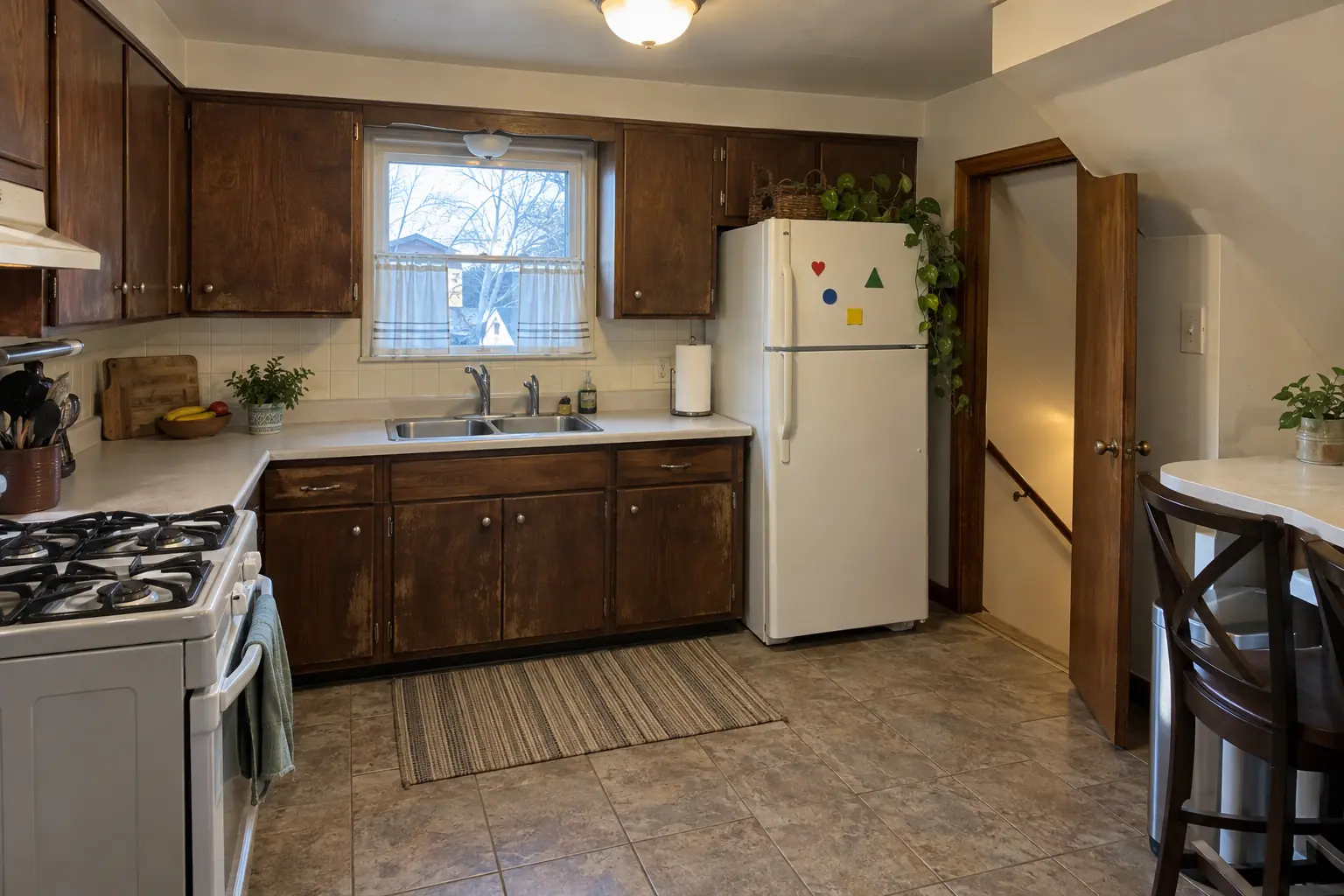 Before
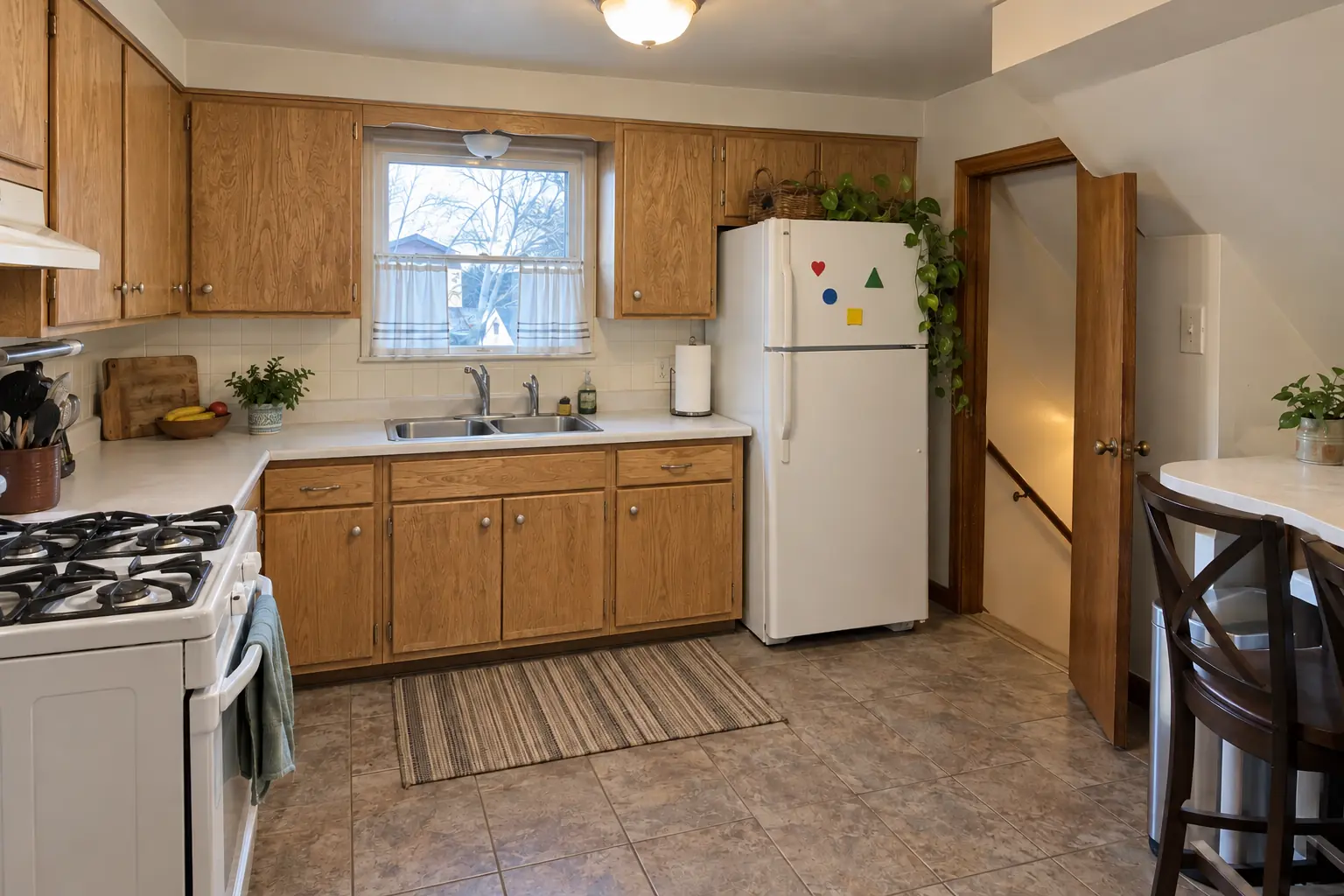 After
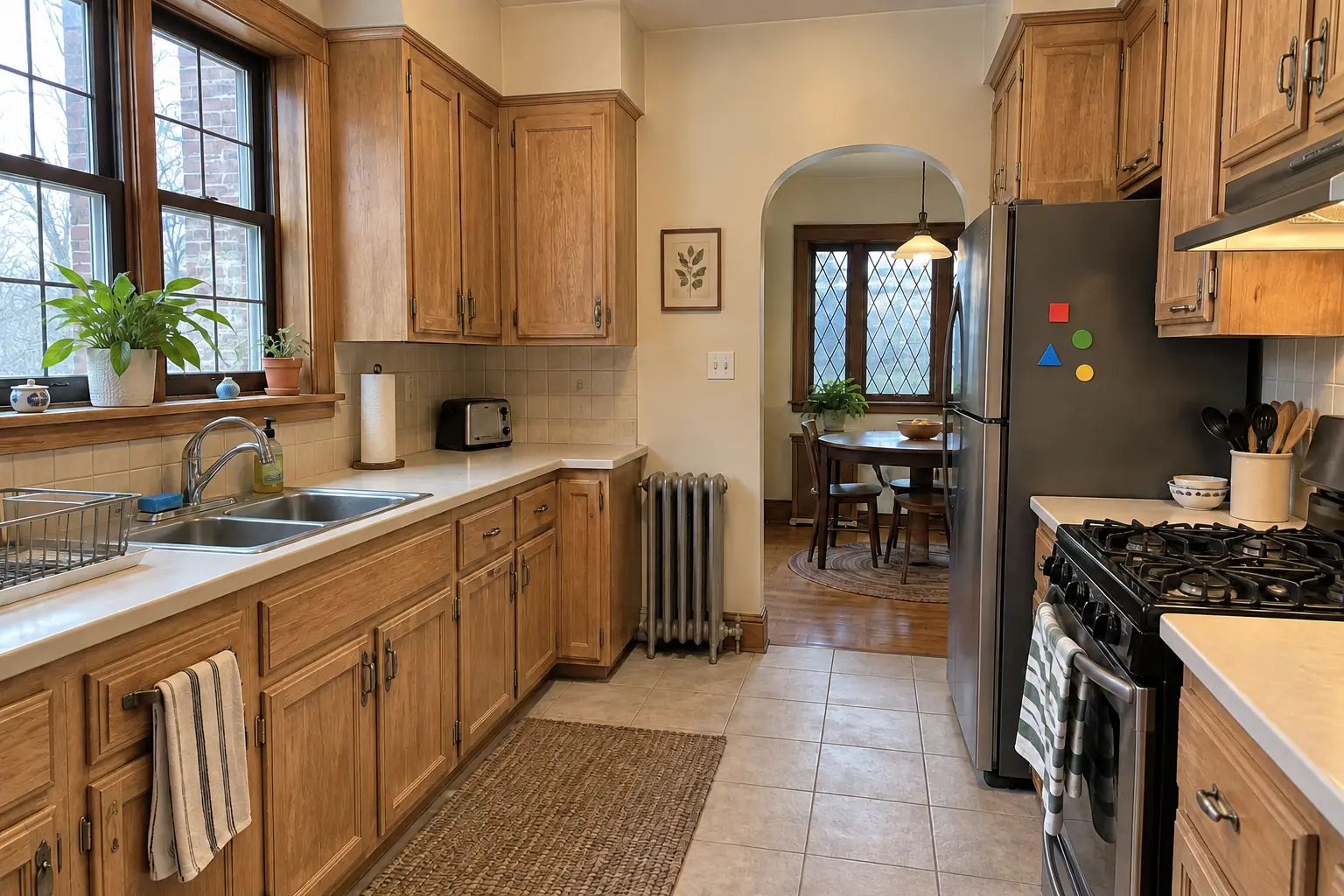
A 1950s ranch in Glen Ellyn, a typical kitchen for Glen Ellyn. What we started with: solid wood cabinets with a dull, uneven stain worn white near the handles. What bothered the owners most: bare wood showing where hands touched the doors. The result: wood cabinets stripped and refinished in a natural light oak tone, grain still showing. The job covered sanding and repairs, sample door and color approval, plus reinstall and hardware.
Cabinet Refinishing & Staining in Glen Ellyn →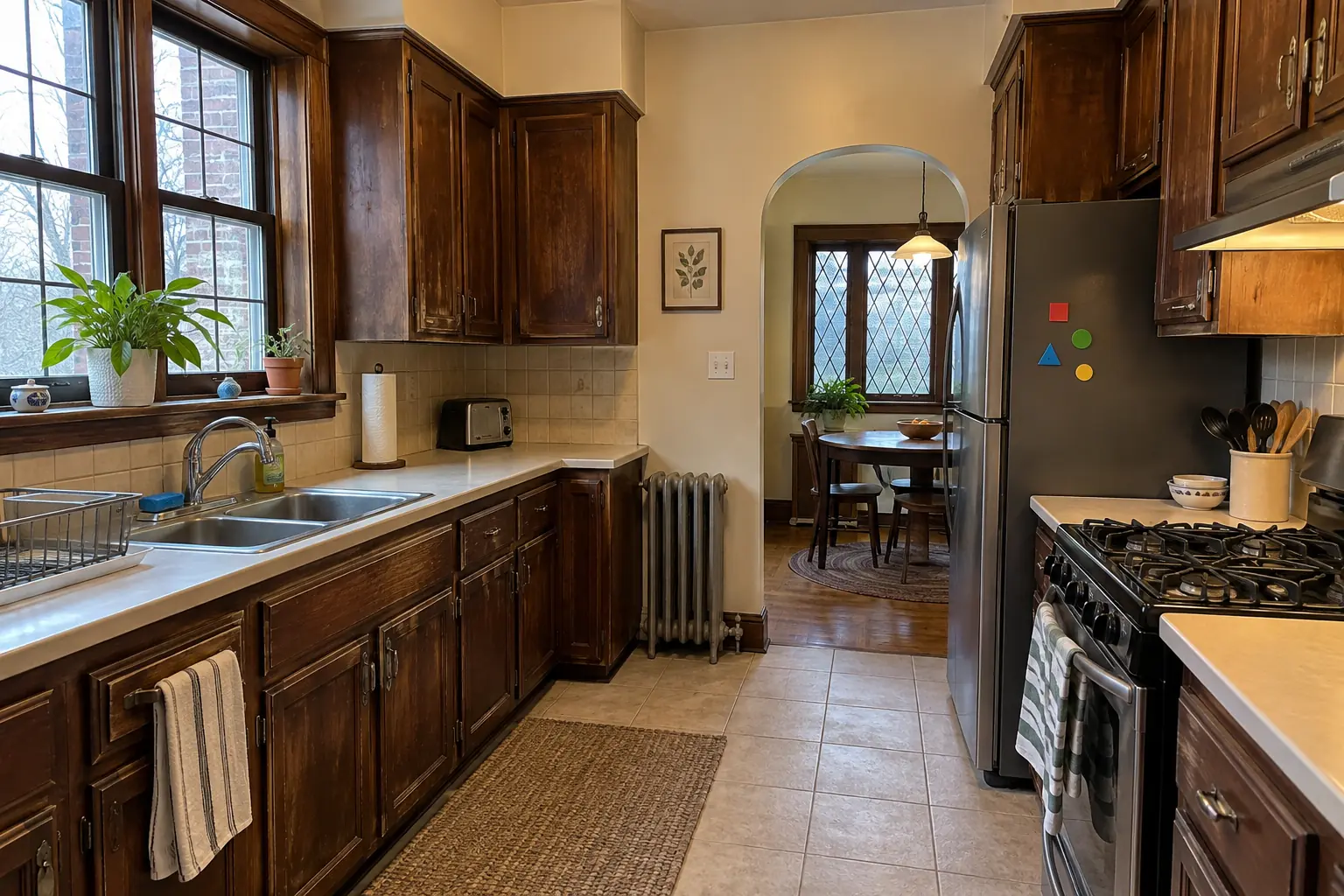 Before
 After
A 1920s bungalow in Evanston, a typical kitchen for Evanston. The kitchen as it was: solid wood cabinets with a dull, uneven stain worn white near the handles. What bothered the owners most: a dull finish worn through near the handles. After: wood cabinets stripped and refinished in a natural light oak tone, grain still showing. The job covered protection and setup, stripping the old finish, plus sample door and color approval.
Cabinet Refinishing & Staining in Evanston →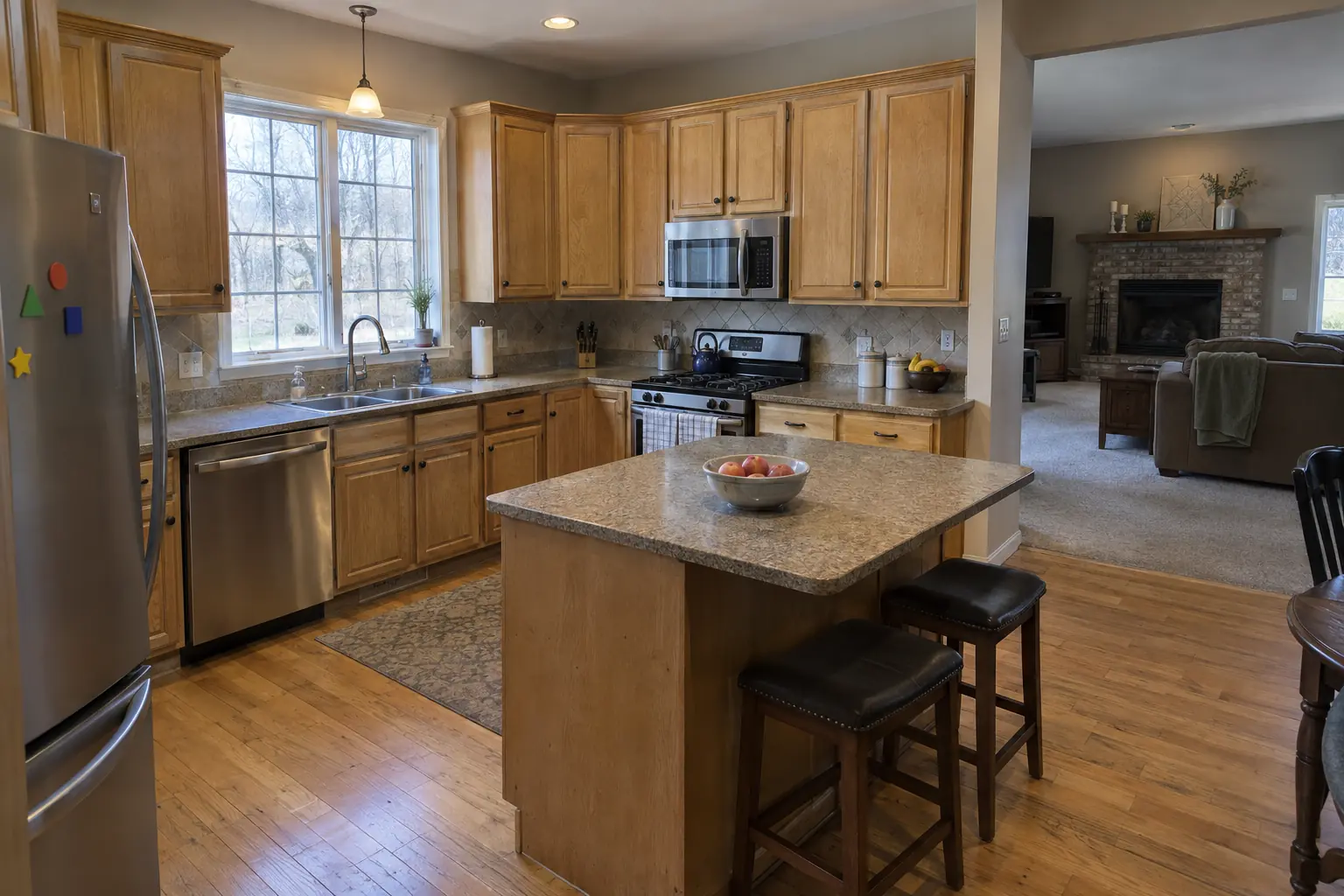 Before
 After
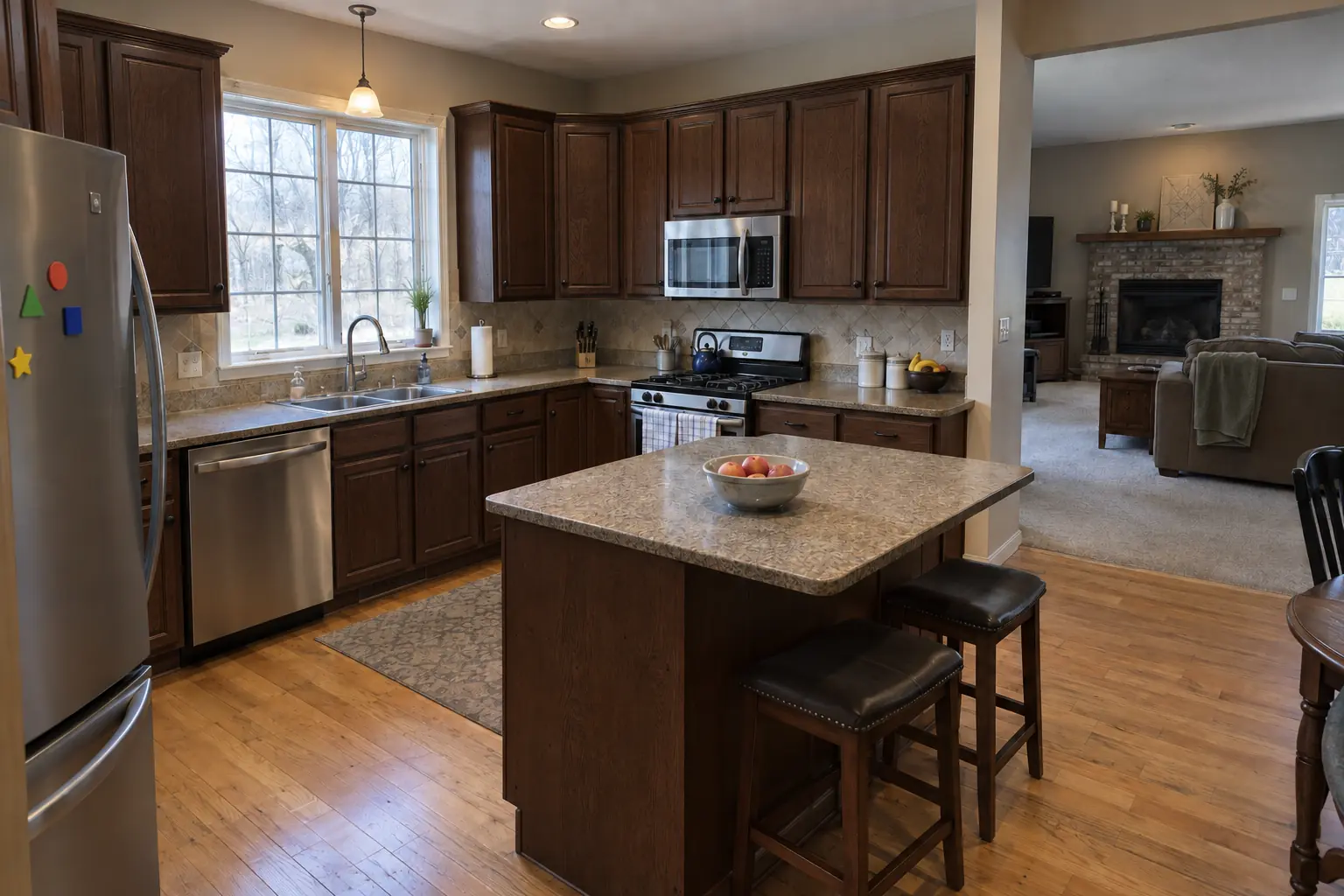
A two-story colonial from the 1990s near Mill Creek, a typical kitchen for Geneva. What we started with: solid wood cabinets with a dull, uneven stain worn white near the handles. The reason for the call: a dull finish worn through near the handles. After: wood cabinets stripped and refinished in a deep espresso-brown stain, grain still showing. On site this meant door and drawer removal, stripping the old finish, plus sanding and repairs.
Cabinet Refinishing & Staining in Geneva →Pick your town for local details, ZIP codes and nearby projects.
Call us — we'll check your ZIP, answer your questions and book an in-home estimate.