Serving St. Charles & nearby Geneva, West Chicago

Range Hood Installation in St. Charles, IL

We install under-cabinet, wall chimney, island and insert range hoods in St. Charles, ducted outside wherever the house allows.

  • Installers working in St. Charles ZIP 60174, 60175
  • Hookups by licensed trades where the code calls for it
  • Old unit hauled away on request

Prefer a callback?

Leave your number and a St. Charles range hood installer will call you.

Range hood installs we handle in St. Charles

A range hood only works as well as the duct behind it. In St. Charles we size the hood to your cooktop, plan the shortest smooth duct path to an outside wall or the roof, mount the hood at the height its maker calls for and test the airflow before we leave.

2000s hood on an old duct

Many 2000s kitchens still have the original hood on a small duct. We often replace both, so the new hood isn't held back by the old pipe.

Flexible foil duct behind the old hood

Flex duct sags, collects grease and is a poor choice for a kitchen exhaust. The new run goes in as rigid metal pipe, taped and supported.

Old hood that only recirculates

A hood that blows air back into the room through a charcoal filter catches some grease but leaves heat, moisture and smoke inside. When a duct route exists, we convert it to vent outdoors.

Duct too small for the new hood

Putting a powerful fan on a narrow duct mostly adds noise. We size the duct to the hood's outlet and keep it that size all the way out.

Island hood over a new island cooktop

Ventilating an island takes more planning than a wall hood: ceiling support, joist direction and the path out all decide where the hood can go.

Hood too narrow for the cooktop

A hood narrower than the burners lets smoke roll past its edges. We usually match the cooktop width at a minimum, and go wider over gas or pro-style ranges.

No hood over the range at all

Adding ventilation where there was none means finding a duct path, a power source and solid blocking for the hood. We plan all three before cutting anything.

Hood that vents into the attic or soffit

Venting into a soffit or attic space only moves the problem out of sight. The exhaust has to terminate outside the building envelope.
What the install includes

  • Site check and sizingCooktop width, fuel type and duct path are checked before a model is chosen.
  • Permit and approvalsPermits, condo approvals and any makeup-air requirement are confirmed up front.
  • Blocking and mountingMounting points set at the height in the maker's instructions.
  • Duct runA short, direct duct with as few elbows as possible.
  • Wall cap or roof jackExterior wall cap or roof jack with a backdraft damper, flashed and sealed against weather.
  • Recirculating setupDuctless installs get the maker's charcoal filter kit and a clear plan for replacing it.
  • Test and cleanupEvery fan speed and light tested, the damper checked from outside, the area cleaned up.

Options to choose from

Internal and remote blowersA remote blower moves the motor away from the cooktop for a quieter hood.
Under-cabinet hoodsHoods that mount under a wall cabinet, with the duct running up through the cabinet or out the back.
Ducted vs recirculatingDucted hoods send air outside; recirculating hoods filter it through charcoal and return it to the room.
Inserts and linersThe working core of a decorative hood, ducted like any other hood.
Island hoodsHoods suspended above an island, supported from the ceiling framing.

What the work looks like in St. Charles homes

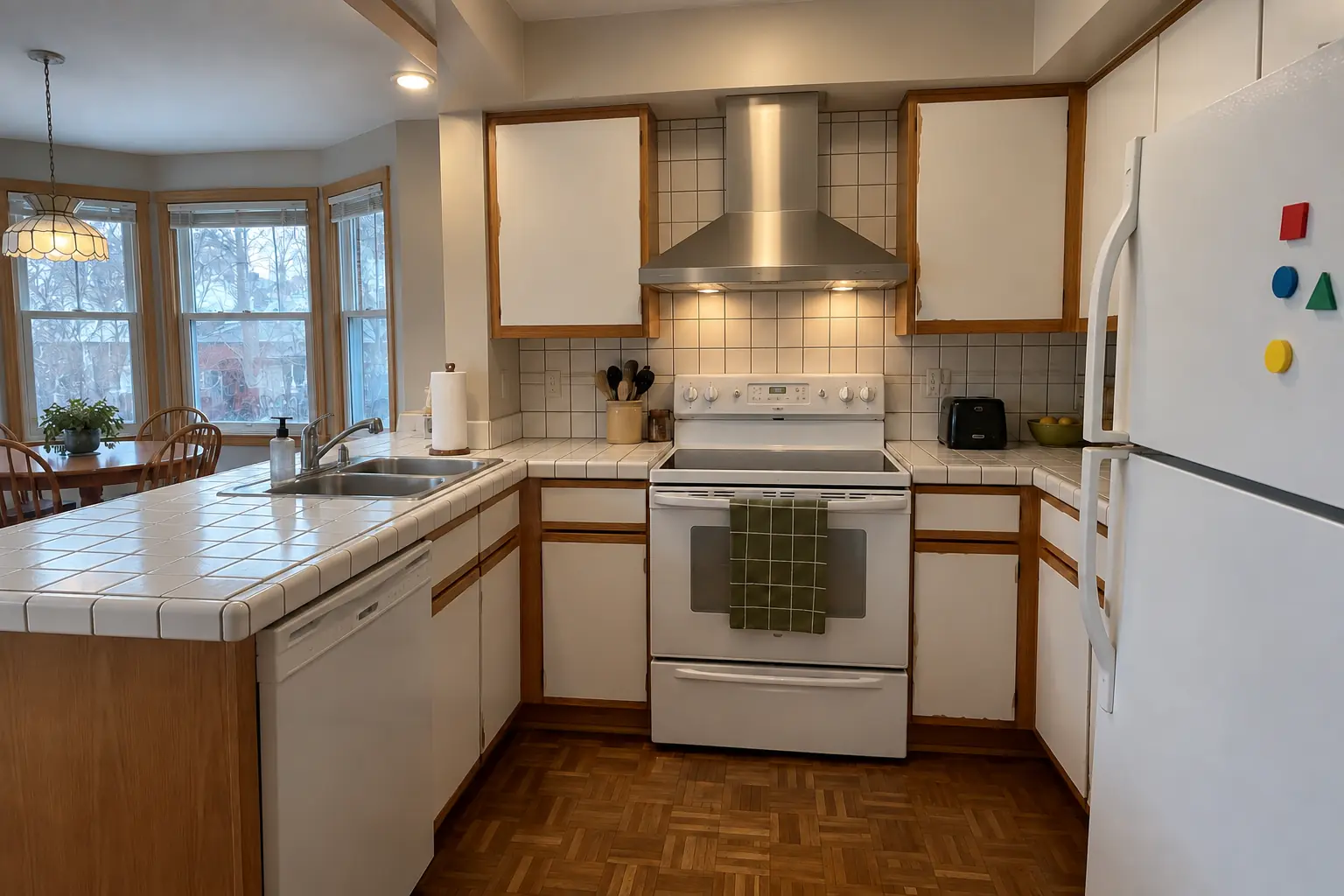
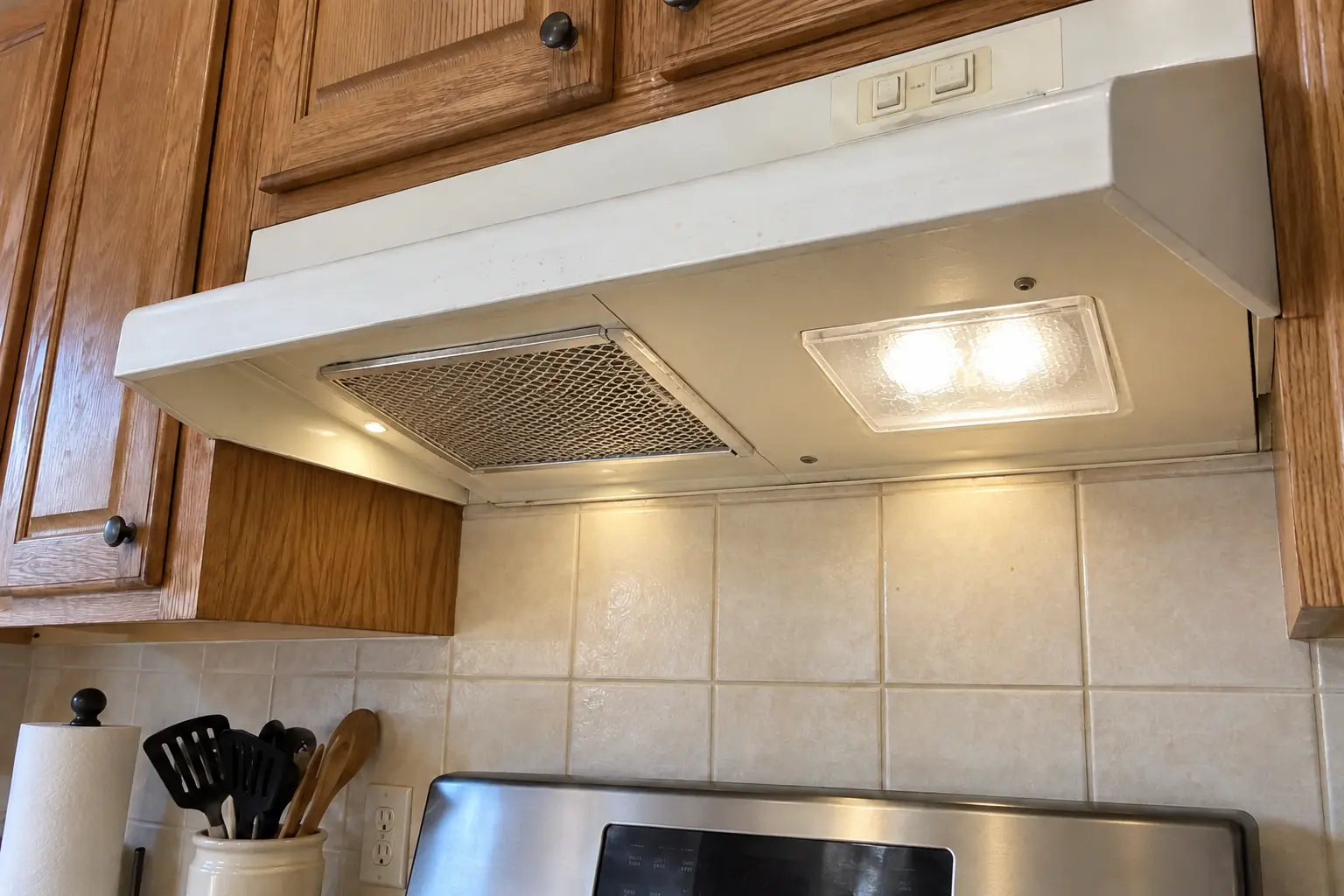
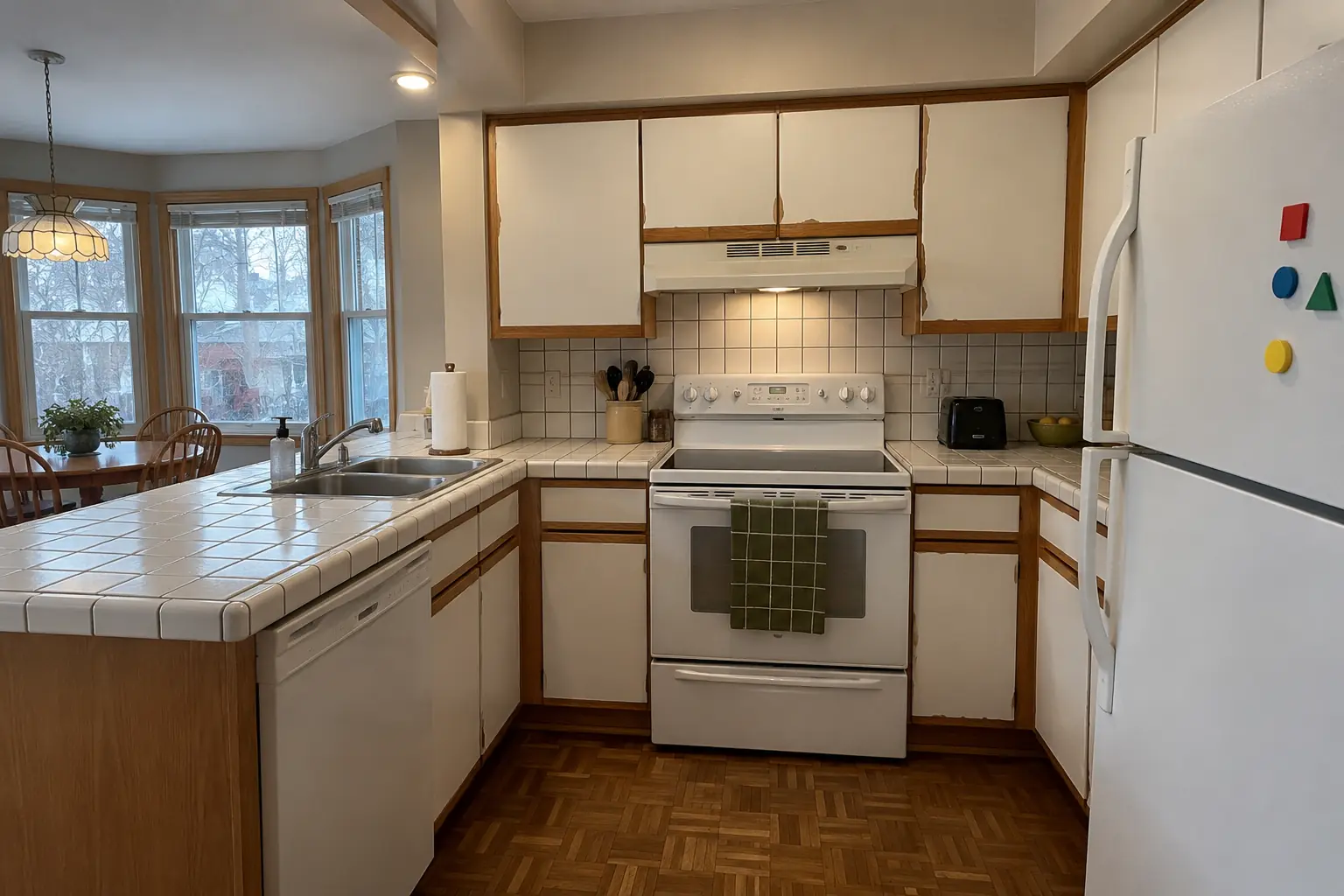
Range Hood Installation in a 1980s-1990s two-story colonial / tract house — beforeBefore
Range Hood Installation in a 1980s-1990s two-story colonial / tract house — installedInstalled
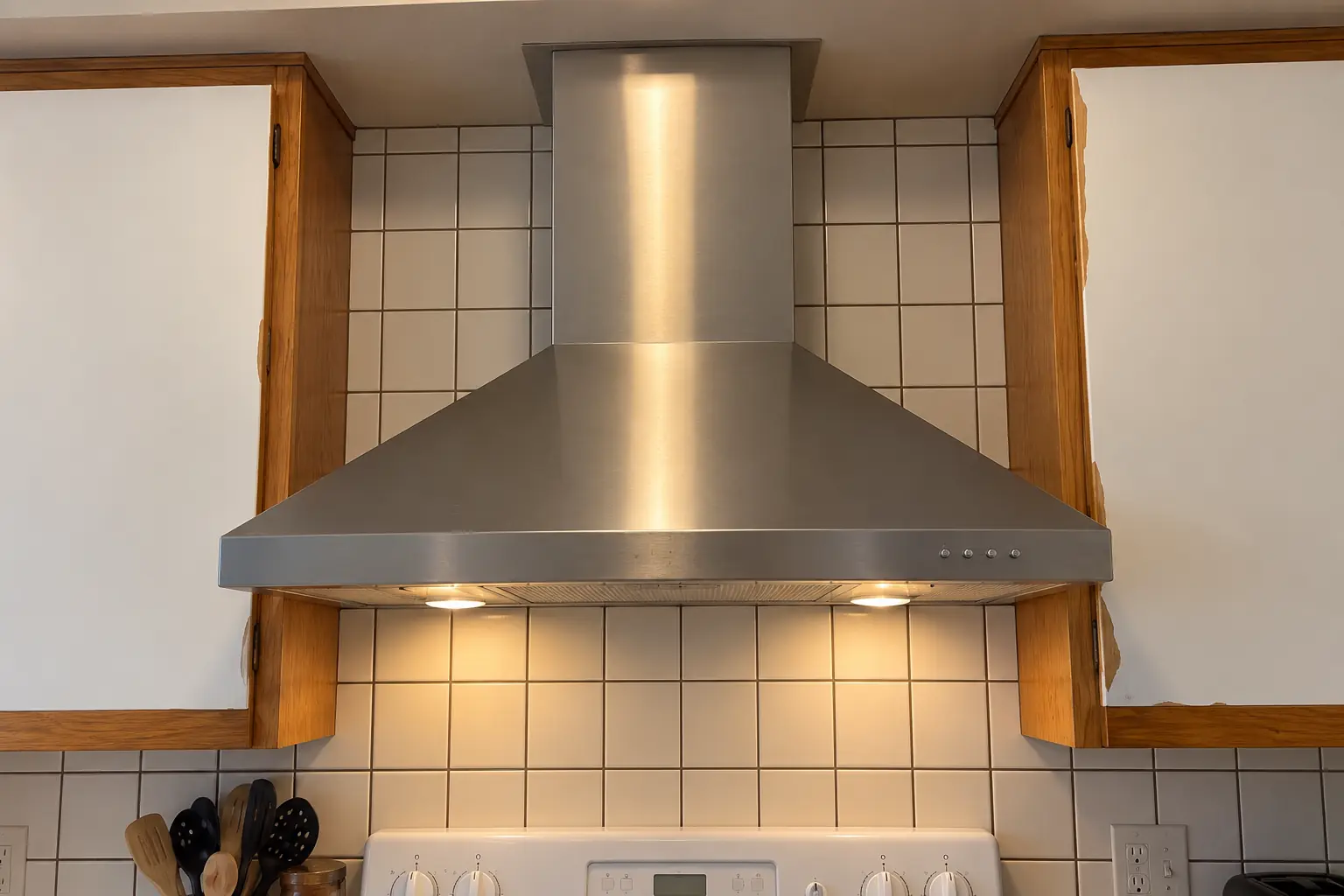
Range Hood Installation in a 1980s-1990s two-story colonial / tract house — detailDetail

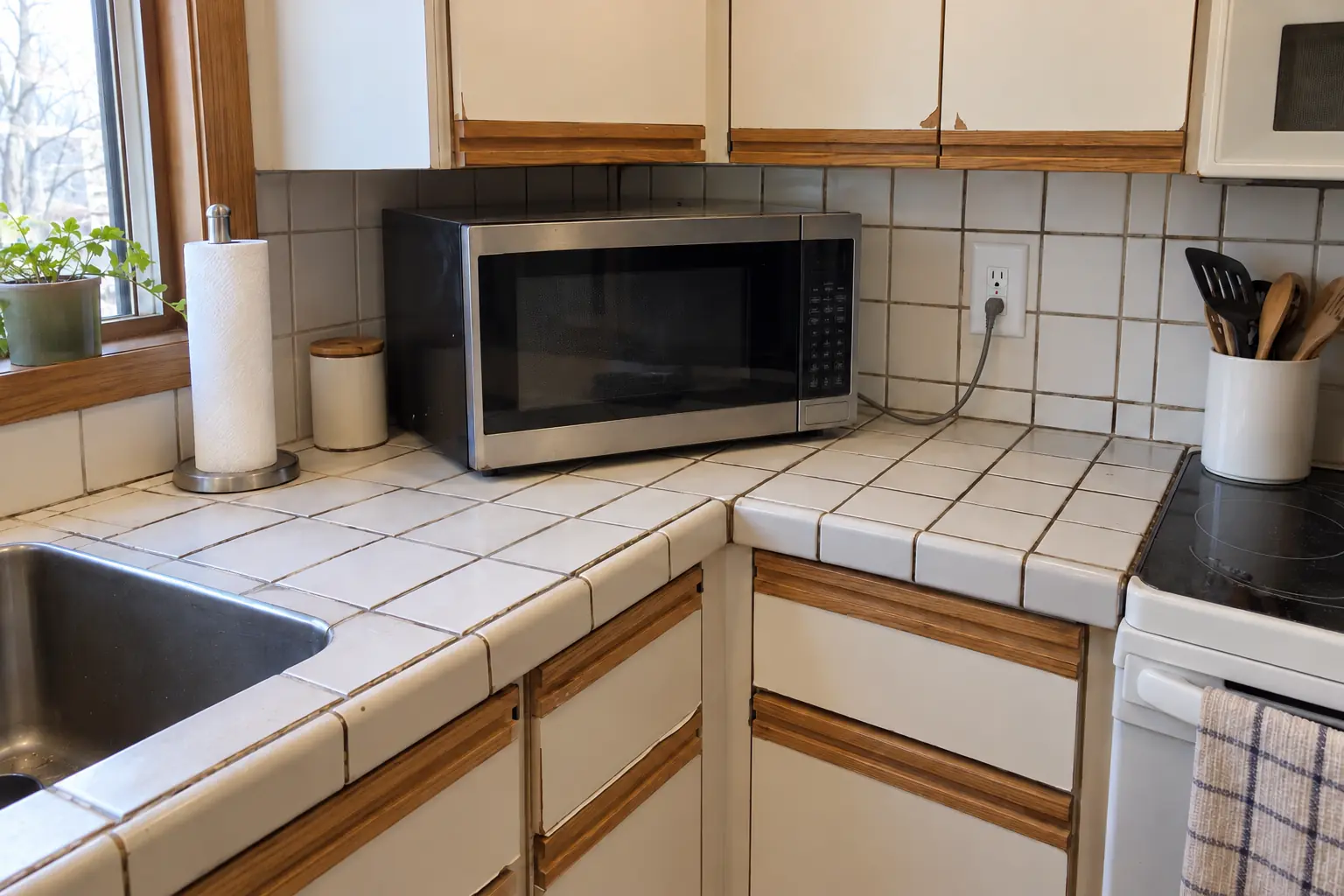
Range Hood Installation in a 1980s two-story, St. Charles

A 1980s two-story in St. Charles, a typical kitchen for St. Charles. Before: white appliances and white thermofoil cabinets peeling at the edges, oak trim. What bothered the owners most: a recirculating hood that left the kitchen smoky. The result: a new stainless chimney range hood ducted to the outside. Work included permit and approvals, duct run, plus wall cap or roof jack.
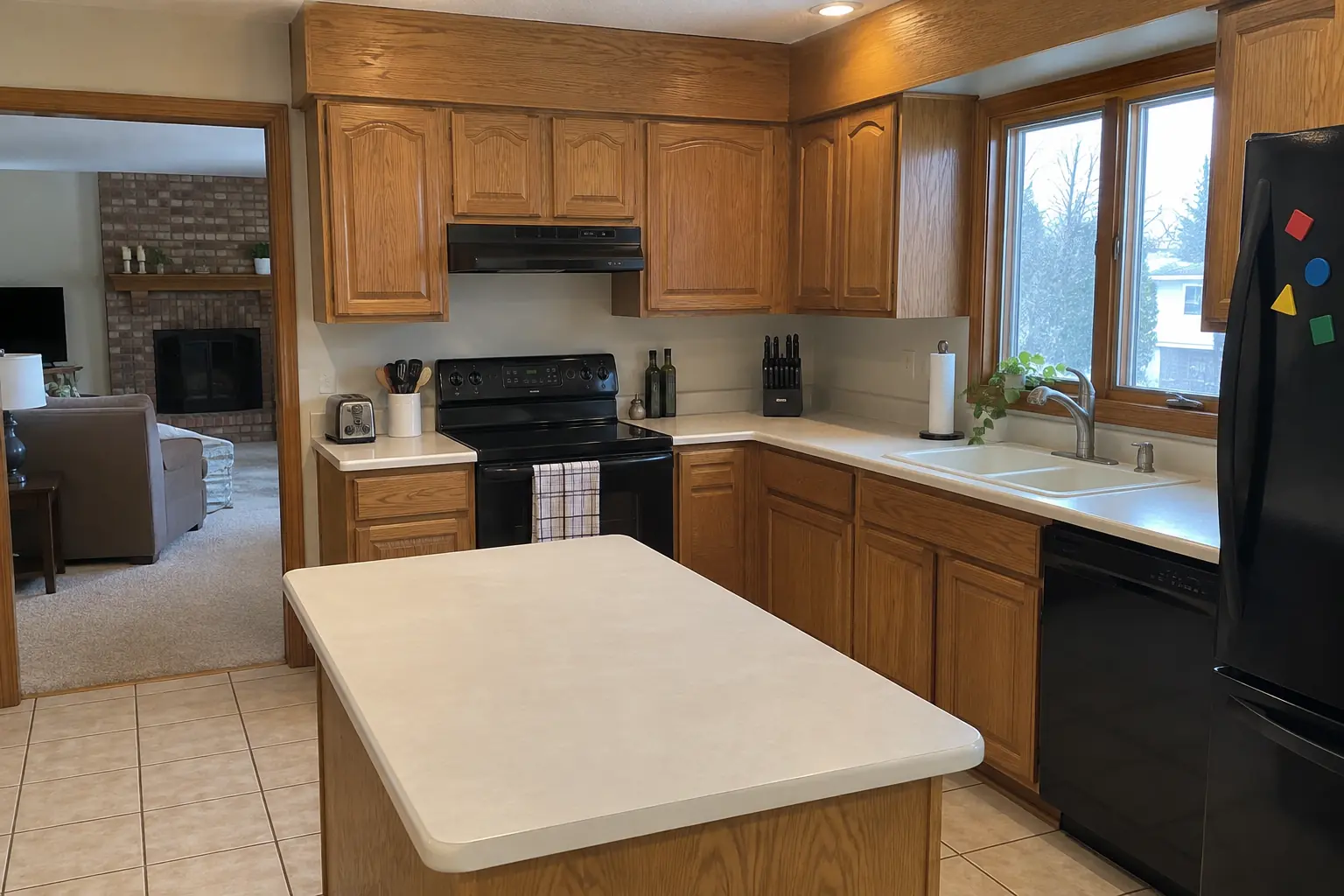
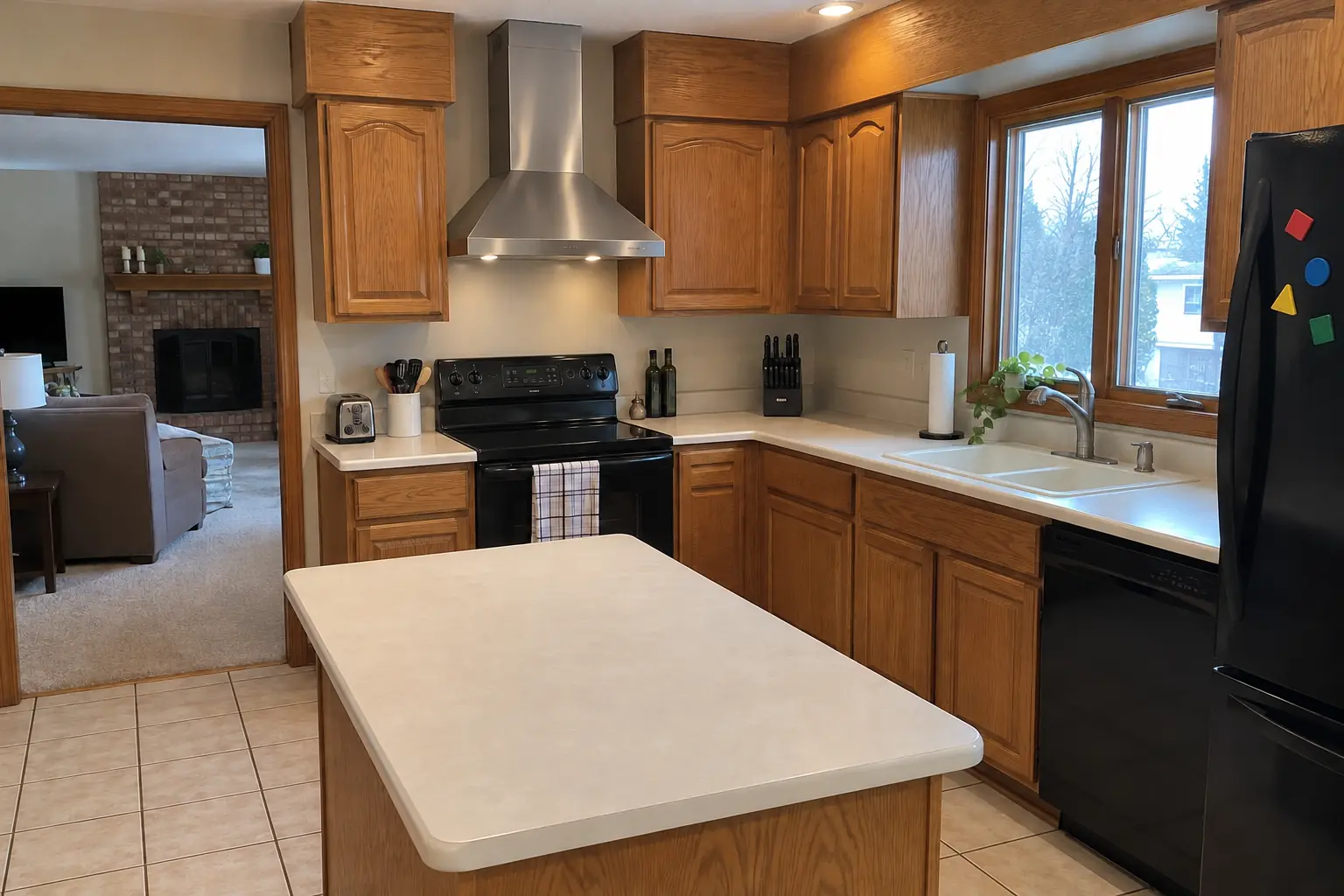
Range Hood Installation project in Batavia, beforeBefore
Range Hood Installation project in Batavia, afterAfter

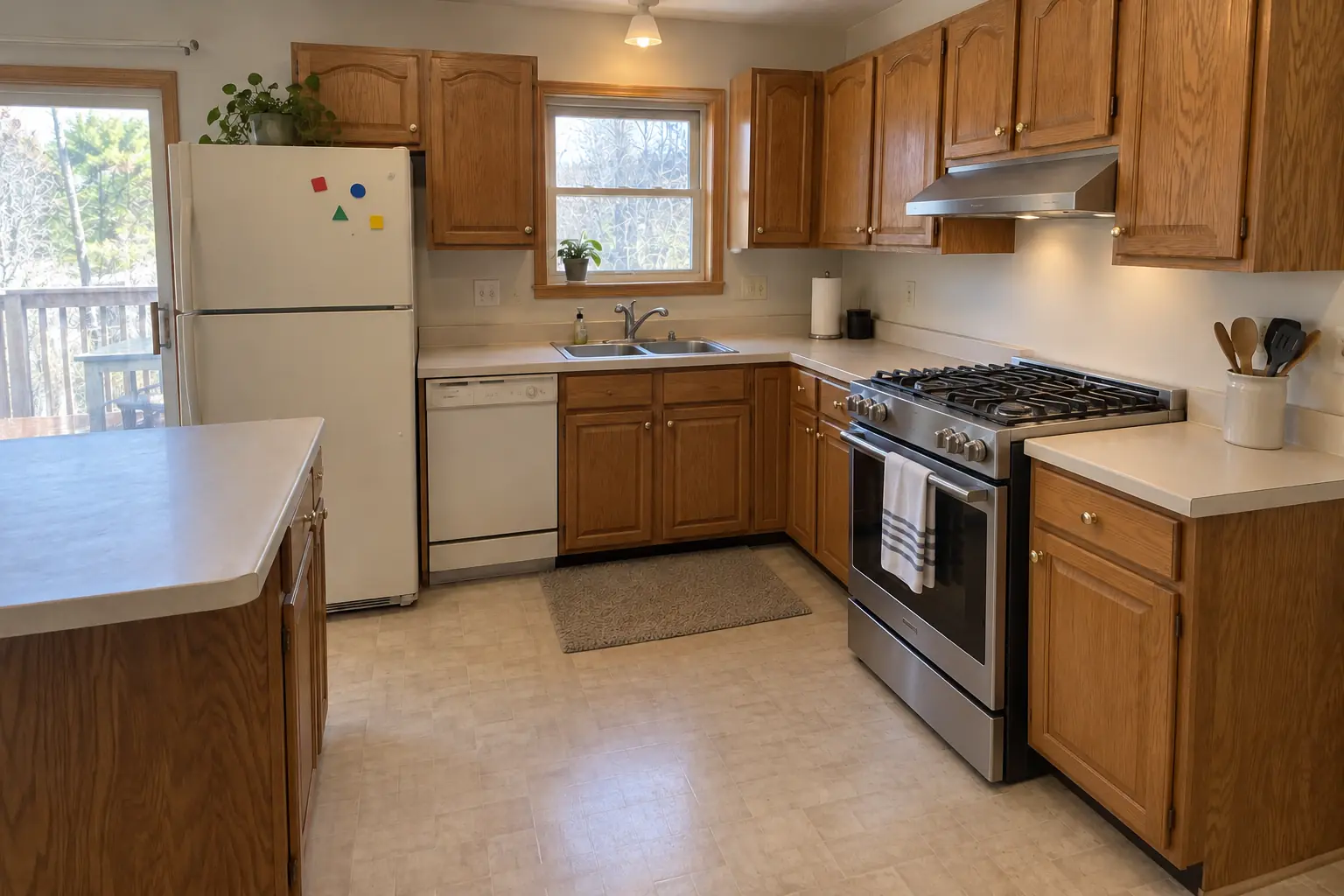
A Batavia 1980s two-story: before and after

The site: a 1980s two-story in Batavia. The kitchen as it was: black appliances and golden-oak cabinets with oak soffits above. The reason for the call: a recirculating hood that left the kitchen smoky. The result: a new stainless chimney range hood ducted to the outside. On site this meant site check and sizing, blocking and mounting, plus duct run.

Range Hood Installation in Batavia →
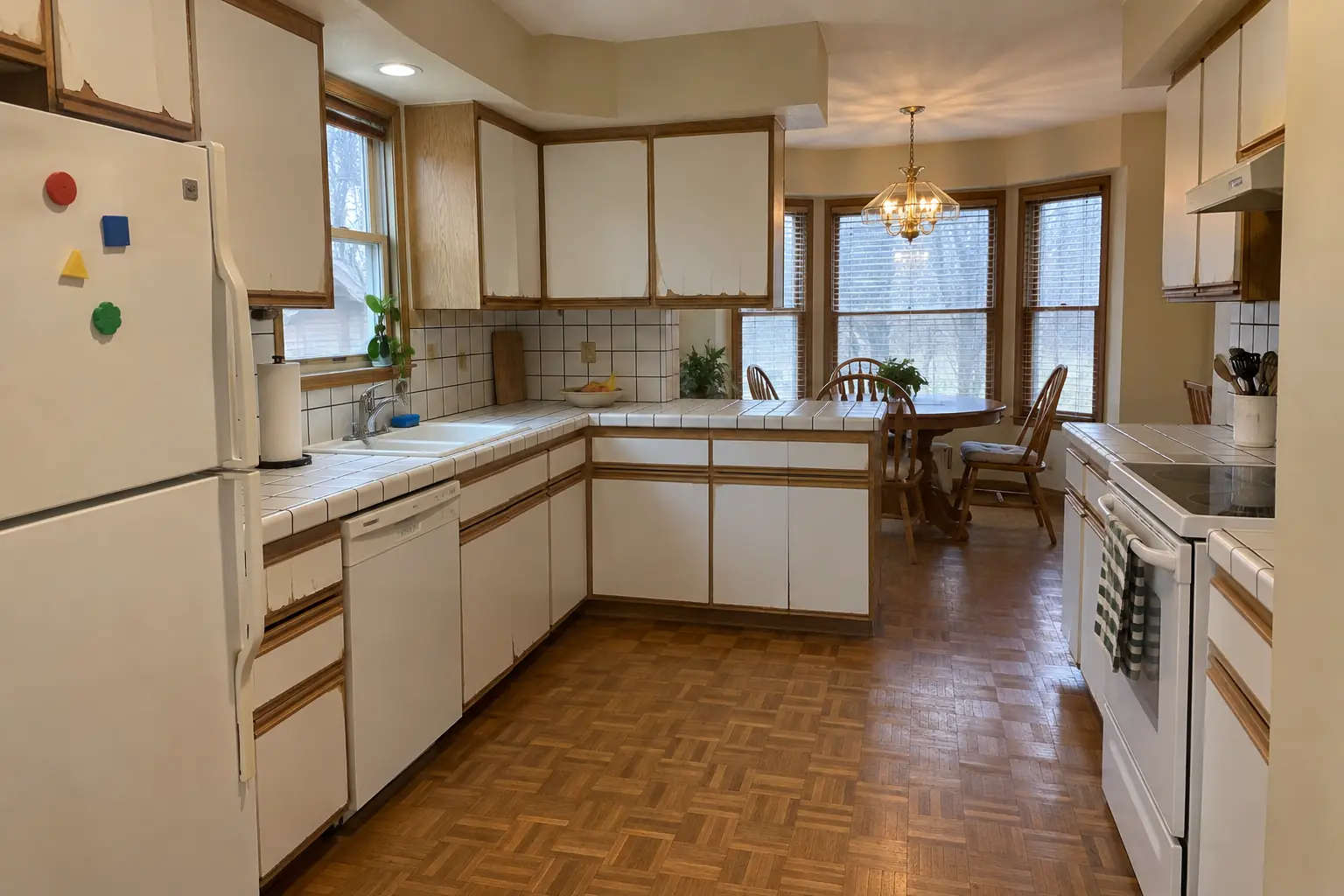
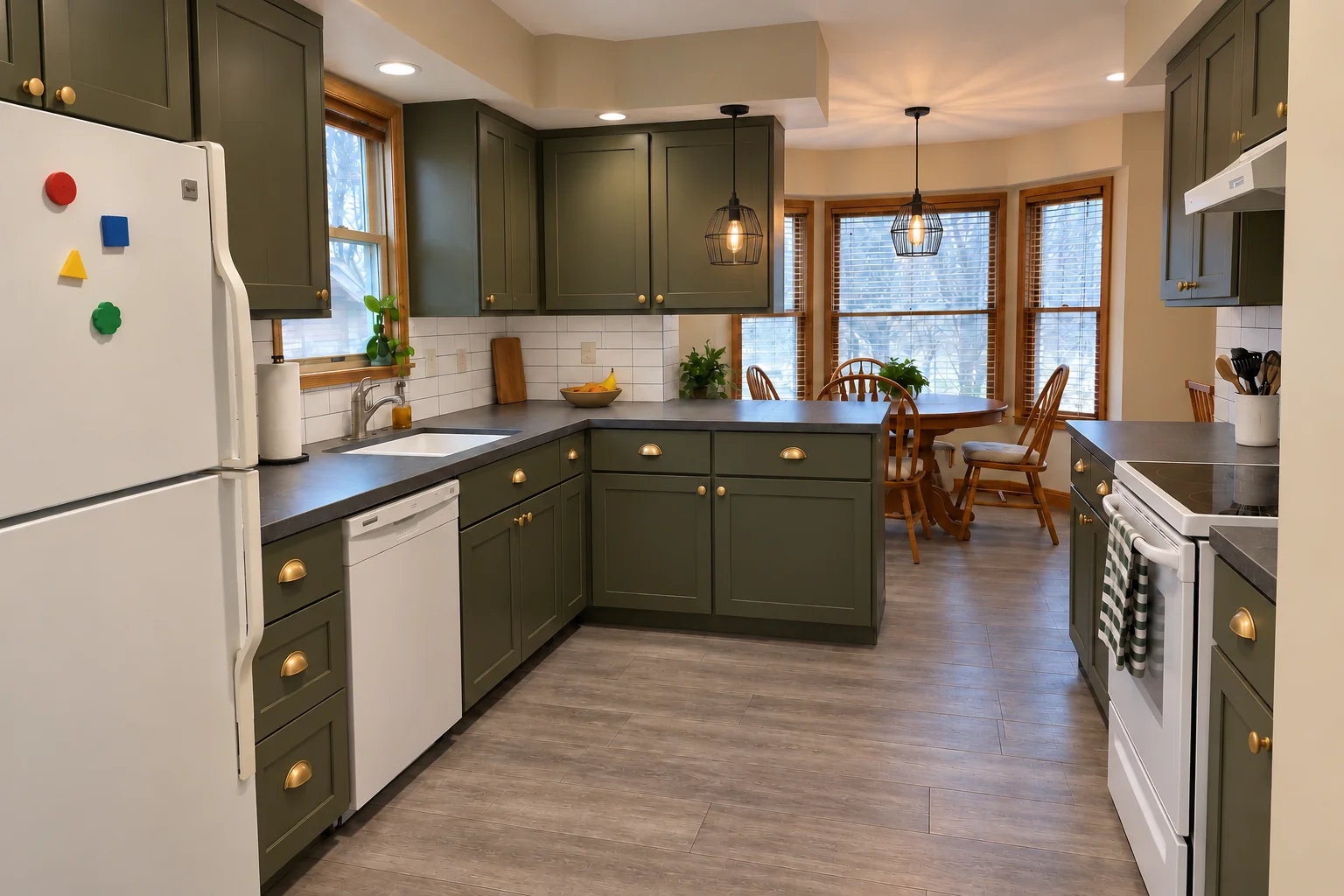
Kitchen Remodeling project near St. Charles, beforeBefore
Kitchen Remodeling project near St. Charles, afterAfter

Kitchen Remodeling in a 1980s two-story, St. Charles

What changed: cabinets in deep olive with unlacquered brass knobs and cup pulls, charcoal concrete-look quartz counters, a white 3x12 tile in a stacked pattern backsplash, gray wood-look porcelain plank flooring and black cage pendants and slim recessed lights.

Kitchen Remodeling in St. Charles →
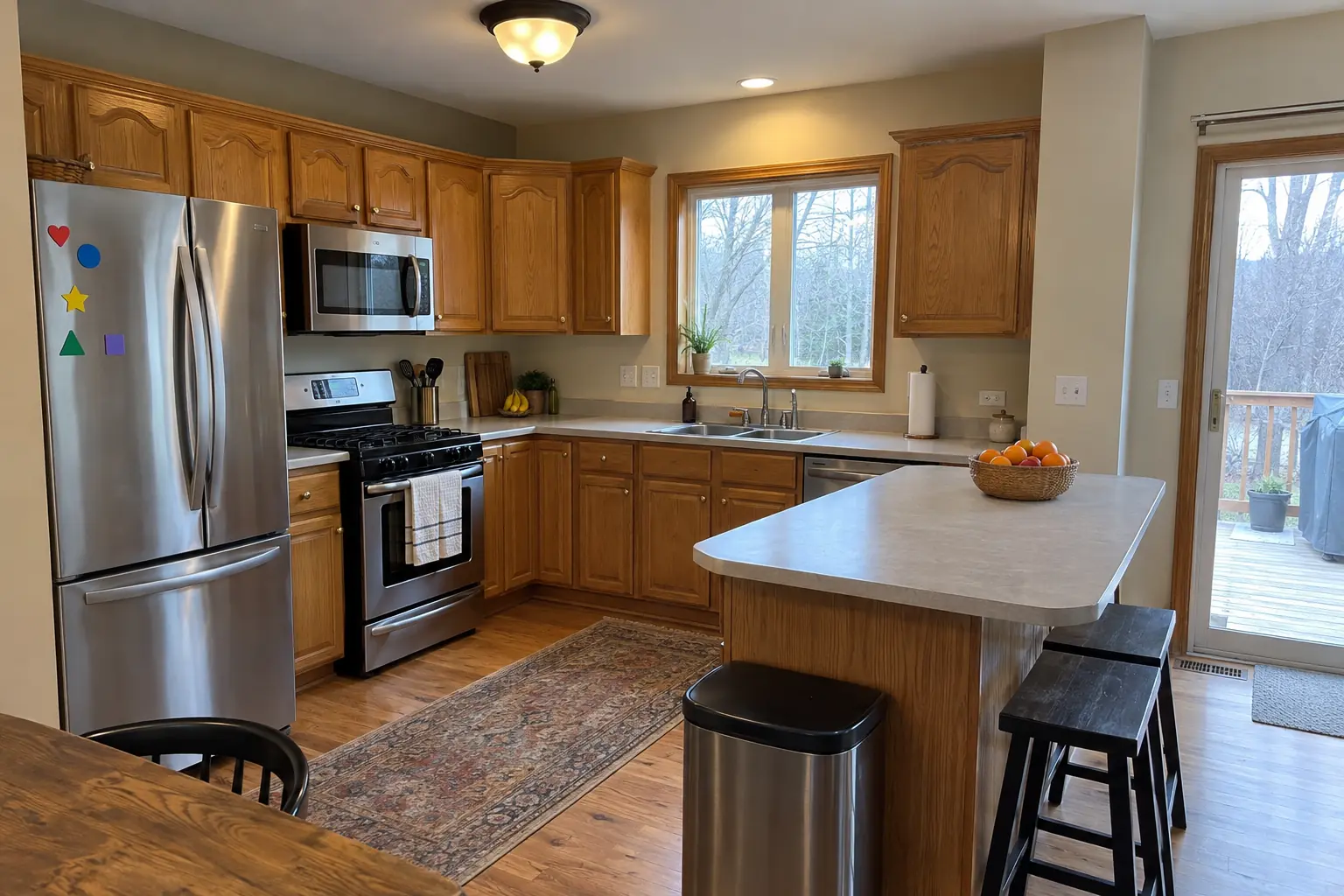
Kitchen Cabinet Painting project near St. Charles, beforeBefore
Kitchen Cabinet Painting project near St. Charles, afterAfter

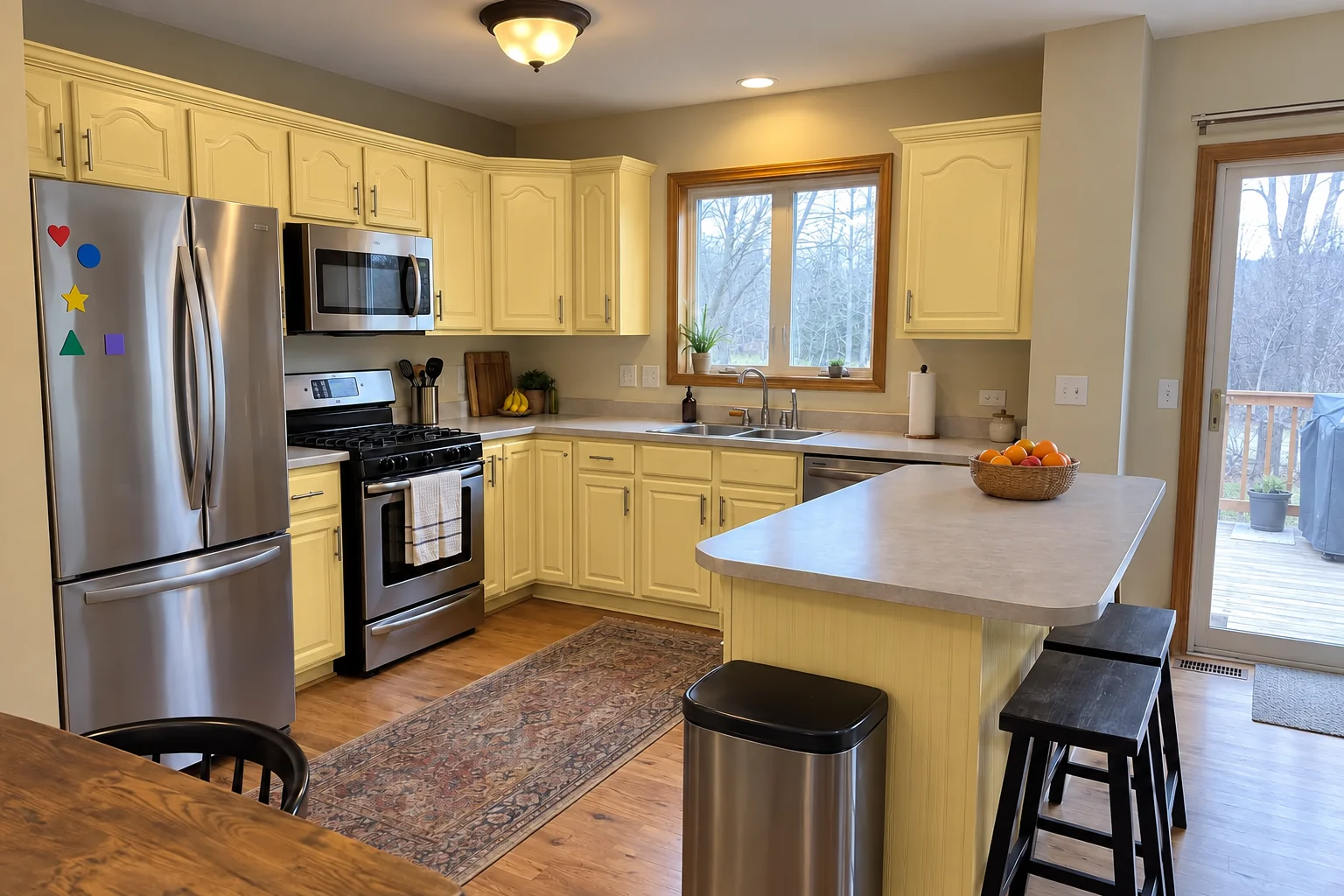
St. Charles kitchen, two-story colonial from the 1990s: kitchen cabinet painting

What changed: the same doors sprayed in light butter yellow, new brushed nickel bar pulls; counters and floor stayed as they were.

Kitchen Cabinet Painting in St. Charles →

How the install goes

  1. Photos and modelTell us what you cook on and show us the space; a model number helps.
  2. Duct route and sizingOn site we size the hood, pick the duct route and check permits and makeup air.
  3. Written estimateAn itemized estimate for the hood install, duct, exterior cap, wiring and any permit.
  4. Install and testWe install, test the airflow and clean up the same day in most cases.

Range Hood Installation questions from St. Charles homeowners

Can a range hood vent into the attic?
It shouldn't. Grease and moisture in an attic cause damage; the duct must end outside with a damper.
Do I need an electrician to install a range hood?
If power is already at the hood location, no. If it isn't, an electrician adds it before we hang the hood.
Do I need a permit to install a range hood?
Replacing a hood in place is usually simple; new ductwork and roof or wall holes are what bring permits into play.
How high should a range hood be above the stove?
Follow the maker's instructions; most specify a range that is often around 24 to 30 inches above the cooktop, sometimes higher for gas.
Can I install a range hood myself?
A simple swap on the same duct can be DIY. When the job involves a new duct route, a roof jack or a permit, it's worth hiring it out.
Do I need historic review for range hood installation in St. Charles?
St. Charles has locally reviewed areas, including City has a Historic Preservation District and Historic Preservation Commission and Certificate of Appropriateness may be required. District names not collected.. Exterior changes there can need review; interior-only work usually does not. We check before anything changes on the outside.
St. Charles contractor registration: do kitchen contractors need it?
No registration fee; contractor requirements (general contractor certificate of insurance, with City as certificate holder) must be submitted before a permit is issued. We take care of that before work starts.
Does St. Charles require a licensed electrician for range hood installation?
Electrical contractors must be licensed in an Illinois municipality (good standing evidence) and provide a $10,000 surety bond payable to the City. New circuits and wiring are done by licensed electricians.
What is the St. Charles building department phone number?
Permits go through Building Division, Community Development, 2 E. Main St., phone (630) 377-4406. When your scope needs one, we prepare the application and schedule the inspections.
Who inspects kitchen hoods and fire safety in St. Charles?
Fire Prevention Bureau, (630) 377-4457, [email protected]. We schedule the inspection and have the paperwork ready.
Do I need a permit for range hood installation in St. Charles?
It depends on the scope. St. Charles's rule in short: Permits required for construction, alteration, repair or demolition of any structure; major residential projects including remodels require 5 sets of drawings. We handle the permit when one is needed with Building Division, Community Development, 2 E. Main St..
Do you work in my part of St. Charles?
Yes. Our crews work across St. Charles — ZIP 60174, 60175 — and nearby Geneva, West Chicago, Batavia.

Working in St. Charles

  • A lot of St. Charles kitchens date from the 2000s. We know these layouts well and what is worth keeping.
  • Most St. Charles homes are single-family. We protect floors and driveways and leave the site clean every day.
  • Live in a historic district? Interior kitchen work is usually not reviewed. We check before anything touches the exterior.

ZIP 60174ZIP 60175

Range Hood Installation nearby

Planning a kitchen project in St. Charles?

Call us — we'll check your ZIP, answer your questions and book an in-home estimate.

Call now (708) 400-7049
Call (708) 400-7049Callback