Refrigerator Not Cooling? Safe Checks to Try and When to Call a Technician
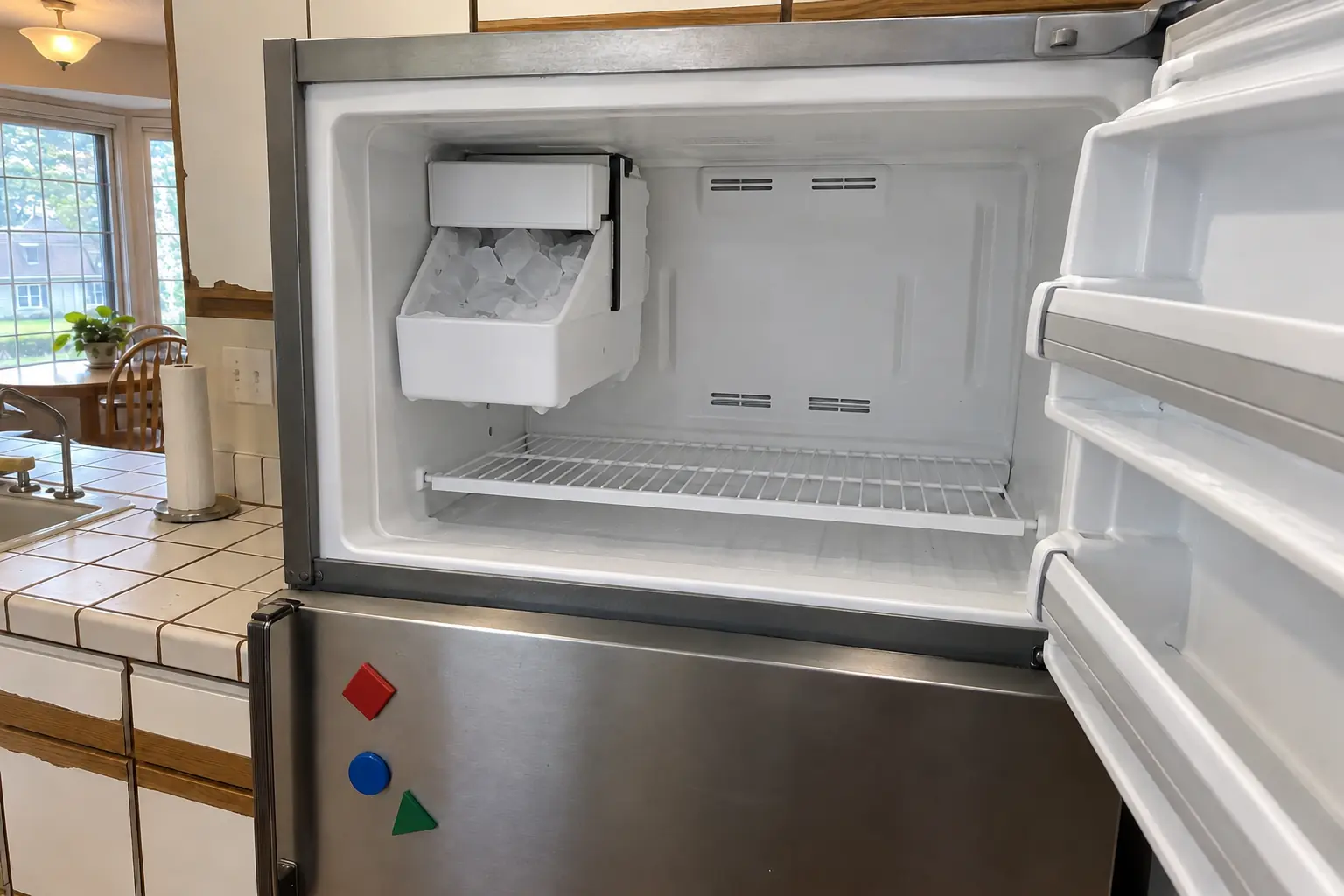
When a refrigerator is not cooling, the cause is often simple: a temperature setting that got bumped, dirty condenser coils, blocked air vents, a door that does not seal, or a fridge that was just loaded with warm groceries. A homeowner can check all of those safely in under an hour. If the refrigerator is still warm afterward, a failed fan, a defrost fault, a control problem or a sealed-system issue is more likely, and that is the point to bring in a technician.
This guide runs the checks in a sensible order, explains what the common symptoms usually mean, and covers how to protect your food while you wait for a repair. Work on the refrigerant system itself must be done by a technician certified under EPA Section 608, so we mark clearly where the homeowner checks stop.
First, protect the food
Before you troubleshoot anything, slow the warm-up. Keep the doors closed as much as possible. A closed refrigerator holds a safe temperature for a few hours, and a full freezer holds longer than a half-empty one.
Food safety agencies recommend keeping the refrigerator at or below 40°F and the freezer at 0°F. If perishable food has been above 40°F for more than about two hours, the USDA advises discarding it. Move essentials to a cooler with ice if the repair will take a while.
Refrigerator not cooling but the light is on: check power and settings
A working interior light only proves the refrigerator has power; the cooling system can still be off. Confirm the controls before assuming a part has failed.
- Check the temperature controlsMake sure they were not turned down or set to off. Settings are easy to bump while loading shelves.
- Look for demo or vacation modeMany digital models have a showroom or demo mode that lights the display without cooling. The manual lists the button sequence to exit it.
- Check the breaker and plugConfirm the breaker has not tripped and the plug is fully seated in the outlet.
- Allow settling timeIf the refrigerator was just moved or delivered, give it the time its manual suggests before judging the cooling.
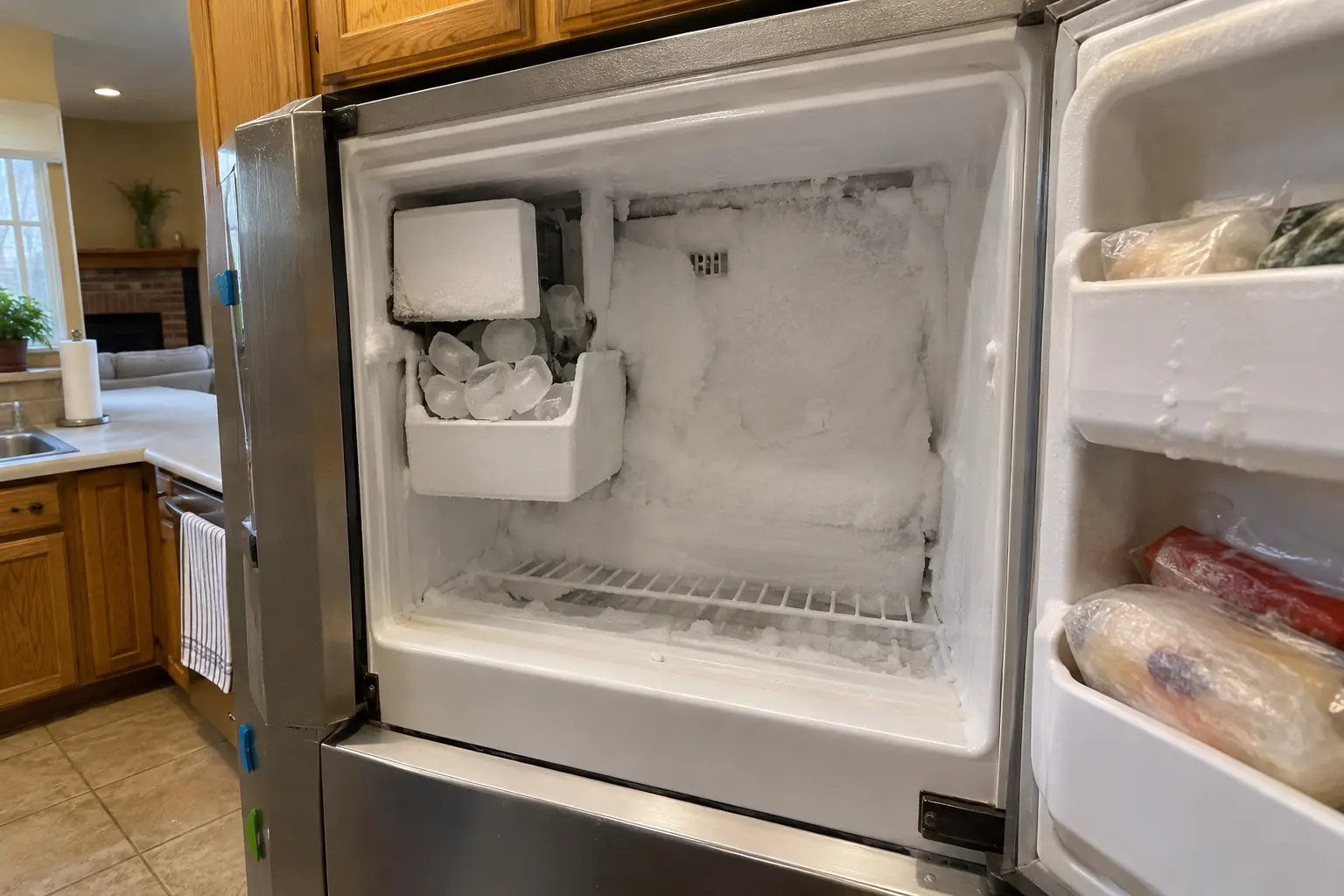 Before
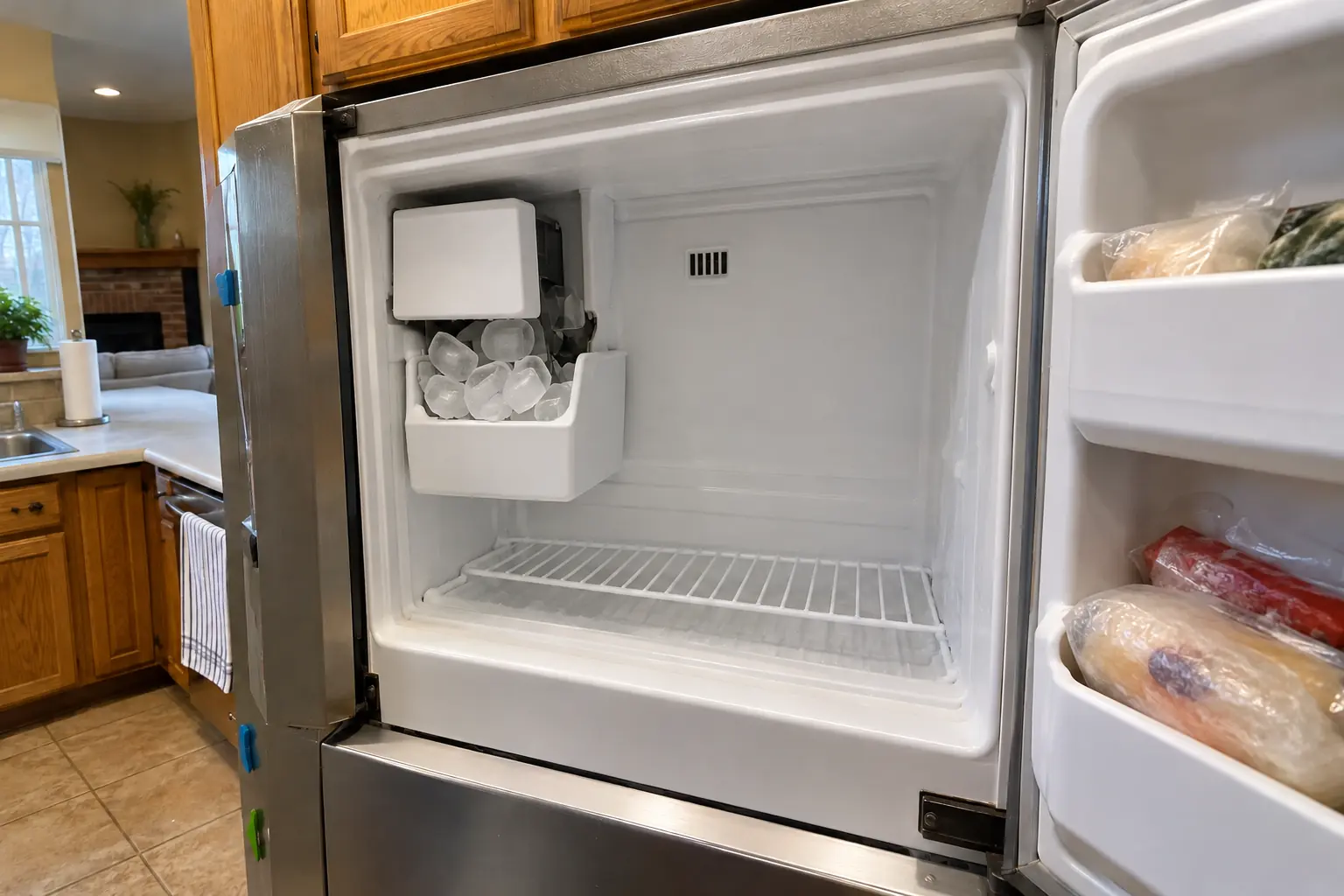 After
Clean the condenser coils
Dirty coils are the most common mechanical reason a refrigerator cools poorly. The condenser coils release heat pulled from inside the cabinet. Covered in dust and pet hair, they make the refrigerator run longer and cool less. On many models they sit behind a grille at the bottom front; on others, on the back.
Unplug the refrigerator, remove the grille, and vacuum the coils with a brush attachment or a coil brush. While you are there, make sure the condenser fan near the compressor spins freely and is not blocked. We suggest repeating this periodically, more often in homes with pets.
Check airflow inside and the door seals
In most modern refrigerators, cold air is made in the freezer and blown into the fresh-food section through vents. Block those vents with food, containers or ice, and the freezer can be cold while the refrigerator side is warm.
Door gaskets matter just as much. A torn or loose gasket lets warm, humid air in. Close the door on a sheet of paper at several spots; if the paper slides out easily, the seal may not be tight. Clean the gasket with warm soapy water, and check that the refrigerator is level so the doors swing closed on their own.
- Clear food away from the air vents in both compartments.
- Avoid overpacking the freezer so air can circulate.
- Check gaskets for tears, gaps or flattened sections.
- Confirm the doors close fully and are not blocked by a drawer or shelf.
What common symptoms usually mean
Once the simple checks are done, the pattern of symptoms narrows down the cause. The table below shows typical links, not certainties; a technician confirms them with testing.
| Symptom | Likely cause | Homeowner step |
|---|---|---|
| Freezer cold, fridge warm | Evaporator fan or frost on vents | Clear vents; try a manual defrost |
| Frost on freezer back wall | Defrost heater, sensor or timer | Manual defrost, then book a repair |
| Both warm, compressor clicking | Start relay or compressor | Call a technician |
| Both warm, fan runs, compressor silent | Compressor, start parts or board | Call a technician |
| Buzzing or rattling | Fan blade hitting ice or failing motor | Check for ice; book a repair |
| Runs constantly, only slightly cool | Dirty coils, weak seal or refrigerant | Clean coils, test gaskets |
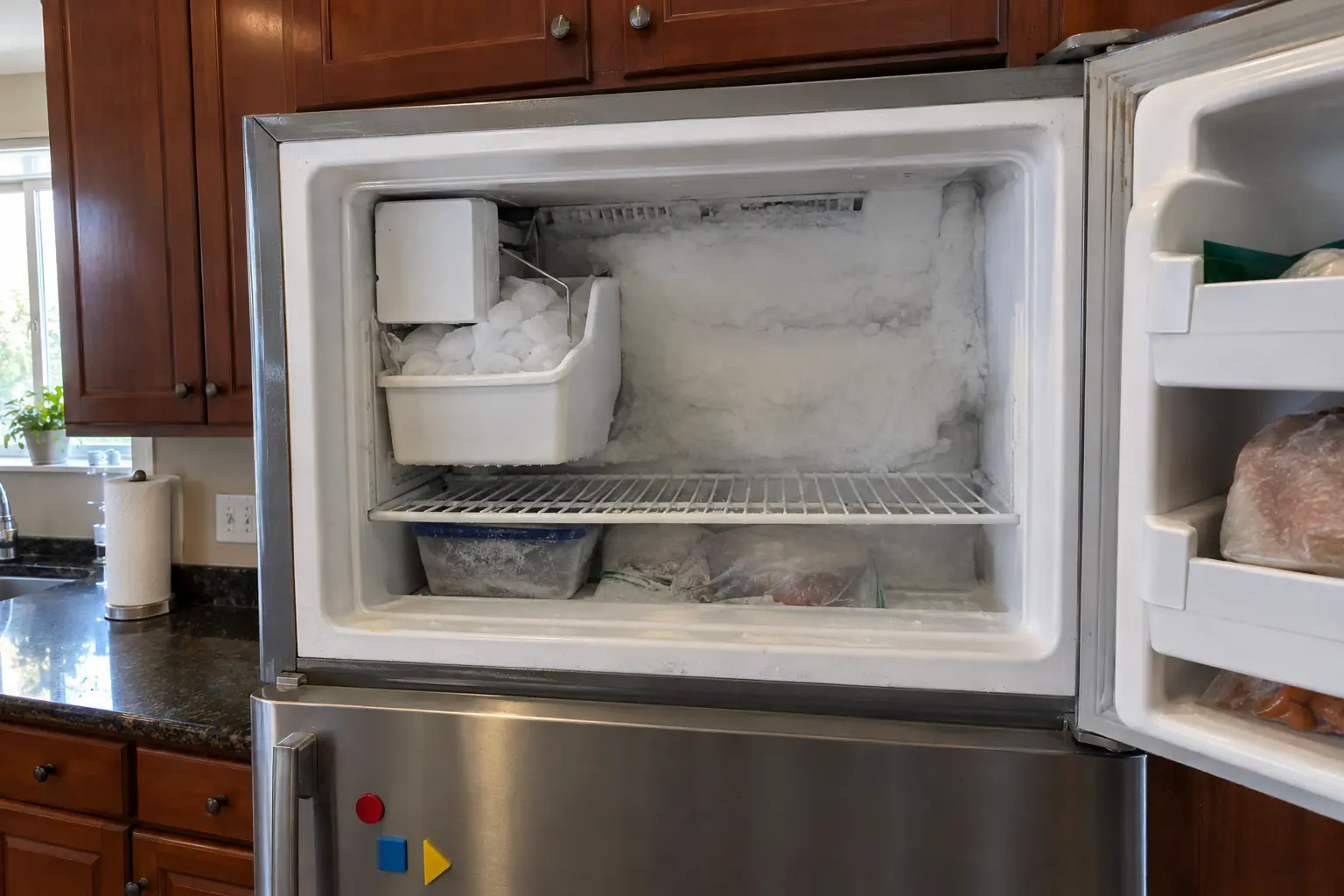 Before
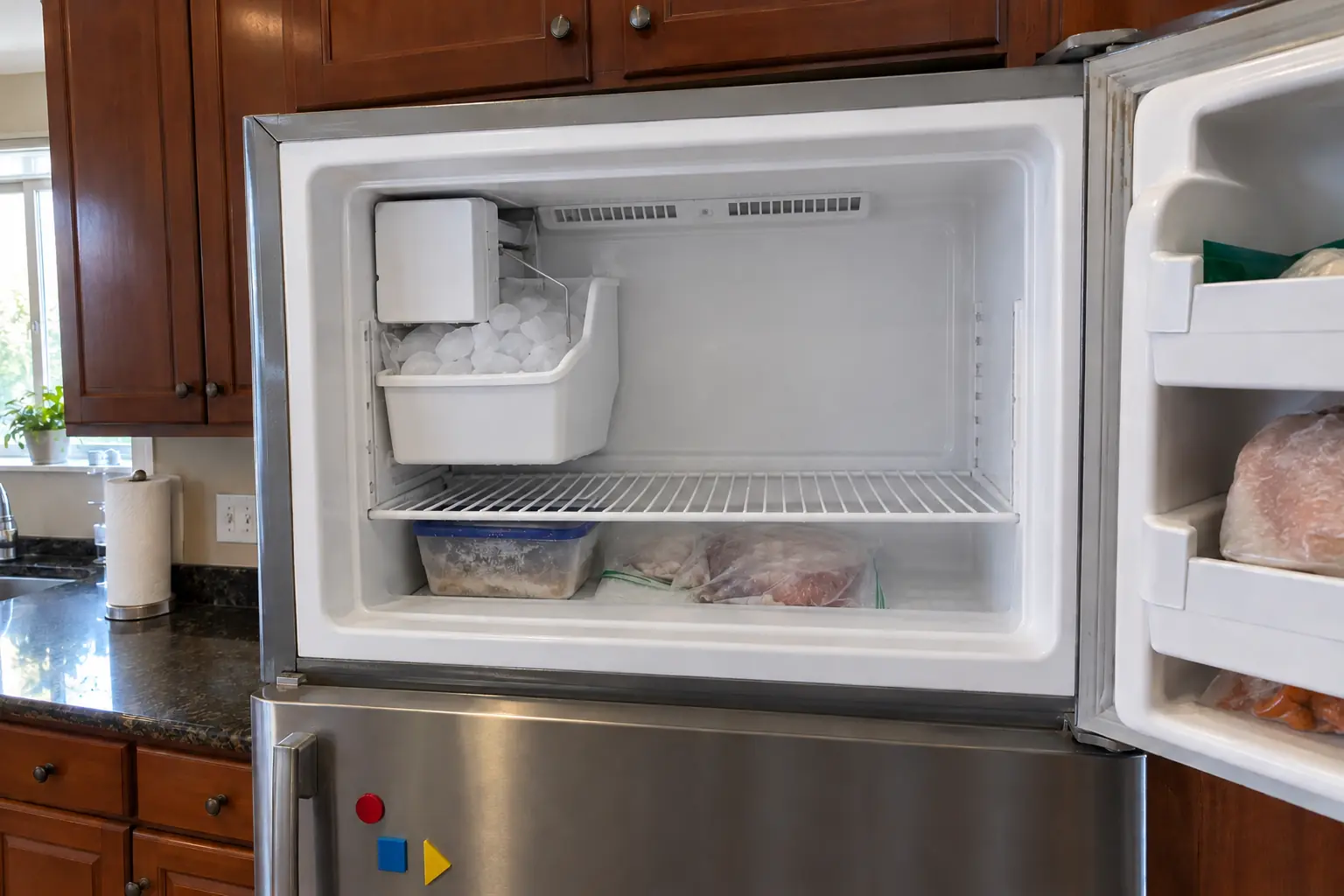 After
Try a manual defrost when frost is the problem
Heavy frost on the freezer's back panel usually means the defrost system is failing and ice is blocking airflow. A manual defrost can restore cooling temporarily and confirms the diagnosis.
- Empty both compartmentsMove food to coolers with ice.
- Unplug the refrigeratorLeave the doors open and lay towels to catch meltwater.
- Wait it outA full defrost can take most of a day. Do not chip at ice with a knife or other sharp tool; it is easy to puncture tubing that carries refrigerant.
- Restart and watchIf cooling returns but fails again within days or weeks, the defrost system needs repair.
When to call a technician
Call a qualified appliance technician when the refrigerator is still not cooling after the checks above, when you hear a clicking compressor that never runs, or when you smell something burning. Refrigerant leaks, compressor replacement and other sealed-system work require an EPA Section 608-certified technician, both because of the training involved and because refrigerants are regulated.
Before the visit, write down the model and serial number from the label inside the door or on the wall of the fresh-food section, and note the symptoms and when they started. Check whether the unit is under a manufacturer warranty, since sealed-system parts are often covered longer than other parts. If repair and replacement look close, our appliance repair vs replacement guide covers how to weigh them.
- Fans, defrost parts, relays and controls: common repairs that are usually worthwhile.
- Sealed-system failure on an older unit: replacement is often the better choice.
- Refrigerator in a cold garage or hot room: check the manual for the allowed room temperature first.
Frequently asked questions
Why is my refrigerator not cooling but the freezer is?
Why is my refrigerator not cooling but the light is on?
How long does a refrigerator take to cool down?
Can dirty coils cause a refrigerator to stop cooling?
Is it worth fixing a refrigerator that is not cooling?
Can a refrigerator stop cooling in a cold garage or a hot room?
Can I recharge refrigerant myself?
Refrigerator & Ice Maker Repair in your town
- Carol Stream
- Naperville
- Schaumburg
- Wheaton
- Glen Ellyn
- Bloomingdale
- Bartlett
- Roselle
- Hanover Park
- Glendale Heights
- West Chicago
- Winfield
- Warrenville
- Lisle
- Downers Grove
- Lombard
- Villa Park
- Elmhurst
- Oak Brook
- Addison
- Itasca
- Wood Dale
- Elk Grove Village
- Hoffman Estates
- Arlington Heights
- Palatine
- Mount Prospect
- Des Plaines
- Park Ridge
- Skokie
- Evanston
- Northbrook
- Glenview
- Highland Park
- Buffalo Grove
- Lake Zurich
- Oak Park
- Berwyn
- Tinley Park
- Orland Park
- Bolingbrook
- Aurora
- Elgin
- St. Charles
- Geneva
- Batavia
- Crystal Lake
- Plainfield
- Woodridge
Sources
Keep reading
-
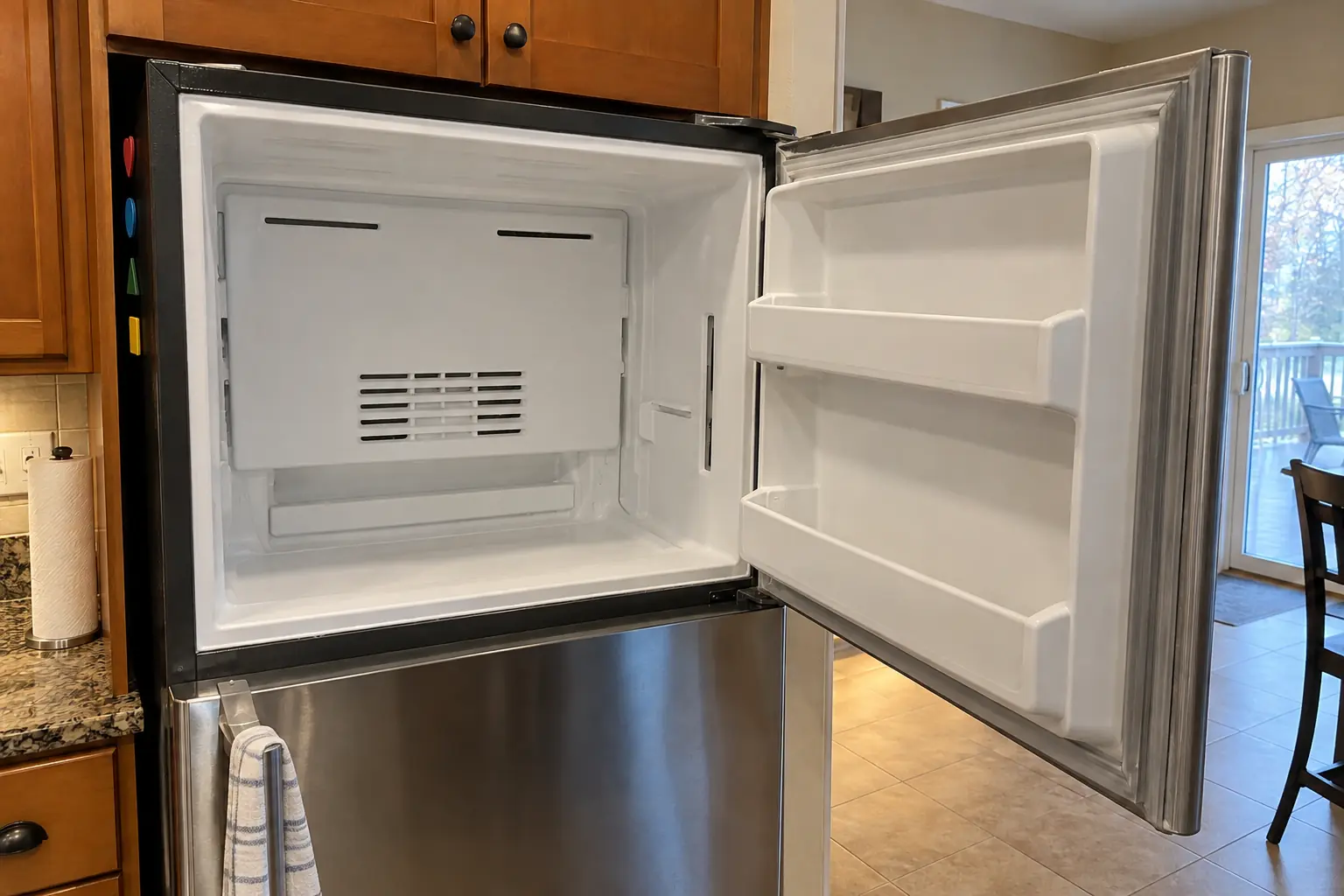 Plumbing, appliances and electricalKitchen Appliance Repair vs Replacement, from Dishwashers to OvensRepair a kitchen appliance when a single part has failed, the body is sound and parts are available: pumps, valves, latches, elements, igniters and…3 min read
-
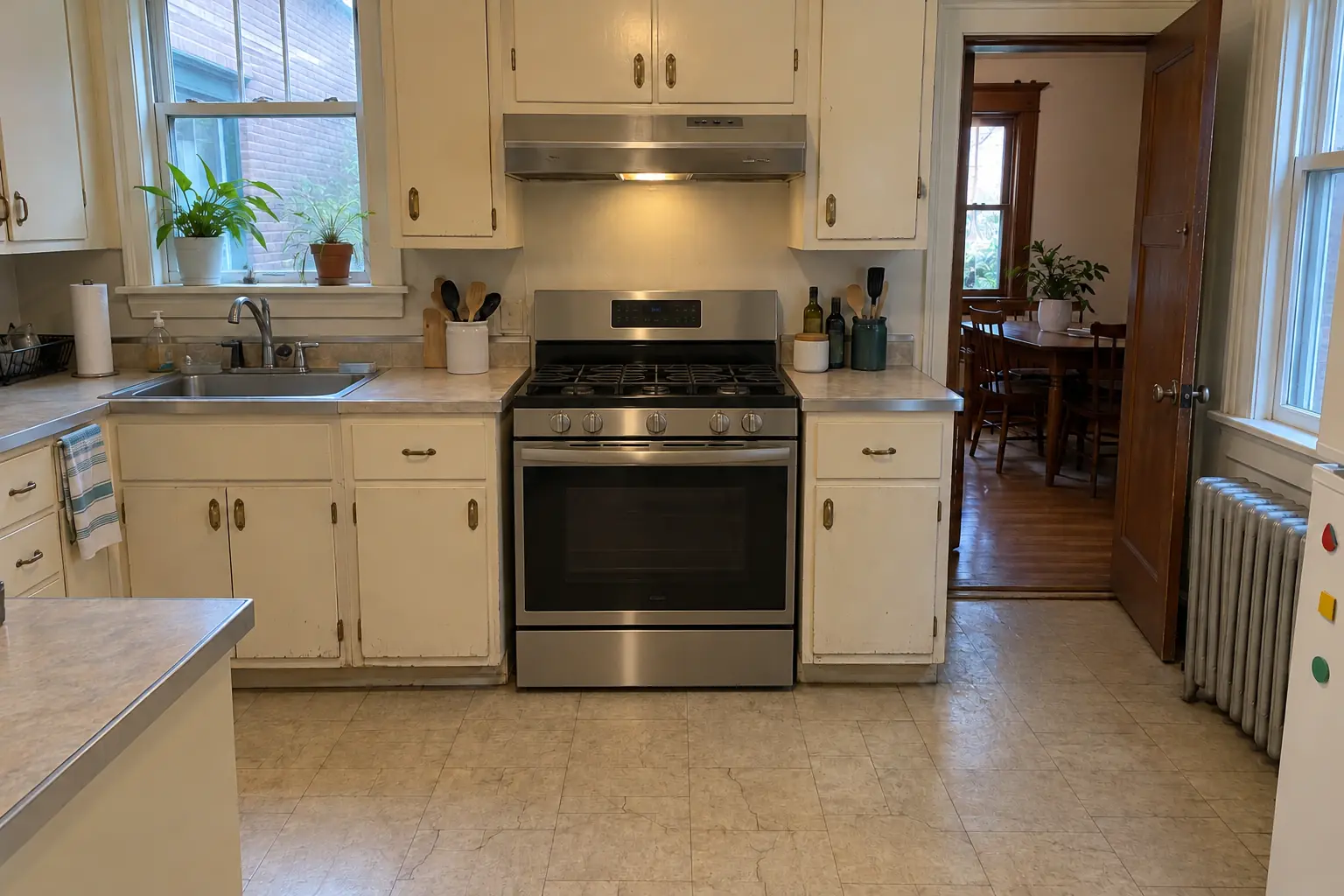 Costs and budgetingKitchen Appliance Installation Cost: Dishwasher Installation Cost, Ranges, Cooktops and MoreDishwasher installation cost usually runs about $200 to $500 in labor to replace a unit in the same spot and $300 to $1,300 where there was no…3 min read
-
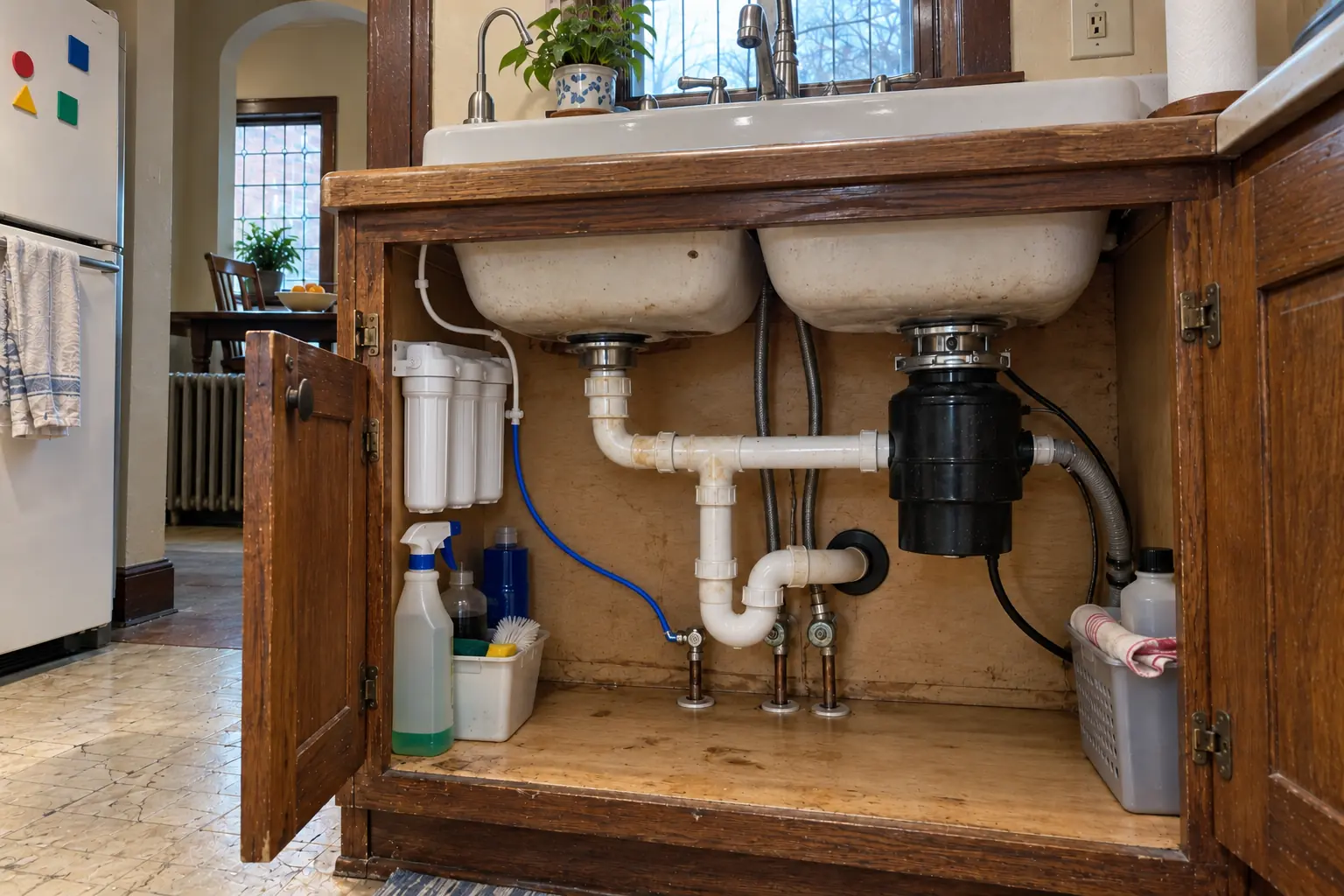 Plumbing, appliances and electricalUnder Sink Water Filter vs Reverse Osmosis: Choosing and Installing a Kitchen SystemUnder sink water filter vs reverse osmosis: a carbon filter mainly improves taste and odor and, when certified for it, reduces specific contaminants…3 min read