Kitchen Wallpaper vs Paint, and Why Kitchen Paint Is Peeling
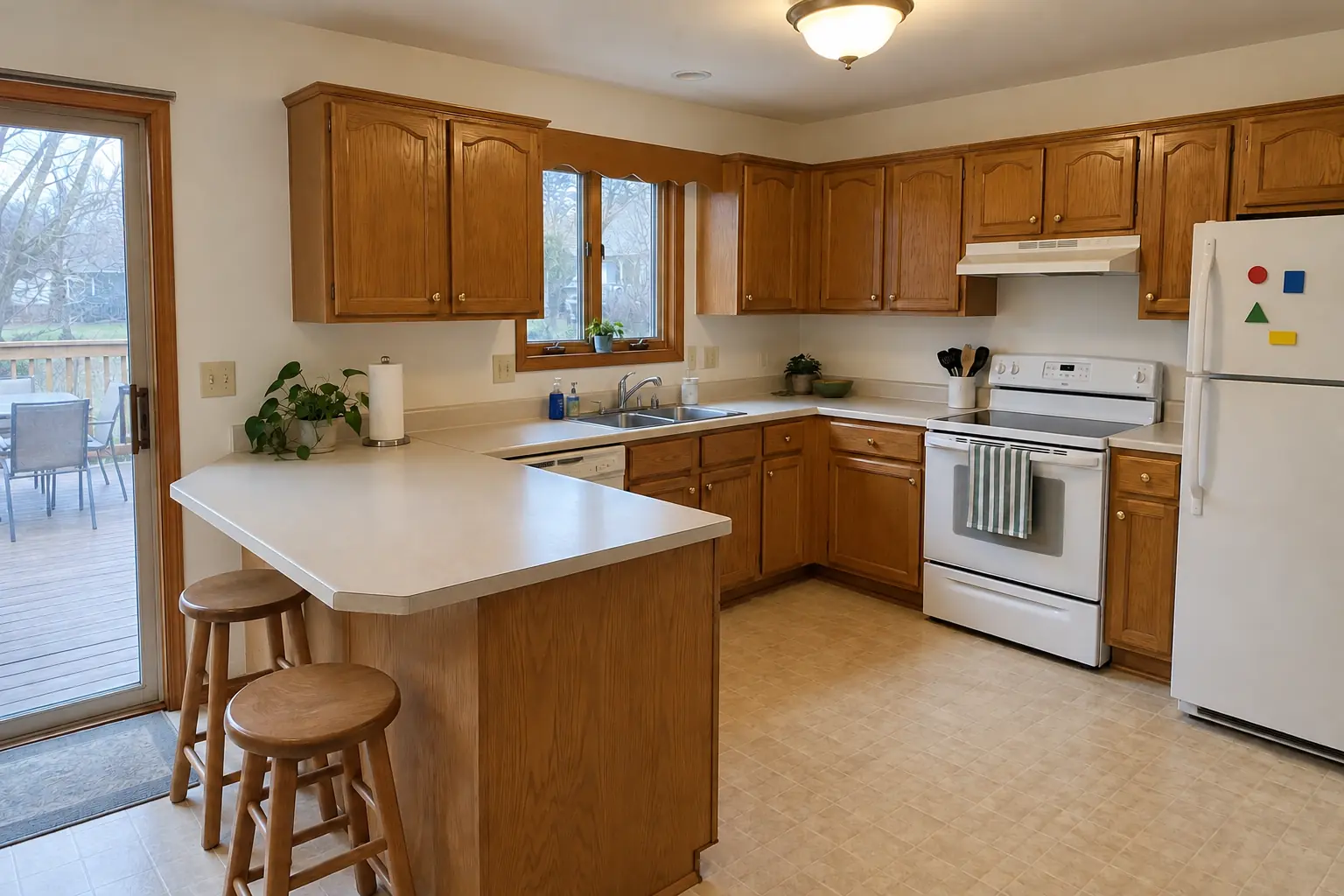
For most kitchen walls, paint is the more practical finish: it is easy to clean, simple to touch up and handles steam and grease well when you choose a washable, scrubbable product in a satin or eggshell sheen. Wallpaper works in kitchens too, especially washable vinyl papers, but it is best kept away from the range and sink and used on a feature wall, a breakfast nook or above wainscoting.
When kitchen paint is peeling, the cause is almost always one of a few things: grease or residue under the paint, moisture from steam or a leak, latex paint applied over oil-based paint without a bonding primer, or poor surface prep. This guide compares kitchen wallpaper vs paint, explains how to choose a sheen, shows how to tell which peeling problem you have, and walks through a repair that stays fixed.
Kitchen wallpaper vs paint: the honest comparison
Kitchens are hard on walls. Cooking puts grease in the air, boiling water and the dishwasher add steam, and walls near the table and the trash get touched and splashed. The finish has to be washable and tolerate humidity. Paint and wallpaper can both do that, but they do it differently, and the type of wallpaper matters as much as the choice between the two.
| Finish | Strengths | Weak points | Best spots |
|---|---|---|---|
| Washable paint | Wipes clean, easy touch-ups, any color | Flat or matte marks easily | Any wall |
| Vinyl or vinyl-coated paper | Washable, adds pattern, hides minor flaws | Seams can lift in steam | Feature walls, nooks |
| Traditional paper or fabric | Rich look and texture | Absorbs grease and moisture | Dining areas, away from cooking |
| Peel-and-stick paper | Easy for renters and accents | Adhesion fails in humid spots | Dry, smooth accent walls |
Choosing kitchen wall paint and sheen
Look for interior paints labeled washable or scrubbable; many paint lines have a kitchen and bath version with mildew resistance. Sheen is the next decision, and it is a trade-off between how easy the wall is to clean and how much it shows flaws.
Eggshell and satin for walls
Satin and eggshell are the usual sheens for kitchen walls because they clean well without showing every bump in the wall. Satin is a little easier to scrub; eggshell hides a little more.
Semi-gloss for trim and doors
Semi-gloss is even easier to clean and is common on trim, doors and wainscoting, but on large walls it highlights every patch and ripple, which matters in older plaster rooms.
Color in practice
Very dark colors show grease spatter and scuffs less but show dust and touch-up marks more; light colors brighten small Chicago kitchens with limited windows. Test a sample on two walls and look at it under the kitchen's own lighting in the evening.
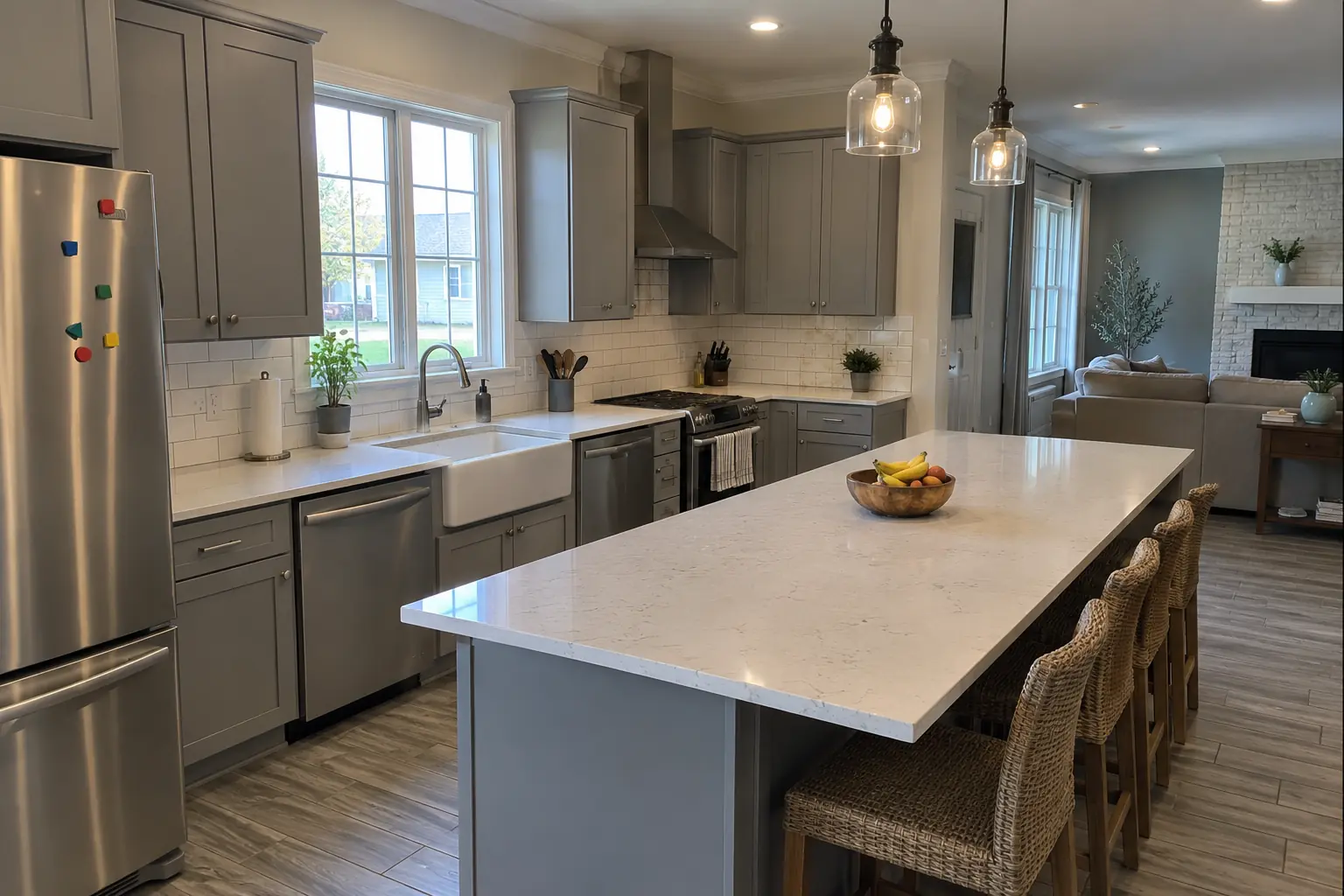 Before
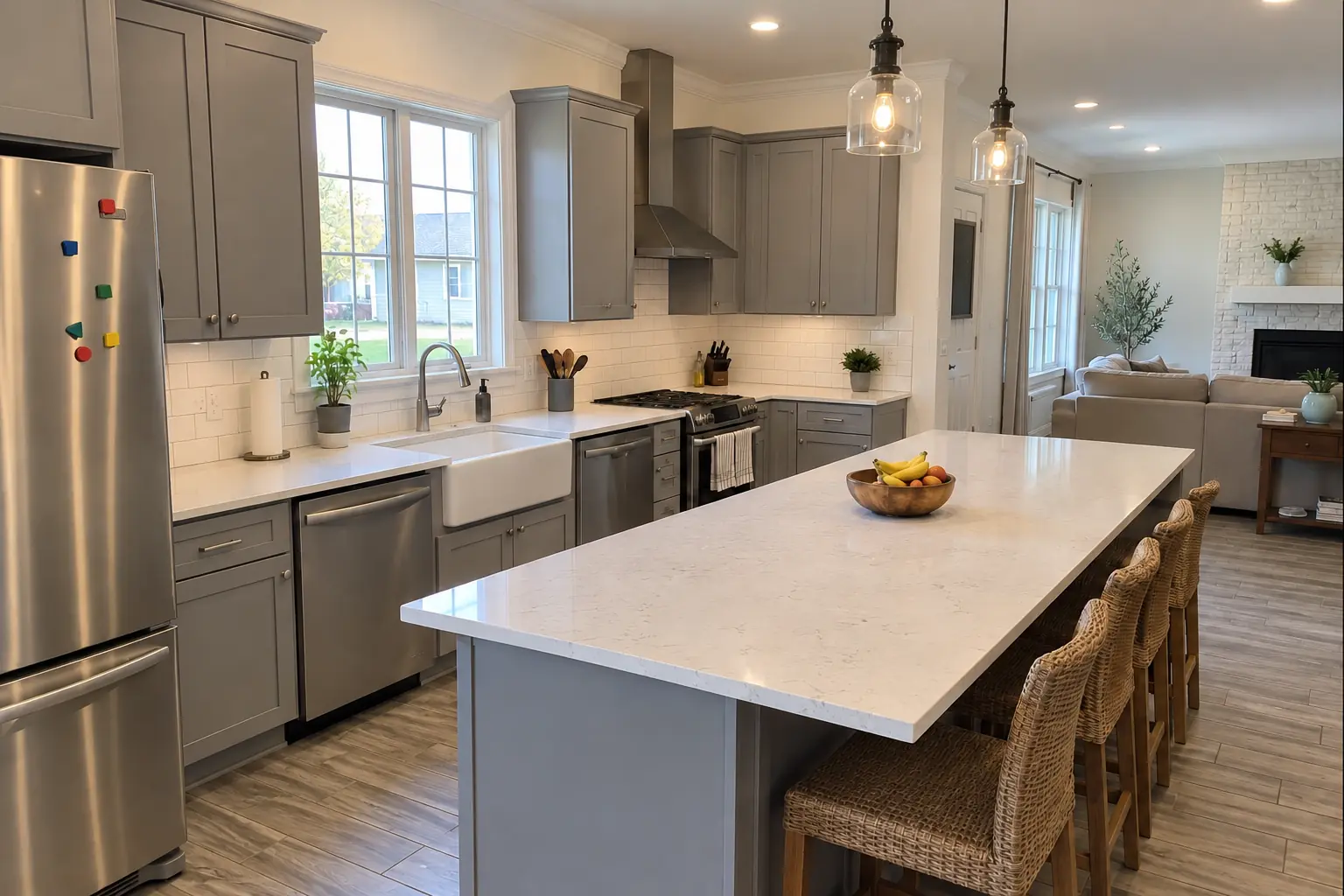 After
Where wallpaper works in a kitchen
Wallpaper is a good choice on walls that do not take direct splash and steam: a dining nook, the wall above a banquette, the space between wall cabinets and the ceiling, the back of open shelving, or a pantry interior. Behind the range and sink, a tile or stone backsplash is the right surface; wallpaper there tends to stain and lift.
Good installation matters more in a kitchen than in a bedroom. Walls should be smooth, clean and primed with a wallpaper primer so the paper sticks and can be removed later without tearing the drywall face. Seams should be tight and not placed where steam from the kettle or dishwasher hits them directly. A range hood vented outdoors protects both paint and paper.
Why kitchen paint is peeling
Peeling paint is a bond failure: the new coat is not holding to the surface underneath. Finding out why matters, because repainting over the same problem will peel again. Where and how it peels is the best clue.
| Cause | Typical sign | Fix before repainting |
|---|---|---|
| Grease and residue | Peels in sheets near the range | Degrease and rinse |
| Latex over oil-based paint | Lifts easily with tape or a fingernail | Sand and use bonding primer |
| Moisture or a leak | Bubbles first, then peels | Find and fix the water source |
| Unsanded gloss surface | Poor grip on trim and doors | Scuff-sand and prime |
| Fresh compound or damp plaster | Peels over patches | Let dry, then prime |
| Old calcimine paint | Chalky layer under modern coats | Wash off or seal with a suitable primer |
How to fix peeling kitchen paint so it stays fixed
A lasting repair is mostly preparation. The paint itself is the easy part.
- Fix the moisture sourceCheck for leaks behind the sink wall, around windows and from the floor above, and make sure a ducted range hood actually moves air outdoors.
- Scrape back to sound paintRemove all loose paint until the edges are firmly attached. In a pre-1978 home, test for lead first.
- Degrease and rinseClean with a degreasing cleaner meant for pre-paint prep, then rinse well, because leftover cleaner also blocks adhesion.
- Test the old paintRub a small spot with a cotton ball and rubbing alcohol: latex softens and comes off on the cotton, oil-based paint does not.
- Sand, fill and primeSand glossy areas, feather the scraped edges, fill or skim where needed, and prime. Over oil-based paint, use a bonding primer made for that purpose.
- Paint and let it cureApply two coats of a washable kitchen paint and let it cure fully before scrubbing it.
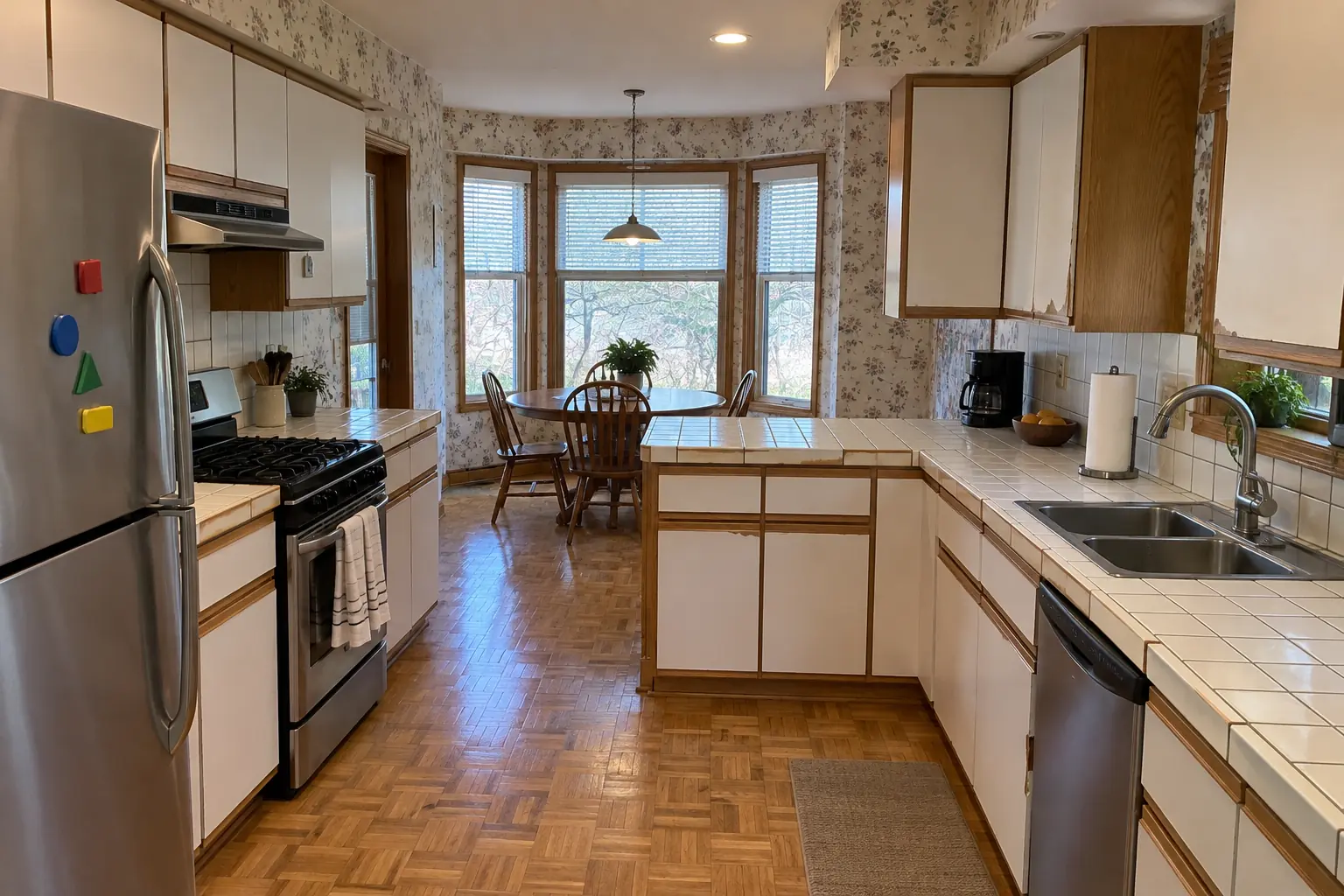 Before
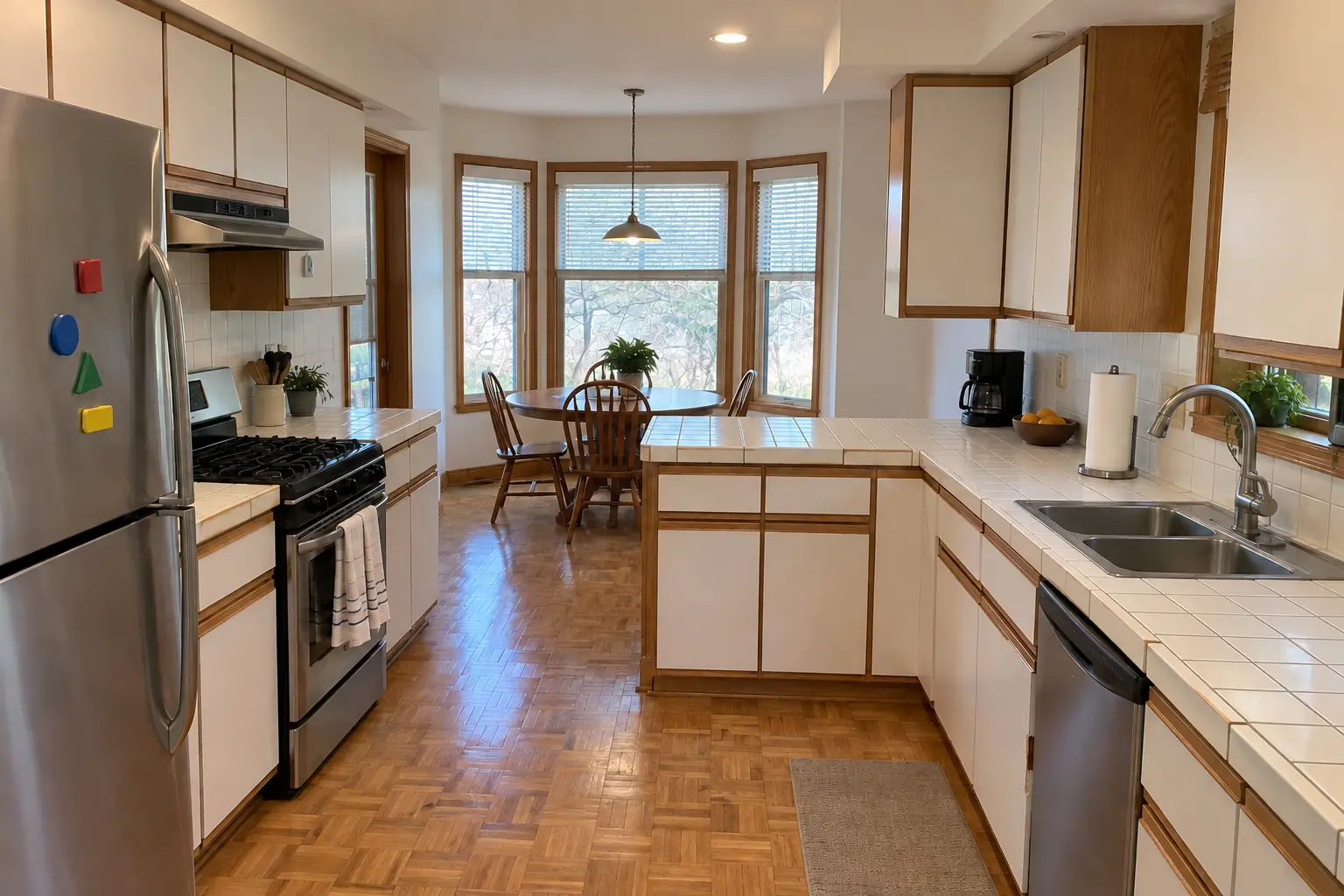 After
Older homes: plaster and lead paint
Many Chicago-area homes have plaster walls, and many built before 1978 have lead-based paint in older layers. Scraping and sanding those layers can create lead dust, which the EPA treats as a serious hazard. If your home was built before 1978 and you are unsure, test the paint before scraping or sanding, and direct health questions to a doctor or the local health department. Contractors paid to disturb painted surfaces in pre-1978 homes must follow the EPA Renovation, Repair and Painting rule and use lead-safe work practices.
Plaster that is cracked, loose from the lath or crumbling under the paint needs repair before painting or papering. Bulges and soft spots are often signs of old water damage and should be checked for an active leak.
Removing wallpaper before painting
Painting over wallpaper is tempting but usually a mistake: seams show through, and the moisture in paint can make the paper bubble and peel. Removing it takes longer but gives a wall that lasts.
- Score and soakScore the paper lightly and soak it with warm water or a remover solution.
- Scrape gentlyLift the paper with a wide scraper without gouging the drywall face.
- Wash off the pasteRemove all adhesive residue and let the wall dry completely.
- Repair, prime and paintSeal any torn drywall paper with a primer made for that purpose, skim coat if needed, then prime and paint.
Frequently asked questions
Is wallpaper a good idea in a kitchen?
What paint finish is best for kitchen walls?
Why is my kitchen paint peeling off in sheets?
Why is the paint bubbling on my kitchen wall?
Can you paint over peeling paint?
Is peel-and-stick wallpaper OK in a kitchen?
Kitchen Wall Painting & Wallpaper in your town
- Carol Stream
- Naperville
- Schaumburg
- Wheaton
- Glen Ellyn
- Bloomingdale
- Bartlett
- Roselle
- Hanover Park
- Glendale Heights
- West Chicago
- Winfield
- Warrenville
- Lisle
- Downers Grove
- Lombard
- Villa Park
- Elmhurst
- Oak Brook
- Addison
- Itasca
- Wood Dale
- Elk Grove Village
- Hoffman Estates
- Arlington Heights
- Palatine
- Mount Prospect
- Des Plaines
- Park Ridge
- Skokie
- Evanston
- Northbrook
- Glenview
- Highland Park
- Buffalo Grove
- Lake Zurich
- Oak Park
- Berwyn
- Tinley Park
- Orland Park
- Bolingbrook
- Aurora
- Elgin
- St. Charles
- Geneva
- Batavia
- Crystal Lake
- Plainfield
- Woodridge
Sources
Keep reading
-
 Planning and designKitchen Paint Ideas: Cabinet Colors, Paint Types, Sheens and FinishesGood kitchen paint ideas pair a color that suits your light and fixed finishes with a paint made for cabinets. For most kitchens that means a…3 min read
-
 CabinetsCabinet Paint Cracking, Chipping and Peeling: Causes and FixesCabinet paint cracking at door joints is usually wood moving with seasonal humidity, not a failed finish. Cabinet paint chipping and peeling almost…3 min read
-
 Plumbing, appliances and electricalDucted vs Ductless Range Hood: Installation Height, Venting and What Shapes the CostDucted vs ductless range hood: a ducted hood sends smoke, grease, heat and moisture outside and performs better whenever a duct path exists; a…4 min read