Serving St. Charles & nearby Geneva, West Chicago

Cabinet Refinishing & Staining in St. Charles, IL

Keep your solid wood cabinets in St. Charles and give them a new stain and a hard clear finish, with the grain still showing.

  • Serving St. Charles ZIP 60174, 60175
  • A new look without tearing the kitchen out
  • Clean, protected work area every day

Prefer a callback?

Leave your number and a St. Charles cabinet refinisher will call you.

Wood cabinet problems we refinish in St. Charles

Refinishing is for owners who like wood but not the color it is now. In St. Charles we take doors to our shop, strip and sand them, re-stain or clear-coat them, and finish the face frames in place while your counters and layout stay untouched.

Thin veneer on panels and end sides

Flat panels and cabinet sides are often veneer over plywood or particleboard. We use strippers and light hand sanding there so we never sand through.

New cabinets don't match the old ones

When new cabinets sit next to older ones, the stain rarely matches out of the box. Refinishing the older run, or both, brings them together.

Honey oak that looks orange

The orange tint in 1980s and 1990s oak comes mostly from the aged varnish, not the wood. Stripping that layer and re-staining gives a cooler, more current color.

Want a darker or richer stain

Darker colors cover more of the old tone, so prep is lighter and the job moves faster. We still sand for adhesion and seal with a hard topcoat.

Finish worn to bare wood near the handles

Pale or grayish patches beside the knobs mean the protective layer is gone. Spot fixes rarely blend, so we refinish the full door and frame so the color reads even.

Patchy or blotchy stain from an earlier job

Uneven, splotchy doors from a do-it-yourself stain job can be corrected. Stripping, a wash coat and the right stain type give a consistent tone.

Cabinets too dark for the room

Lightening stained cabinets is harder than darkening them. We strip a sample door, show you the lightest tone the wood will take, and you decide before we do the rest.

Dark water stains near the sink

Water that sat on the cabinet floor or door edges leaves dark staining. Treating it, re-staining and sealing hides most of it; badly swollen parts get replaced.
What we do on the job

  • Protection and setupWe mask the counters, cover the floor and set up dust control in the kitchen first.
  • Stripping the old finishWe strip the failing topcoat down to wood, or scuff it when the plan is to go darker.
  • Sanding and repairsWe fill gouges with matched filler, re-glue loose parts and sand the surface smooth.
  • Sample door and color approvalYou sign off on a finished sample door before we stain the rest of the kitchen.
  • Stain or tonerThe approved color goes on by wiping or spraying, depending on the wood and the stain type.
  • Face frames on siteThe cabinet boxes stay in your kitchen and are finished on site with ventilation running.
  • Reinstall and hardwareDoors are rehung and adjusted, and new knobs, pulls or soft-close hinges go on if you chose them.

Materials and finishes

Oil-based and water-based wood stainsPenetrating stains color the wood itself and suit oak and other open-grain species.
Waterborne polyurethane topcoatWater-based poly keeps light stains from turning amber and dries quickly between coats.
Wood bleach for spot correctionOxalic acid and two-part wood bleach lighten water marks or stubborn color before the new stain.
Toners and glazesA toner adjusts color in thin, even layers; a glaze adds depth in corners and profiles.
Gel stainGel stain colors evenly on tight-grain woods and can deepen a tone without full stripping.

What the work looks like in St. Charles homes

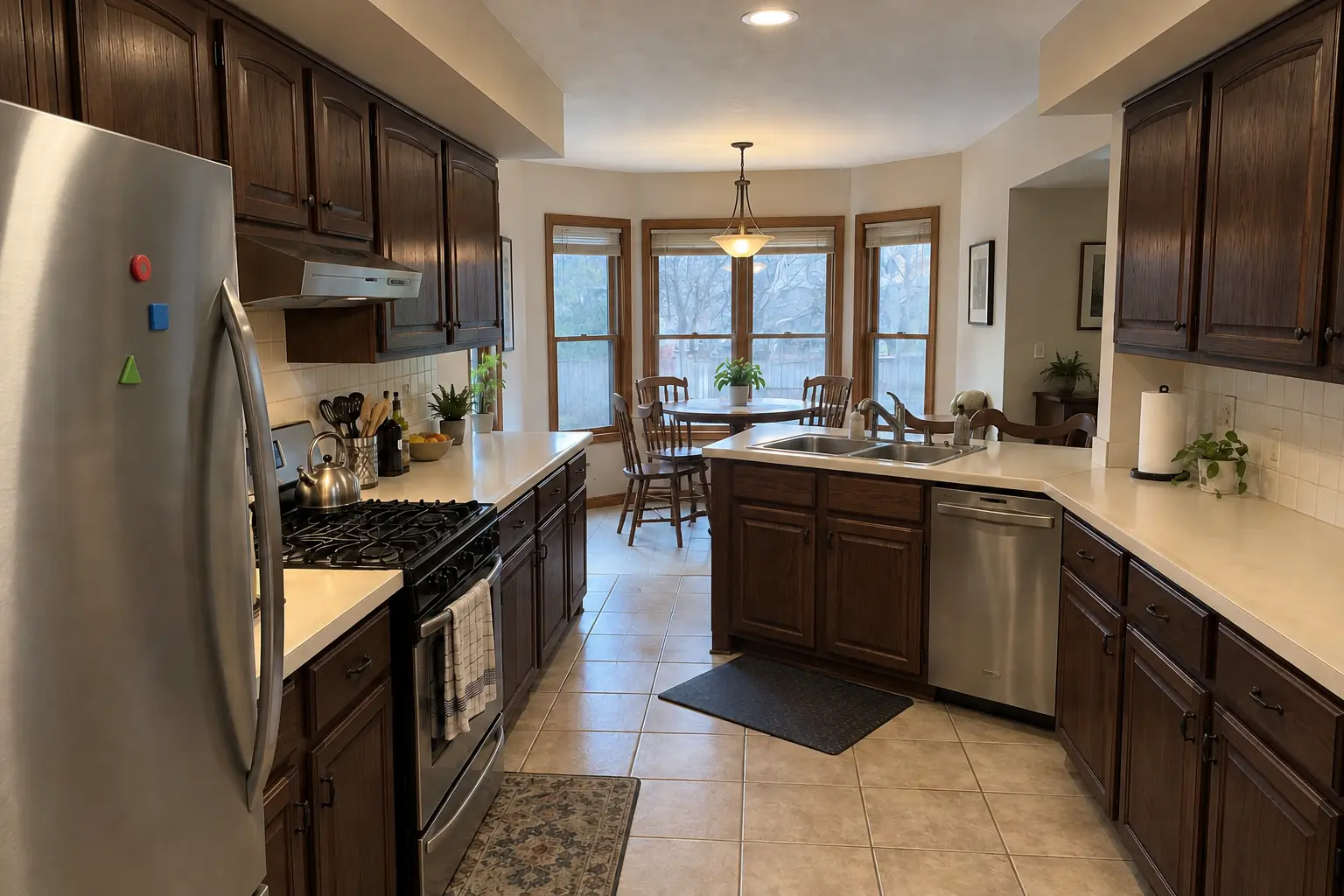
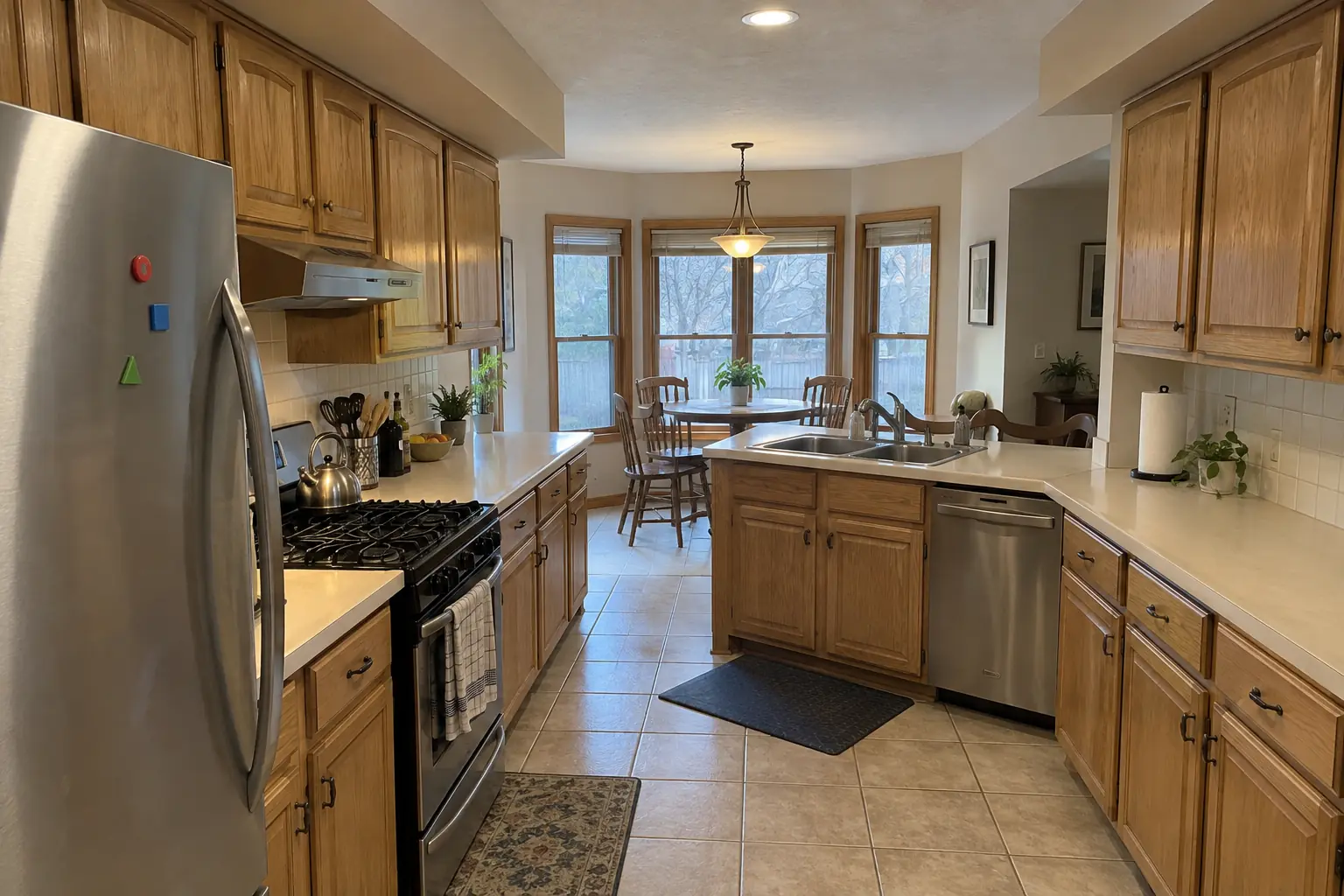
Cabinet Refinishing & Staining in a 1980s-1990s two-story colonial / tract house — beforeBefore
Cabinet Refinishing & Staining in a 1980s-1990s two-story colonial / tract house — afterAfter
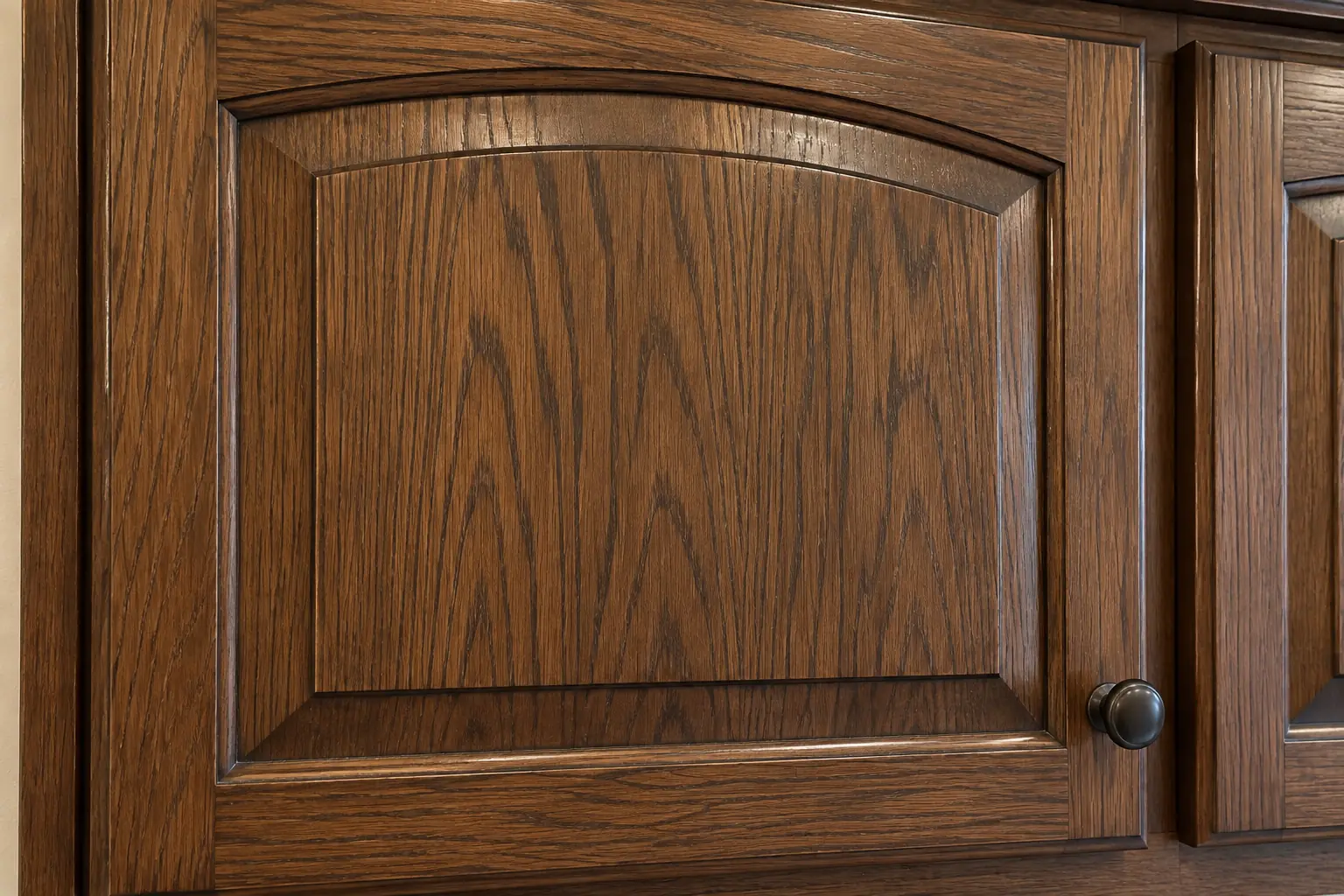
Cabinet Refinishing & Staining in a 1980s-1990s two-story colonial / tract house — detailDetail

Cabinet Refinishing & Staining in a two-story colonial from the 1990s, St. Charles

This one is a two-story colonial from the 1990s in St. Charles. The kitchen as it was: solid wood cabinets with a dull, uneven stain worn white near the handles. The reason for the call: a dull finish worn through near the handles. The result: wood cabinets stripped and refinished in a deep espresso-brown stain, grain still showing. The job covered protection and setup, sample door and color approval, plus reinstall and hardware.
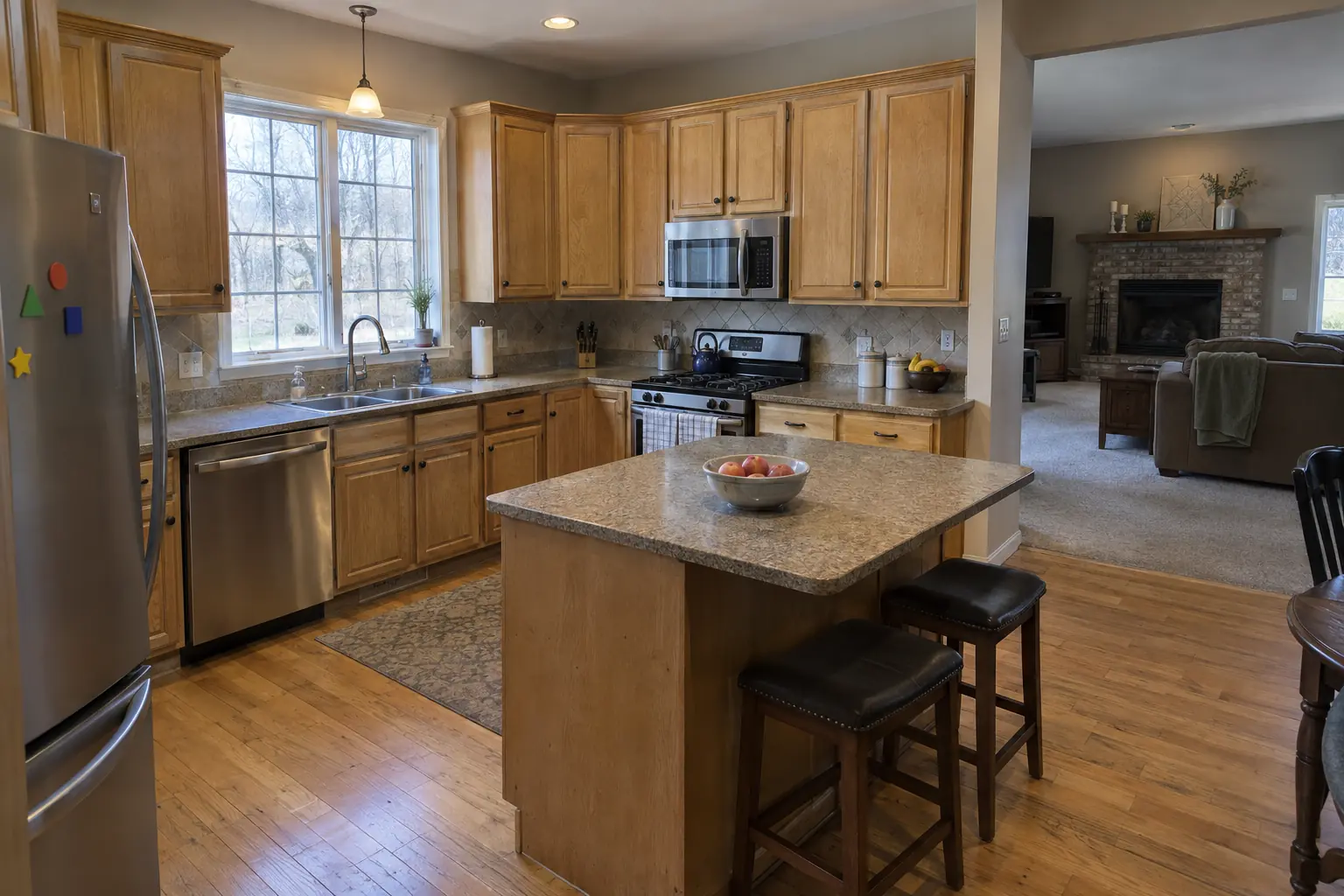
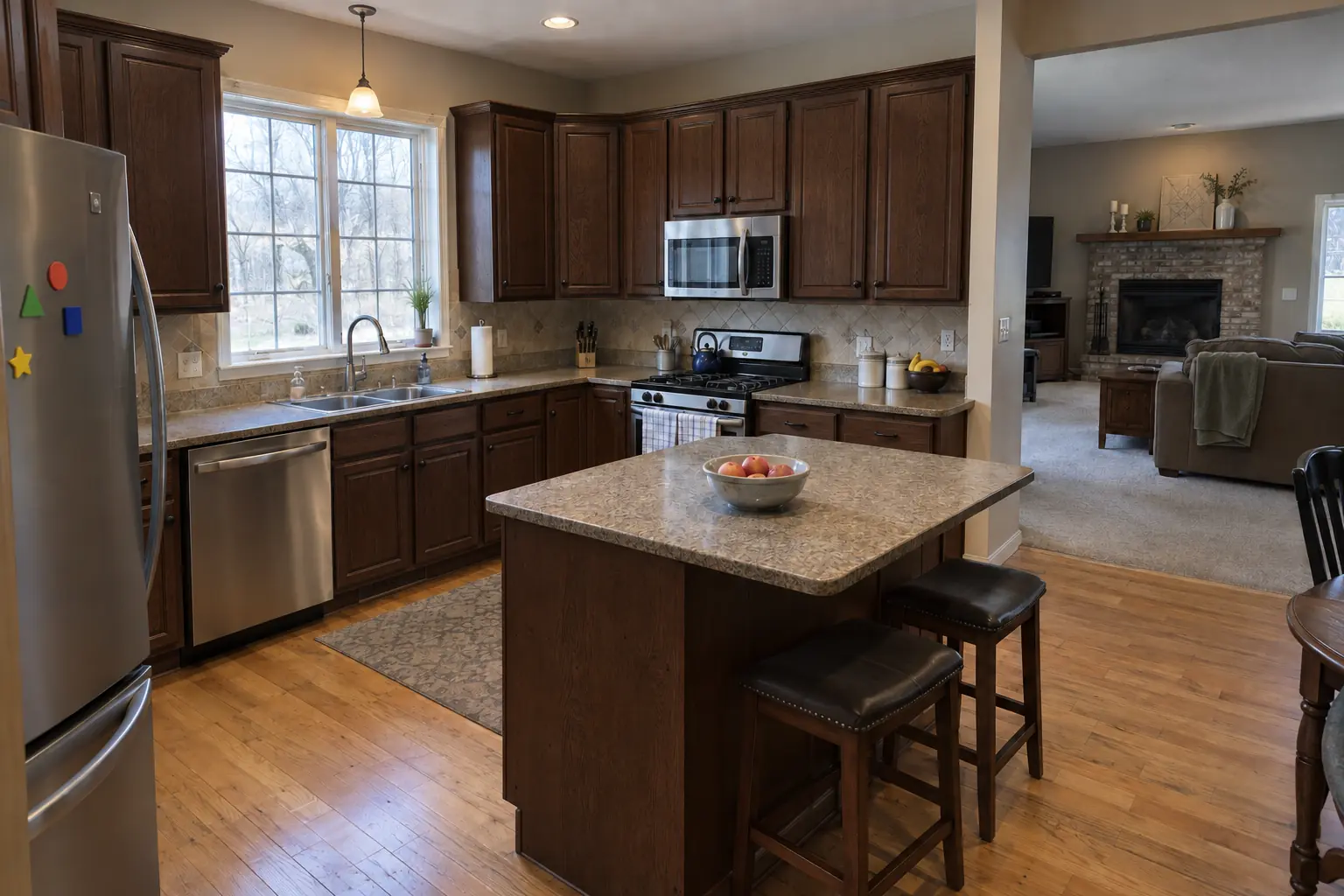
Cabinet Refinishing & Staining project in Geneva, beforeBefore
Cabinet Refinishing & Staining project in Geneva, afterAfter

A Geneva 1980s two-story: before and after

The site: a 1980s two-story near Mill Creek. The kitchen as it was: solid wood cabinets with a dull, uneven stain worn white near the handles. What bothered the owners most: bare wood showing where hands touched the doors. After: wood cabinets stripped and refinished in a deep espresso-brown stain, grain still showing. The job covered sample door and color approval, stain or toner, plus face frames on site.

Cabinet Refinishing & Staining in Geneva →
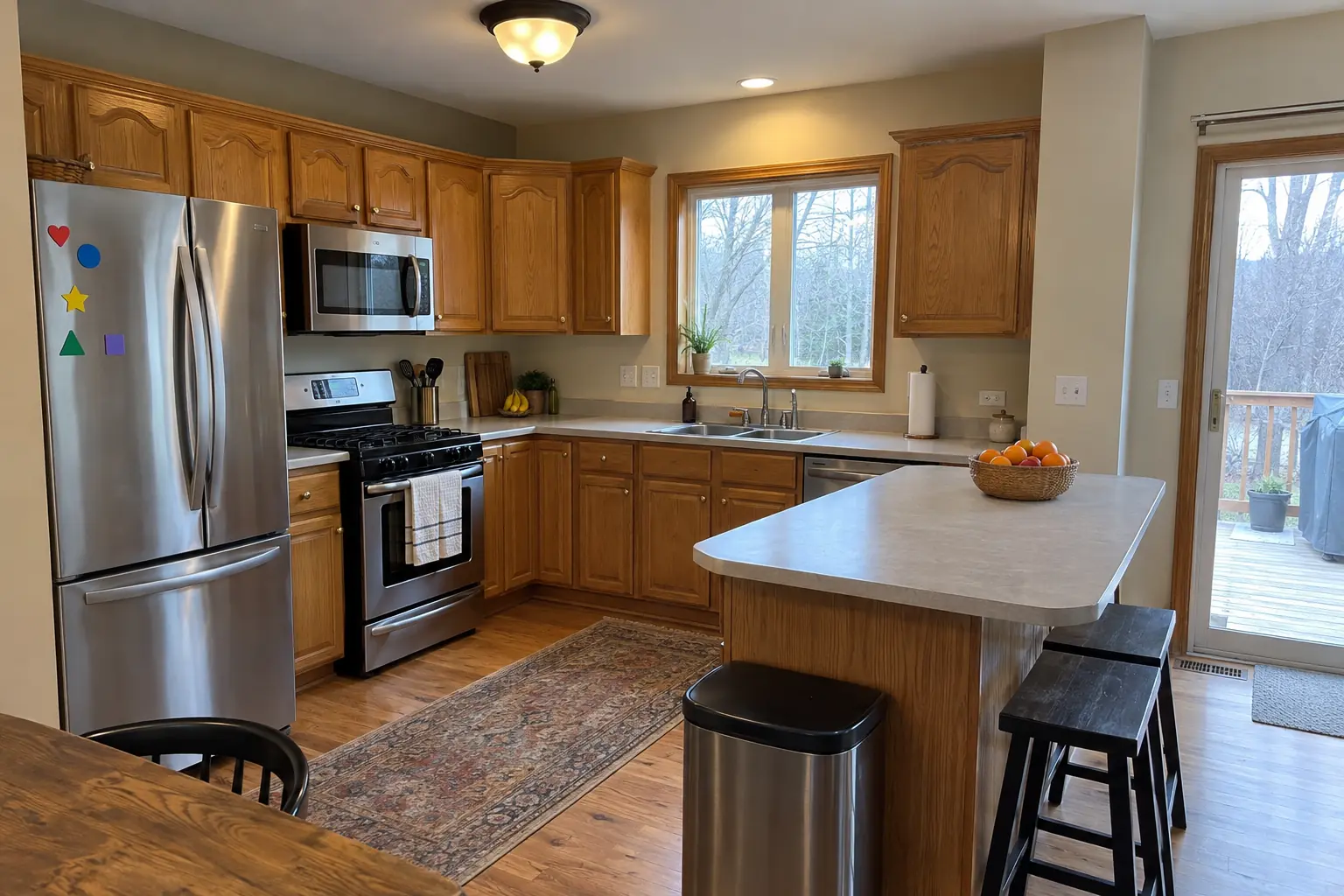
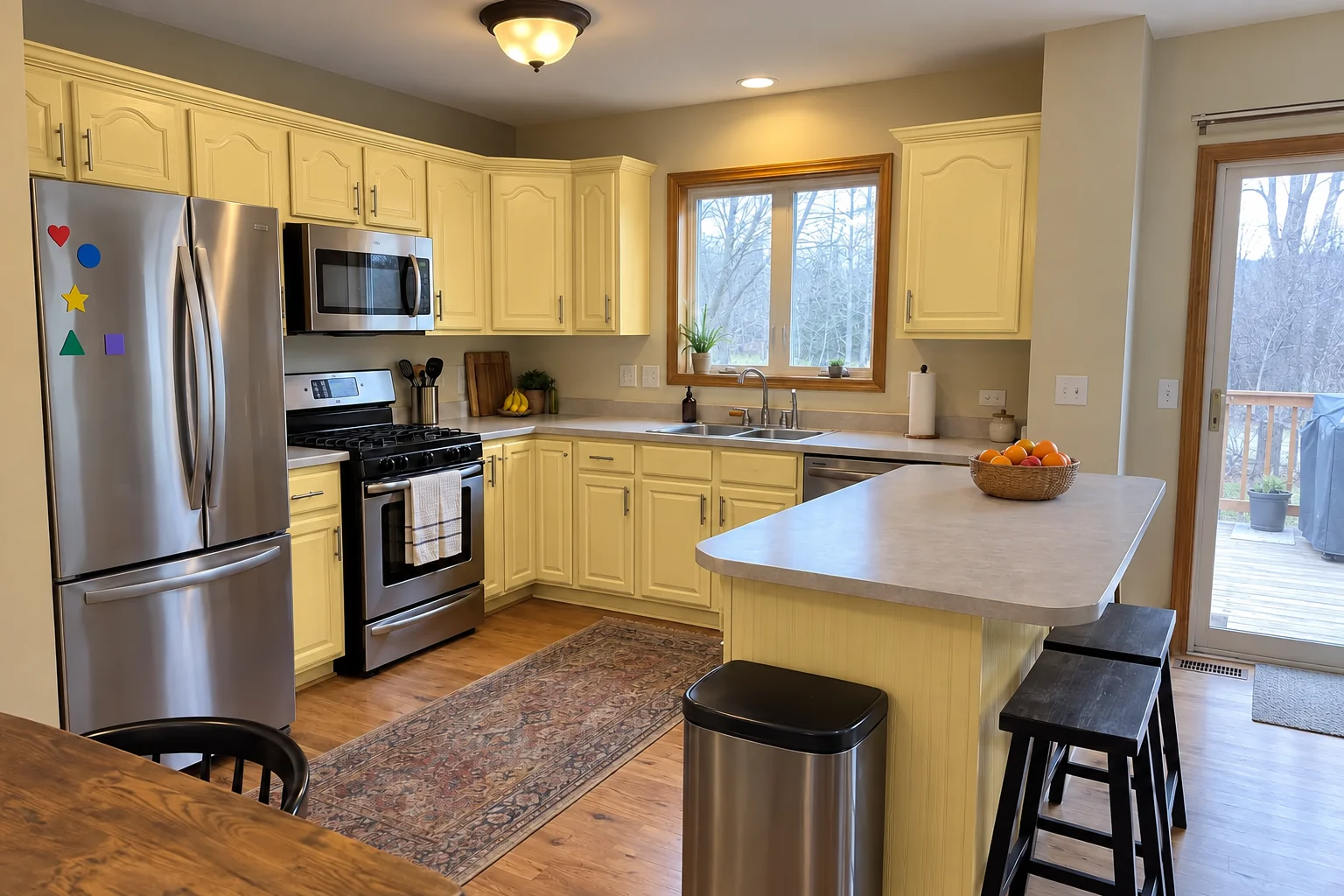
Kitchen Cabinet Painting project near St. Charles, beforeBefore
Kitchen Cabinet Painting project near St. Charles, afterAfter

St. Charles kitchen, 1990s two-story colonial: kitchen cabinet painting

Finished: the same doors sprayed in light butter yellow, new brushed nickel bar pulls; counters and floor stayed as they were.

Kitchen Cabinet Painting in St. Charles →
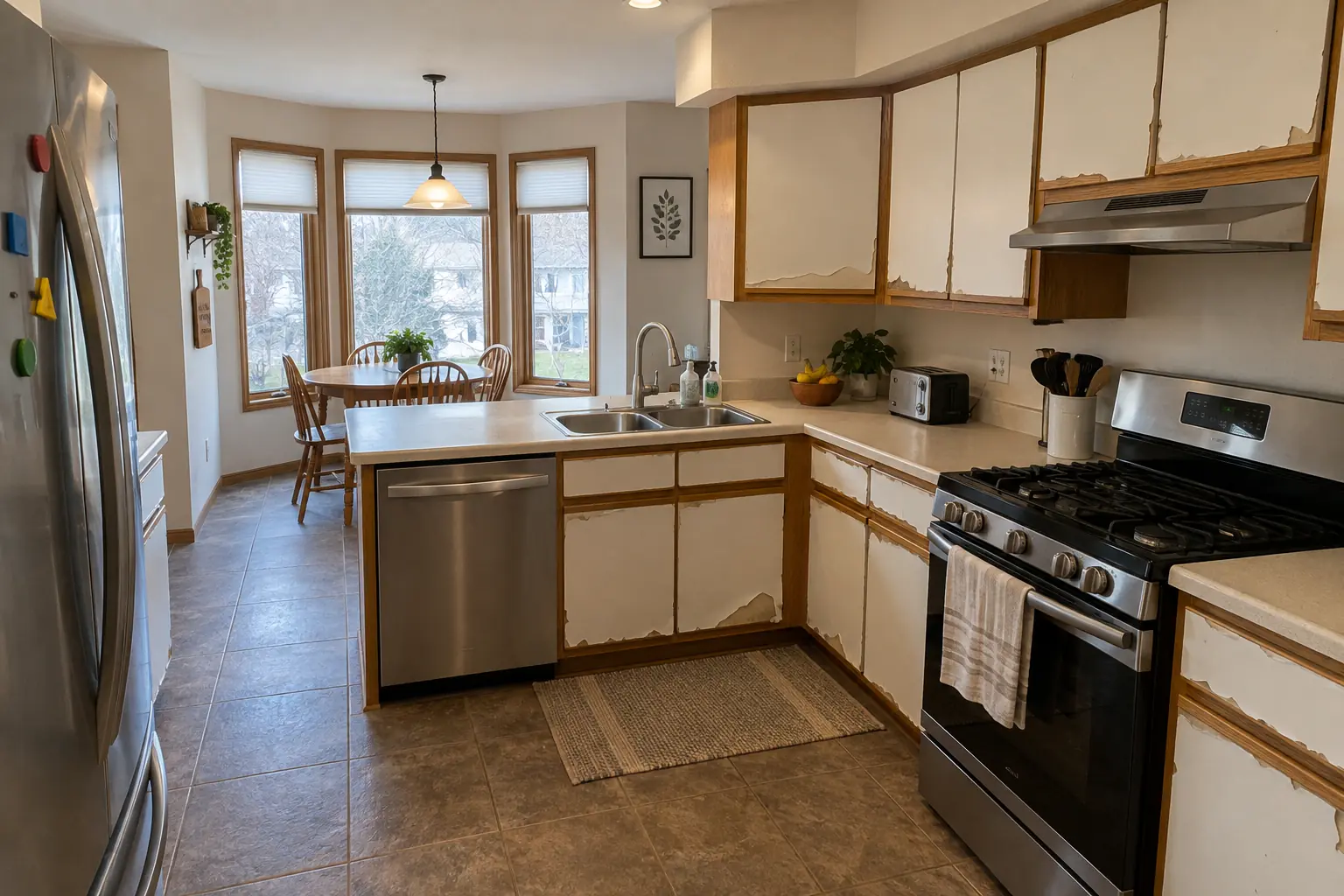
Cabinet Refacing project near St. Charles, beforeBefore
Cabinet Refacing project near St. Charles, afterAfter

Cabinet Refacing in a 1980s two-story, St. Charles

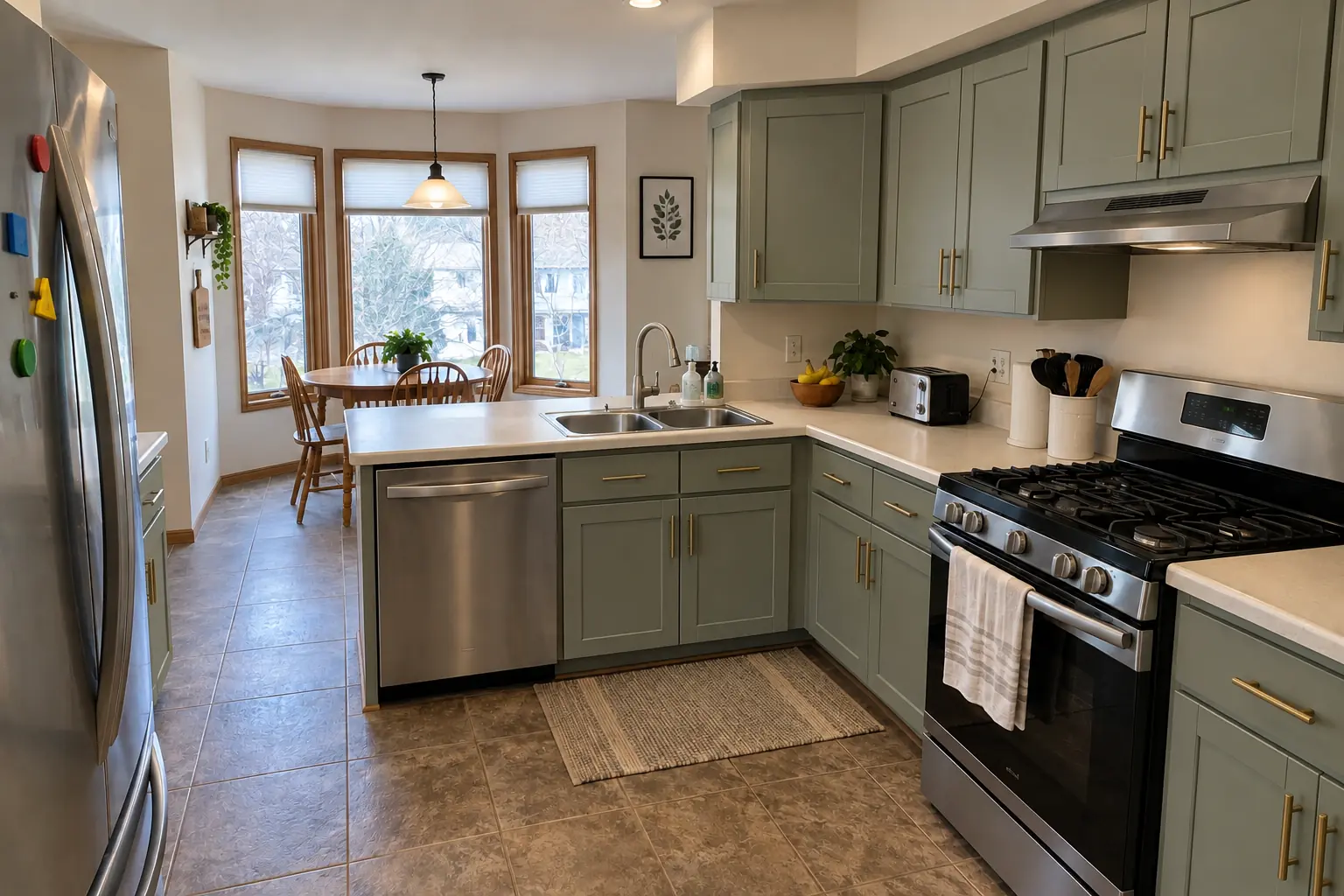
Finished: new five-piece shaker doors in sage green on the existing boxes, matching face-frame veneer and satin brass pulls.

Cabinet Refacing in St. Charles →
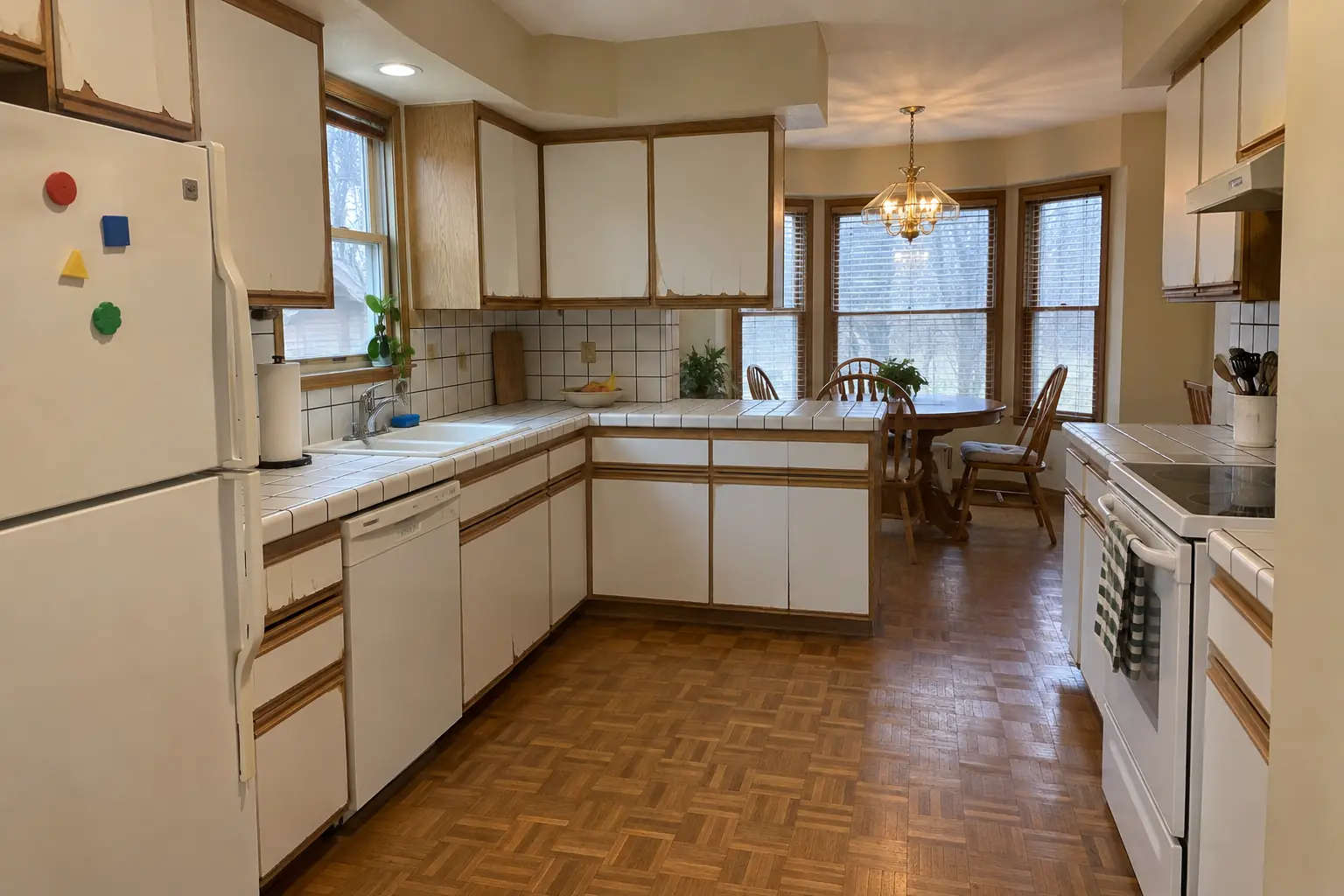
Kitchen Remodeling project near St. Charles, beforeBefore
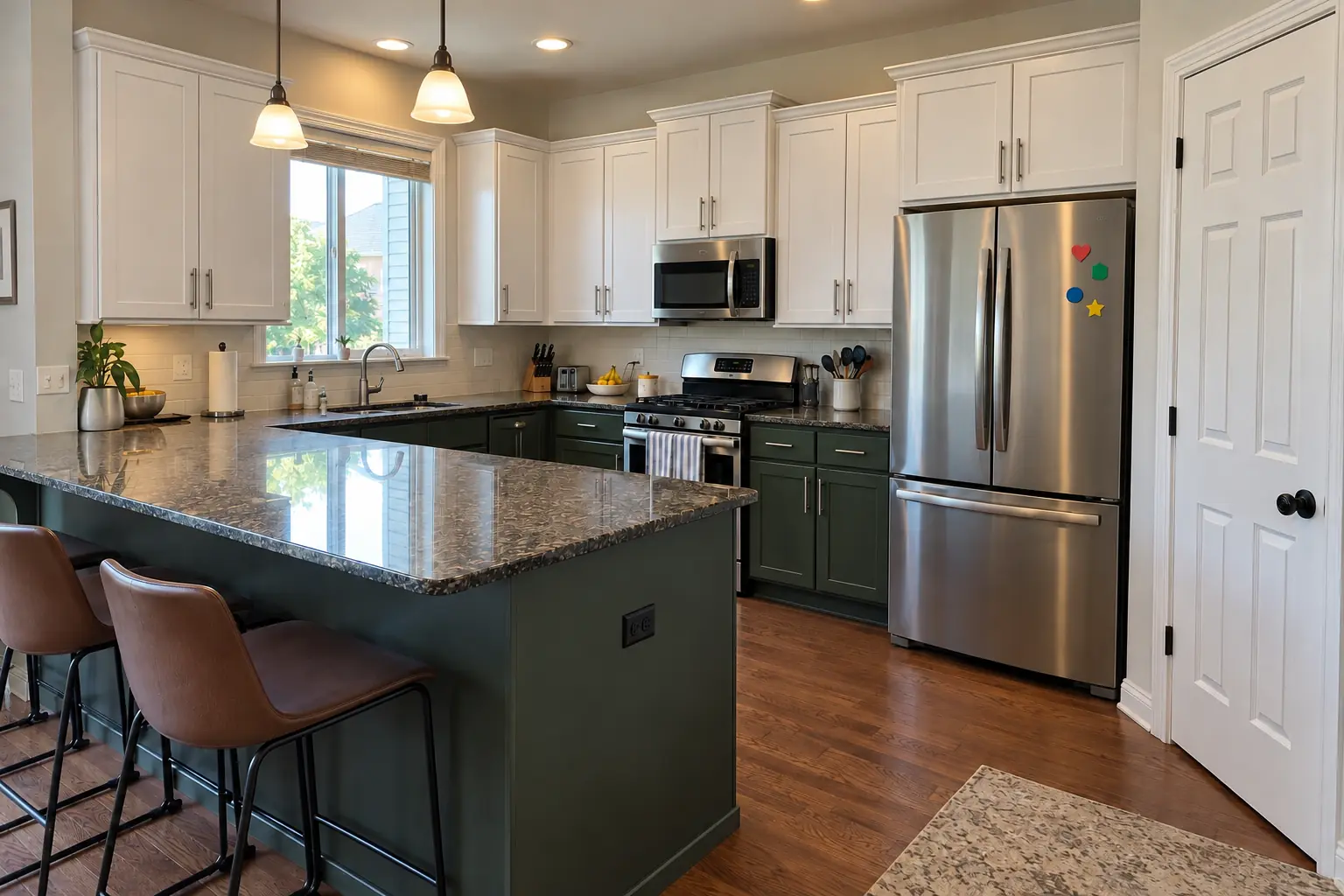
Kitchen Remodeling project near St. Charles, afterAfter

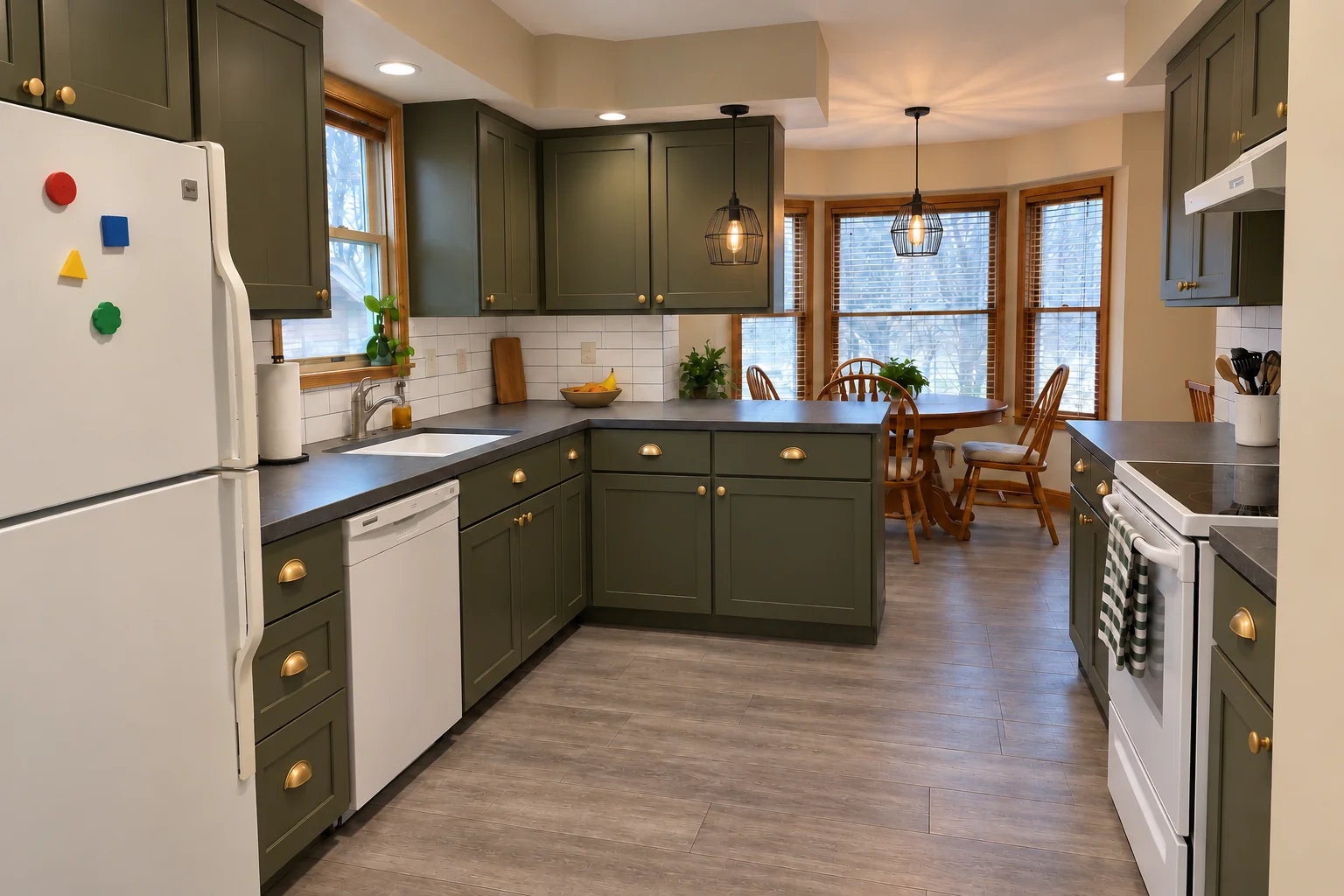
Kitchen Remodeling in a 1980s two-story, St. Charles

Finished: cabinets in deep olive with unlacquered brass knobs and cup pulls, charcoal concrete-look quartz counters, a white 3x12 tile in a stacked pattern backsplash, gray wood-look porcelain plank flooring and black cage pendants and slim recessed lights.

Kitchen Remodeling in St. Charles →

How the job goes

  1. Visit and wood checkAt the visit we identify the species and the old finish, and note veneer and damage.
  2. Color sampleOne door is stripped and stained in your chosen color so you can approve it at home.
  3. Strip and sandOld finish comes off the doors off-site while we prep the frames in your kitchen.
  4. Stain and clear coatColor first, then several clear layers for a hard, smooth finish.
  5. Reinstall and walk-throughWe rehang, align, touch up and check every door and drawer with you.

Cabinet Refinishing & Staining questions from St. Charles homeowners

Can you re-stain 2000s oak cabinets?
Yes. Oak from that era is usually solid on the doors and frames and takes stain well. We check the panels for veneer before choosing how to strip.
Do you refinish vanities and built-ins too?
Yes, the process is the same, and adding them while we are set up keeps the colors identical.
How long does cabinet refinishing take?
Plan on roughly a week or two. Stripping and drying time between coats set the pace, and we schedule the frames so you keep cooking.
Is it worth refinishing kitchen cabinets?
If the boxes are solid wood or good plywood and you like the layout, usually yes. You keep the cabinets, counters and plumbing and change only the finish.
Can I stay in the house during refinishing?
Yes. The heavy stripping and spraying happen in our shop. On site we ventilate and use low-odor products for the frames.
Do I need a St. Charles-registered contractor for cabinet refinishing?
No registration fee; contractor requirements (general contractor certificate of insurance, with City as certificate holder) must be submitted before a permit is issued. We take care of that before work starts.
Do I need a permit for cabinet refinishing in St. Charles?
It depends on the scope. St. Charles's rule in short: Permits required for construction, alteration, repair or demolition of any structure; major residential projects including remodels require 5 sets of drawings. We handle the permit when one is needed with Building Division, Community Development, 2 E. Main St..
Do you work in my part of St. Charles?
Yes. Our crews work across St. Charles — ZIP 60174, 60175 — and nearby Geneva, West Chicago, Batavia.

Working in St. Charles

  • A lot of St. Charles kitchens date from the 2000s. We know these layouts well and what is worth keeping.
  • Most St. Charles homes are single-family. We protect floors and driveways and leave the site clean every day.
  • Live in a historic district? Interior kitchen work is usually not reviewed. We check before anything touches the exterior.

ZIP 60174ZIP 60175

Cabinet Refinishing & Staining nearby

Planning a kitchen project in St. Charles?

Call us — we'll check your ZIP, answer your questions and book an in-home estimate.
Call now (708) 400-7049
Call (708) 400-7049Callback