Serving Glenview & nearby Northbrook, Park Ridge

Range Hood Installation in Glenview, IL

We install under-cabinet, wall chimney, island and insert range hoods in Glenview, ducted outside wherever the house allows.

  • Installers working in Glenview ZIP 60025, 60026, 60062
  • Hookups by licensed trades where the code calls for it
  • Old unit hauled away on request

Prefer a callback?

Leave your number and a Glenview range hood installer will call you.

Range hood installs we handle in Glenview

Swapping a tired hood for a new one can be a short job, and adding a hood where there was none takes more planning. Either way, we work out in Glenview where the duct can run, what the wiring needs and whether the village wants a permit, before you order.

2000s hood on an old duct

A 2000s hood swap usually turns up a small, greasy duct and a damper that no longer closes. Those get replaced with the hood.

Old hood that only recirculates

A hood that blows air back into the room through a charcoal filter catches some grease but leaves heat, moisture and smoke inside. When a duct route exists, we convert it to vent outdoors.

Long duct run with many elbows

Run length and turns matter as much as fan size. We map the route before choosing the hood and keep the path short and smooth.

High-CFM hood and makeup air

A big fan in a well-sealed home can backdraft a water heater or furnace flue. We confirm what your village requires and plan makeup air when it applies.

No hood over the range at all

Adding ventilation where there was none means finding a duct path, a power source and solid blocking for the hood. We plan all three before cutting anything.

Flexible foil duct behind the old hood

If the old hood was hooked up with flexible foil, that duct comes out. Smooth metal duct moves more air and is easier to keep clean.

Gas range that needs stronger ventilation

Pro-style gas ranges with high-output burners often need a larger hood and a bigger duct. We follow the range and hood makers' guidance.

Duct too small for the new hood

The maker's instructions list the duct size the hood needs. If the existing duct is undersized, we enlarge the run rather than reduce at the hood.
What the install includes

  • Site check and sizingCooktop width, fuel type and duct path are checked before a model is chosen.
  • Permit and approvalsWe find out whether the village needs a mechanical permit for a new duct penetration and pull it when it does.
  • Removing the old hoodPower off, old hood disconnected and taken down, the old duct inspected or removed.
  • Blocking and mountingSolid wood blocking added in the wall or ceiling so the hood is anchored to framing.
  • Duct runRigid smooth metal duct sized to the hood outlet, joints sealed with foil tape and supported.
  • Wall cap or roof jackThe duct ends outside under a damper that closes when the fan is off.
  • Electrical connectionThe hood connected to a suitable circuit; new wiring or switches are run by an electrician.

What to pick before the install

Inserts and linersFan units built into a custom wood, plaster or metal hood cover.
Internal and remote blowersMost hoods carry the fan inside; some use an inline or exterior blower to cut noise in the kitchen.
Island hoodsHoods suspended above an island, supported from the ceiling framing.
Wall chimney hoodsWall-mounted hoods with a tall cover, often used where there is no cabinet above the range.
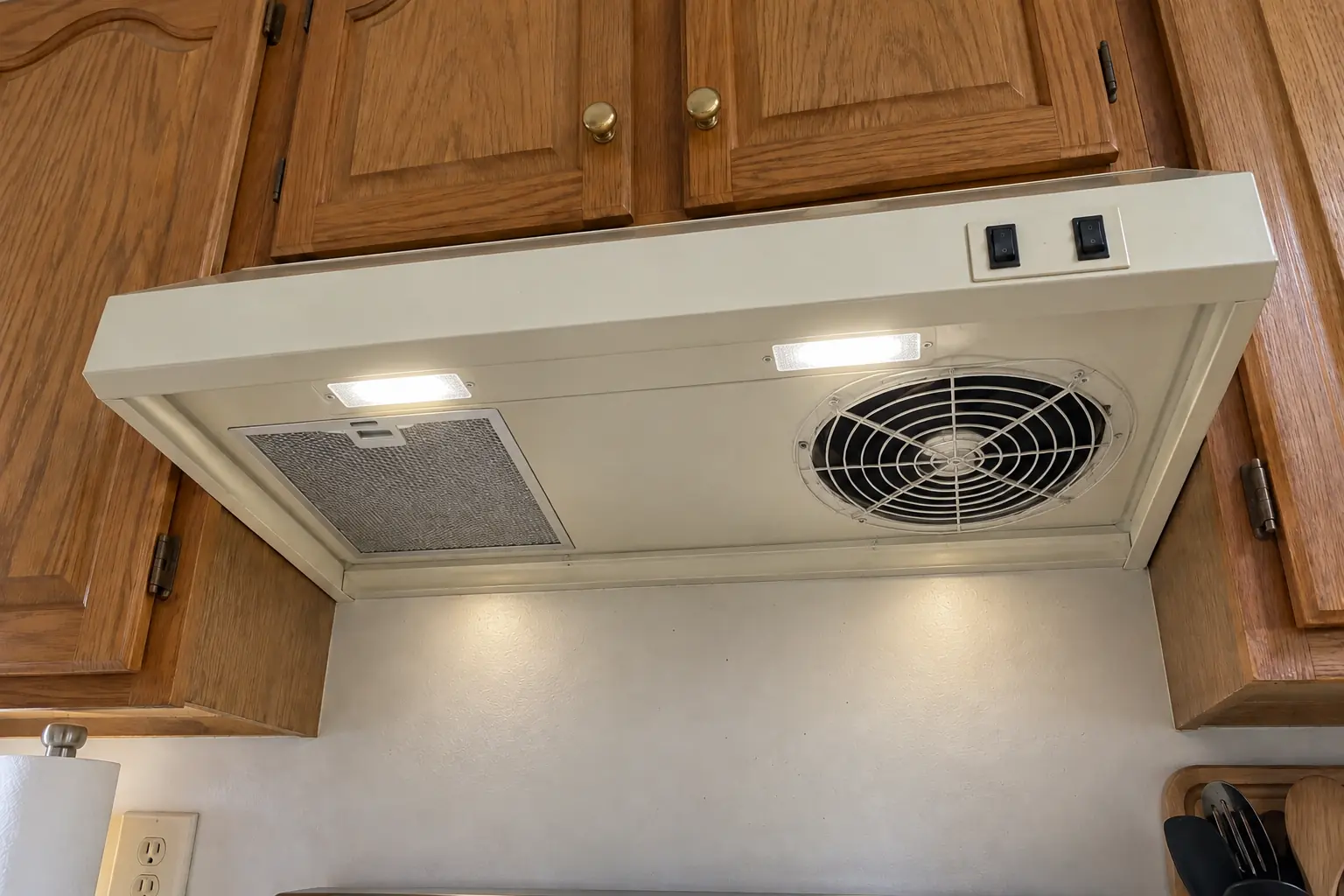
Under-cabinet hoodsHoods that mount under a wall cabinet, with the duct running up through the cabinet or out the back.

What the work looks like in Glenview homes

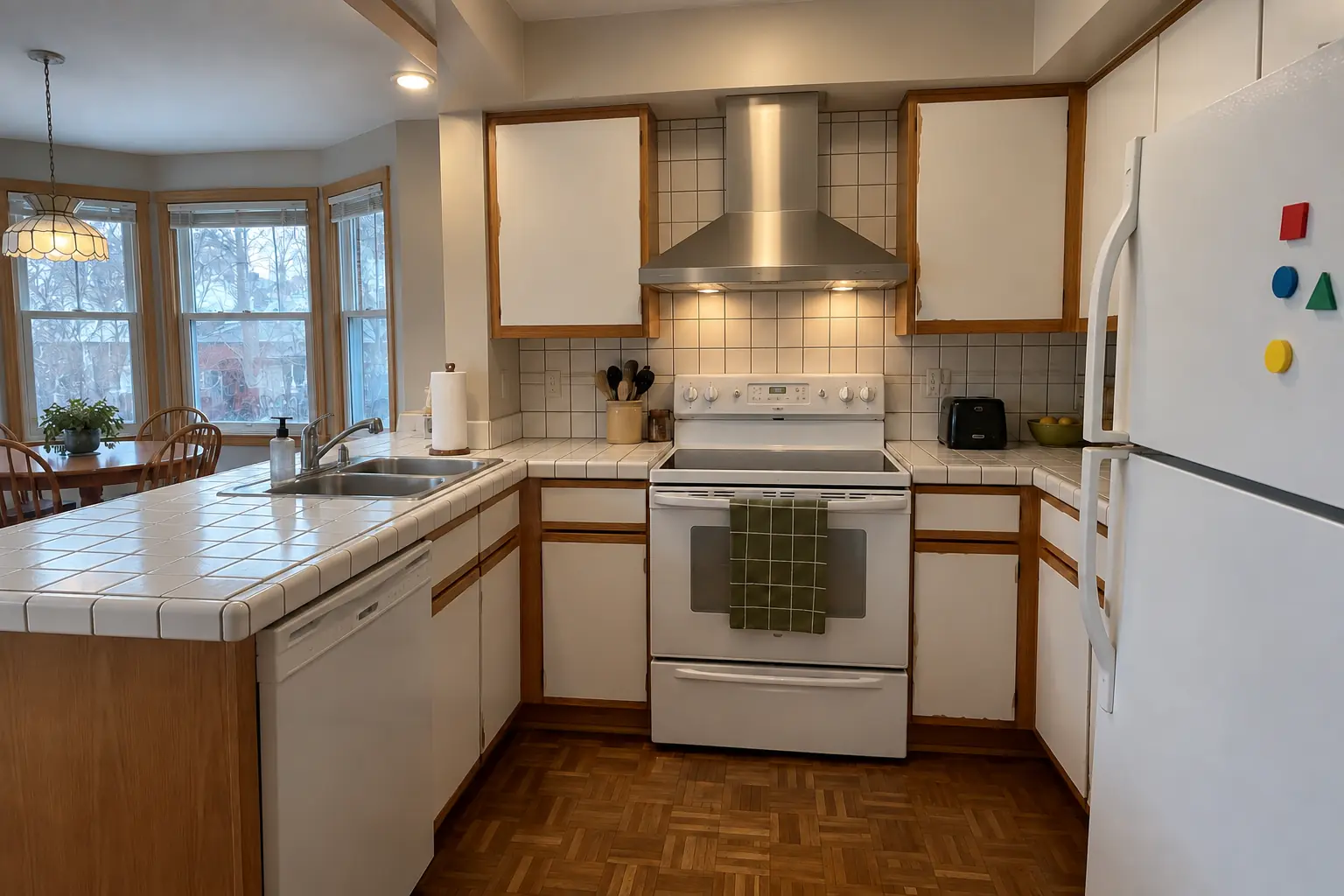
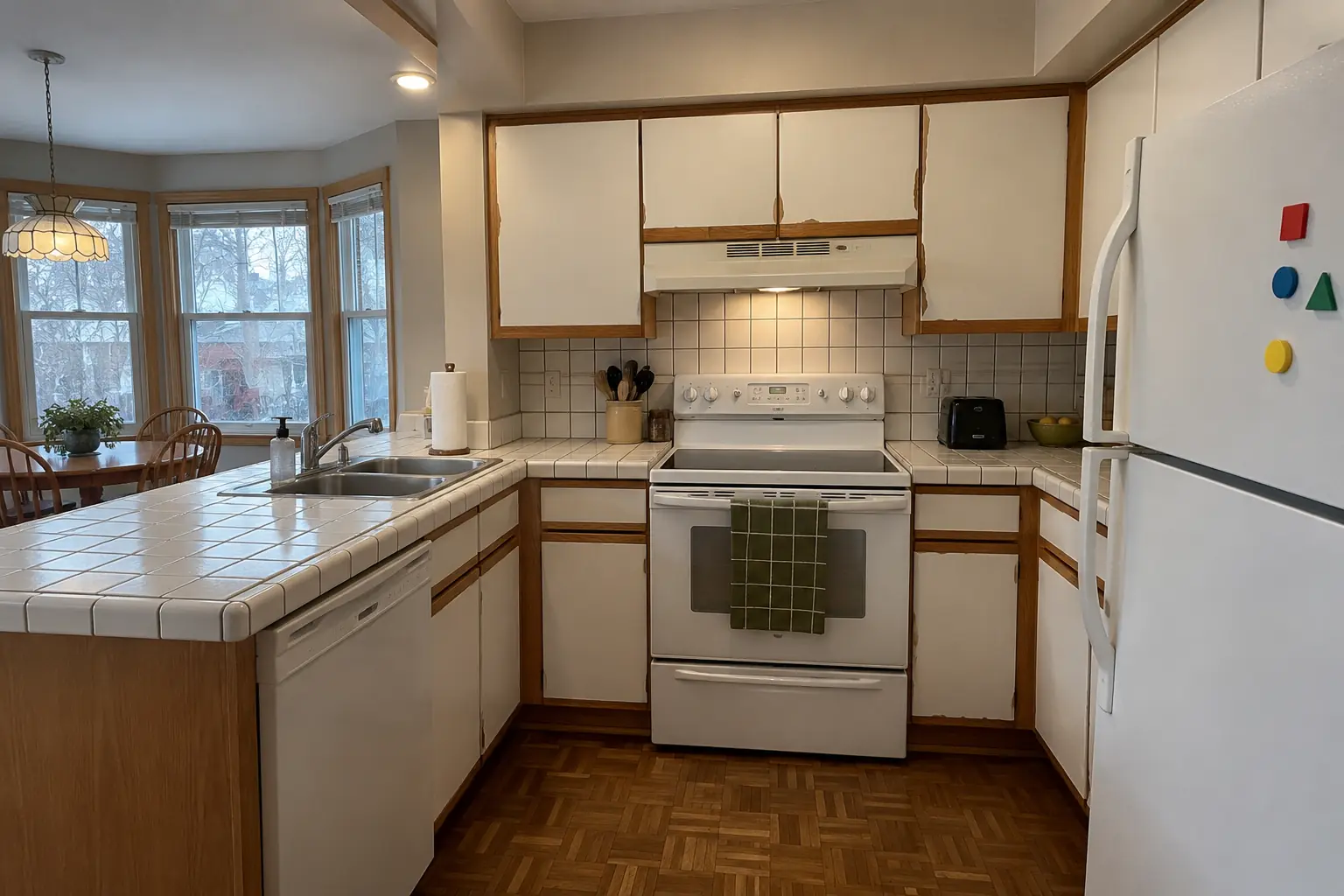
Range Hood Installation in a 1980s-1990s two-story colonial / tract house — beforeBefore
Range Hood Installation in a 1980s-1990s two-story colonial / tract house — installedInstalled
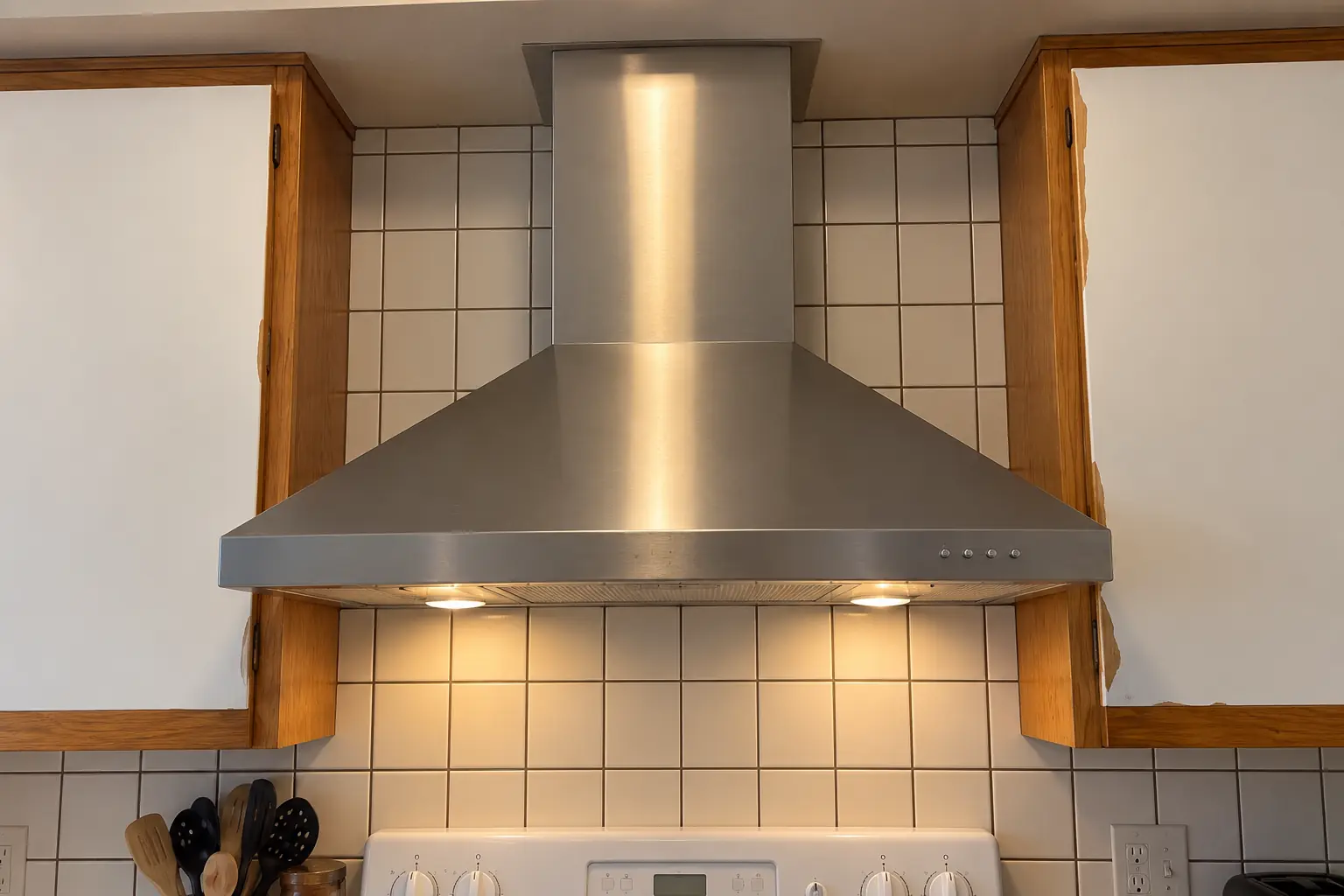
Range Hood Installation in a 1980s-1990s two-story colonial / tract house — detailDetail

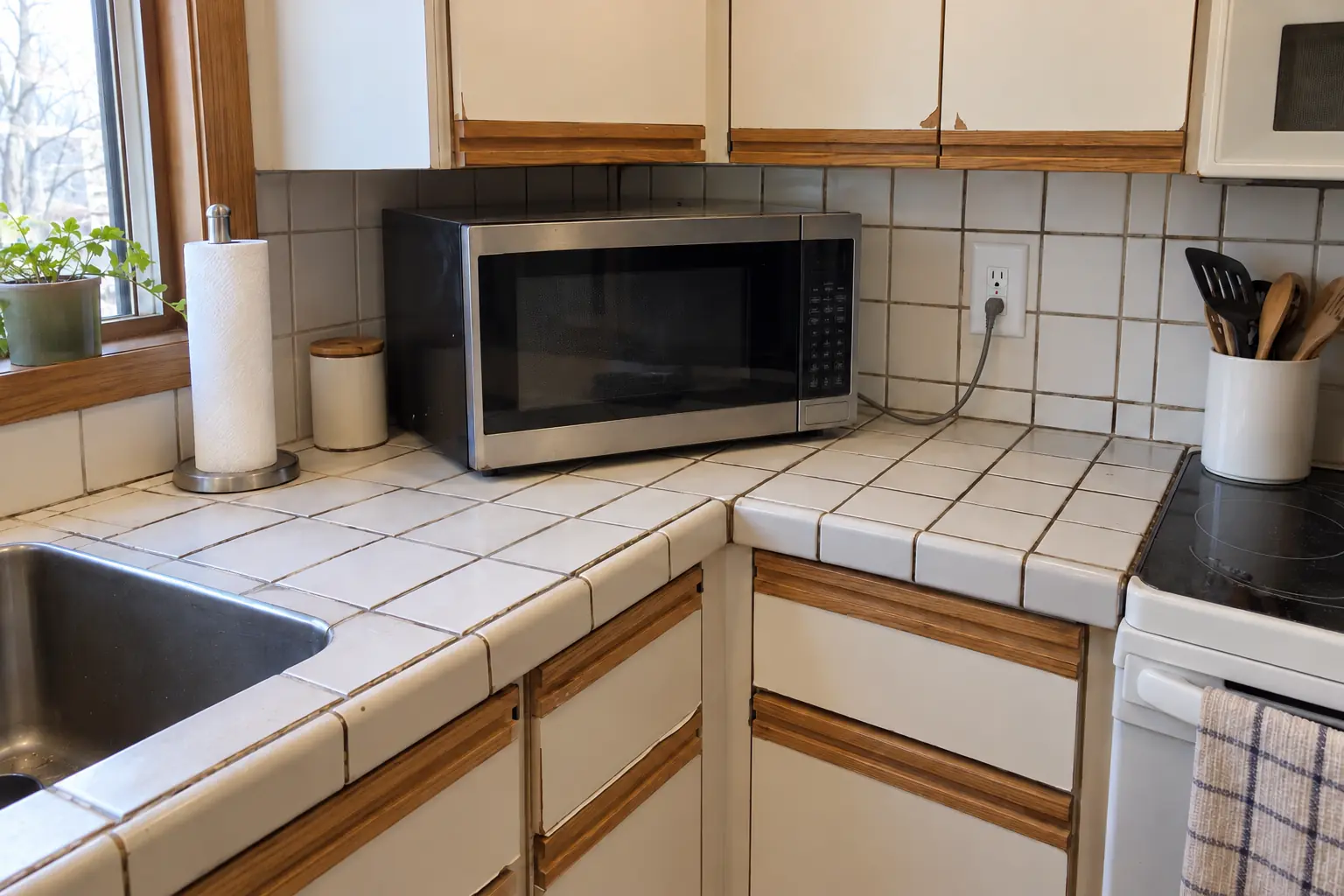
Glenview kitchen, 1990s two-story colonial: range hood installation

The site: a 1990s two-story colonial near The Grove. Before: white appliances and white thermofoil cabinets peeling at the edges, oak trim. The main complaint was cooking smells that stayed in the house for hours. After: a new stainless chimney range hood ducted to the outside. The job covered permit and approvals, removing the old hood, plus duct run.
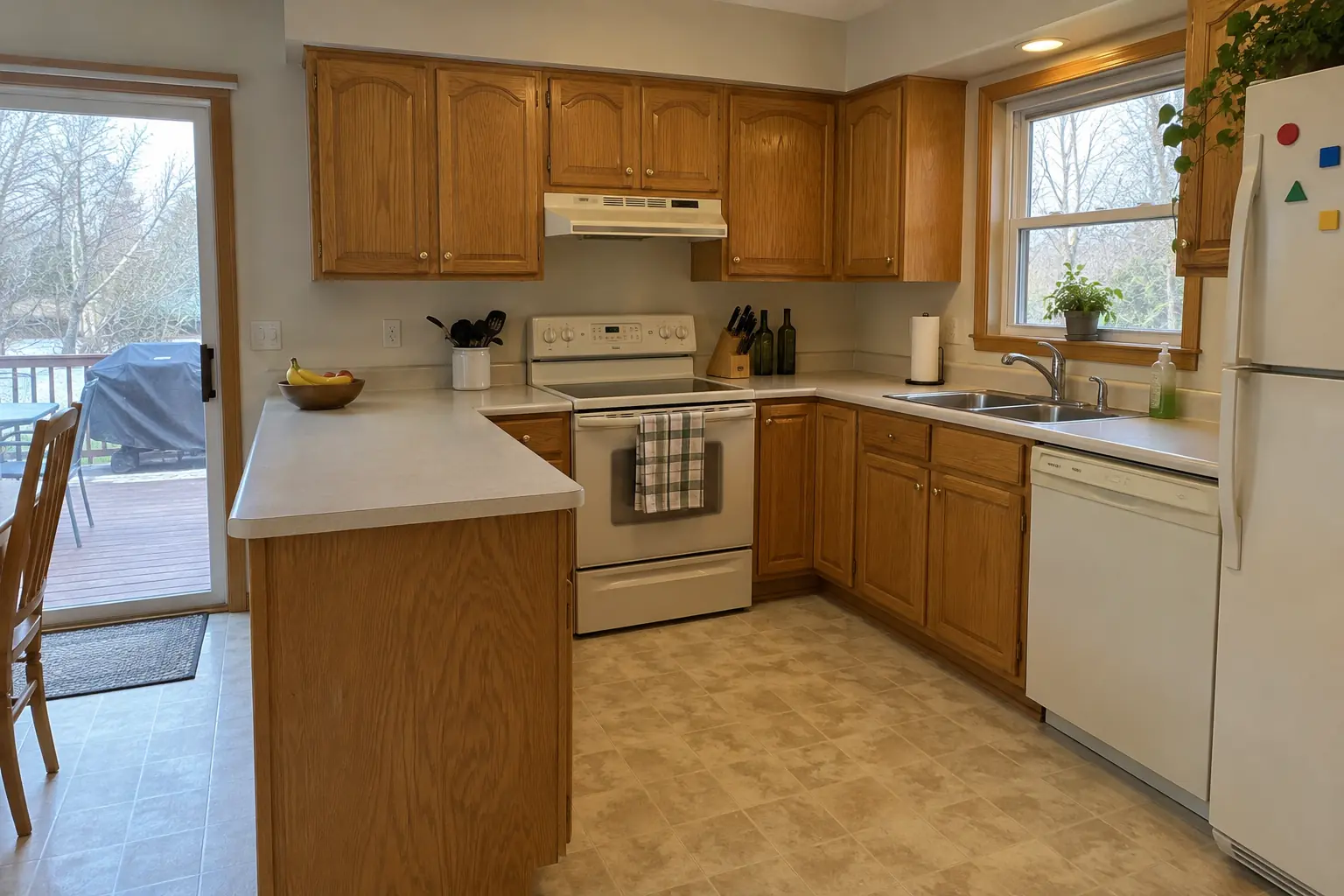
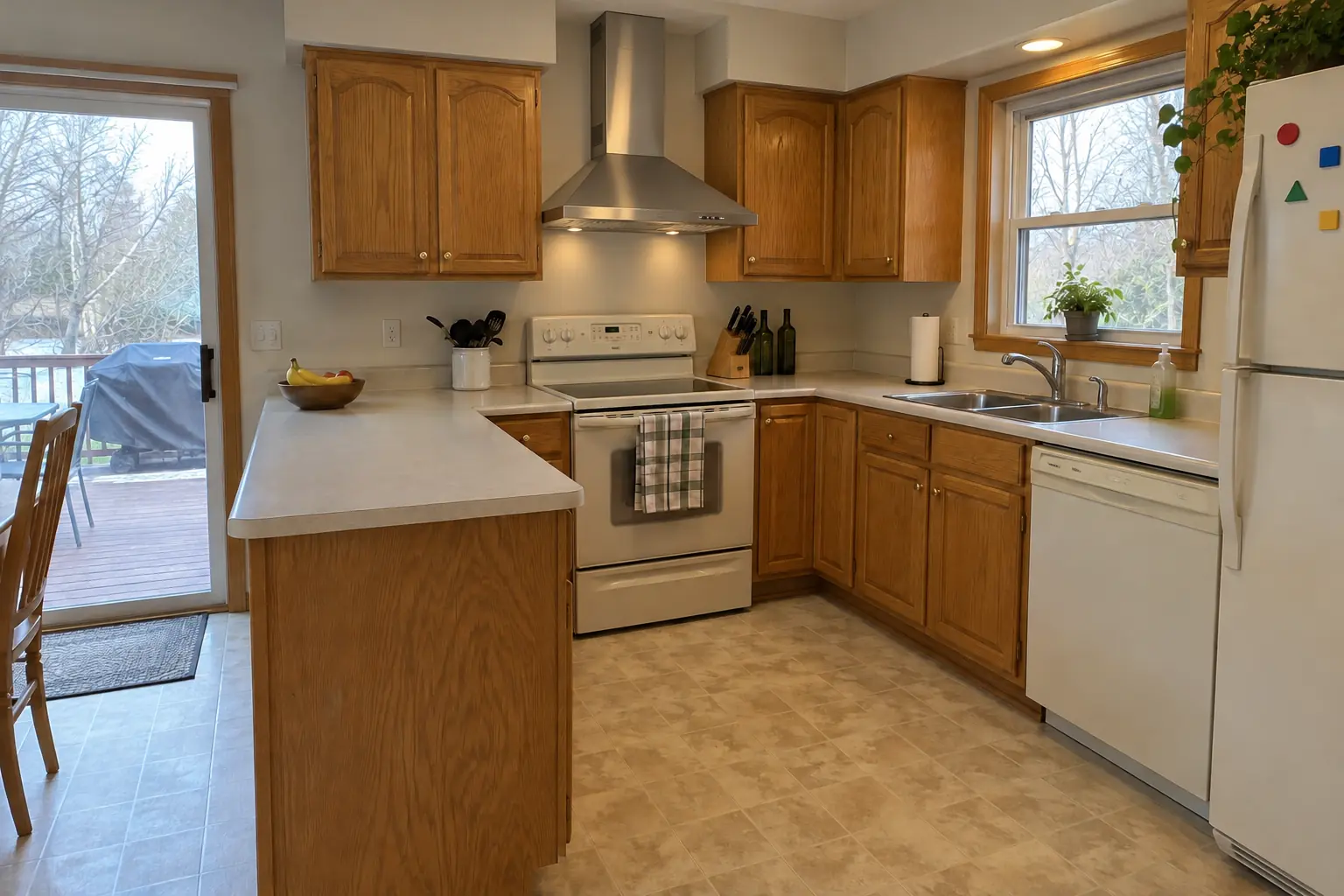
Range Hood Installation project in Northbrook, beforeBefore
Range Hood Installation project in Northbrook, afterAfter

Range Hood Installation in a 1990s two-story colonial, Northbrook

The site: a 1990s two-story colonial near Downtown Northbrook. Before: almond appliances and honey-oak cathedral raised-panel cabinets with worn finish near the handles, brass knobs. What bothered the owners most: an old hood that was loud and barely pulled any air. After: a new stainless chimney range hood ducted to the outside. On site this meant site check and sizing, blocking and mounting, plus electrical connection.

Range Hood Installation in Northbrook →
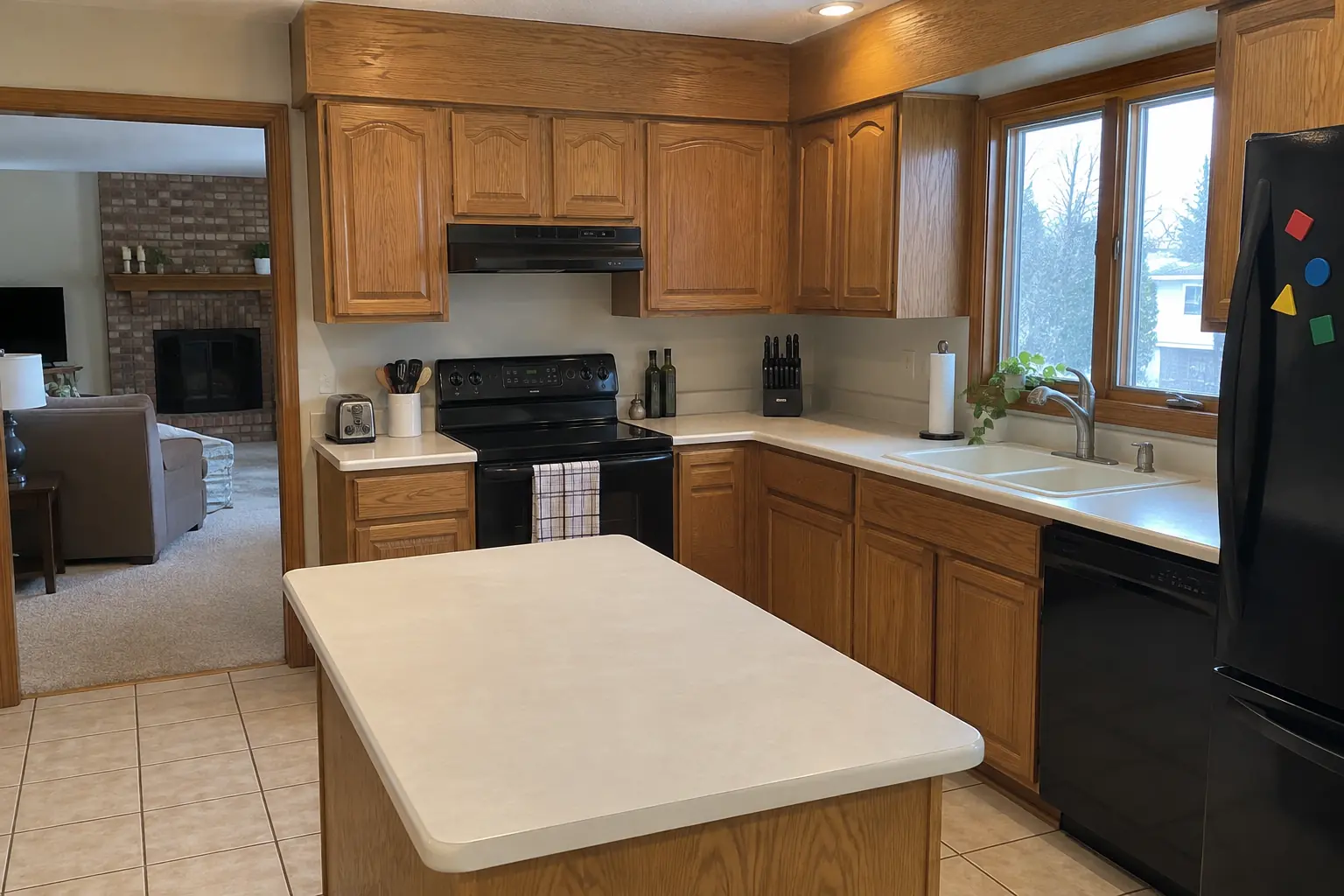
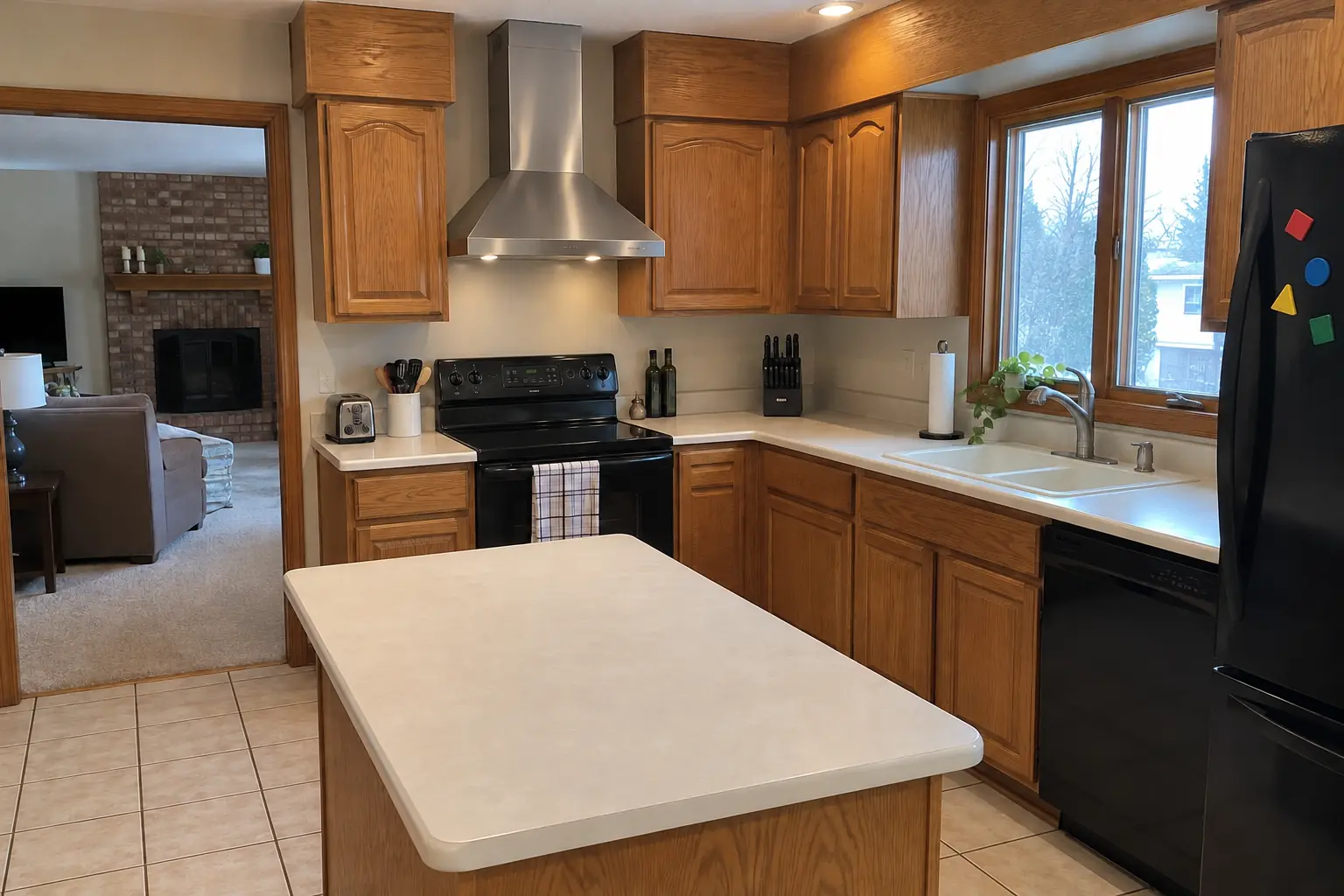
Range Hood Installation project in Skokie, beforeBefore
Range Hood Installation project in Skokie, afterAfter

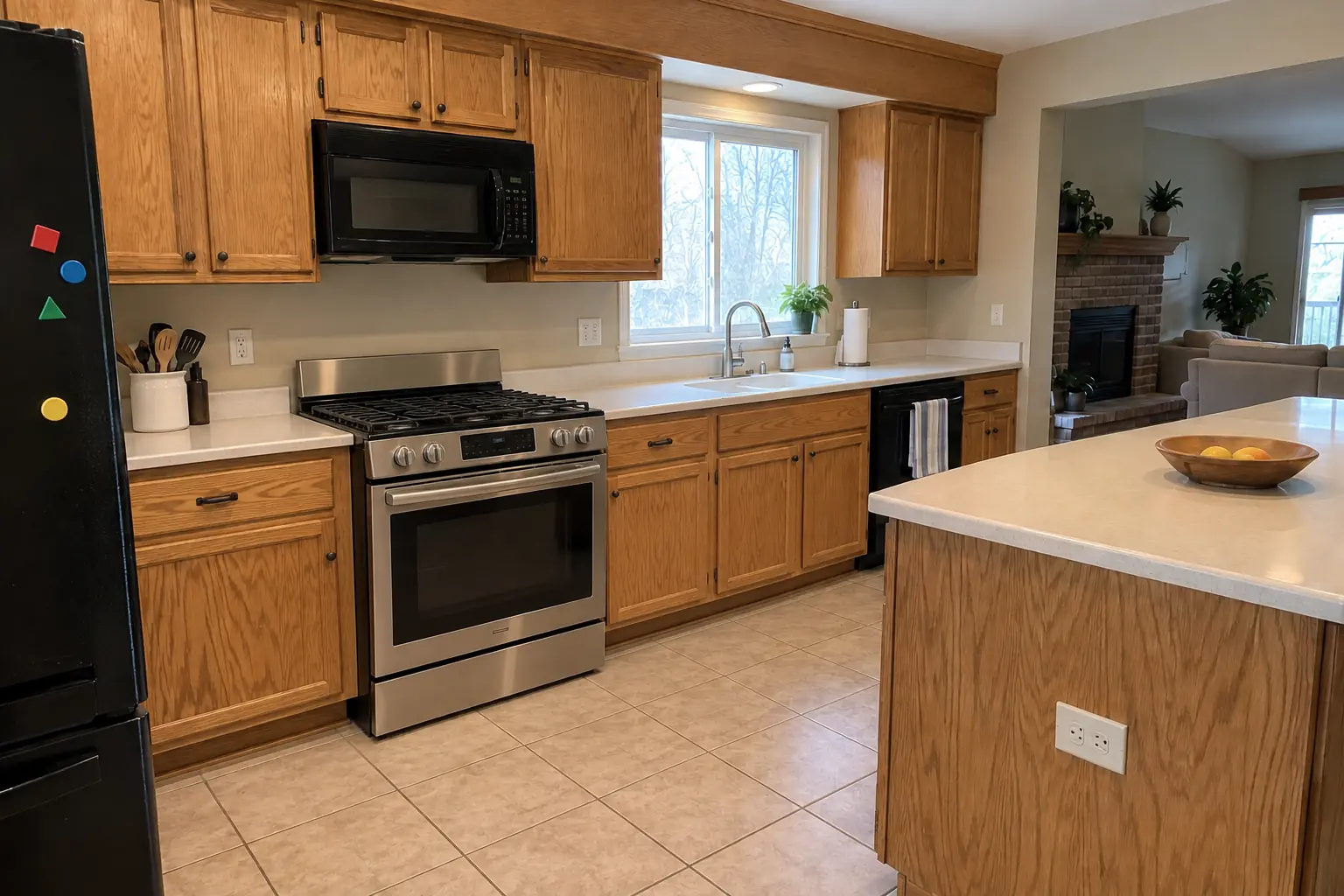
A Skokie two-story colonial from the 1990s: before and after

A two-story colonial from the 1990s in Skokie, a typical kitchen for Skokie. The kitchen as it was: black appliances and golden-oak cabinets with oak soffits above. What bothered the owners most: a recirculating hood that left the kitchen smoky. Finished kitchen: a new stainless chimney range hood ducted to the outside. On site this meant removing the old hood, blocking and mounting, plus electrical connection.

Range Hood Installation in Skokie →
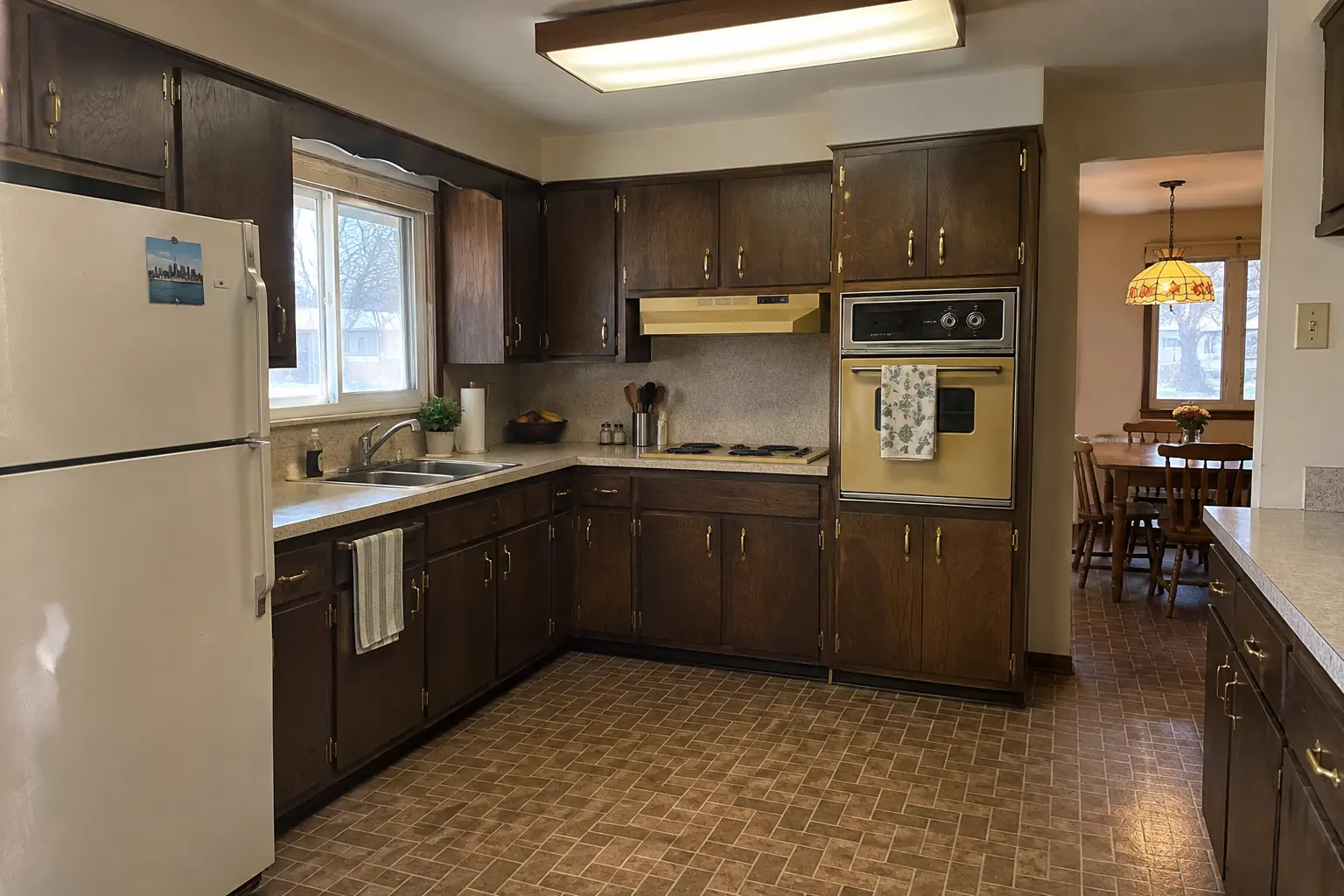
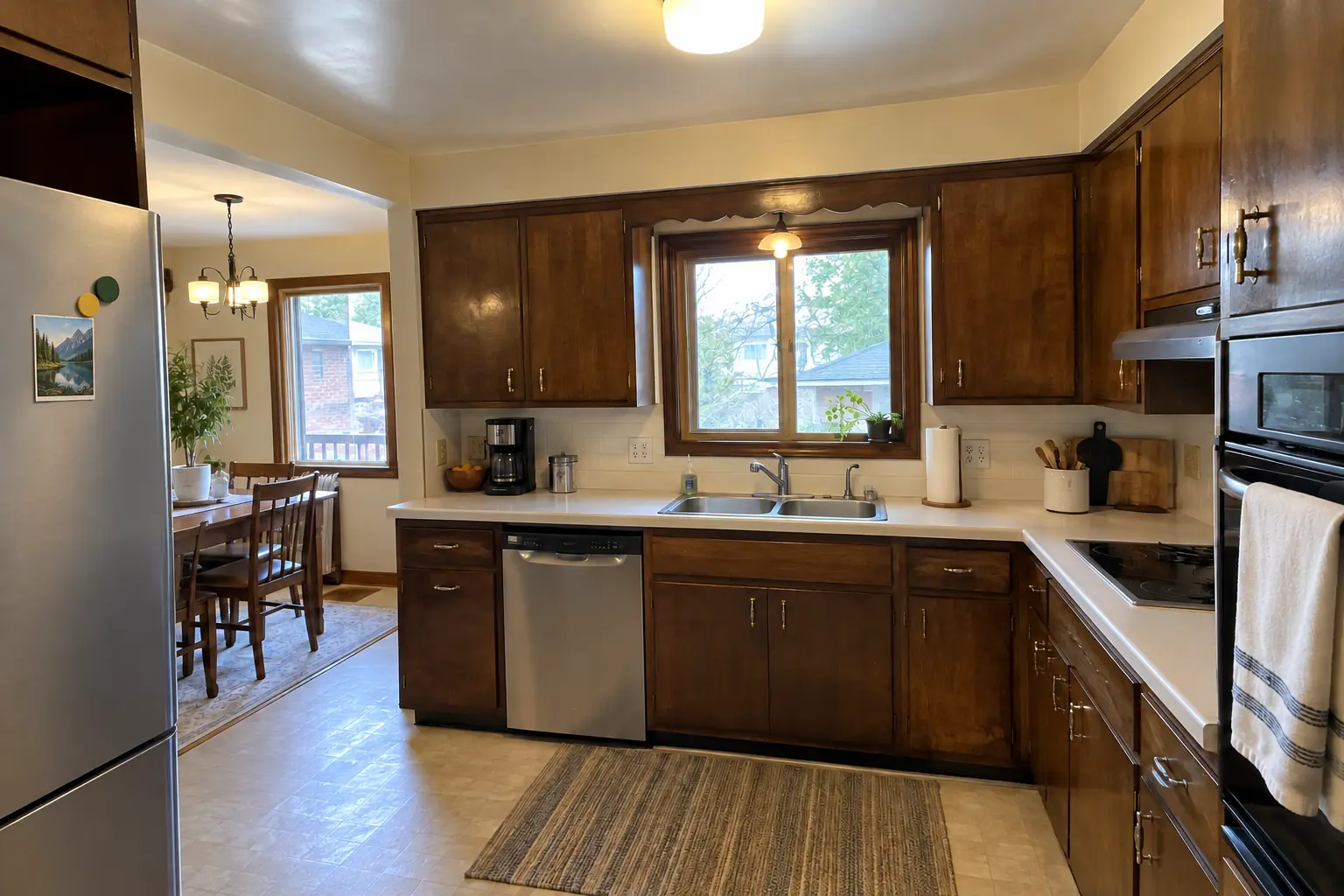
Kitchen Remodeling project near Glenview, beforeBefore
Kitchen Remodeling project near Glenview, afterAfter

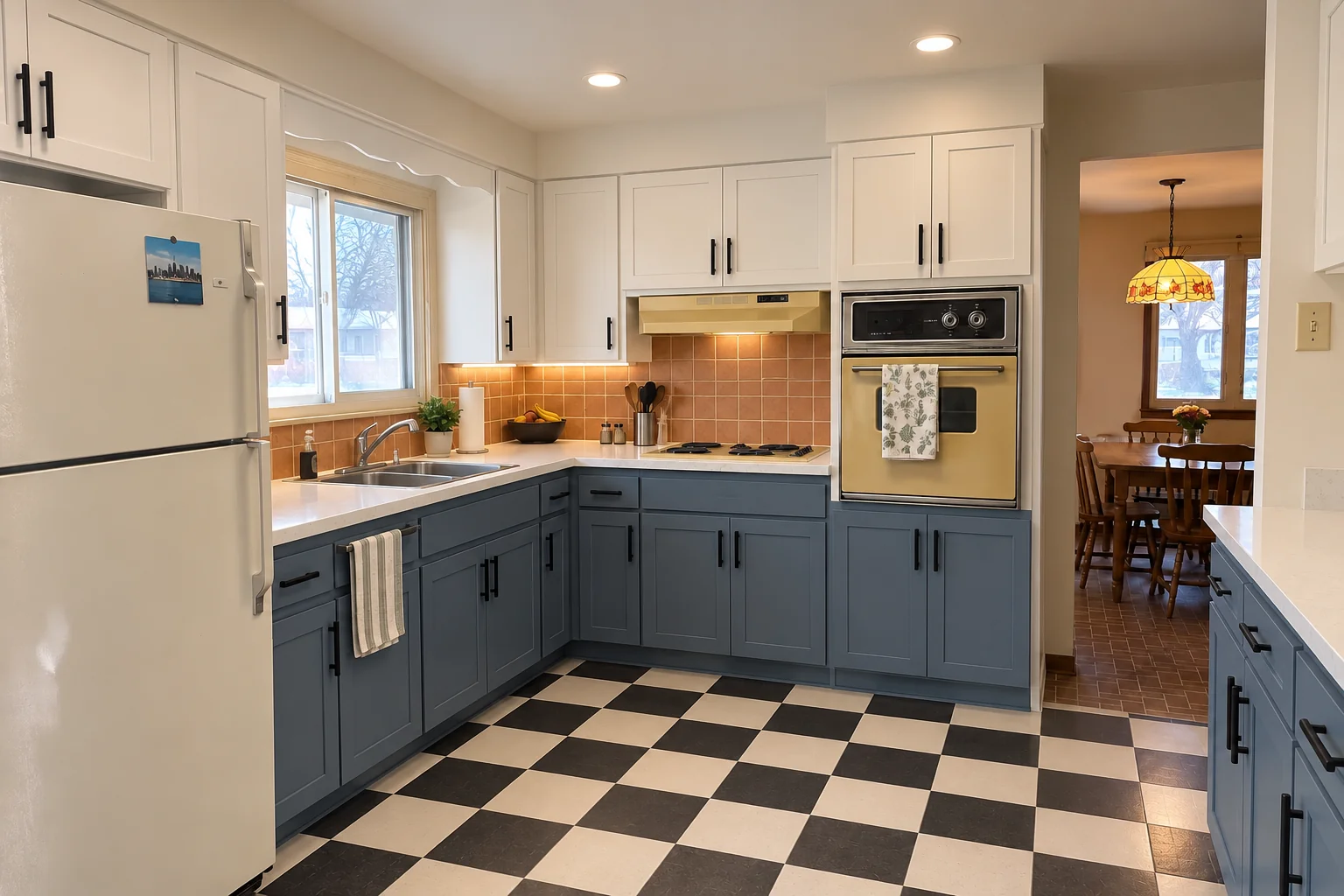
A Glenview 1950s ranch: before and after

Finished: cabinets in white uppers and dusty blue lowers with matte black pulls, bright white quartz counters, a terracotta-look square tile backsplash, black-and-white checkerboard tile flooring and recessed lights and under-cabinet LED strips.

Kitchen Remodeling in Glenview →
Kitchen Cabinet Painting project near Glenview, beforeBefore
Kitchen Cabinet Painting project near Glenview, afterAfter

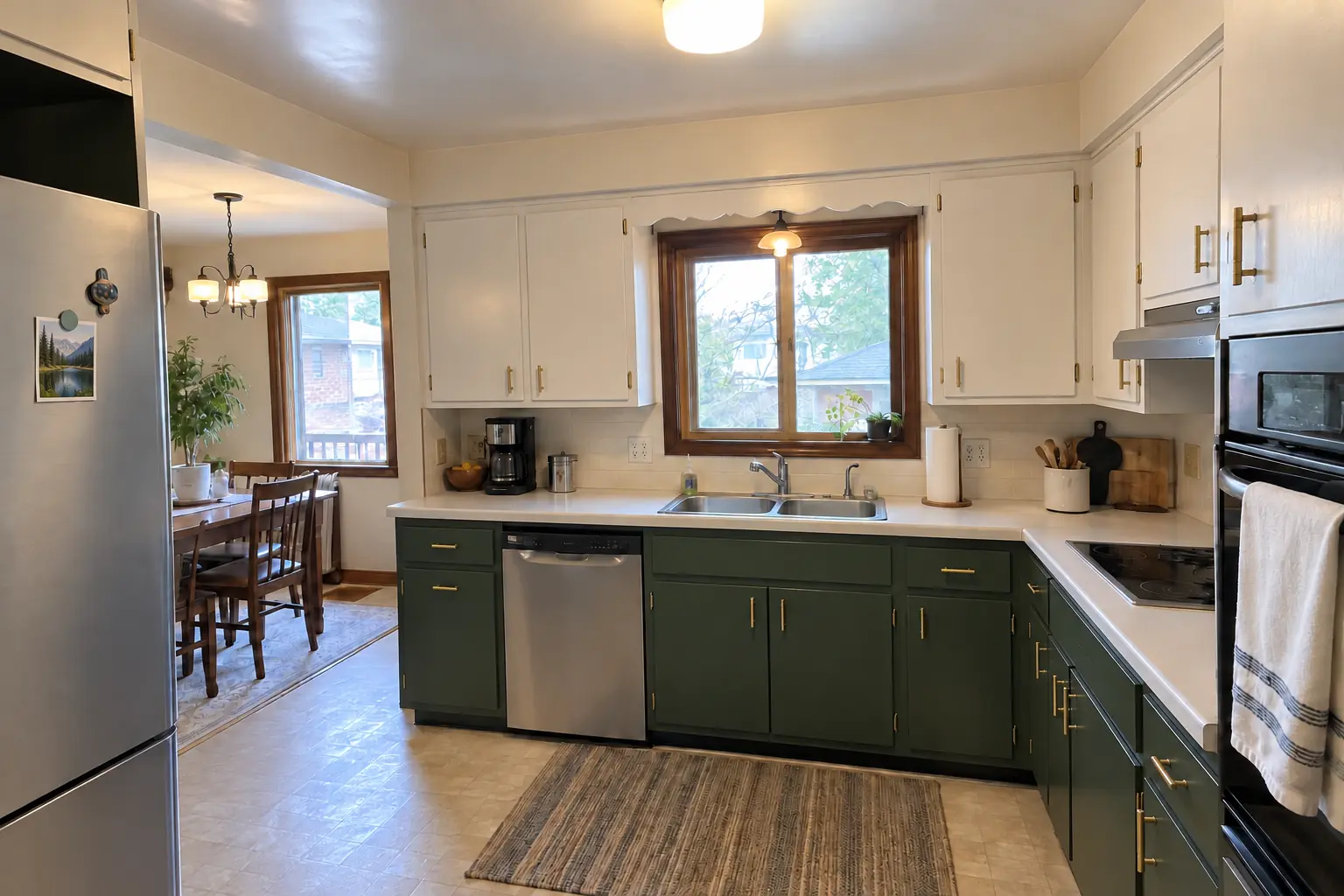
A Glenview postwar Cape Cod: before and after

The same doors sprayed in pale sage, new polished nickel pulls; counters and floor stayed as they were.

Kitchen Cabinet Painting in Glenview →

Install day

  1. Photos and modelSend photos of the range wall, the old hood and the cabinet above, plus the model you like.
  2. Duct route and sizingOn site we size the hood, pick the duct route and check permits and makeup air.
  3. Written estimateA clear written price with duct and electrical work listed separately.
  4. Install and testWe install, test the airflow and clean up the same day in most cases.

Range Hood Installation questions from Glenview homeowners

How many CFM does my range hood need?
There's no one answer. Gas, pro-style burners and heavy searing push it up; induction and light cooking need less.
Who installs a range hood: a plumber, an electrician or a contractor?
A contractor who handles ducting and mounting is the right call. Plumbers don't usually do hoods; new circuits go to an electrician.
How high should a range hood be above the stove?
There's no single number. We mount it at the height the hood and range makers call for, adjusted for your ceiling and your height.
Do I need makeup air for a big hood in Glenview?
If the hood's rated airflow passes the local limit, makeup air may be required. We confirm the Glenview rules first.
Can I install a range hood myself?
Some do. The hard parts are cutting through the exterior, sealing the cap and sizing the duct, and those are the parts that cause leaks and weak airflow.
Does Glenview require a licensed electrician for range hood installation?
Electricians register with the Village by submitting a copy of their license; no fee or bond listed. New circuits and wiring are done by licensed electricians.
Glenview building permit for range hood installation: where do I apply?
Permits go through Community Development, Inspectional Services Division (Development Center), phone (847) 904-4330. When your scope needs one, we prepare the application and schedule the inspections.
Which Glenview office signs off on hood work?
Commercial kitchen hood permits and inspections are handled through the Development Center (inspection scheduling 847-904-4320. We schedule the inspection and have the paperwork ready.
Glenview contractor registration: do kitchen contractors need it?
General and demolition contractors register with the Village: $50 fee, $25,000 bond, certificate of insurance and workers comp proof. Unlisted contractor types need no registration. We take care of that before work starts.
Do I need a permit for range hood installation in Glenview?
It depends on the scope. Glenview's rule in short: Permit required for remodeling/altering a structure, changing the number or location of plumbing fixtures or piping, and new electrical work. We handle the permit when one is needed with Community Development, Inspectional Services Division (Development Center).
Do you work in my part of Glenview?
Yes. Our crews work across Glenview, including The Park, The Glen, The Grove — ZIP 60025, 60026, 60062 — and nearby Northbrook, Park Ridge, Des Plaines.

Working in Glenview

  • A lot of Glenview kitchens date from the 2000s. We know these layouts well and what is worth keeping.
  • Most Glenview homes are single-family. We protect floors and driveways and leave the site clean every day.
  • We know how Community Development, Inspectional Services Division (Development Center) handles kitchen permits and pull them for you.

The ParkThe GlenThe Grove

ZIP 60025ZIP 60026ZIP 60062
Range Hood Installation nearby

Planning a kitchen project in Glenview?

Call us — we'll check your ZIP, answer your questions and book an in-home estimate.

Call now (708) 400-7049
Call (708) 400-7049Callback