Serving Glendale Heights & nearby Bloomingdale, Carol Stream

Kitchen Subfloor Repair in Glendale Heights, IL

Soft, rotted or squeaky kitchen subfloors opened up, rebuilt and made solid in Glendale Heights homes.

  • Technicians covering Glendale Heights ZIP 60139
  • Diagnosis first, then a written price for the repair
  • Honest advice when replacing makes more sense

Prefer a callback?

Leave your number and a Glendale Heights subfloor carpenter will call you.

Subfloor problems we fix in Glendale Heights kitchens

A soft spot in front of the dishwasher or sink usually means water has been reaching the wood under the floor for a while. In Glendale Heights we find and stop the leak, cut out the damaged subfloor, check the joists and install new panels that are glued and screwed down.

Floor too thin for tile

Tile needs a stiffer base than vinyl. We add a layer of plywood or reinforce the framing before a tile floor goes in.

Squeaks and creaks underfoot

Noisy floors are usually loose, not broken. Re-securing the panels to the framing quiets them.

Musty smell or stains in the basement ceiling

Water stains on the basement ceiling below the kitchen can point to a leak above. We check the subfloor from both sides.

Cracked tile or separating plank floor

Tile that cracks and click-lock floors that gap at the seams are often reacting to a subfloor that flexes or isn't flat. We fix the base so the finish floor stops failing.

Damage at a seam from a past repair

Old subfloor repairs are often the weak spot. We rebuild them so the edges are fully backed.

Uneven or out-of-level floor

A floor that rolls under a straightedge needs flattening before new flooring. We choose between leveling the framing and leveling the surface.

Soft spot in front of the dishwasher

When the floor gives under your foot at the dishwasher, the plywood has probably absorbed water. The fix is cutting out the soft area back to solid wood.

Bouncy or sagging floor

Bounce in the middle of the kitchen often comes from the framing, not the plywood. Sistering or adding blocking stiffens it.
What we check and fix

  • Finding and stopping the leakNo new subfloor goes in until the water that ruined the old one is stopped.
  • Moving appliances and cabinetsThe dishwasher, fridge or range comes out, and toe kicks or a sink base are removed if the damage runs under them.
  • Removing the finish floorTile, vinyl or wood is taken up over the damaged area, with the cut planned so the floor can be patched cleanly.
  • Moisture testingA moisture meter shows how far the wet wood extends and whether the framing is dry enough to close.
  • Cutting out damaged subfloorWe remove the damaged area in a clean rectangle with every edge supported.
  • Joist inspection and reinforcementJoists under the opening are probed for rot and cracks; weak ones get new lumber fastened beside them.
  • Ready for flooringThe repaired area is left ready for tile, plank or wood, and appliances go back when the floor is finished.

Common fixes and parts

Sister joists and blockingFraming reinforcement that stiffens the floor and backs every seam.
Underlayment layerAn extra plywood or backer layer that stiffens the floor for tile or smooths it for vinyl.
OSB panelsEngineered strand board, used to match an existing OSB floor.
Construction adhesive and subfloor screwsGlue and screws together keep the subfloor from moving and squeaking.
Tongue-and-groove plywoodThe usual choice for kitchen subfloors: stiff, holds screws well and tolerates brief wetting better than OSB.

What the work looks like in Glendale Heights homes

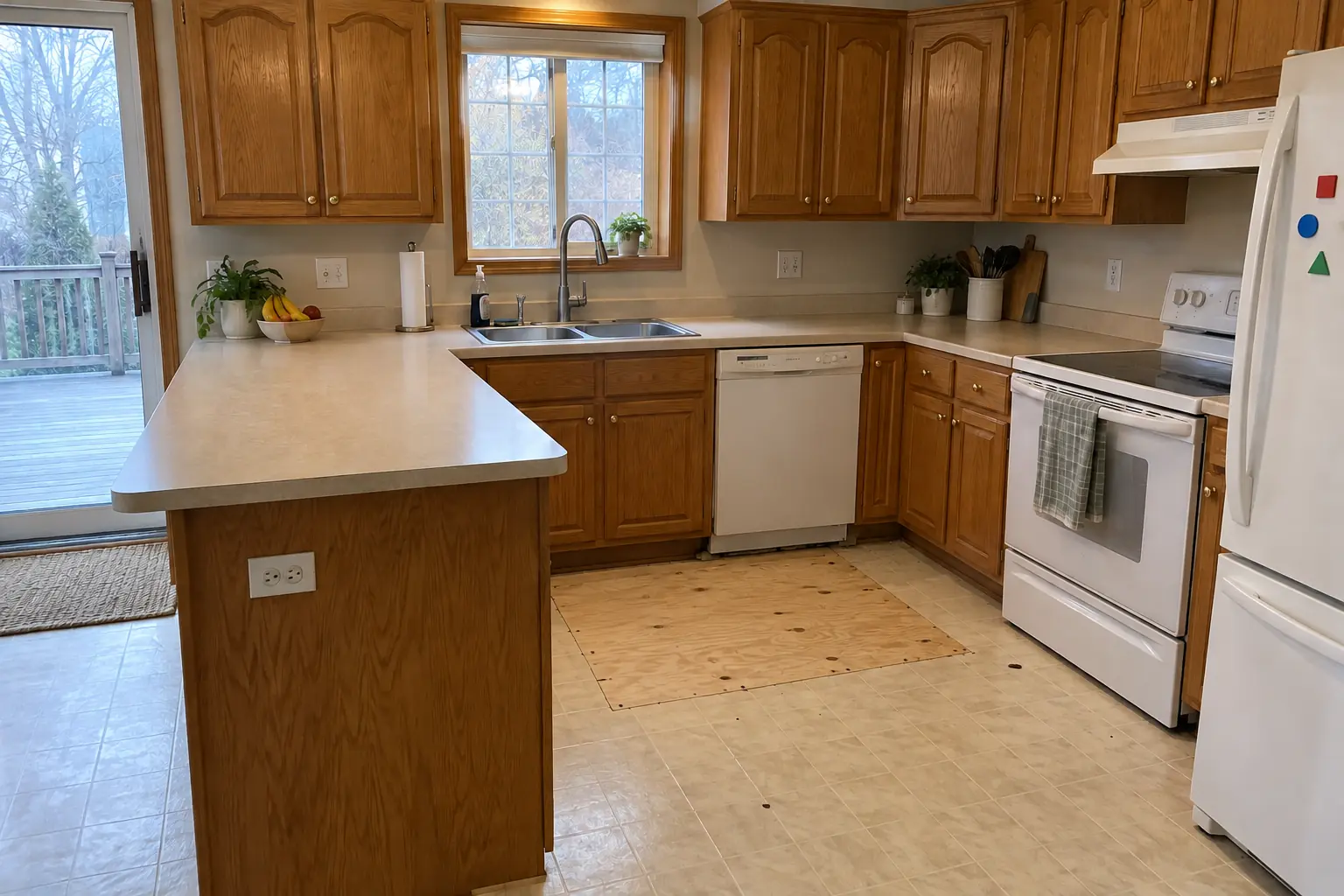
Kitchen Subfloor Repair in a 1980s-1990s two-story colonial / tract house — problemProblem
Kitchen Subfloor Repair in a 1980s-1990s two-story colonial / tract house — fixedFixed
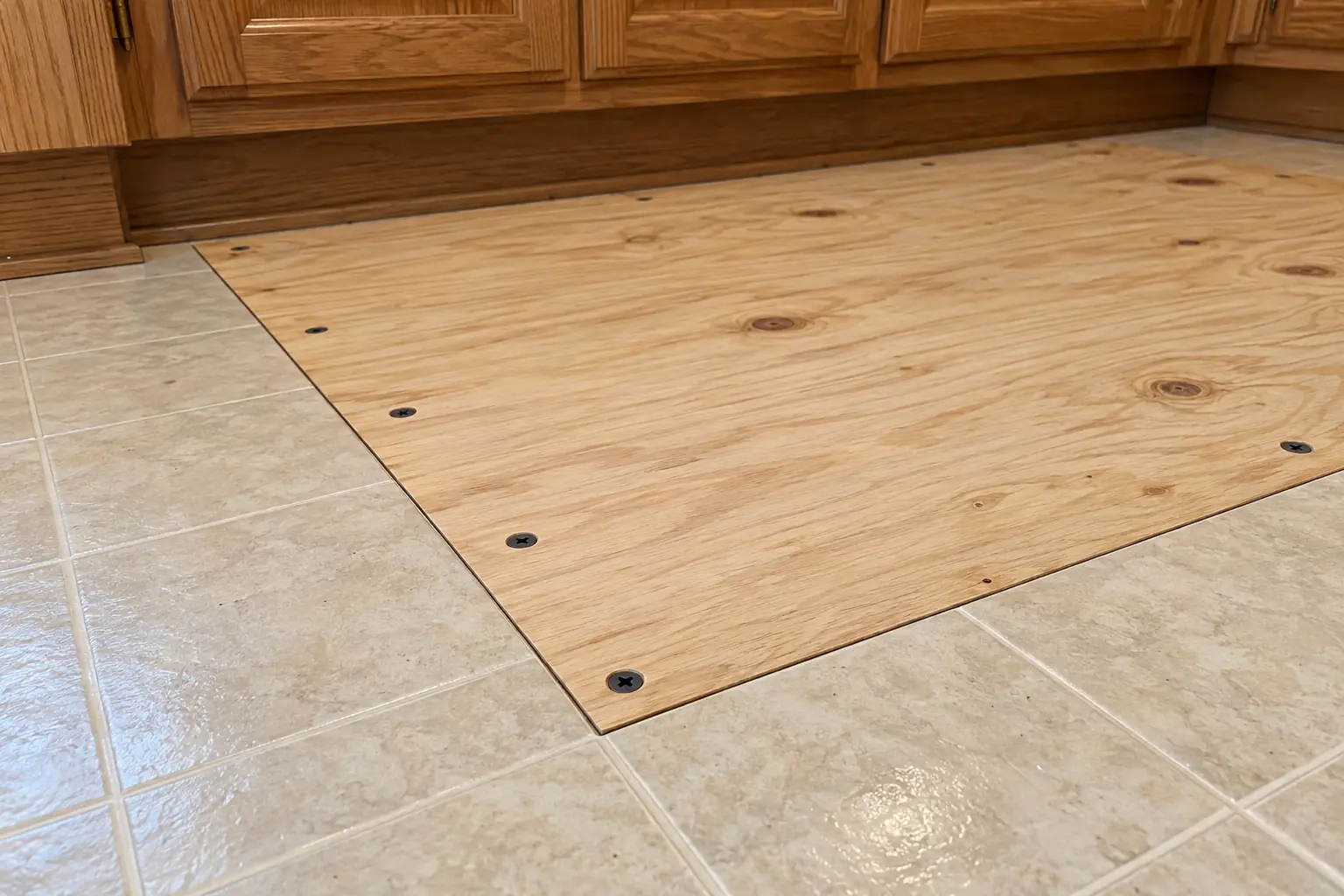
Kitchen Subfloor Repair in a 1980s-1990s two-story colonial / tract house — detailDetail

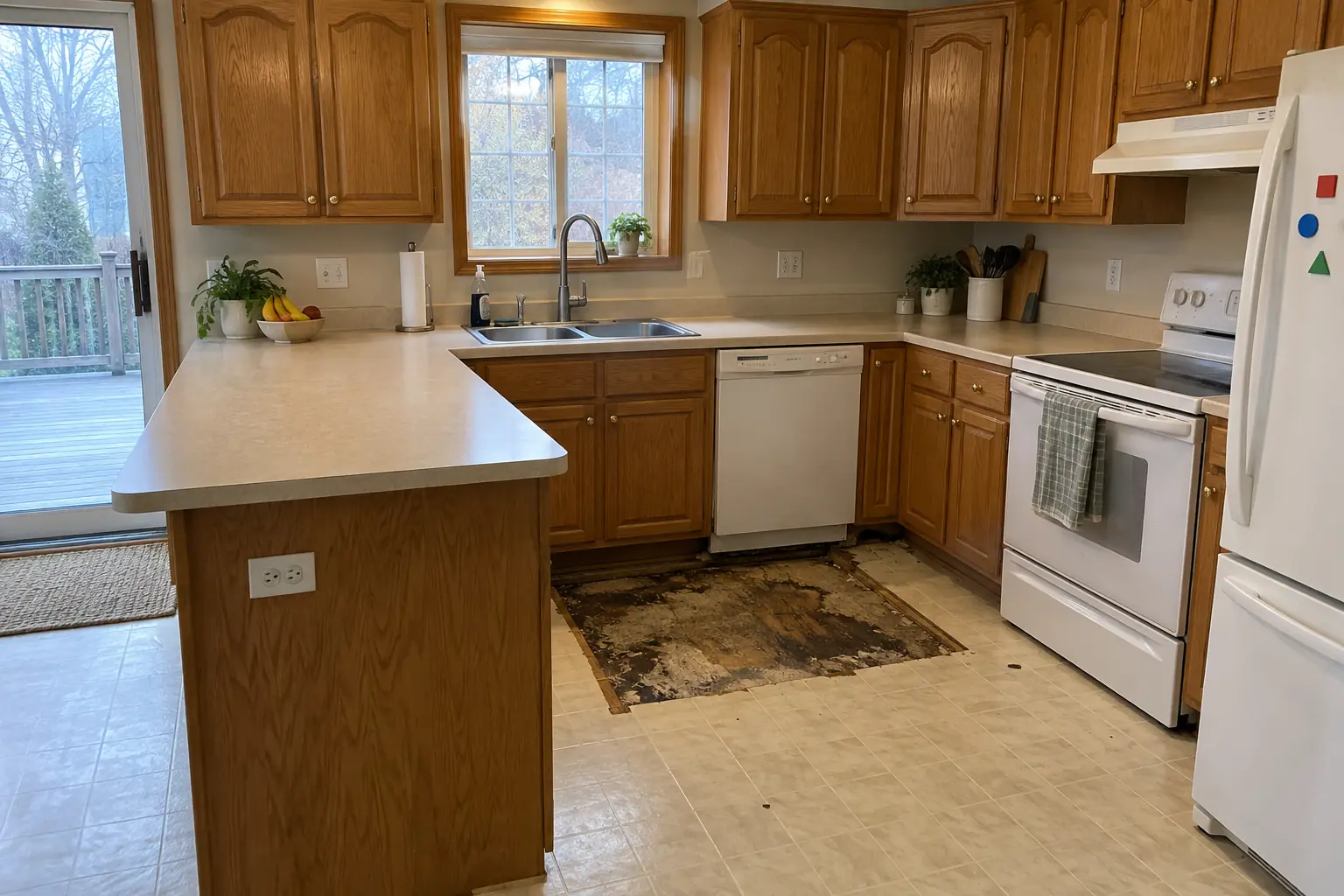
Kitchen Subfloor Repair in a 1990s two-story colonial, Glendale Heights

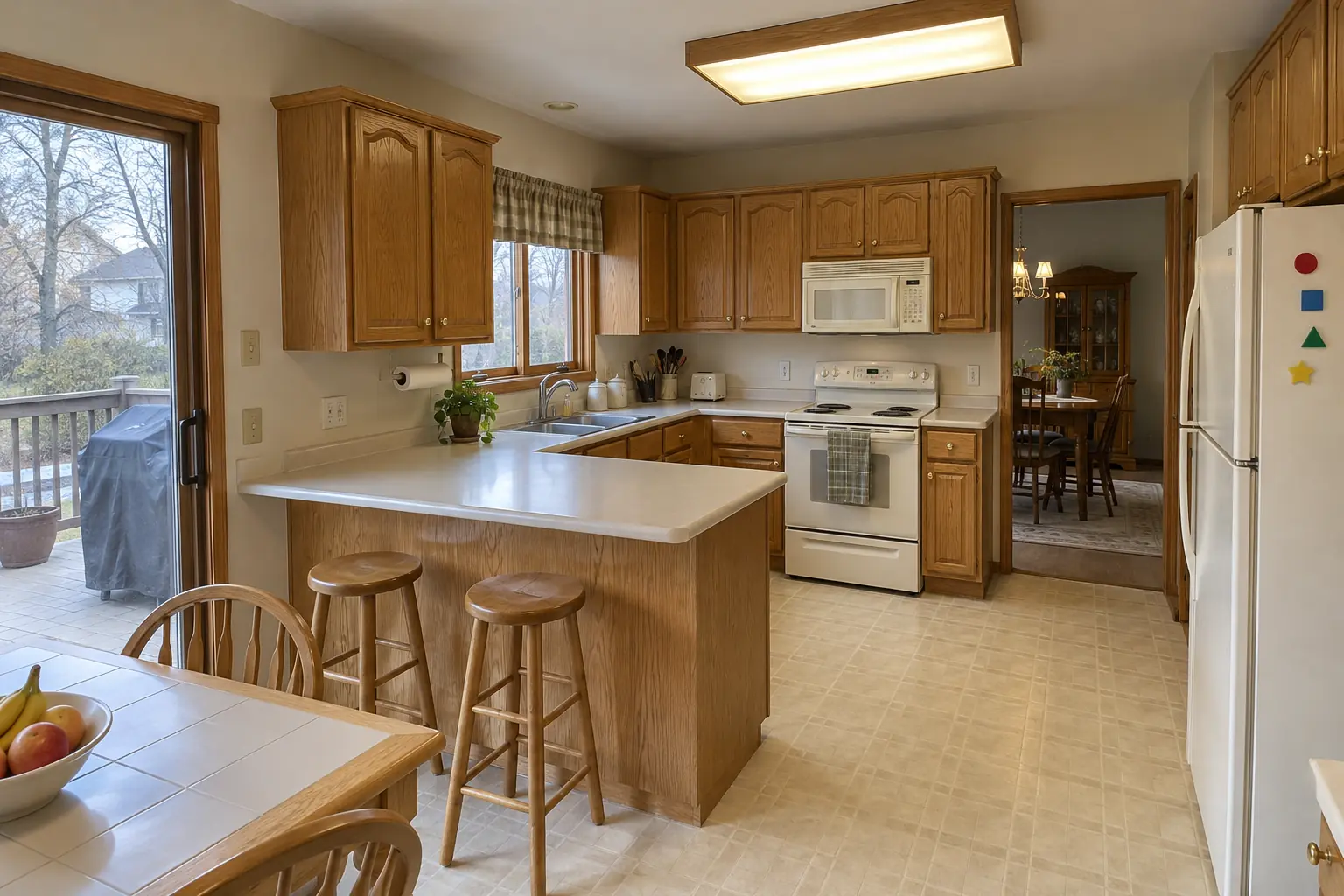
This one is a 1990s two-story colonial in Glendale Heights. The kitchen as it was: beige sheet vinyl and almond appliances. The reason for the call: a spongy floor in front of the dishwasher. After: new plywood subfloor glued and screwed down in front of the dishwasher, ready for flooring. Work included finding and stopping the leak, moving appliances and cabinets, plus ready for flooring.
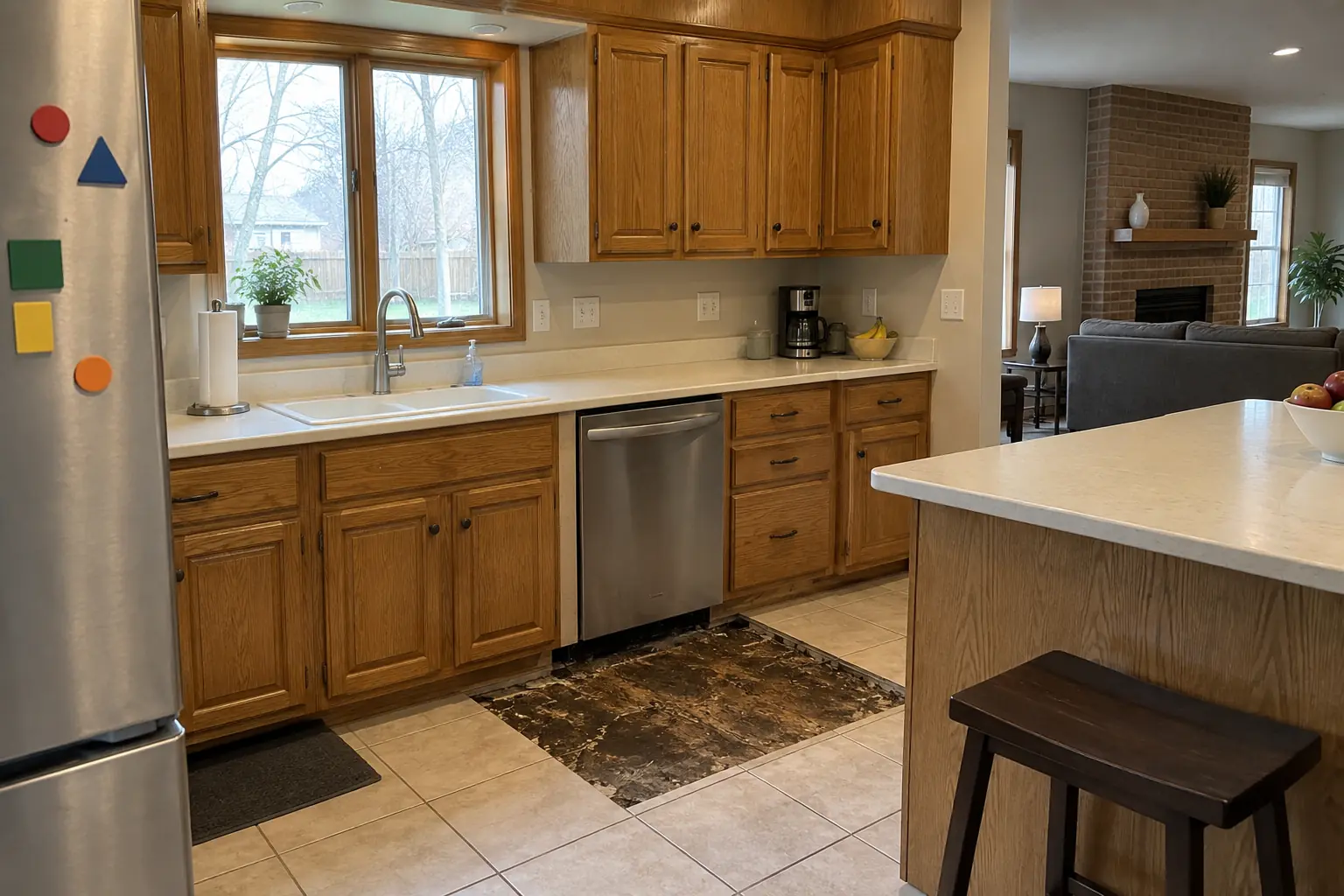
Kitchen Subfloor Repair project in Bloomingdale, beforeBefore
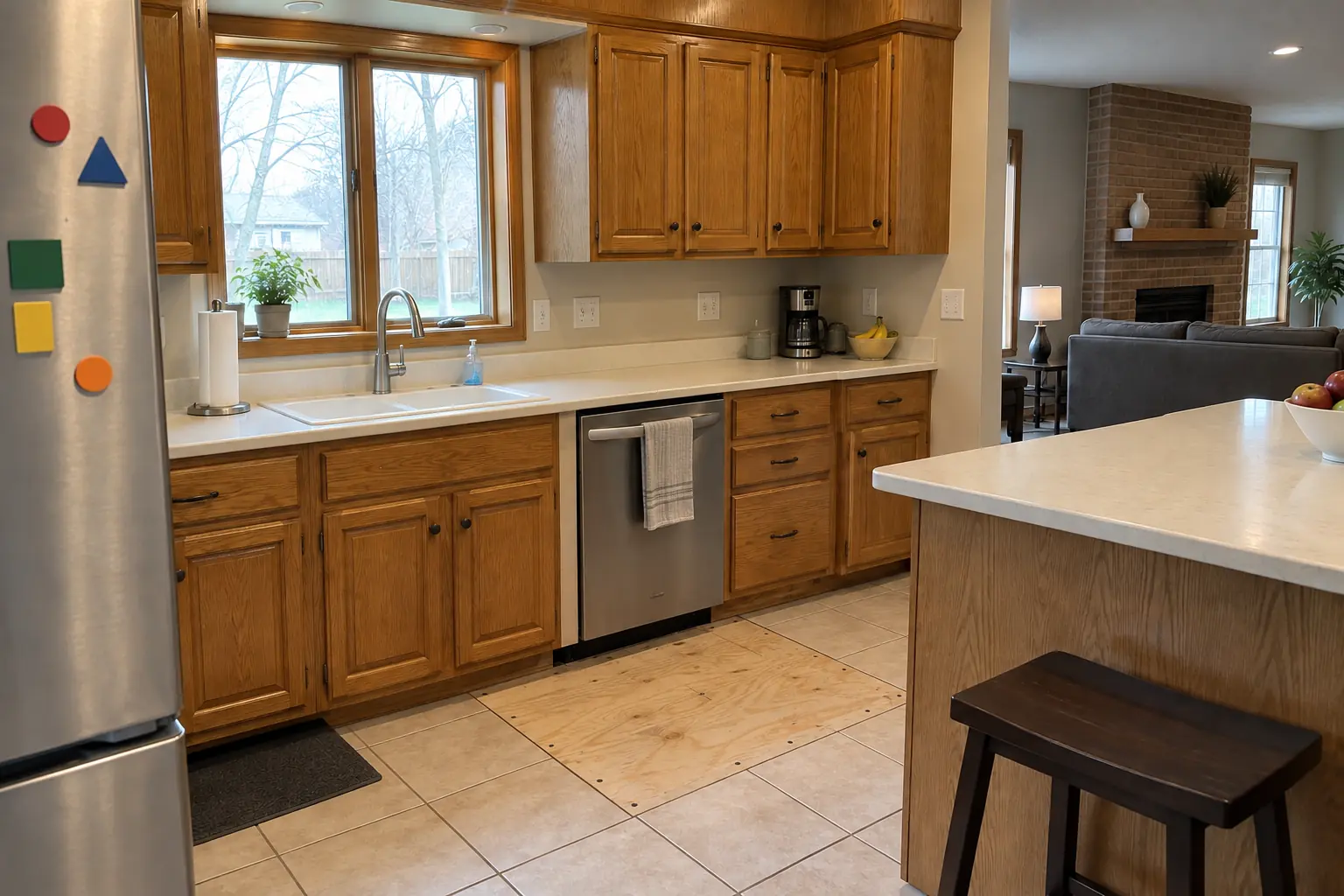
Kitchen Subfloor Repair project in Bloomingdale, afterAfter

Before and after: a two-story colonial from the 1990s in Bloomingdale

The site: a two-story colonial from the 1990s near Old Town Bloomingdale. The kitchen as it was: 12-inch beige ceramic tile and black appliances. What bothered the owners most: tiles cracking over a floor that flexed. Finished kitchen: new plywood subfloor glued and screwed down in front of the dishwasher, ready for flooring. On site this meant finding and stopping the leak, moisture testing, plus joist inspection and reinforcement.

Kitchen Subfloor Repair in Bloomingdale →
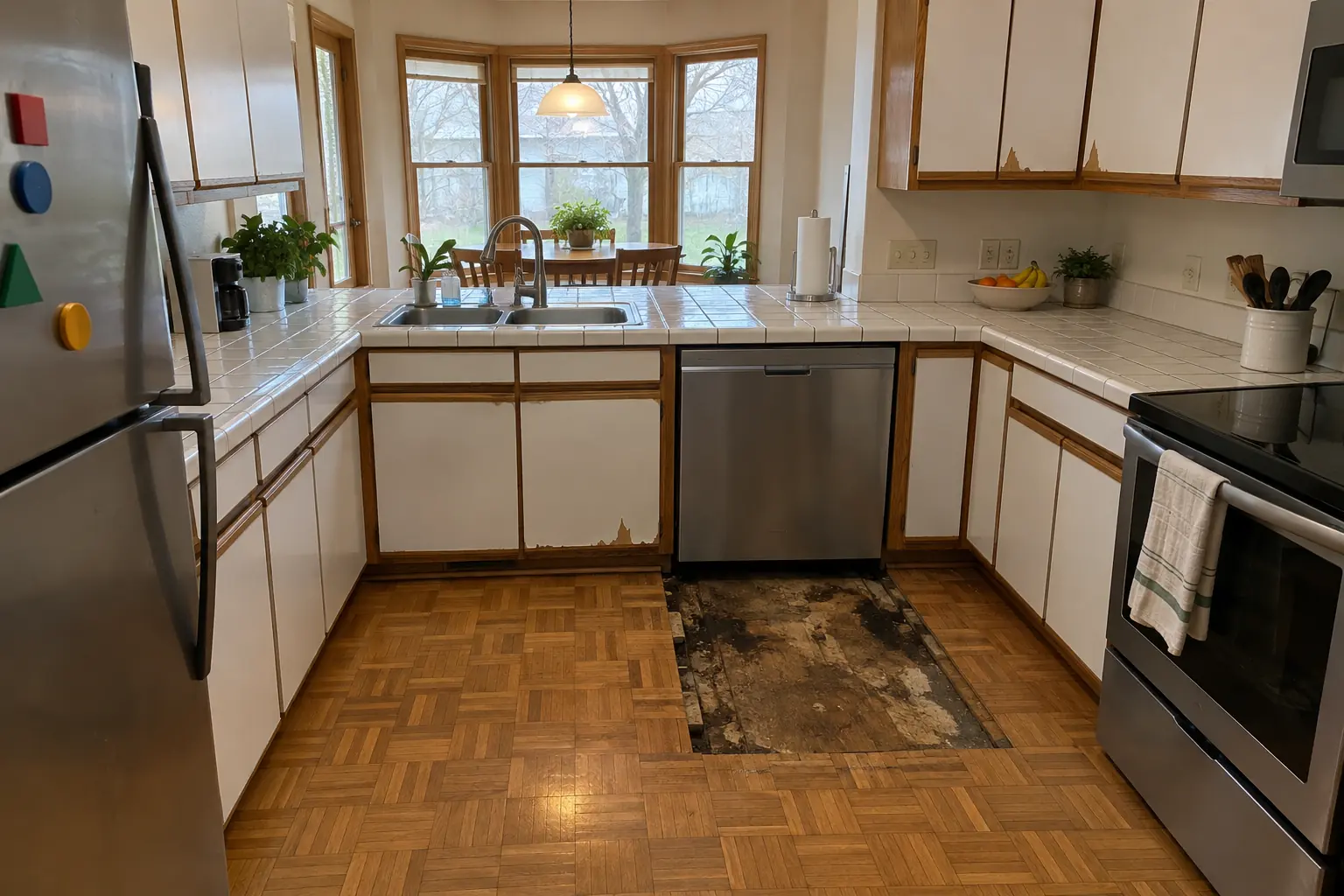
Kitchen Subfloor Repair project in Glen Ellyn, beforeBefore
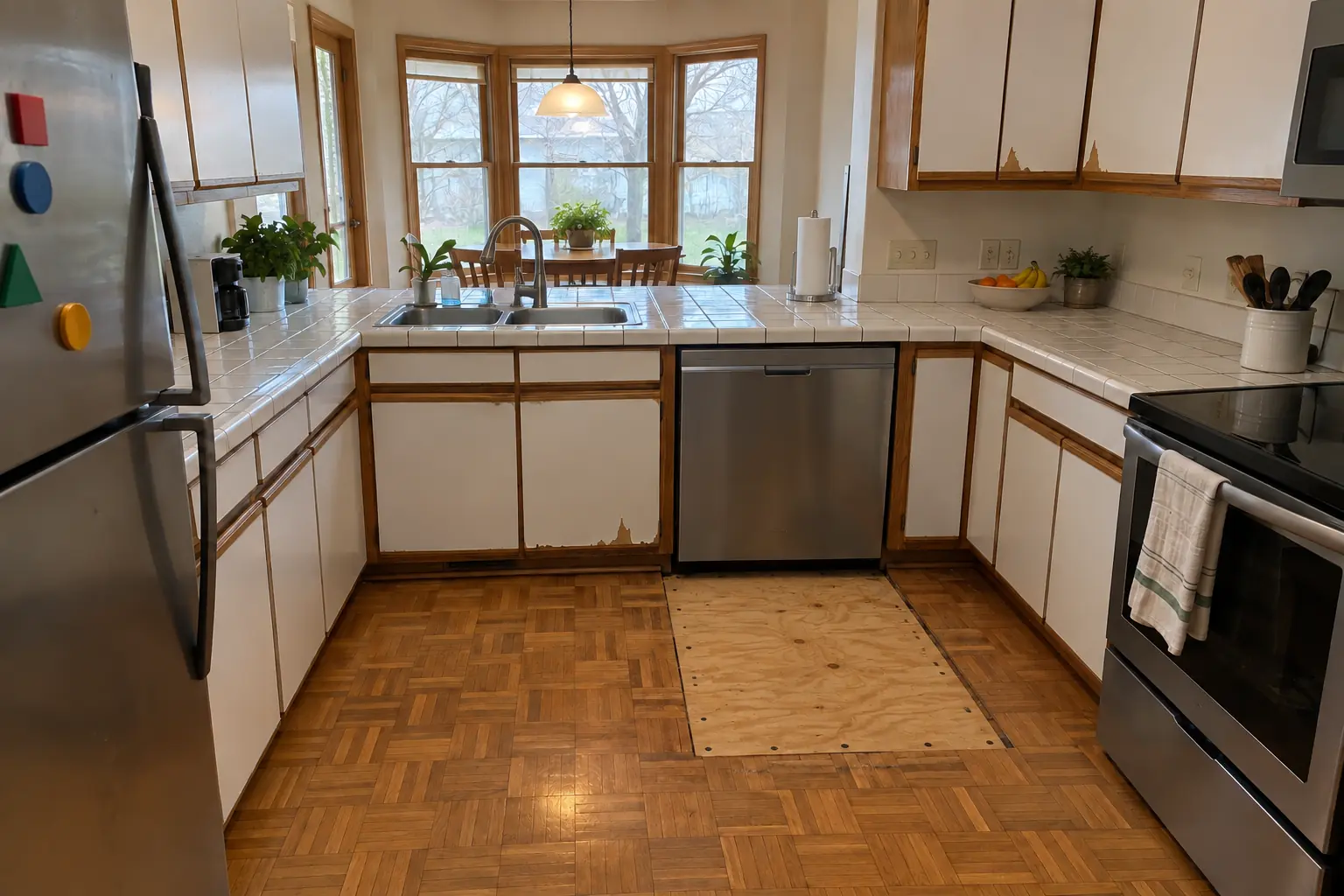
Kitchen Subfloor Repair project in Glen Ellyn, afterAfter

Glen Ellyn kitchen, 1990s two-story colonial: kitchen subfloor repair

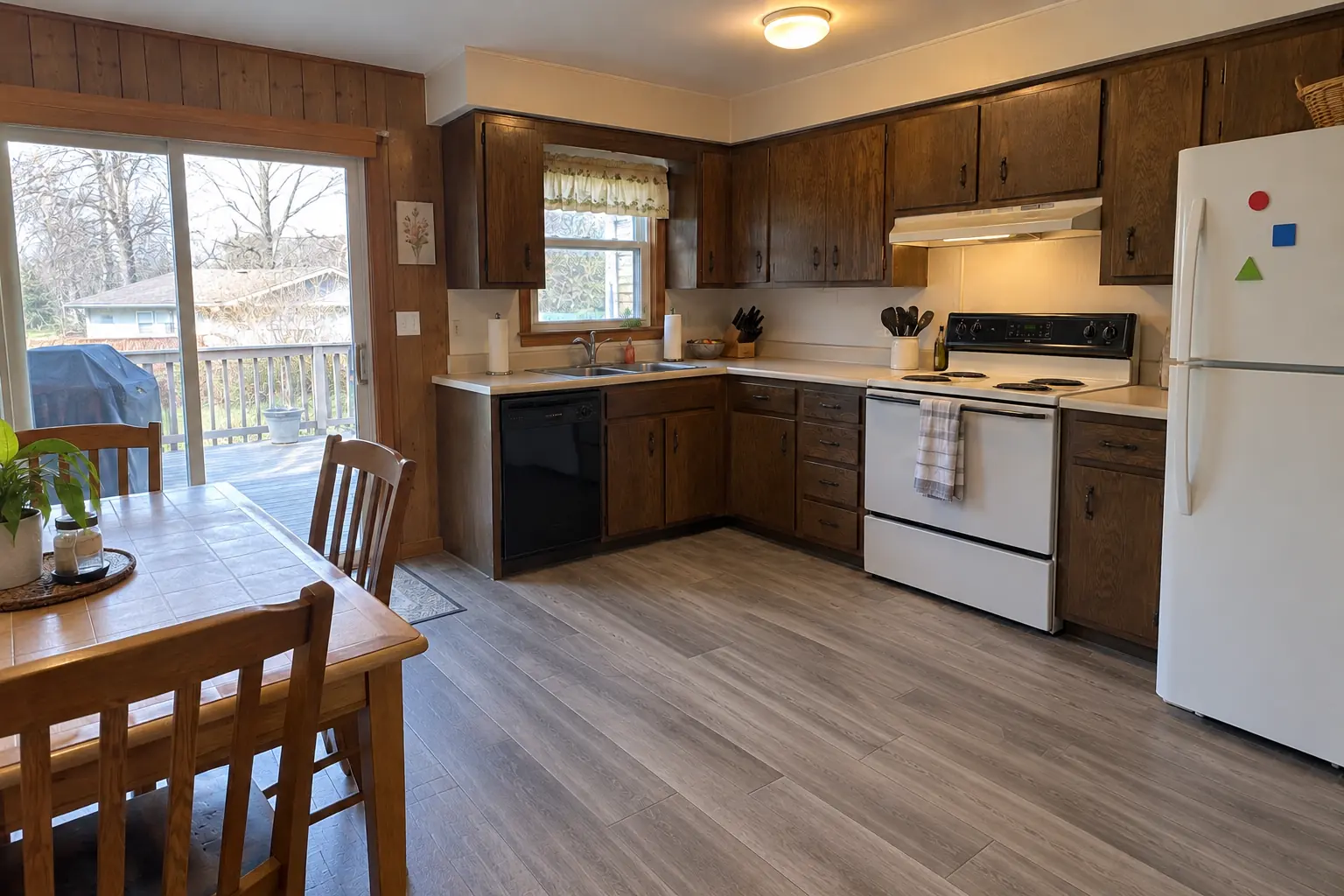
The site: a 1990s two-story colonial in Glen Ellyn. Before: oak parquet and white appliances. The reason for the call: cupped boards over a wet subfloor. The result: new plywood subfloor glued and screwed down in front of the dishwasher, ready for flooring. On site this meant finding and stopping the leak, removing the finish floor, plus joist inspection and reinforcement.

Kitchen Subfloor Repair in Glen Ellyn →
Hardwood Floor Repair & Refinishing project near Glendale Heights, beforeBefore
Hardwood Floor Repair & Refinishing project near Glendale Heights, afterAfter

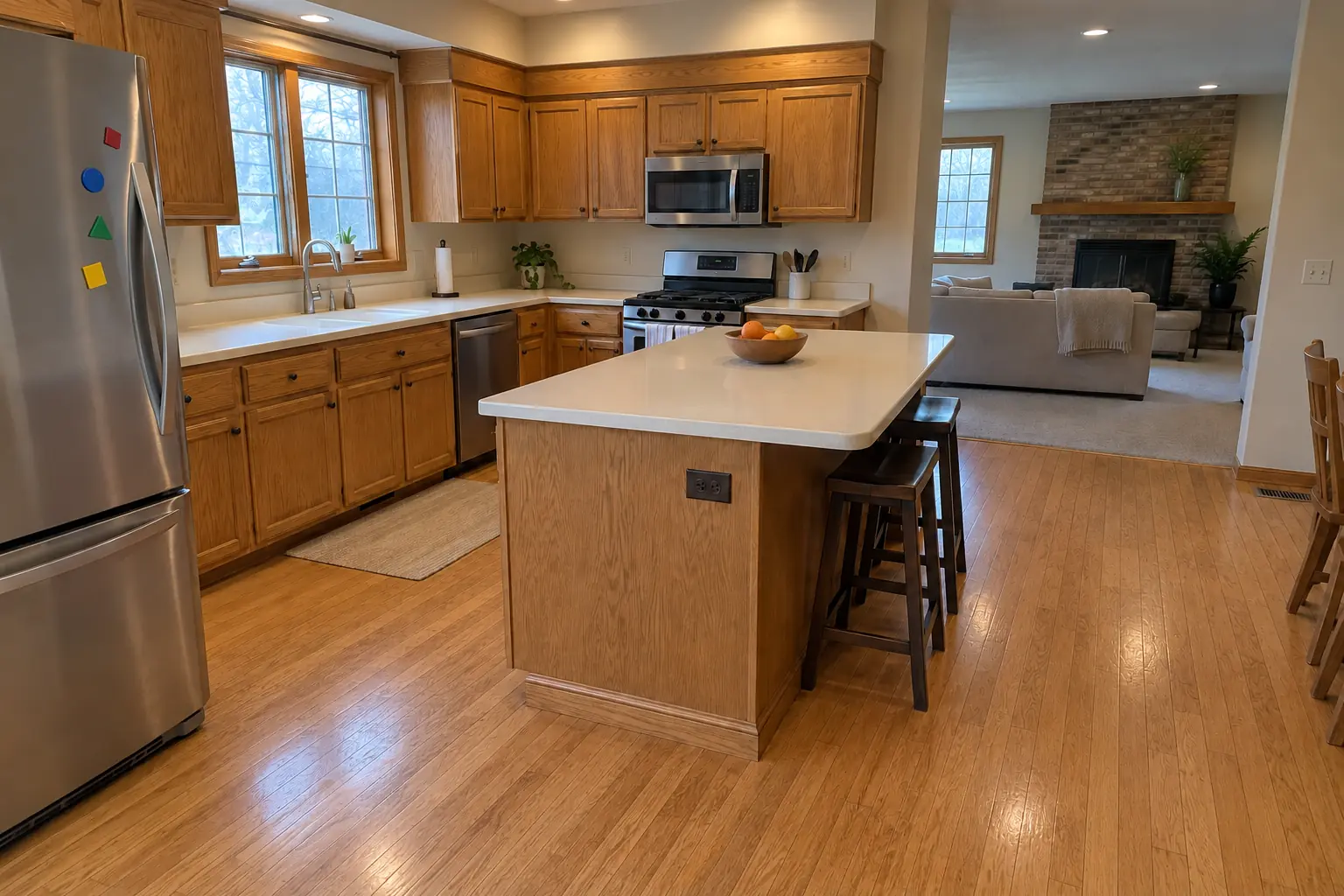
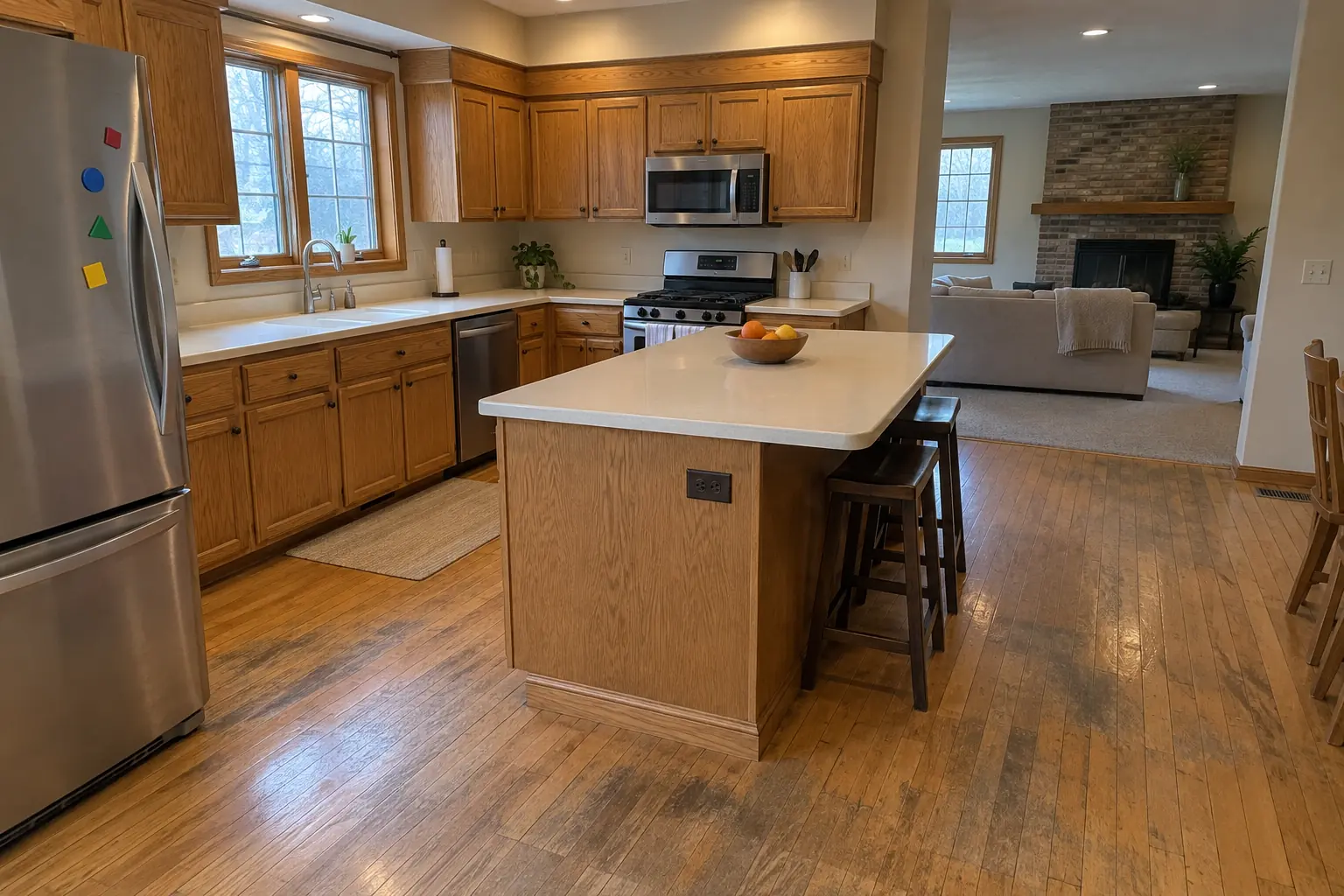
Glendale Heights kitchen, 1980s two-story: hardwood floor repair & refinishing

What changed: the oak floor sanded and refinished with a satin clear finish, grain visible and the water marks gone.

Hardwood Floor Repair & Refinishing in Glendale Heights →
Kitchen Remodeling project near Glendale Heights, beforeBefore
Kitchen Remodeling project near Glendale Heights, afterAfter

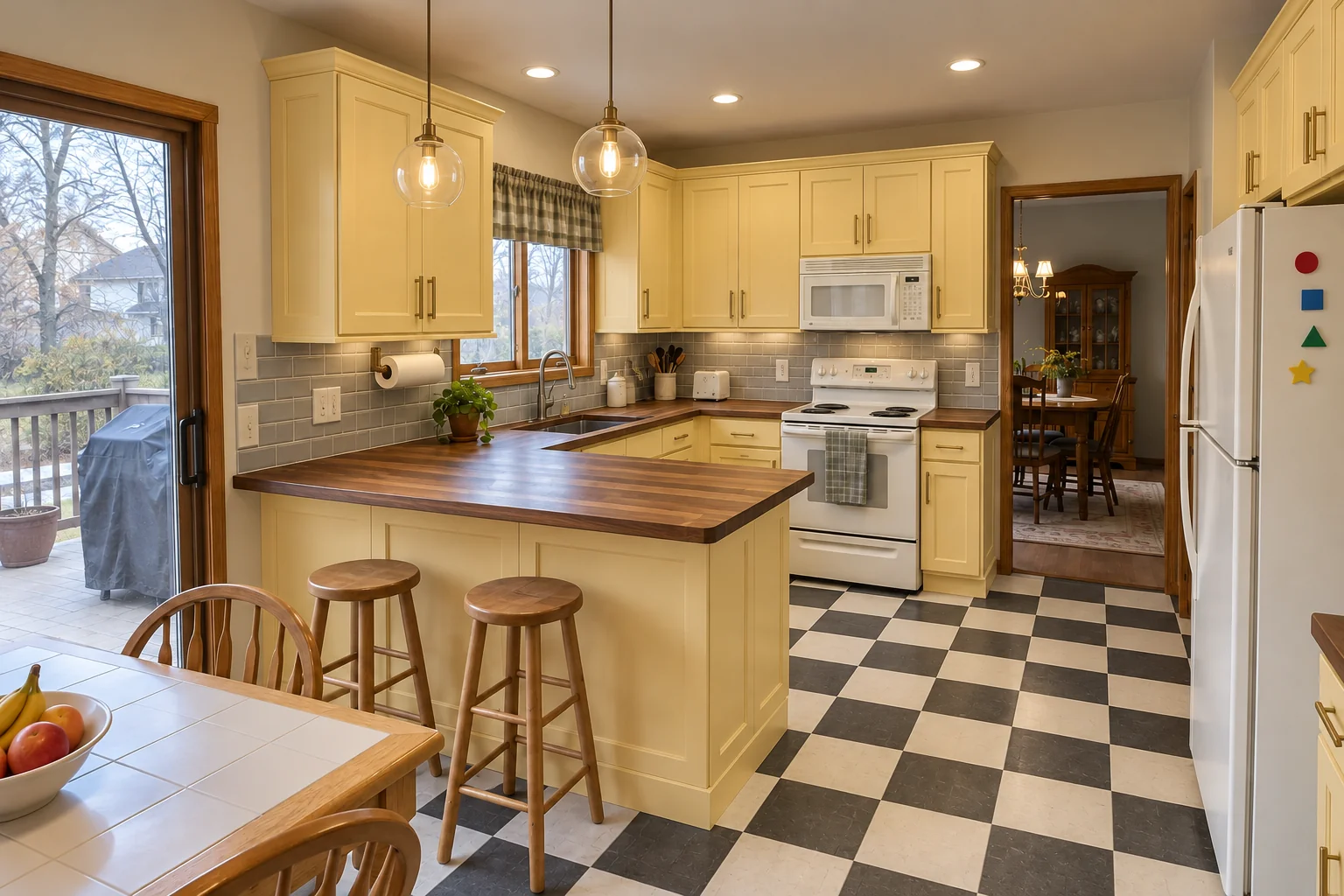
Before and after: a two-story colonial from the 1990s in Glendale Heights

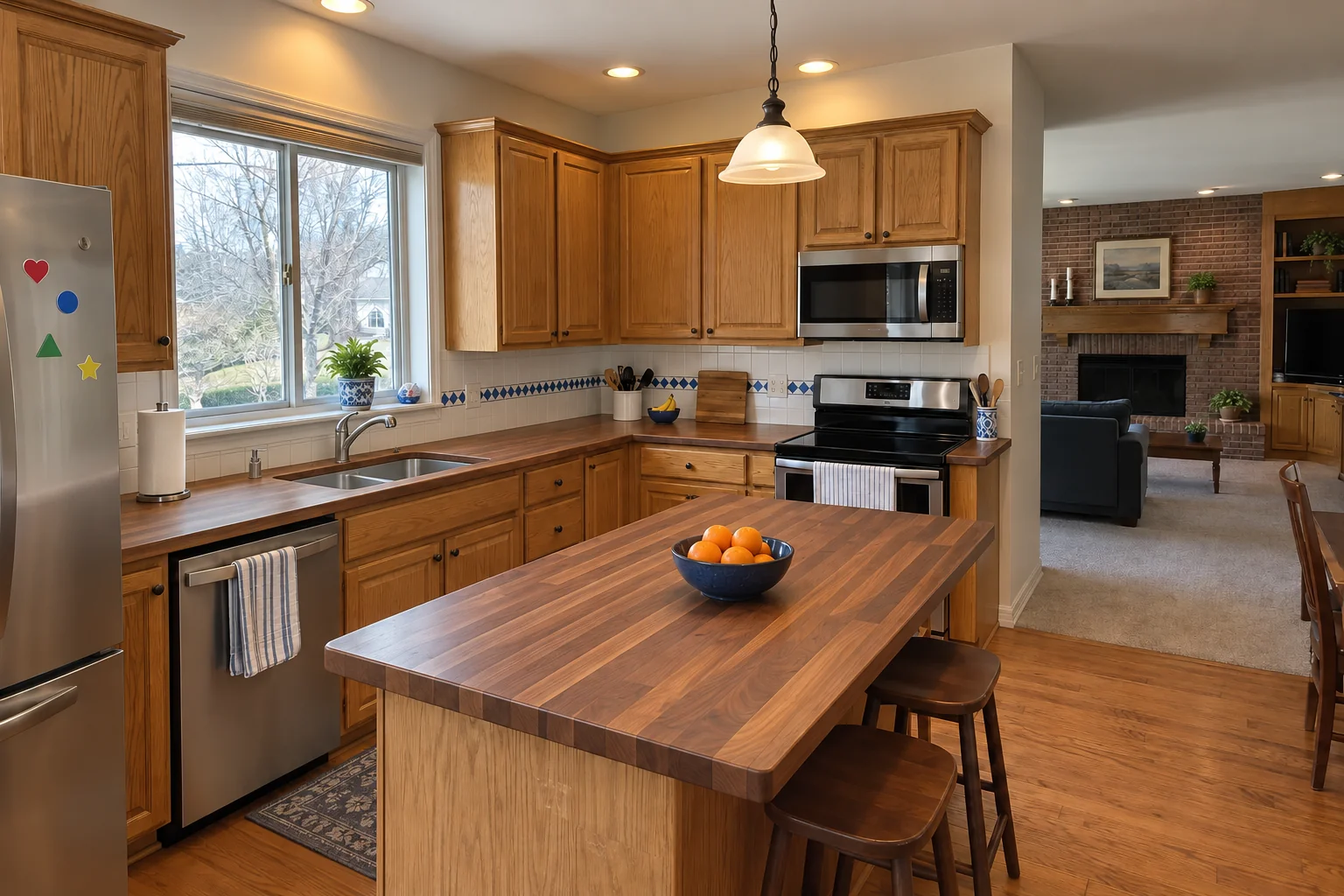
Finished: cabinets in light butter yellow with satin brass pulls, warm walnut butcher block counters, a gray beveled subway tile backsplash, black-and-white checkerboard tile flooring and two glass pendants and recessed lights.

Kitchen Remodeling in Glendale Heights →

From diagnosis to fixed

  1. Inspect the floorA visit to find the soft area, its cause and how far the damage goes.
  2. Stop the waterWe repair the source of moisture first.
  3. Rebuild the subfloorDamaged wood out, framing reinforced, new panels glued and screwed; small repairs often take a day or two.
  4. Finish the floorThe finish floor is restored and appliances go back.

Kitchen Subfloor Repair questions from Glendale Heights homeowners

What affects the cost of subfloor repair?
A small panel patch costs less than structural work. We explain the options in writing.
Why is the floor soft by my dishwasher?
Moisture from the dishwasher has likely reached the wood. We confirm it with a meter and repair it.
Who should I call for subfloor repair?
A carpentry or flooring contractor that can open the floor, check the framing and replace subfloor. That is the work we do.
Can you replace just a section of subfloor?
We do it often. The patch is sized to the damage and fastened to the framing.
Do I need a permit for subfloor repair?
Replacing subfloor panels usually doesn't. Structural work such as sistering or replacing joists often does, and we pull the permit when it's required.
Does kitchen subfloor repair need a Glendale Heights building permit, and who files it?
Permits go through Community Development Department, phone 630-260-6030. When your scope needs one, we prepare the application and schedule the inspections.
Can you do kitchen subfloor repair in a Glendale Heights condo?
Associations usually set rules for work hours, elevators, deliveries and insurance, and many require approval for plumbing, electrical or structural changes. We provide the certificate of insurance and follow the building's rules.
Do I need a permit for kitchen subfloor repair in Glendale Heights?
It depends on the scope. Glendale Heights's rule in short: Permits required for most construction projects; a Residential Remodel/Alteration application exists; call Community Development if unsure. We handle the permit when one is needed with Community Development Department.
Do you work in my part of Glendale Heights?
Yes. Our crews work across Glendale Heights — ZIP 60139 — and nearby Bloomingdale, Carol Stream, Addison.

Working in Glendale Heights

  • A lot of Glendale Heights kitchens date from the 1970s. We know these layouts well and what is worth keeping.
  • Condo or townhome? We follow association rules on work hours and elevators and bring the insurance certificate your board asks for.
  • We know how Community Development Department handles kitchen permits and pull them for you.

ZIP 60139

Kitchen Subfloor Repair nearby

Planning a kitchen project in Glendale Heights?

Call us — we'll check your ZIP, answer your questions and book an in-home estimate.
Call now (708) 400-7049
Call (708) 400-7049Callback